Škoda Puts Free 3D Printed Car Accessories on Printables
Stop Paying for Cup Holders: Škoda Just Made Car Accessories Free
Imagine walking into a car dealership, selecting your perfect vehicle, and then being told that the cup holders, storage boxes, and cable organizers you need to keep your cabin tidy are not included. In the past, you might have grumbled, bought a generic plastic kit from an accessory shop, or resigned yourself to a messy dashboard. But in 2026, that frustration is becoming obsolete. Škoda Auto has just dropped a bombshell into the automotive and additive manufacturing worlds: they are now offering free 3D printable files for cup holders, storage boxes, and cable organizers for both current and discontinued models, available directly on Printables [2].
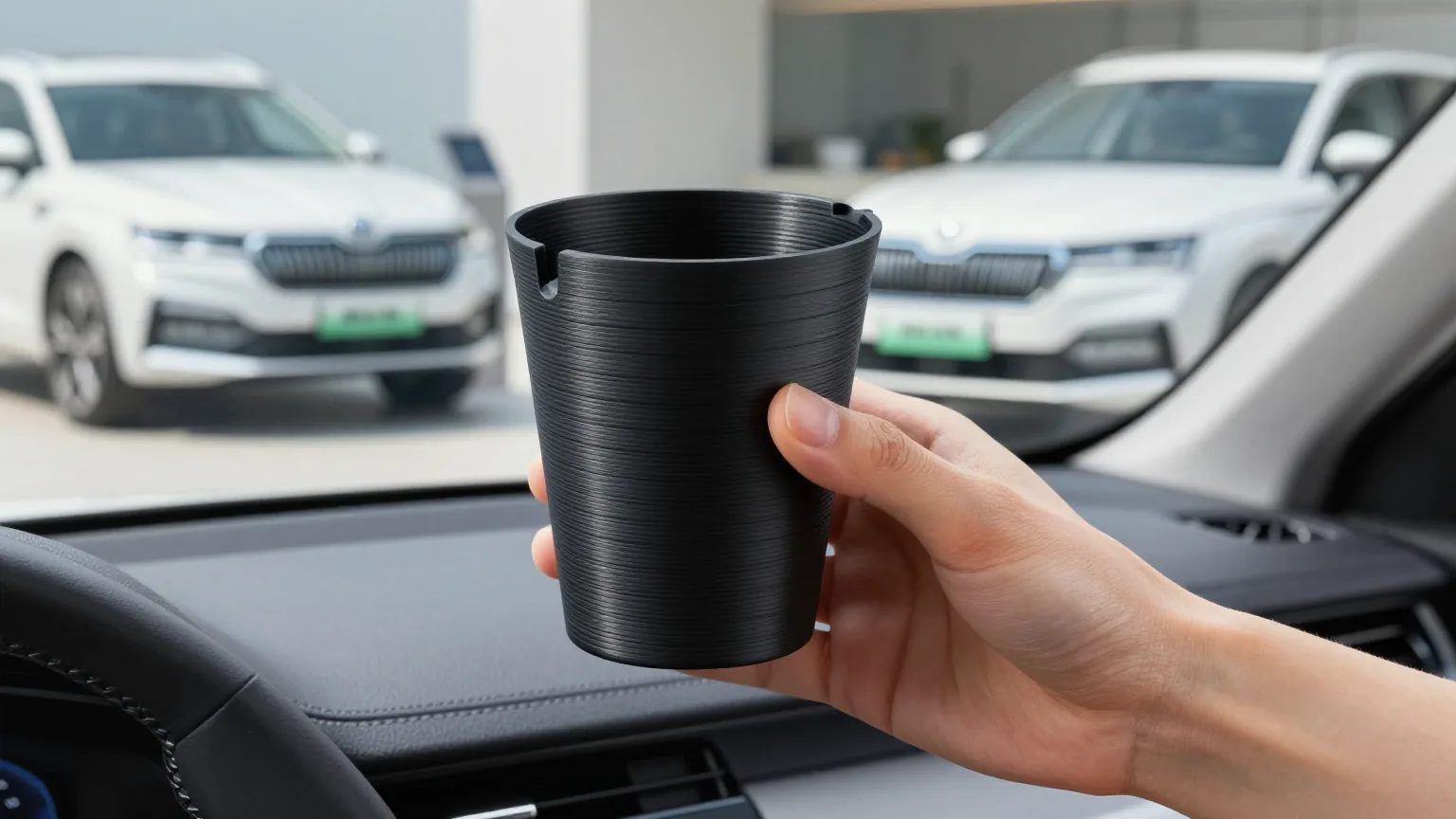
This isn’t just a clever marketing stunt; it is a significant shift in how manufacturers think about post-purchase support and the integration of digital fabrication into everyday life. By placing these files on Printables, one of the largest and most active communities for 3D printing enthusiasts, Škoda is democratizing car customization. It is an acknowledgment that the "last mile" of product usability is often solved by the user, not the manufacturer. If you own a Škoda, or even if you just like the idea of having perfectly fitted, custom-made accessories for your car without spending a dime on the design, this news is a game-changer. Let’s dive into why this matters, how it fits into the broader landscape of 3D printing news, and what it means for the future of automotive accessories.
The Shift from Plastic Kits to Digital Files
For decades, the standard for car accessories was the "universal fit." You bought a black plastic bin, a generic cup holder, or a catch-all tray that might have worked in a BMW but felt loose in a VW. These items were mass-produced, low-margin, and often of dubious quality. They were one-size-fits-all solutions that rarely fit well at all. The rise of 3D printing has fundamentally disrupted this model. Instead of shipping physical objects, companies can now ship digital designs. This reduces shipping costs, eliminates inventory waste, and allows for hyper-specific customization.
Škoda’s move to Printables is a prime example of this shift. By providing the files, they are leveraging the global network of home and professional 3D printers to produce the accessories on demand. This is a win-win: the customer gets a perfectly tailored accessory for their specific car model, and the manufacturer saves on the logistics of shipping small, low-value items. It also opens the door for users to modify the designs. Want a cup holder that holds your specific brand of thermos? You can tweak the file. Need a storage box with a magnetic lid? The design is open for modification. This level of flexibility was impossible with traditional injection-molded parts.
Why Printables? The Power of Community
It is worth noting that Škoda chose Printables, a platform by Prusa Research, rather than creating their own proprietary portal. This decision speaks volumes about the maturity of the 3D printing ecosystem. Printables has become the de facto standard for sharing and discovering 3D models, with a vast library of designs ranging from simple household items to complex mechanical parts. By joining this ecosystem, Škoda is embedding itself into the daily workflow of millions of makers.
For the average car owner, this means accessibility. You don’t need to be a 3D printing expert to benefit. You just need access to a printer, either at home or at a local fabrication shop. The community aspect of Printables also ensures that these files are continuously improved. Users can leave comments, suggest improvements, and share their own printed versions. This creates a feedback loop that traditional manufacturing channels simply cannot match. It turns the accessory market into a collaborative project, where the best designs rise to the top through user engagement.
The Rise of AI-Assisted Design in 2026
While the Škoda news is exciting, it is important to view it within the context of the broader 2026 3D printing landscape. One of the major trends driving this year is the integration of AI-assisted design. According to recent reports, AI is no longer just a buzzword; it is a practical tool that helps designers generate complex geometries and optimize structures for strength and material usage [4].
Imagine if the files Škoda released were designed with AI assistance. The internal structure of a cup holder could be a lattice pattern that provides maximum rigidity with minimum material usage, something that would be incredibly difficult to design by hand. AI can also simulate stress points, ensuring that the accessory won’t break under the weight of a heavy water bottle or a stack of papers. This technology is making 3D printed parts not just functional, but superior to their traditional counterparts in terms of weight-to-strength ratios. As AI tools become more accessible, we can expect even more manufacturers to release high-quality, optimized files for their products.
Speed and Efficiency: The New Priority for Robotics and Manufacturing
Another trend highlighted in recent 3D printing news is the prioritization of speed in both design and production, particularly in the robotics sector [3]. While Škoda’s initiative is consumer-focused, the underlying technology is the same: rapid prototyping and manufacturing. In the industrial world, companies are using 3D printing to reduce the time from design to finished part from weeks to days. This speed is now trickling down to the consumer level. With the proliferation of faster, more reliable 3D printers, printing a set of car accessories is no longer a weekend project; it is an afternoon task.
This speed is crucial for the viability of free digital accessories. If printing took too long or was too difficult, the value proposition would diminish. But with modern FDM and resin printers, the process is streamlined. You download the file, slice it, hit print, and a few hours later, you have a custom accessory. This immediacy is a key factor in why manufacturers are increasingly adopting this model. It allows them to respond quickly to market needs and user feedback, iterating on designs in real-time.
Historical Context: From RepRap to Mainstream
To appreciate the magnitude of Škoda’s move, we need to look back at the history of 3D printing. The journey began with the RepRap project, which demonstrated that 3D printers could be self-replicating and affordable. For years, 3D printing was the domain of hobbyists and researchers. It was experimental, prone to failure, and often produced brittle, weak parts. But over the last two decades, the technology has matured dramatically.
We have seen the evolution from crude plastic blobs to high-resolution, durable parts. The development of new materials, such as carbon-fiber-filled filaments and high-temperature resins, has expanded the range of applications. Today, 3D printing is not just for prototypes; it is a viable production method for end-use parts. Škoda’s initiative is a testament to this maturity. They are no longer viewing 3D printing as a novelty, but as a practical tool for solving real-world problems. This shift in perception is crucial for the future of the industry. As more mainstream brands like Škoda embrace 3D printing, the technology will become even more normalized and accessible.
The Environmental Angle: Less Waste, More Customization
One of the often-overlooked benefits of 3D printing is its potential to reduce waste. Traditional manufacturing processes, such as injection molding, require expensive molds and produce significant scrap material. If a design change is needed, the entire mold must be replaced. In contrast, 3D printing is an additive process, meaning it only uses the material necessary to create the part. Any excess material is minimal and can often be recycled.
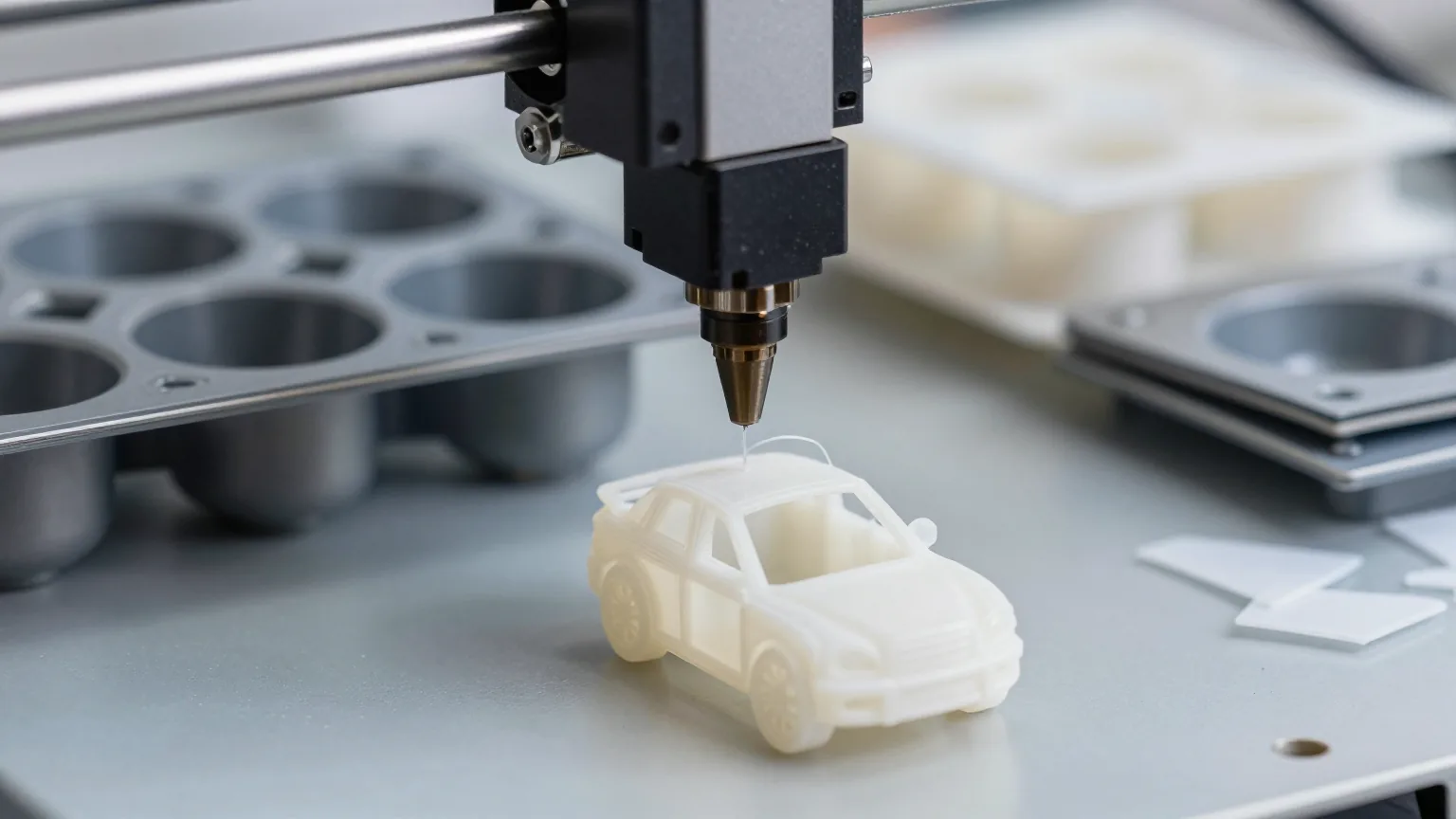
By offering free 3D printable files, Škoda is encouraging a shift away from mass-produced plastic accessories that may end up in landfills. Instead, users can print exactly what they need, when they need it. If you only need one cup holder, you print one. If you need a specific size of storage box, you print that size. This "just-in-time" production model is inherently more sustainable. Furthermore, many 3D printers now use recycled or bio-based filaments, further reducing the environmental impact. As consumers become more environmentally conscious, the ability to create durable, custom parts with minimal waste is a major selling point.
Technical Insights: What to Look For in These Files
For those eager to dive into printing these Škoda accessories, there are a few technical considerations to keep in mind. First, check the recommended materials. For car interiors, durability and resistance to UV light are important. While standard PLA is easy to print, it can become brittle over time, especially in hot cars. PETG or ABS/ASA might be better choices for long-term durability. PETG offers a good balance of strength, flexibility, and ease of printing, making it a popular choice for functional parts.
Second, consider the layer height. For visible parts like cup holders, a layer height of 0.1mm to 0.2mm will provide a smoother finish. For less visible parts, like the inside of a storage box, a higher layer height of 0.2mm to 0.3mm can significantly reduce print times. Third, pay attention to the infill. A solid infill is not necessary for most accessories. A 15-20% infill with a strong pattern, such as gyroid or grid, is usually sufficient to provide the required strength while saving material and time. Finally, ensure that the files are compatible with your printer’s build volume. Some car accessories can be quite large, so you may need to scale them down or split them into multiple parts if you have a smaller printer.
The Broader Trend: Manufacturers Embracing User-Generated Content
Škoda is not alone in this approach. Other companies are beginning to recognize the value of user-generated content and community-driven design. In the robotics industry, for example, companies are prioritizing speed in 3D printed parts for both design and production, often relying on user feedback to refine their designs [3]. This trend is spreading across industries. From furniture to electronics, manufacturers are realizing that their users are often the best designers for specific use cases.
By opening up their design files, companies are inviting users to be co-creators. This not only increases customer loyalty but also generates a wealth of data on how products are actually used. If a user modifies a cup holder to fit a specific bottle, that information can be valuable for the manufacturer in future design iterations. It creates a direct line of communication between the company and the end-user, bypassing traditional market research methods. This direct feedback loop is a powerful tool for innovation and can lead to products that are better aligned with user needs.
Challenges and Considerations
While the prospect of free, custom car accessories is exciting, there are some challenges to consider. First, quality control is an issue. Not all 3D printers are created equal, and not all users are skilled operators. A poorly printed accessory could be unsafe or ineffective. For example, a cup holder that is too weak could break and spill a hot drink on your lap. Manufacturers need to provide clear instructions and recommended settings to mitigate this risk. Second, intellectual property is a concern. By releasing files on a public platform, companies must ensure that their designs are protected from misuse. However, in the case of car accessories, the risk is relatively low, and the benefits of community engagement likely outweigh the risks.
Additionally, there is the issue of accessibility. Not everyone has access to a 3D printer. For those who do not, this initiative may feel exclusive. However, the growing number of public maker spaces and local fabrication shops is helping to bridge this gap. In many cities, you can take a 3D printable file to a local shop and have it printed for a small fee. This "print-on-demand" model is becoming increasingly common, making 3D printing accessible to a wider audience.
The Future of Automotive Accessories
Looking ahead, we can expect to see more manufacturers adopting this model. As 3D printing technology continues to advance, the quality and speed of printed parts will only improve. We may see the emergence of "car accessory ecosystems" where users can download files for a wide range of parts, from dashboard organizers to seat covers. These files could be customized with AI tools, allowing users to design unique patterns or add personal touches to their accessories.
We might also see the integration of 3D printing into the car manufacturing process itself. Some automakers are already using 3D printing to produce interior parts, such as door panels and dashboard components. As this technology becomes more widespread, the distinction between "factory-made" and "user-printed" parts may blur. In the future, you might be able to print a replacement part for your car at home, using files provided by the manufacturer. This would revolutionize the way we think about car maintenance and repair.
How to Get Started: A Practical Guide
If you are inspired by Škoda’s initiative and want to start printing your own car accessories, here is a simple guide to getting started:
- Find Your Files: Visit the Printables website and search for "Škoda" or your specific car model. Look for files that have been verified or have positive reviews from other users.
- Choose Your Material: For car interiors, PETG is often the best choice due to its durability and resistance to heat. Avoid PLA if the part will be exposed to direct sunlight for long periods.
- Check Your Printer: Ensure that the model fits within your printer’s build volume. If not, consider scaling it down or splitting it into multiple parts.
- Slice Your Model: Use a slicer software to prepare the model for printing. Adjust the layer height, infill, and supports as needed. For car accessories, a 15-20% infill is usually sufficient.
- Print and Assemble: Print the parts and assemble them according to the instructions. If necessary, use a small amount of glue or clips to secure the parts together.
- Test and Adjust: Test the accessory in your car to ensure it fits properly. If it is too loose or too tight, you can adjust the dimensions in the slicer and reprint the part.
Conclusion: A New Era of Customization
Škoda’s decision to offer free 3D printable car accessories on Printables is more than just a clever marketing move. It is a statement about the future of manufacturing, customization, and user empowerment. By leveraging the power of 3D printing and the 3D printing community, Škoda is providing a solution to a common problem: the lack of high-quality, custom-fit car accessories. This initiative is part of a broader trend in which manufacturers are embracing digital fabrication and user-generated content to create more personalized and sustainable products.
As 3D printing technology continues to evolve, we can expect to see even more innovative applications in the automotive industry. From AI-assisted design to low-waste multicolor printing, the possibilities are endless [4]. The key takeaway is that the power to create is now in the hands of the user. Whether you are a seasoned 3D printing enthusiast or a curious car owner, this is an opportunity to explore the world of additive manufacturing and create something truly unique for your vehicle.
So, what are you waiting for? Download the files, fire up your printer, and start creating. The future of car accessories is not just about what you buy; it is about what you make. And in 2026, the tools to make it are more accessible than ever before. Join the conversation on Printables, share your own designs, and help shape the future of automotive customization. The road to a more personalized driving experience starts with a single print.