3D Printed Titanium Joints: How They’re Cutting Surgery Time in Half
Imagine waking up in a hospital bed, the IV drip still gently ticking in the corner, and thinking, “That was it? That’s the big surgery?” For patients undergoing complex orthopedic or trauma reconstruction, the reality has historically been quite different. It meant long, grueling hours under anesthesia, a team of surgeons working in tight coordination, and a recovery period that could feel like a marathon. But a new frontier in medical technology is rewriting this script. Enter 3D printed titanium joints.
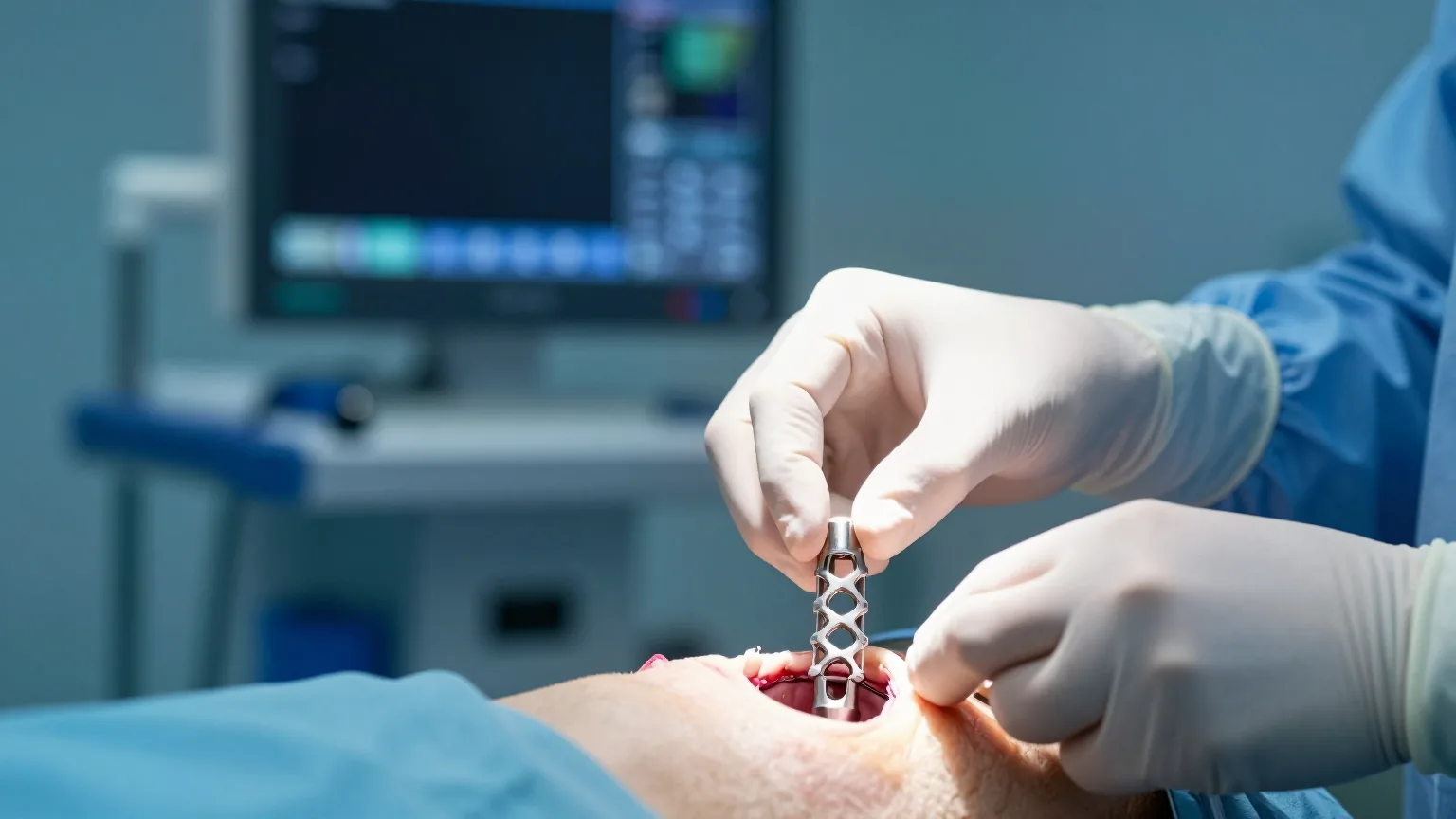
These aren’t just futuristic gadgets from a sci-fi movie; they are life-changing medical devices that are currently transforming operating rooms around the world. By leveraging additive manufacturing, surgeons can now implant custom-fit titanium structures that reduce surgical time by up to 50%, lower complication rates, and accelerate patient recovery. It is a perfect storm of digital precision, advanced materials science, and human empathy. Let’s dive into how this technology is not just saving minutes, but saving lives.
The History of Metal in Medicine: From Bronze to Titanium
To appreciate the revolution happening today, we need to look back. The history of medical implants is as old as civilization itself. Archaeologists have found evidence of early joint replacements in ancient Egypt, where ivory and bone were used to support damaged limbs. However, the modern era of metal implants truly began in the 20th century.
Initially, stainless steel was the go-to material. It was strong, but it had a significant drawback: it was heavy and often caused corrosion over time. Then came cobalt-chromium alloys, which improved durability but still lacked the biocompatibility needed for long-term integration with the human body. The game changer was titanium. First used in hip replacements in the 1960s and 70s, titanium won the hearts (and hips) of surgeons because it is biocompatible, meaning the body accepts it well, and it is incredibly strong for its weight.
For decades, titanium implants were produced using subtractive manufacturing—essentially carving out a shape from a solid block of metal. This process was inefficient, generated massive amounts of waste, and limited the geometric complexity of the final implant. You couldn’t easily create intricate, porous structures that mimic natural bone. That limitation changed everything when 3D printing entered the picture.
What is Additive Manufacturing in Medicine?
Before we get into the nitty-gritty of titanium, let’s clarify what we mean by “3D printing” in this context. In the medical field, we often use the term “additive manufacturing.” This is because the process builds objects layer by layer, adding material rather than removing it.
There are several technologies involved, but the most common for metal implants is Electron Beam Melting (EBM) or Laser Powder Bed Fusion (LPBF). In these processes, a thin layer of metal powder is spread across a bed. A high-energy source, either an electron beam or a laser, scans the surface and melts the powder according to a digital blueprint. The melted metal fuses with the layer below. The bed lowers, a new layer of powder is spread, and the process repeats. Thousands of layers later, a solid, complex titanium structure emerges from the powder.
This method allows for geometries that are simply impossible to cast or machine. Think of it as the difference between carving a statue out of a block of marble versus building a skyscraper brick by brick. The 3D printed approach offers unparalleled design freedom, which is crucial when dealing with the irregular shapes of human anatomy.
The Problem with “Off-the-Shelf” Implants
For most of the last century, medical implants have been “off-the-shelf” products. A manufacturer produces thousands of identical hip or knee replacements, and a surgeon selects the size that is closest to fitting the patient. It’s a bit like buying shoes off a rack. Most of the time, you find a pair that works, but rarely do they fit perfectly.
In orthopedics, a poor fit can have catastrophic consequences. If a joint implant doesn’t match the exact curvature of the patient’s bone, it creates gaps. These gaps become breeding grounds for bacteria, leading to infections. They also cause stress concentrations in the bone, which can lead to fractures or implant failure over time. Furthermore, fitting a standard implant often requires the surgeon to remove more healthy bone than necessary to make room for the device. This is not ideal, especially for younger patients who may need a revision surgery in twenty or thirty years.
The mismatch between a standardized product and a unique human body is a fundamental flaw in traditional medicine. 3D printing solves this by allowing for patient-specific customization. No two humans are exactly alike, and now, their implants don’t have to be either.
How Customization Cuts Surgery Time
So, how exactly does a custom-printed joint cut surgery time in half? It’s all about preparation and precision.
When using a standard implant, a significant portion of the surgery is spent on “trial and error.” The surgeon must try different sizes, check the alignment, make adjustments, and ensure the implant sits flush against the bone. This is a meticulous and time-consuming process. With a 3D printed custom implant, the device is designed to fit the patient’s specific anatomy perfectly, based on pre-operative imaging like CT scans.
Because the fit is precise, the surgeon can skip the lengthy fitting process. There is no need to shave down extra bone to make the implant fit. The implant snaps into place like a puzzle piece. This reduction in intra-operative decision-making and physical adjustment translates directly into fewer minutes under anesthesia.
Let’s look at the numbers. In a standard complex knee reconstruction, surgery might take four to five hours. With a 3D printed custom implant, that time can be reduced to two to two and a half hours. For a patient, this isn’t just a number on a clock. Less time under anesthesia means a lower risk of complications such as blood clots, pneumonia, and cognitive decline, particularly in elderly patients. It also means a faster return to consciousness and a smoother initial recovery.
The Magic of Porous Structures
If you think custom fit is impressive, wait until you hear about the internal structure of these implants. Traditional titanium implants are solid blocks of metal. They are strong, but they are also stiff. Human bone, on the other hand, is a living, porous material that is flexible and has a specific density.
When a solid metal implant is placed in the body, a phenomenon called “stress shielding” can occur. Because the titanium is stiffer than the bone, it takes on more of the mechanical load. The bone, no longer feeling the stress it’s used to, begins to weaken and thin out over time. This is a major cause of implant failure.
3D printing allows engineers to create a lattice structure inside the implant. This lattice mimics the trabecular bone (the spongy part of bone) found in the human body. By tuning the porosity and the stiffness of this lattice, surgeons can match the mechanical properties of the implant to those of the patient’s bone. This encourages the body to grow new bone into the pores of the implant, a process known as osseointegration.
It’s like building a trellis for a vine. The vine (the bone) grows through and around the structure, becoming part of it. This creates a much stronger, more permanent bond than a solid metal block ever could. It’s a brilliant example of biomimicry, where we copy nature’s designs to solve engineering problems.
Case Study: The Complex Case of the Trauma Patient
Let’s look at a real-world scenario to see how this plays out. Imagine a patient involved in a severe car accident who suffers a shattered pelvis. The pelvis is a complex ring of bone that supports the spine and connects the legs to the torso. Reconstructing a shattered pelvis is one of the most challenging surgeries in orthopedics. The anatomy is irregular, the blood supply is critical, and the forces involved are immense.
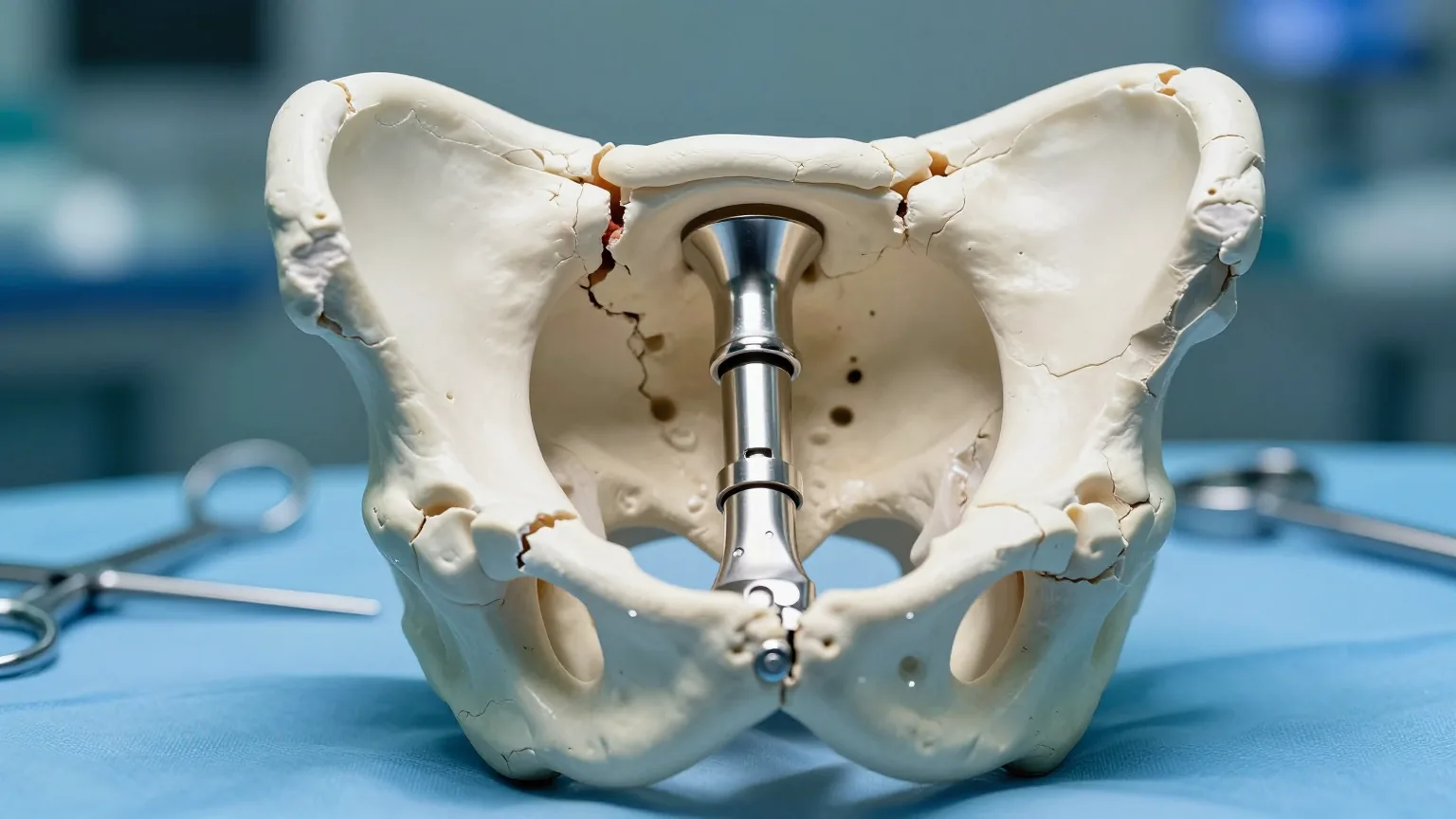
Traditionally, this would involve hours of meticulous reconstruction, using plates and screws to hold the bone fragments together. The surgeon would have to work blind, relying on X-rays and tactile feedback to align the fragments. It’s a high-stakes environment where every minute counts.
With 3D printing, the patient’s CT scan is used to create a 3D model of their specific pelvic fracture. A custom titanium cage or plate is then designed and printed to fit the exact defect. In some cases, surgeons also print a plastic replica of the patient’s pelvis to practice the surgery before they even enter the operating room. This “rehearsal” allows the team to identify potential issues, plan the approach, and determine exactly where to place the screws.
When the patient is on the table, the custom titanium implant is ready. It fits the defect perfectly, providing immediate stability. The surgery is faster, more accurate, and less invasive. The patient leaves the operating room with a stable pelvis and a significantly lower risk of post-operative complications.
The Economic Impact: Saving Money by Spending Less Time
You might think that 3D printed, custom-made titanium implants would be prohibitively expensive. After all, we’re talking about high-tech machinery, expensive metal powder, and complex software. And yes, the unit cost of a 3D printed implant is higher than a standard off-the-shelf one. However, the total cost of care is often lower.
How? It’s simple math. Operating room time is incredibly expensive. Every hour in an OR involves a team of surgeons, nurses, anesthesiologists, and technicians, plus the use of expensive equipment. If a surgery is cut in half, the hospital saves significant labor and facility costs. Furthermore, shorter surgeries lead to shorter hospital stays. Patients recover faster and can go home sooner, reducing the cost of inpatient care.
There is also the cost of complications. Infections, revisions, and long-term disabilities are far more expensive to treat than the initial implant. By reducing the risk of these complications through better fit and biocompatibility, 3D printing helps reduce the long-term financial burden on both the patient and the healthcare system. It’s a win-win-win situation for patients, hospitals, and insurers.
Regulatory Hurdles and Safety Standards
Of course, putting a new type of metal device inside a human body is no small feat. Regulatory bodies like the FDA in the United States and the EMA in Europe have strict standards for medical devices. 3D printed implants must undergo rigorous testing to ensure they are safe and effective.
This includes mechanical testing to ensure the implant can withstand the forces of daily life, biocompatibility testing to ensure it doesn’t cause allergic reactions or toxicity, and sterilization validation. Because every implant is unique, the regulatory pathway can be complex. Often, these devices are approved under “Humanitarian Use Device” (HUD) classifications, which allows for faster approval for devices that treat rare or unusual conditions, provided there are fewer than 8,000 potential users per year.
Despite these hurdles, the safety record of 3D printed titanium implants has been excellent. Numerous clinical studies have shown that they perform as well as, or better than, traditional implants. The key is quality control. Manufacturers must ensure that the printing process is consistent and that the final product is free of defects like porosity or cracks that could lead to failure. Advanced inspection techniques, including CT scanning and X-ray fluorescence, are used to verify the integrity of every single implant before it reaches the operating room.
The Future: Beyond Titanium
While titanium is the current king of 3D printed implants, it’s not the only player in the game. Researchers are exploring other materials that offer different benefits. For example, magnesium alloys are being investigated for temporary implants. Magnesium is biodegradable, meaning it dissolves in the body over time as the bone heals. This eliminates the need for a second surgery to remove the implant.
There is also a growing interest in composite materials. By combining titanium with other elements or even biological materials, we can create implants that have even better mechanical properties or that promote faster healing. Some labs are even experimenting with 3D printing biological tissues, such as cartilage or bone, using patient cells. This could lead to a future where we don’t just implant metal, but we grow new body parts.
Another exciting development is the use of 3D printing for surgical guides. Before the implant is placed, surgeons can print plastic guides that fit over the patient’s bone. These guides have pre-drilled holes for screws, ensuring that the hardware is placed with millimeter precision. This “guided surgery” is already becoming common and is significantly improving outcomes in knee and hip replacements.
Ethical Considerations and Accessibility
As with any medical breakthrough, we must consider the ethical implications. Who has access to this technology? If 3D printed implants are more expensive, could they create a two-tier system of healthcare where only the wealthy get the best care? This is a valid concern. However, as the technology becomes more widespread and the cost of printing decreases, it is hoped that these implants will become available to a broader population.
There is also the issue of data privacy. To create a custom implant, detailed medical imaging data must be shared with manufacturers and software companies. Patients need to be assured that their data is secure and used only for the purpose of creating their implant. Transparency and clear consent processes are essential to building trust in this new paradigm.
Furthermore, we must consider the environmental impact. While 3D printing is generally more efficient than traditional manufacturing in terms of material waste, the production of metal powder and the energy required for the printing process have their own environmental costs. Sustainable practices, such as recycling metal powder and using renewable energy in manufacturing facilities, will be crucial for the long-term viability of this technology.
Conclusion: A New Era of Personalized Medicine
3D printed titanium joints represent more than just a technological upgrade. They symbolize a shift in how we think about medicine. We are moving away from a “one size fits all” approach to one that is truly personalized. By leveraging the power of additive manufacturing, we are able to create implants that are not only better for the patient’s body but also better for the healthcare system.
The fact that these implants can cut surgery time in half is a testament to the power of precision. It reduces the burden on surgeons, lowers the risk for patients, and accelerates recovery. It is a clear example of how technology, when applied with empathy and scientific rigor, can improve human lives in profound ways.
As we look to the future, we can expect to see even more innovations in this space. From biodegradable implants to tissue engineering, the possibilities are endless. The journey from a CT scan to a custom-printed titanium joint is a remarkable feat of modern engineering, but its true value lies in the quiet moments after the surgery: the patient walking down the hallway, the reduced pain, the faster return to normal life.
So, the next time you hear about 3D printing, don’t just think of toy figurines or architectural models. Think of the patients getting a second chance at mobility, the surgeons working more efficiently, and the future of medicine becoming more precise, more personalized, and more humane. The technology is here, and it is changing the game. It’s time to pay attention, because the future of healthcare is being built, one layer at a time.
Call to Action: Are you a medical professional, a student, or simply curious about the future of health tech? I’d love to hear your thoughts. Have you or a loved one experienced a 3D printed implant? What are your biggest hopes or concerns about this technology? Share your stories and questions in the comments below, or join the conversation on social media using #3DPrintedMedicine. Let’s explore this fascinating frontier together.