How 3D Printed Titanium Saves 40% in Aerospace Parts
Imagine holding a component that weighs less than a sheet of paper but can withstand the brutal thermal shock of re-entering Earth's atmosphere. Now imagine that this component cost 40% less to produce than its traditional machined counterpart. For decades, the aerospace industry operated under the assumption that high-performance materials demanded high-performance costs. If you wanted something light, strong, and corrosion-resistant, you paid a premium. But that era is rapidly coming to an end, thanks to the quiet revolution of additive manufacturing, specifically 3D printing titanium.
For a long time, 3D printing was viewed in the aerospace sector with a mix of skepticism and curiosity. Engineers loved the design freedom but feared the consistency. Suppliers loved the margins but hated the disruption. Today, however, the narrative has shifted. We are no longer just asking if we can 3D print titanium parts for critical flight applications; we are asking how many more we can print. The headline figure that has industry analysts and CFOs scrambling is the 40% cost reduction. But how does a technology that seems to "add" material actually save money? And why is titanium, a metal known for being difficult and expensive, the key to this equation?
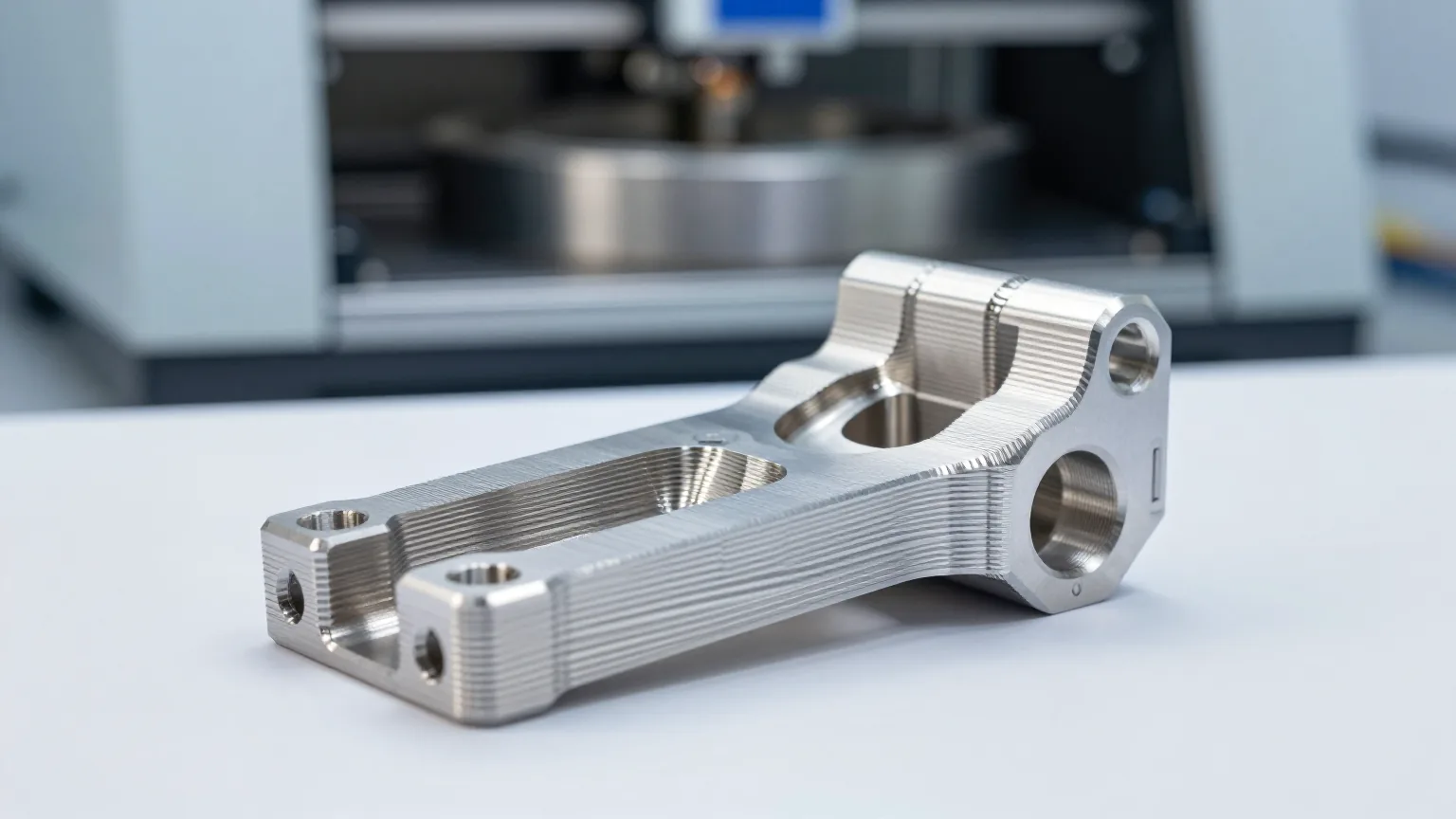
In this post, we are going to dive deep into the mechanics of this cost-saving miracle. We’ll explore the historical baggage of titanium machining, the physics of why titanium hates lasers (and how we fixed that), and the real-world applications that are making this 40% figure a reality rather than a marketing fluff. Buckle up, because the future of flight is being printed, one layer at a time.
The Heavy Baggage of Traditional Machining
To understand the savings, we first have to understand the pain. For the last half-century, the standard method for producing aerospace components was subtractive manufacturing. You start with a solid block of material—often a large billet of titanium—and you carve away everything you don’t need. It sounds simple, but in the world of aerospace, "carving away" is a euphemism for an incredibly inefficient and expensive process.
Let’s look at a typical bracket or a complex manifold. In traditional machining, you might start with a block of titanium that is 500mm x 500mm x 500mm. The final part might only be 100mm x 100mm x 50mm. That means you are throwing away 90% of your raw material as swarf (metal shavings). In the world of commodity steel, that’s annoying. In the world of aerospace-grade titanium, that is a financial hemorrhage. Titanium is expensive. It requires specialized furnaces to melt and alloy, and it is notoriously difficult to work with. It is hard, it is abrasive, and it reacts violently with air at high temperatures. Machining it requires slow feed rates, specialized tooling, and multiple setups to ensure precision.
Historically, the cost breakdown for a machined titanium part looked something like this:
- Material Cost: High, due to the waste.
- Labor Cost: Very high, requiring highly skilled machinists.
- Machining Time: Long, often taking days or weeks for complex geometries.
- Tooling Wear: Significant, as titanium dulls standard carbide tools rapidly.
This is where the "40% savings" story begins. Additive manufacturing, or 3D printing, flips this model on its head. Instead of starting with a block and removing material, you start with nothing and build the part atom by atom. You only use the material that goes into the final part. No waste. No massive blocks of expensive metal sitting in inventory. No hours of manual setup. The machine does the work while you sleep. But there is a catch, and it’s a big one.
Titanium: The Metal That Fights Back
If 3D printing titanium was as easy as printing plastic, this article would be a lot shorter. The problem is that titanium is a nightmare for laser-based additive manufacturing processes, specifically Laser Powder Bed Fusion (LPBF). Why? Because titanium is a "reactive" metal. At the high temperatures required to melt it (around 1,668°C or 3,038°F), titanium has a voracious appetite for oxygen and nitrogen. If even a tiny amount of these gases gets into the melt pool, the resulting part becomes brittle. It’s no longer the strong, lightweight alloy we need for aircraft; it’s a brittle block of junk that will shatter under stress.
For years, this was the primary barrier to adoption. Manufacturers could print small test coupons, but scaling up to production volumes while maintaining consistent, high-strength parts was a massive challenge. The cost of maintaining the inert argon atmosphere required to keep the titanium pure was astronomical. The equipment had to be airtight, monitored 24/7, and any leak could ruin an entire batch of powder, which is itself expensive.
However, the last five years have seen a paradigm shift in how we handle this reactivity. Advances in powder delivery systems, better inert gas management, and improved laser control algorithms have turned the "titanium problem" into a manageable engineering challenge. We now have printers that can maintain the necessary purity levels with much greater consistency. This reliability is the first step toward unlocking that 40% cost saving. You can’t save money if your parts fail inspection. Consistency is the new currency in aerospace.
The Geometry of Savings: Why Shape Matters
Here is where the magic of 3D printing truly shines, and where the 40% figure starts to make tangible sense. Traditional machining is limited by the tool. A drill bit can only go straight. A mill can only cut in specific planes. If you need a hole that is internal, or a cavity that is deep and narrow, you are stuck with complex multi-axis machining or, worse, assembling multiple smaller parts together.
3D printing has no such constraints. You can print a part that looks like a honeycomb, a lattice, or a complex organic shape that integrates multiple functions into a single piece. In aerospace, this is known as "topology optimization." Engineers use software to determine the absolute minimum material needed to withstand the specific loads the part will experience. The result is often a part that looks alien—like a piece of coral or a skeletal structure.
This has two major cost implications:
- Weight Reduction: Lighter parts mean less fuel consumption. In the airline industry, every kilogram saved on a long-haul flight translates to millions of dollars in fuel savings over the life of the aircraft. Even if the part costs the same to make, the operational savings are massive. But because we are also saving on material and labor, the part is cheaper to make and cheaper to fly.
- Part Consolidation: This is the big one. A traditional assembly might require 12 separate parts, 50 bolts, and hours of assembly labor. A 3D printed design can consolidate these 12 parts into one. This eliminates the cost of the 11 other parts, the fasteners, the assembly time, and the potential failure points of the joints. When you remove 11 parts from the bill of materials, you don’t just save a little money; you save a significant chunk of the total system cost.
The 40% Breakdown: Where Does the Money Go?
So, is the 40% figure just a marketing tactic? No. When you break down the Total Cost of Ownership (TCO) for a specific aerospace component, the savings are visible in several distinct buckets. Let’s look at a hypothetical complex titanium bracket used in a jet engine assembly.
1. Material Savings (approx. 15-20%): As mentioned, subtractive manufacturing wastes up to 90% of the raw material. Additive uses nearly 100% of the powder. Even though 3D printed titanium powder is expensive, the fact that you aren’t throwing away 450kg of metal per part makes a huge difference. Furthermore, the optimized geometry often requires 20-30% less material than the traditional design, simply because it’s lighter.
2. Labor and Machining Time (approx. 15-20%): Machining a complex titanium part can take 50-100 hours of machine time. A 3D printer might take 20-40 hours. But more importantly, the labor is different. Machining requires constant human oversight, tool changes, and manual inspection. 3D printing is largely automated. Once the job is queued, the machine runs. This reduces the need for highly paid, specialized machinists for the initial production run. Post-processing (support removal, heat treatment) still requires labor, but it is less intensive than multi-axis milling.
3. Design and Engineering Iteration (approx. 5-10%): This is a hidden cost that many overlook. In traditional manufacturing, if you need to change a design to fix a stress point, you have to re-tool, re-program the CNC, and re-machine. This can take weeks. With 3D printing, you just change the digital file and print the next part. This agility allows for faster prototyping and design optimization. You can test 10 variations in a week instead of a month. This speed to market and the ability to iterate quickly reduces the overall engineering cost and the time the part spends in development.
4. Inventory and Logistics (Variable): Aerospace companies historically stockpile spare parts. They keep years’ worth of machined titanium components in warehouses because the lead time to make a new one is long. With 3D printing, you can adopt a "print on demand" model. You keep the digital files, not the physical inventory. This frees up capital and warehouse space. For rare or obsolete parts, this can be the difference between keeping an aircraft flying and grounding it for months while waiting for a custom-machined part.
Case Study: The Engine Nozzle That Changed Minds
Let’s look at a real-world example to ground this theory. While specific numbers are often proprietary, several major aerospace manufacturers have publicly discussed their transitions. One notable area is the production of engine components, such as fuel nozzles and turbine blades.
Consider a fuel nozzle. Traditionally, these are complex, high-precision parts made from titanium or high-temperature alloys. They require intricate internal cooling channels to prevent them from melting. In the past, creating these internal channels was a nightmare. You had to machine from multiple directions, or use erosion techniques that were slow and imprecise.
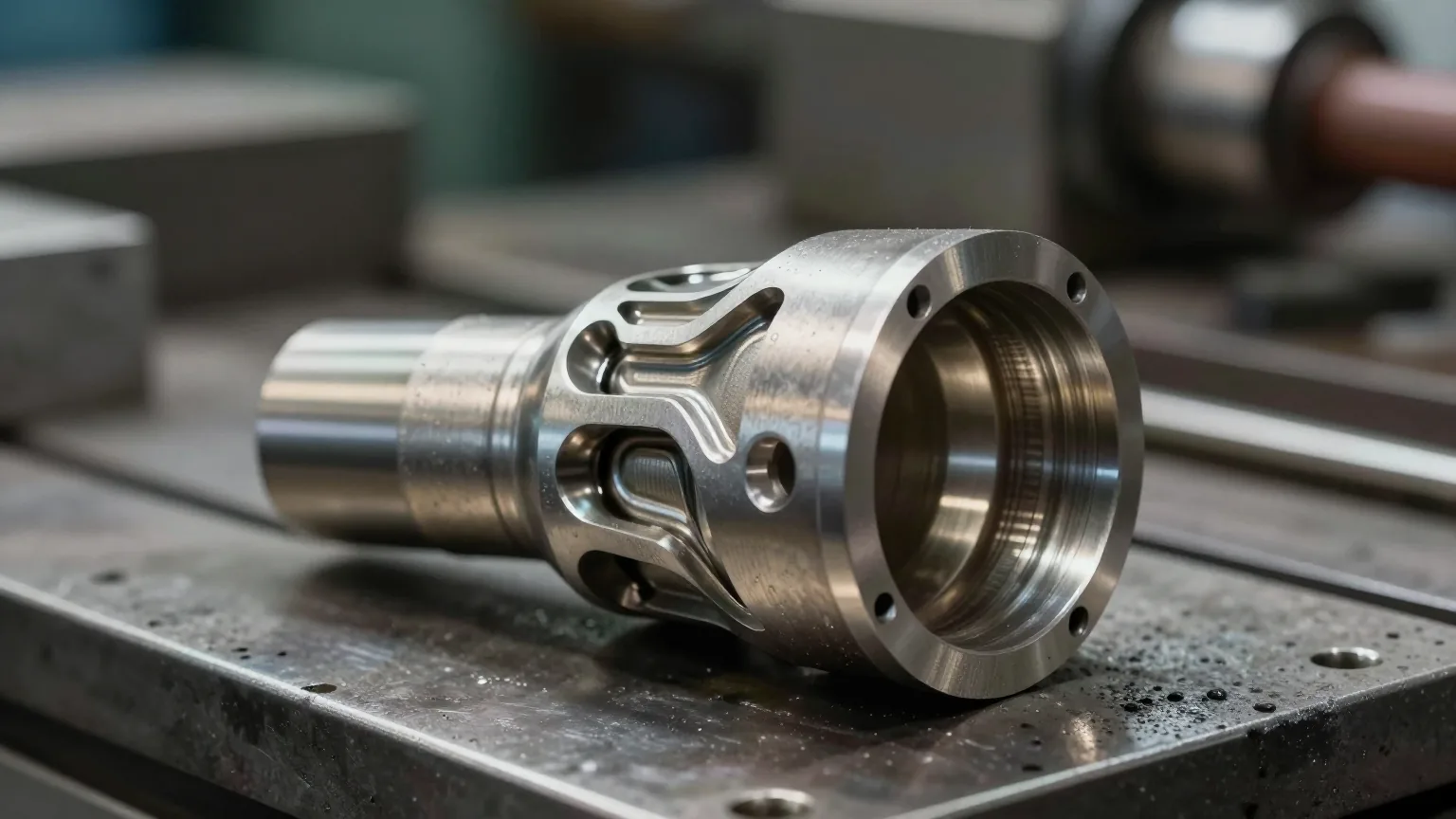
With 3D printing, the cooling channels are printed as part of the structure. They can be shaped to be exactly where the heat is highest, maximizing efficiency. A manufacturer recently reported that by switching to 3D printed titanium nozzles, they reduced the part weight by 25% and the manufacturing time by 50%. The cost reduction wasn’t just from the material; it was from the elimination of the complex assembly process that used to be required to attach the cooling elements. The part went from being an assembly of 6 components to a single, monolithic piece. That is the power of consolidation. The 40% savings in this case wasn’t just about the metal; it was about the complexity.
The Quality Hurdle: Why Aerospace is Different
We have to be honest: aerospace is not the consumer electronics industry. You cannot have a 0.1% failure rate. In a smartphone, a defect is an inconvenience. In an aircraft, a defect is a disaster. This is why the adoption of 3D printed titanium has been slower than in other industries. The certification process is rigorous, expensive, and time-consuming.
Every 3D printed part must be inspected. We use techniques like X-ray computed tomography (CT) to scan the part for internal porosity or cracks. We perform ultrasonic testing and visual inspections. The data from these tests is stored and tracked for the life of the part. This "digital thread" is essential. If a part fails in flight, we need to know exactly which printer, which batch of powder, and which laser settings were used.
This level of traceability adds cost, yes. But it also adds value. It provides a level of data that traditional machining cannot match. With traditional machining, you know the final dimensions, but you don’t know the microstructure or the internal stress state as well as you do with a scanned 3D printed part. Over time, as this data accumulates, we will be able to predict failures before they happen. This predictive maintenance capability is a massive cultural shift in aerospace. We are moving from "fix it when it breaks" to "know when it will break." The 40% savings are not just in the manufacturing phase; they are in the operational and maintenance phase.
Cultural and Historical Context: From Space Race to Supply Chain
To understand why this matters now, we have to look back. During the Space Race of the 1960s, titanium was the material of choice. It was strong, light, and could withstand the extreme conditions of space. But it was also so difficult and expensive to work with that it was reserved only for the most critical components. The Apollo program used titanium, but it was a luxury material.
For decades after, titanium remained a niche material, used in high-end medical implants and racing cars. It was too expensive for mass-market automotive use and too difficult for general industrial use. The aerospace industry kept using it, but only where it was absolutely necessary. This created a culture of "make it last" and "minimize quantity." Parts were designed to be over-engineered because they were so expensive to replace.
3D printing is changing this culture. By reducing the cost and increasing the speed of production, it is making titanium accessible for a wider range of applications. We are seeing a shift from "scarcity" to "abundance" in terms of design freedom. Engineers are no longer afraid to use titanium for non-critical structural elements because the cost barrier has lowered. This democratization of high-performance materials is a significant cultural shift in engineering. It encourages experimentation and innovation. When the cost of failure is lower, the cost of innovation is lower.
Modern Perspectives: The Supply Chain Revolution
One of the most underappreciated benefits of 3D printed titanium is its impact on the supply chain. The aerospace industry is notoriously vulnerable to supply chain disruptions. A shortage of a specific alloy, a logistics issue in a port, or a geopolitical conflict can halt production lines. Traditional manufacturing relies on a long, complex chain of suppliers, each adding cost and risk.
Additive manufacturing allows for "near-shoring" or "on-shoring." Instead of shipping raw titanium from a foundry in another country, you can store the powder locally and print the parts when you need them. This reduces lead times from weeks to days. It also reduces the environmental impact of shipping heavy metal blocks across the globe. The carbon footprint of 3D printing is lower not just because of the energy efficiency of the process, but because of the reduced logistics.
Furthermore, it enables a new model of "spare parts as a service." Instead of buying a spare part upfront, you can pay for the digital file and the printing service when you need it. This changes the business model from capital expenditure (CapEx) to operational expenditure (OpEx). For airlines and defense contractors, this is a huge financial advantage. It smooths out cash flow and reduces the risk of obsolescence. If a part design changes, you don’t have to scrap a warehouse full of old parts. You just update the file.
Challenges and Realities: It’s Not All Sunshine
We must remain grounded. 3D printing titanium is not a silver bullet. There are challenges. The initial capital cost of industrial-grade LPBF printers is high. A single machine can cost hundreds of thousands of dollars. This makes it a significant investment for small and medium-sized enterprises (SMEs). Not every company can afford to jump in. This is why service bureaus and shared manufacturing facilities are becoming crucial. They allow smaller companies to access the technology without bearing the full capital cost.
There is also the issue of post-processing. 3D printed parts often require heat treatment to relieve internal stresses and improve mechanical properties. This requires specialized furnaces and expertise. Support removal can be labor-intensive, especially for complex geometries. The surface finish is also different; it is rougher than machined parts. For some applications, this is fine. For others, additional machining or finishing is required, which adds cost and time.
And then there is the talent gap. 3D printing requires a new set of skills. You need engineers who understand both traditional manufacturing and additive processes. You need technicians who can operate and maintain these complex machines. You need data scientists who can analyze the process parameters to ensure quality. This is a different skill set than what is currently available in the traditional manufacturing workforce. Upskilling the workforce is a critical part of the transition. The 40% savings will not happen if we don’t invest in the people who will run the machines.
The Future: Beyond 40%
Where do we go from here? The 40% savings figure is likely a floor, not a ceiling. As the technology matures, we expect to see even greater efficiencies. We are seeing the development of multi-material printing, where you can print titanium and other metals in the same part. This will allow for even greater design freedom and further cost reductions. We are also seeing improvements in print speed. New laser technologies and powder delivery systems are allowing for faster build rates. If you can print a part in half the time, your cost per part drops further.
We are also seeing the rise of "digital twins." This is where the digital file of the part is linked to the physical part. As the part is used in the field, sensors collect data on its performance. This data is fed back into the design process, allowing for continuous improvement. The next version of the part will be even lighter, even stronger, and even cheaper to make. This iterative loop of design, print, test, and learn is the true power of additive manufacturing. It is a closed-loop system that traditional manufacturing cannot easily replicate.
The future of aerospace is not just about flying faster or higher. It is about flying smarter. It is about using less material, less energy, and less time to create parts that are better than anything we have ever made before. 3D printed titanium is at the heart of this revolution. It is not just a new way to make parts; it is a new way to think about manufacturing.
Conclusion: The Call to Action
The 40% cost savings in aerospace parts via 3D printed titanium is not a myth. It is a reality that is being realized by forward-thinking companies today. It is the result of a convergence of better materials, better machines, better software, and a cultural shift in how we approach design and manufacturing.
But this is not just a story for the big giants. It is a story for the entire industry. If you are an engineer, a designer, or a business leader in the aerospace or related sectors, the message is clear: the future is additive. The cost barriers are falling. The quality barriers are being overcome. The supply chain barriers are being dismantled.
What should you do? Start by looking at your current parts. Which ones are expensive? Which ones are complex? Which ones are difficult to source? These are your candidates for 3D printing. Talk to a service bureau. Run a cost-benefit analysis. Don’t be afraid to experiment. The technology is ready. The market is ready. The only thing left is for you to take the leap.
The sky is no longer the limit. It’s just the starting point. And it’s being printed, one layer at a time.