CoBound HiC: Carbon Now a Key Ingredient in SiC Parts
In the world of advanced materials, we often talk about "additive" manufacturing as if we are simply adding layers of plastic or metal. But what happens when the additive process changes the fundamental chemistry of the part itself? What if the "glue" holding it all together isn't just a temporary scaffold, but a permanent, structural component that actually improves the final product? This is the question that has the advanced manufacturing community buzzing right now. Enter CoBound HiC, a high-carbon binder for silicon carbide (SiC) binder jetting, recently launched by Atomik AM and Concr3de [1].
At first glance, this might sound like niche chemistry nerd talk. But stick with us, because this development represents a significant shift in how we view binder jetting. It moves the technology from a method of "holding things together" to a method of "making things stronger." In this post, we’ll dive deep into what CoBound HiC is, why the carbon content matters, and how this fits into the broader landscape of 3D printing news as we head toward the end of 2026.
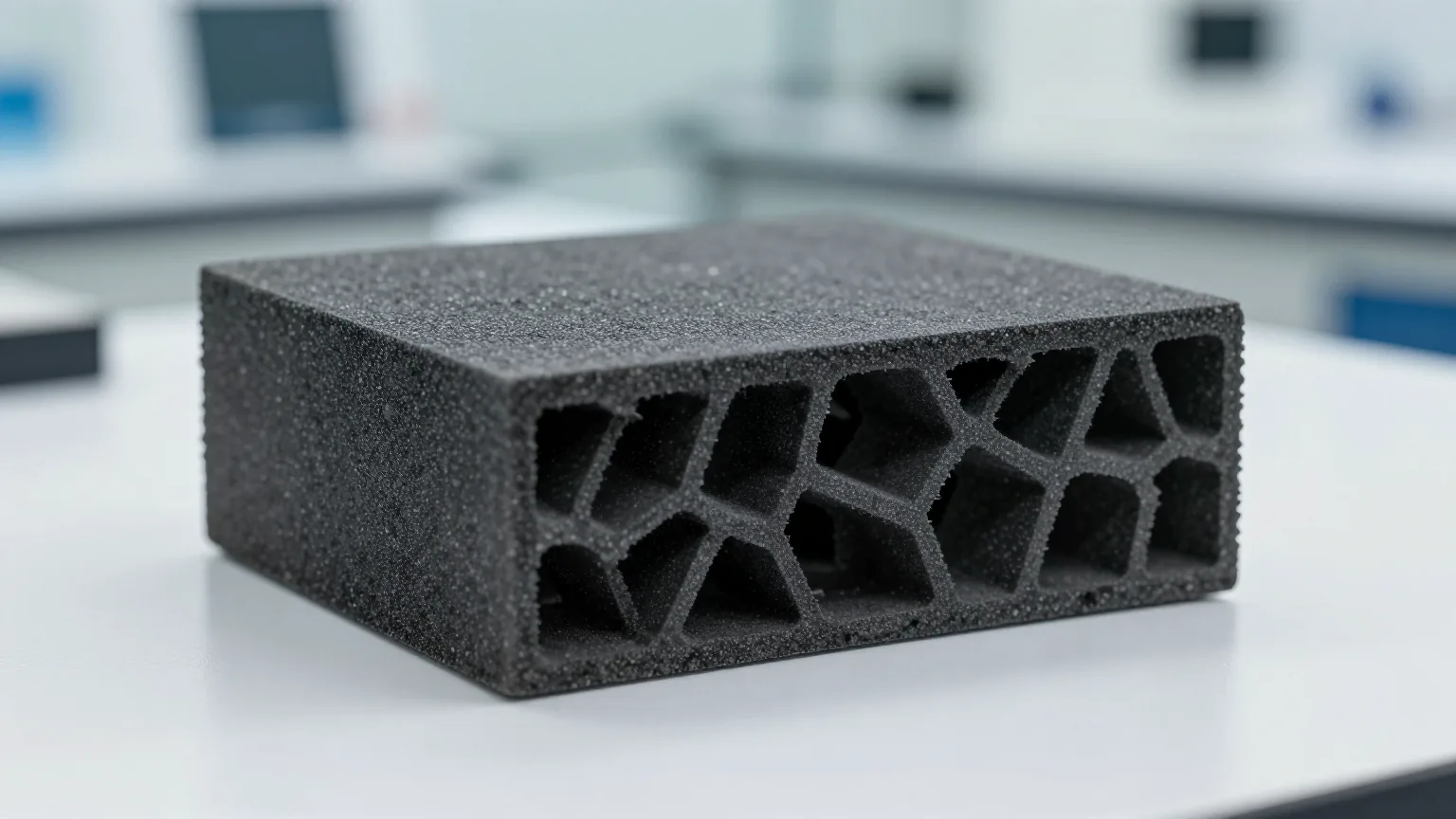
The Binder Jetting Paradigm Shift
To understand why CoBound HiC is a big deal, we first need to understand the traditional pain points of binder jetting. For years, binder jetting has been praised for its speed and ability to handle complex geometries. However, it has often been criticized for a specific weakness: the post-processing. In many conventional ceramic or metal binder jetting processes, the binder acts as a temporary glue. It holds the powder together during printing, but it often needs to be burned out (debinding) and then sintered to create the final dense part.
This process is not only time-consuming and energy-intensive, but it can also introduce defects, warping, or porosity. The binder is, in many traditional contexts, a necessary evil. It’s the scaffolding you have to tear down to get to the building. CoBound HiC flips this script. By using a high-carbon binder specifically designed for silicon carbide, the carbon doesn't just disappear. It remains. It contributes to the final part [1]. This changes the binder from a sacrificial agent to a functional ingredient.
Why Silicon Carbide? The Super-Material of the 21st Century
If you’ve been following the news in electric vehicles (EVs), aerospace, or high-performance electronics, you’ve likely heard the name Silicon Carbide. SiC is a ceramic material that is incredibly hard, has excellent thermal conductivity, and can withstand extreme temperatures without melting or deforming. It is the material of choice for high-efficiency power semiconductors, which are the brains behind modern EV charging infrastructure and battery management systems.
Traditionally, manufacturing SiC parts has been difficult. It is brittle, hard to machine, and expensive to produce in complex shapes. That’s where 3D printing comes in. By using binder jetting, manufacturers can create complex SiC structures that would be impossible to machine from a solid block. However, the challenge has always been maintaining the material’s integrity during the transition from powder to part. CoBound HiC addresses this by ensuring that the carbon in the binder integrates with the SiC matrix, potentially enhancing the thermal and mechanical properties of the final component.
Atomik AM and Concr3de: A Powerhouse Collaboration
This innovation didn’t happen in a vacuum. It is the result of a strategic collaboration between two key players in the additive manufacturing space: Atomik AM and Concr3de [1]. Atomik AM is known for its expertise in high-performance additive manufacturing solutions, while Concr3de brings specialized knowledge in concrete and composite 3D printing. Their joint effort to launch CoBound HiC signals a growing trend where specialized material science companies are partnering with printer manufacturers to unlock new capabilities.
This partnership is significant because it suggests that the future of 3D printing isn't just about better machines; it's about better materials. As we look at other news from the sector, such as Prusa’s Turnkey 3D Printing Farm installing racks of FDM and SLA printers on-site [1], we see a broader ecosystem forming. While Prusa is focusing on accessibility and farm-level production, Atomik AM and Concr3de are pushing the boundaries of what materials can do at the industrial level. It’s a two-front war: one front focused on volume and accessibility, the other on performance and material science.
The Chemistry of "High-Carbon"
Let’s get a bit technical, but promise to keep it interesting. In traditional binder jetting for ceramics, the binder is often a polymer that burns off cleanly, leaving behind just the ceramic powder. But in the case of CoBound HiC, the binder is high in carbon content. Why? Because carbon and silicon carbide have a unique relationship. When the part is heated during the densification process, the carbon in the binder can interact with the SiC. Instead of just vanishing, it can form carbon-carbon bonds or integrate into the structure, creating a composite-like effect.
This is similar to how carbon fiber is used in composites to add strength and stiffness. By incorporating carbon directly into the binder, CoBound HiC allows the final SiC part to have enhanced properties. It’s like adding a secret ingredient to a recipe that makes the cake not just hold together, but taste better. This is a subtle but profound shift in material engineering. It means that the "waste" product of the binding process is now a valuable asset.
Industrial Implications: From Lab to Factory
So, what does this mean for real-world applications? Let’s look at some potential use cases. In the automotive sector, SiC parts are critical for thermal management. Heat sinks, for example, need to dissipate heat quickly without adding too much weight. A SiC part made with CoBound HiC could potentially offer better thermal conductivity due to the carbon integration, allowing for lighter, more efficient cooling systems in EVs and data centers.
In aerospace, where every gram counts, SiC is already used in turbine blades and heat shields. The ability to 3D print these parts with a binder that enhances their structural integrity could lead to longer-lasting, more fuel-efficient aircraft components. Furthermore, in the semiconductor industry, SiC substrates are becoming increasingly important as we move toward higher power densities. Being able to print custom-shaped SiC substrates with high precision and improved material properties could accelerate the development of next-generation chips.
It’s worth noting that this isn't just about making parts; it’s about making parts that are better than their machined counterparts. If the carbon integration leads to improved thermal shock resistance or mechanical strength, then 3D printing isn't just an alternative manufacturing method; it’s a superior one for specific high-performance applications.
The Broader Context: 3D Printing News in 2026
To put CoBound HiC into perspective, let’s look at the wider 3D printing landscape as of late 2026. The industry is maturing rapidly. We are seeing a diversification of technologies. On one end, we have desktop printers becoming more affordable and accessible. For instance, Fabbaloo recently highlighted that it’s "that time of year again," with Black Friday sales on for desktop 3D printers [4]. This shows that the consumer market is still booming, with companies like Vision Miner introducing the 22 IDEX V4, a new iteration of its independent dual-extrusion printer [4].
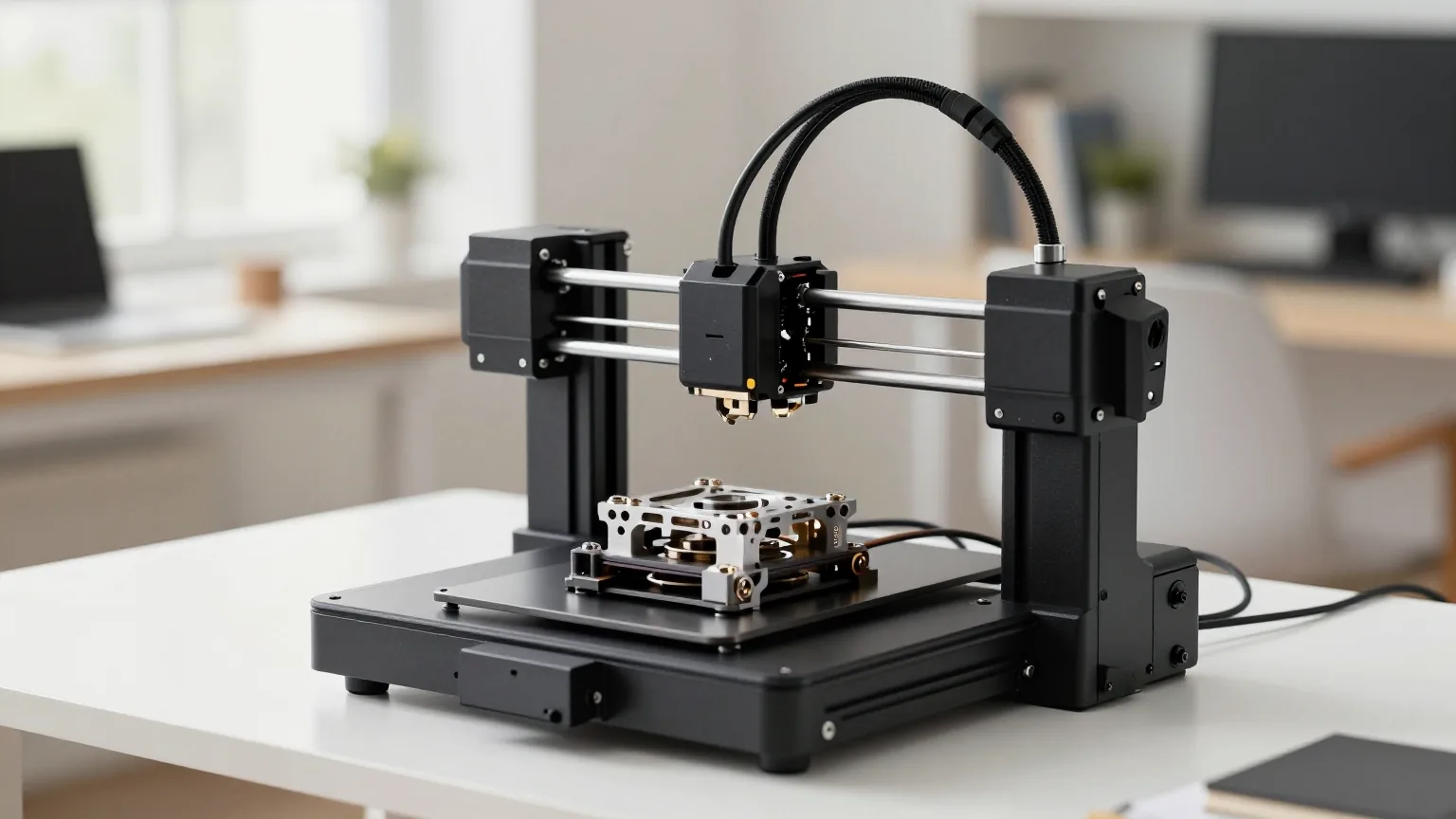
On the other end, we have industrial giants pushing the boundaries of speed and quality. UltiMaker, for example, recently unveiled the Factor 4 Plus, a high-speed industrial 3D printer with automated quality validation [5]. This feature is crucial for industrial adoption, as it ensures that every part meets strict quality standards without manual inspection. Meanwhile, Design News highlights how micro 3D printing is driving real impact in fields like medicine and microelectronics, with a philosophy of "Fail Fast. Mold Smarter." [5].
CoBound HiC fits into this ecosystem as a material innovation that complements these hardware advancements. While UltiMaker focuses on the machine, and Vision Miner focuses on the user experience, Atomik AM and Concr3de are focusing on the material. This triad of machine, material, and process is what defines modern additive manufacturing. You can’t have one without the others. A fast printer is useless if it can’t print the right material. A great material is useless if the printer can’t handle it. CoBound HiC is a testament to this holistic approach.
Cultural and Historical Context: From Pottery to Polymers
It’s interesting to note that the concept of using a binder to hold powder together is not new. It dates back thousands of years to pottery and metal casting. Ancient potters mixed clay with water and sometimes straw or other organic materials to make the clay easier to shape and less likely to crack during drying. The straw acted as a binder, holding the clay together until it was fired and hardened. In a way, the straw was a "sacrificial" binder, much like the polymers in early binder jetting.
However, the evolution from straw to high-carbon binders represents a leap in material science. We have moved from using natural, organic materials to synthetic, high-performance chemicals. This shift mirrors the broader history of materials engineering: from wood and stone to steel and concrete, and now to advanced composites and ceramics. CoBound HiC is the latest chapter in this story, where we are no longer just mimicking nature but enhancing it. We are creating materials that don’t exist in nature, with properties that are optimized for specific human needs.
Challenges and Considerations
Of course, no new technology comes without its challenges. One of the main hurdles for CoBound HiC will be scaling up. Binder jetting is already a complex process, requiring precise control of the binder deposition and the subsequent sintering. Adding a high-carbon binder may require new process parameters, such as different temperatures or atmospheres, to ensure that the carbon integrates properly without creating defects. Manufacturers will need to invest in R&D to optimize these processes.
Another challenge is cost. SiC powder is expensive, and high-carbon binders are likely to be more costly than standard polymer binders. This could limit the adoption of CoBound HiC to high-value applications where the performance benefits justify the higher cost. However, as with all 3D printing technologies, costs are expected to decrease over time as production scales up and competition increases.
There is also the issue of standardization. As new materials like CoBound HiC enter the market, there will be a need for new standards and testing protocols to ensure consistency and reliability. This will require collaboration between material suppliers, printer manufacturers, and end-users to develop best practices and quality assurance guidelines.
The Future of Carbon in Additive Manufacturing
CoBound HiC is just the beginning. It opens the door to a new class of binders that are not just structural aids but functional additives. Imagine binders that add electrical conductivity, or binders that improve biocompatibility for medical implants. The possibilities are vast. As we look toward the future, we can expect to see more material science innovations like this one, where the focus shifts from "what can we print?" to "what can we make?"
This trend is part of a larger movement toward sustainable and high-performance manufacturing. By using carbon as a key ingredient, CoBound HiC aligns with the goal of creating materials that are both durable and environmentally friendly. Carbon is abundant and relatively low-cost, and by using it in a high-value application, we are adding value to a resource that is often associated with pollution. It’s a win-win situation: better parts, and a more efficient use of resources.
Conclusion: A New Era for SiC Parts
In conclusion, the launch of CoBound HiC by Atomik AM and Concr3de is a significant milestone in the history of 3D printing [1]. It represents a shift from additive manufacturing as a method of replication to a method of innovation. By turning the binder into a key ingredient, we are unlocking new possibilities for silicon carbide parts, with potential applications in EVs, aerospace, and semiconductors.
As we continue to navigate the rapidly evolving landscape of 3D printing, it’s important to remember that the real magic isn't in the printer; it’s in the material. CoBound HiC is a reminder that the future of manufacturing lies in the synergy between hardware, software, and chemistry. It’s a reminder that even in a field as established as binder jetting, there is always room for innovation.
So, what should you do with this information? If you’re in the automotive, aerospace, or electronics industries, it’s time to start paying attention to material science innovations like CoBound HiC. Talk to suppliers, experiment with new materials, and think about how these advances could impact your products. If you’re a student or hobbyist, keep an eye on the broader trends in 3D printing, from the Black Friday sales on desktop printers [4] to the high-speed industrial machines [5]. The industry is moving fast, and those who stay informed will be the ones who lead the way.
The future is additive, and it’s looking brighter (and carbon-rich) than ever before. Let’s keep printing.