3D Printing in 2026: How Additive Manufacturing Is Reshaping Global Supply
Imagine a world where the supply chain doesn’t just move boxes from a warehouse to a store, but atoms from a printer to a part. For decades, the global economy ran on the logic of mass production: make a million, ship them halfway across the ocean, and hope they arrive before the trend dies. But in 2026, that model is cracking. It’s not just breaking; it’s being reshaped by a technology that was once confined to hobbyist basements and high-tech labs: 3D printing, or additive manufacturing (AM). Google News [1] and major outlets like CNN [2] have been tracking the accelerating pace of this shift, noting that AM is no longer a niche solution for prototyping but a critical pillar of modern industrial strategy. This isn’t science fiction. It’s the new reality of how goods are made, moved, and maintained in an increasingly volatile global landscape.
As we stand at the tail end of the 2020s, the narrative around 3D printing has fundamentally changed. We are no longer asking, "Can we 3D print this?" We are asking, "Why are we still using traditional subtractive methods for this?" The transition is driven by a perfect storm of material science breakthroughs, software automation, and geopolitical necessity. In this post, we’ll dive deep into how additive manufacturing is rewriting the rules of global supply, exploring the technological leaps, the economic impacts, and the cultural shifts that are defining the industry in 2026.
The Death of the "Minimum Order Quantity"
Let’s start with the most immediate impact: the obliteration of the Minimum Order Quantity (MOQ). In traditional manufacturing, if you wanted to make a custom part, you needed a mold. That mold cost thousands, sometimes millions. Therefore, you had to buy thousands of parts to make the mold pay for itself. If you only needed ten, you were out of luck, or you were stuck with a tiny, expensive batch that took months to produce.
In 2026, that bottleneck is gone. Modern AM processes allow for "digital inventory." Instead of storing physical widgets in a warehouse, companies store the digital files for those widgets. When a customer orders a part, it is printed on demand, often in the same region as the buyer. This shift has decentralized supply chains. According to reports from The Associated Press [3], manufacturers in the automotive and aerospace sectors have reduced their reliance on long-distance shipping by up to 40% for critical components, citing the ability to print parts locally as a key driver. This doesn’t just save money on freight; it saves time. The "just-in-time" model has evolved into "just-in-place," where production happens exactly where the product is needed.
Material Science: Beyond Plastic
If you think 3D printing is still just about plastic figurines and prototypes, you are living in 2015. By 2026, the material palette for additive manufacturing has exploded. We are seeing high-performance metals, carbon composites, and even bio-compatible materials becoming standard in industrial applications.
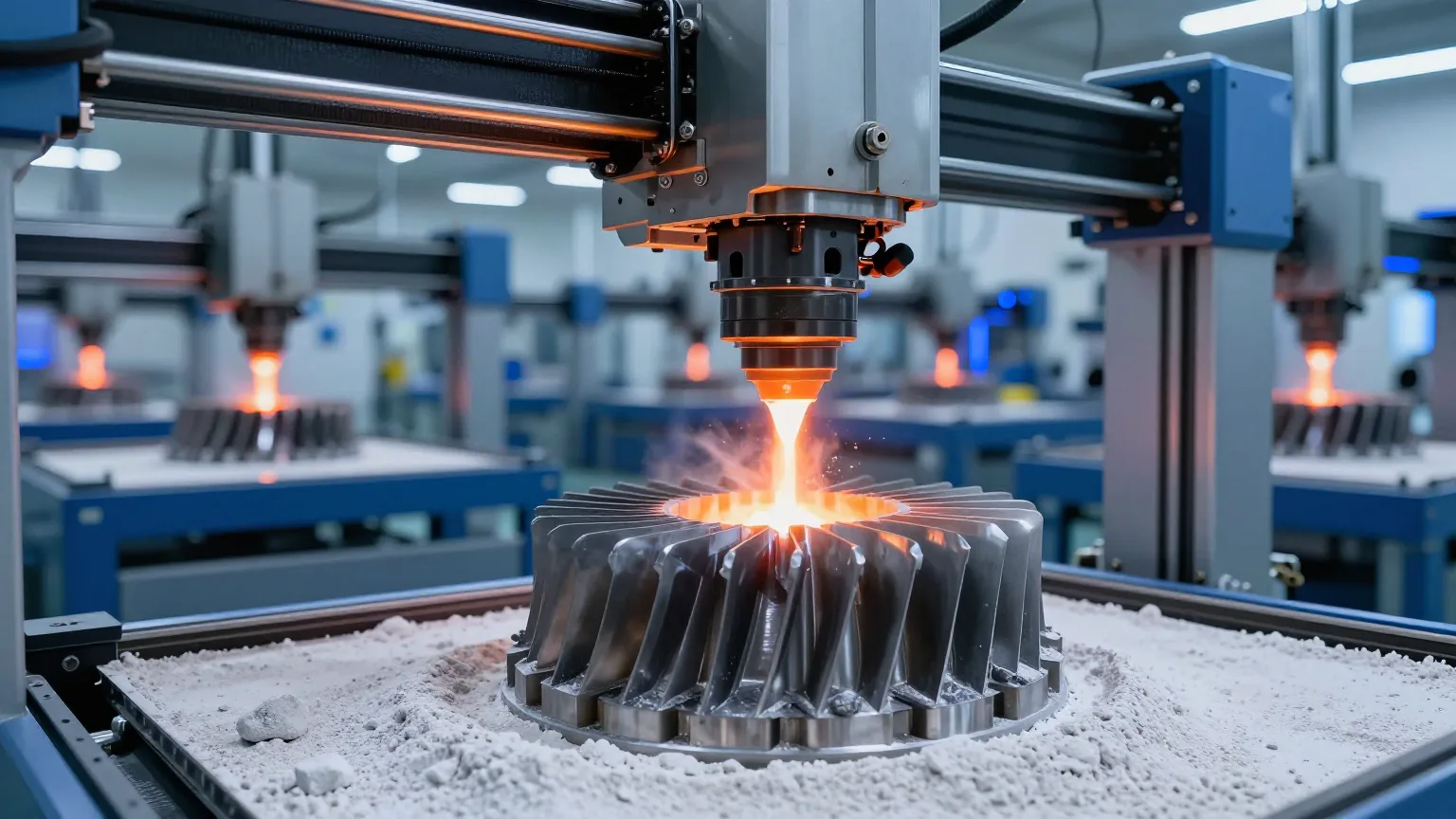
One of the most significant developments is the maturity of metal AM. Techniques like Selective Laser Melting (SLM) and Electron Beam Powder Bed Fusion have become robust enough for end-use parts in harsh environments. These parts are not just strong; they are optimized. Traditional casting often results in parts that are heavier than necessary to ensure structural integrity. AM allows for "topology optimization," where software designs a part with material only where stress is applied, creating lattice structures that are incredibly strong yet surprisingly light. ABC News [4] has highlighted several case studies where aerospace companies have replaced solid titanium brackets with AM lattice structures, reducing weight by over 30% without compromising safety. This is a game-changer for industries where every gram counts, from rocket launches to commercial aviation.
Furthermore, the development of multi-material printing has moved from lab curiosities to commercial reality. Machines can now switch between materials mid-print, allowing for parts with different properties in different sections. Imagine a turbine blade with a heat-resistant core and a wear-resistant tip, printed in a single continuous process. This level of complexity was previously impossible without joining multiple parts, introducing potential failure points at the joints.
Geopolitics and the Resilience of Local Production
The global supply chain of the early 2020s was a fragile web, vulnerable to pandemics, port strikes, and geopolitical tensions. The lessons of those disruptions have been deeply etched into the minds of CEOs and supply chain directors. In 2026, the push for "friend-shoring" and near-shoring is at an all-time high. 3D printing is the perfect tool for this strategy.
Because AM equipment is relatively compact compared to traditional factory lines, companies can set up production hubs in strategic locations. A company with headquarters in Germany can have a small AM facility in Mexico to serve its North American customers, or in Poland to serve the European market. This reduces exposure to cross-border risks. Al Jazeera [5] has noted the growing interest in AM among emerging economies, which are using the technology to leapfrog traditional industrialization phases. By building local manufacturing capabilities, these nations can reduce their dependence on imported finished goods, fostering economic sovereignty.
This shift is not just about efficiency; it’s about security. In critical sectors like defense and healthcare, the ability to produce essential parts locally is a matter of national security. Governments are increasingly investing in AM infrastructure to ensure that critical components, from medical implants to military hardware, can be produced domestically in times of crisis. The concept of "strategic autonomy" has become a buzzword in industrial policy, and 3D printing is central to achieving it.
The Green Revolution: Waste Reduction and Energy Efficiency
Sustainability is no longer a nice-to-have; it’s a regulatory requirement and a consumer demand. Traditional manufacturing is inherently wasteful. In machining, you start with a solid block of metal and cut away everything you don’t need. Up to 80% of the material can end up as scrap. In injection molding, you have to create expensive molds, and any change in design requires new molds, often leading to obsolete inventory.
AM is, by definition, additive. You only use the material that ends up in the final part. This results in significantly less waste. Moreover, AM parts are often lighter due to their optimized geometry, which translates to lower energy consumption in use. For example, a lighter car uses less fuel or electricity to move. A lighter airplane consumes less fuel per mile. CNN [2] has reported on studies showing that the total carbon footprint of AM-produced parts can be lower than traditionally manufactured parts, especially when the reduction in transportation distance is factored in. While the energy cost of printing a part is still higher than mass-producing it, the lifecycle analysis often favors AM, particularly for high-value, low-volume items.
Additionally, the ability to repair rather than replace is a major sustainability win. Instead of scrapping a large, expensive machine because one small gear broke, you can print a replacement gear and install it. This extends the life of assets and reduces the demand for new raw materials. This "circular economy" aspect of AM is gaining traction as companies strive to meet net-zero goals.
Healthcare: Personalized Medicine on Demand
Nowhere is the impact of 3D printing more profound than in healthcare. In 2026, patient-specific implants and surgical guides are becoming routine. Every human body is unique. A standard off-the-shelf hip implant might fit 90% of patients, but for the other 10%, it’s a compromise. AM allows doctors to print implants based on a patient’s specific CT scan data. The result is a perfect fit, leading to faster recovery times and better long-term outcomes.
Beyond implants, AM is transforming drug delivery. Researchers are developing 3D-printed pills with complex geometries that control the release of medication over time. A single pill can contain multiple layers of different drugs, each designed to dissolve at a specific rate, ensuring the patient gets the right dose at the right time. This level of precision pharmacology was previously unattainable. The Associated Press [3] has covered several clinical trials where 3D-printed drugs showed improved efficacy and fewer side effects compared to traditional formulations.
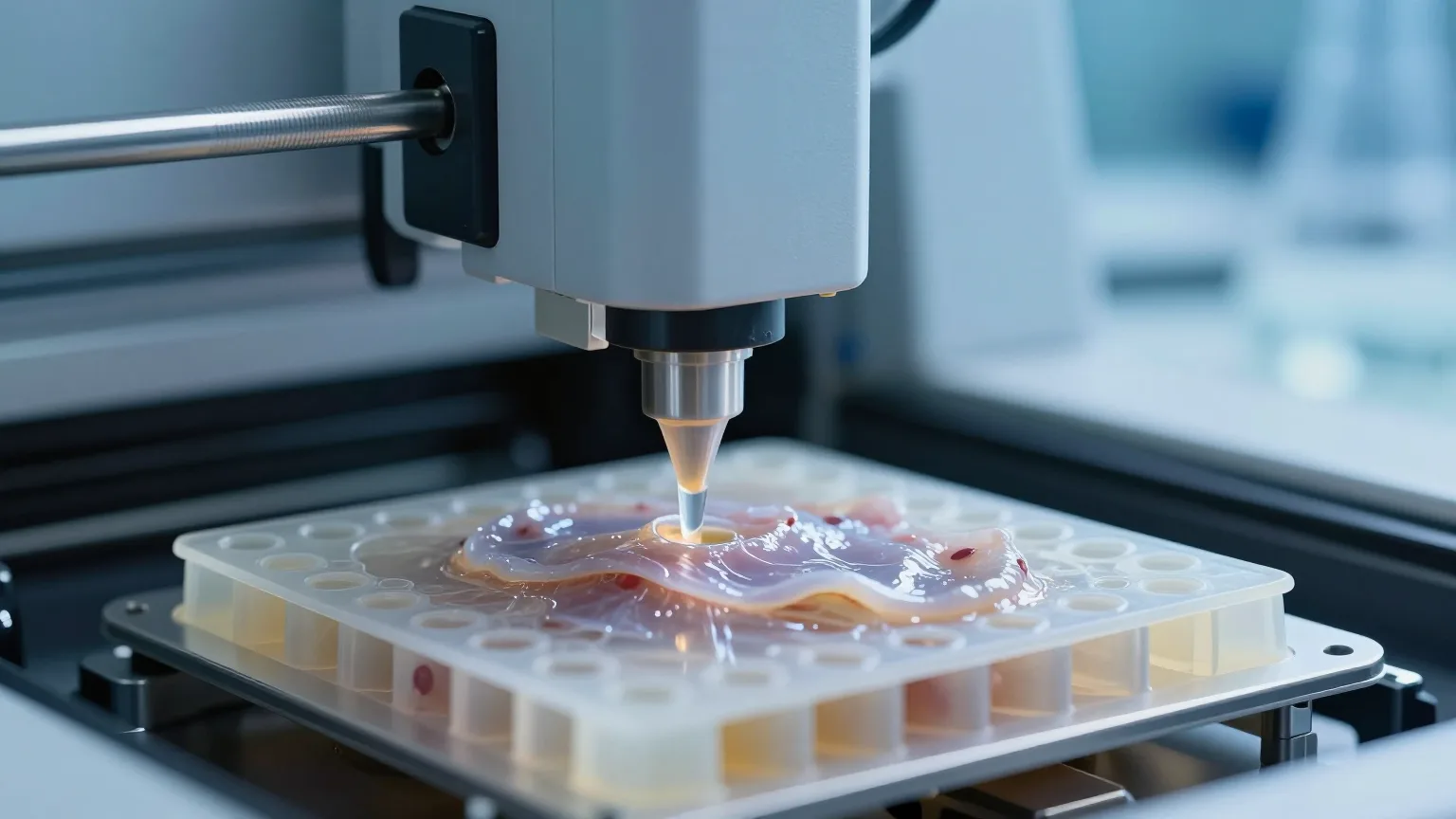
The potential for bioprinting, while still in its early stages, is also accelerating. Scientists are working on printing living tissues and organs using a patient’s own cells. While we are not yet at the stage of printing a full human kidney for transplant, the technology is being used to create tissue models for drug testing. This could revolutionize how new drugs are developed, reducing the need for animal testing and speeding up the approval process.
Education and the Democratization of Design
The cultural impact of 3D printing is perhaps less visible but equally significant. It has democratized design and engineering. In 2026, 3D printers are standard equipment in schools, universities, and community centers. Students are learning to design and manufacture their own solutions from a young age. This shift in education is fostering a generation of "maker-thinkers" who are comfortable with both digital tools and physical creation.
This democratization is also empowering small businesses and entrepreneurs. The barrier to entry for manufacturing has never been lower. A small team of designers can create a product, test it with a 3D printer, and launch it to market without needing a factory. This has led to a boom in niche, customized products that would have been unviable under the mass production model. From custom phone cases to bespoke furniture, the market is filled with unique, personalized items that reflect the growing consumer desire for individuality.
The Role of AI and Automation
One of the biggest hurdles to the widespread adoption of AM was the complexity of the process. Setting up a print job, monitoring the process, and post-processing the part required skilled technicians. In 2026, artificial intelligence and automation are changing that. AI algorithms can now optimize print parameters in real-time, adjusting laser power and speed to prevent defects. Machine learning models can predict when a printer is likely to fail, allowing for proactive maintenance.
Moreover, robotic arms are increasingly being used for post-processing. Removing support structures, sanding surfaces, and inspecting parts for quality are tasks that are being automated. This reduces the labor cost and time associated with AM, making it more competitive with traditional manufacturing. The integration of AI and AM is creating a new class of "smart factories" where production is highly flexible and responsive to demand. ABC News [4] has highlighted several startups that are leveraging these technologies to offer "printing-as-a-service" platforms, where customers can upload a file and receive a finished part within days, with minimal human intervention.
Challenges and Limitations
It would be dishonest to present 3D printing as a panacea. There are still significant challenges. One of the biggest is speed. While AM is getting faster, it is still slower than mass production methods like injection molding for high-volume items. If you need a million plastic bottle caps, you are still better off using injection molding. AM excels in low-volume, high-complexity applications.
Another challenge is the cost of materials. While the cost of metal powders and high-performance resins has decreased, they are still more expensive than traditional raw materials. This limits the application of AM to high-value products. Additionally, there are intellectual property concerns. The digital nature of AM files makes them easy to copy and distribute, raising questions about piracy and patent infringement. Companies are investing heavily in secure file management and digital rights management to protect their designs.
There are also environmental concerns regarding the energy consumption of AM machines and the difficulty of recycling some of the materials used. The industry is working on developing more sustainable materials and energy-efficient processes, but this is an ongoing challenge.
The Future: Beyond Manufacturing
As we look beyond 2026, the potential of additive manufacturing seems boundless. We are moving beyond just printing parts; we are printing systems. Imagine a car where the entire chassis, engine block, and transmission are printed in a single, integrated process, eliminating the need for assembly. This could lead to vehicles that are lighter, stronger, and cheaper to produce.
We are also seeing the rise of "distributed manufacturing," where a network of small AM facilities around the world can coordinate to produce complex products. A car might have its chassis printed in one country, its engine in another, and its interior in a third, all coordinated by a central digital platform. This level of flexibility and efficiency is unprecedented.
In the space sector, AM is enabling the construction of infrastructure on the moon and Mars. NASA and other space agencies are developing AM machines that can use local regolith (soil) to print building materials. This will be essential for establishing permanent human presence on other planets. The technology that is reshaping our supply chains on Earth is also preparing us for life off-planet.
Conclusion: The Call to Action
The story of 3D printing in 2026 is not just about a new manufacturing technology. It’s about a fundamental shift in how we think about production, supply, and value. It’s about moving from a world of scarcity and standardization to one of abundance and customization. It’s about empowering individuals, communities, and nations to take control of their own production capabilities.
For businesses, the message is clear: ignore AM at your peril. Whether you are in manufacturing, healthcare, aerospace, or consumer goods, there is likely a place for additive manufacturing in your value chain. Start small. Prototype a part. Test a material. Integrate a printer into your workflow. The learning curve is steep, but the rewards are significant.
For policymakers, the message is to support the development of AM infrastructure and workforce. Invest in education. Fund research into new materials and processes. Create regulations that encourage innovation while protecting safety and IP.
And for you, the reader, the message is to stay curious. The world is changing rapidly, and 3D printing is at the forefront of that change. Explore the technology. Learn about it. Share your ideas. The future is being printed, one layer at a time. And it looks better than we ever imagined.
So, what’s your take? Do you see 3D printing as a niche tool or a global revolution? Let us know in the comments. And if you found this post informative, share it with your network. The more we talk about this, the faster the future arrives.