AI-Driven Design and Low-Waste Color: 2026's Hottest 3D Printing Trends
The End of the "One-Size-Fits-All" Era: Welcome to the 2026 3D Printing Revolution
Remember when 3D printing was mostly about patience? You would feed a long, stringy filament into a machine, watch it sputter and click for eight hours, and pray that the bridge didn’t collapse. If it did, you were left with a lumpy plastic blob that you either threw away or kept as a sad paperweight in your desk drawer. That era is officially over. In 2026, the additive manufacturing landscape has shifted from "can we make this?" to "how smart and sustainable can we make this?"
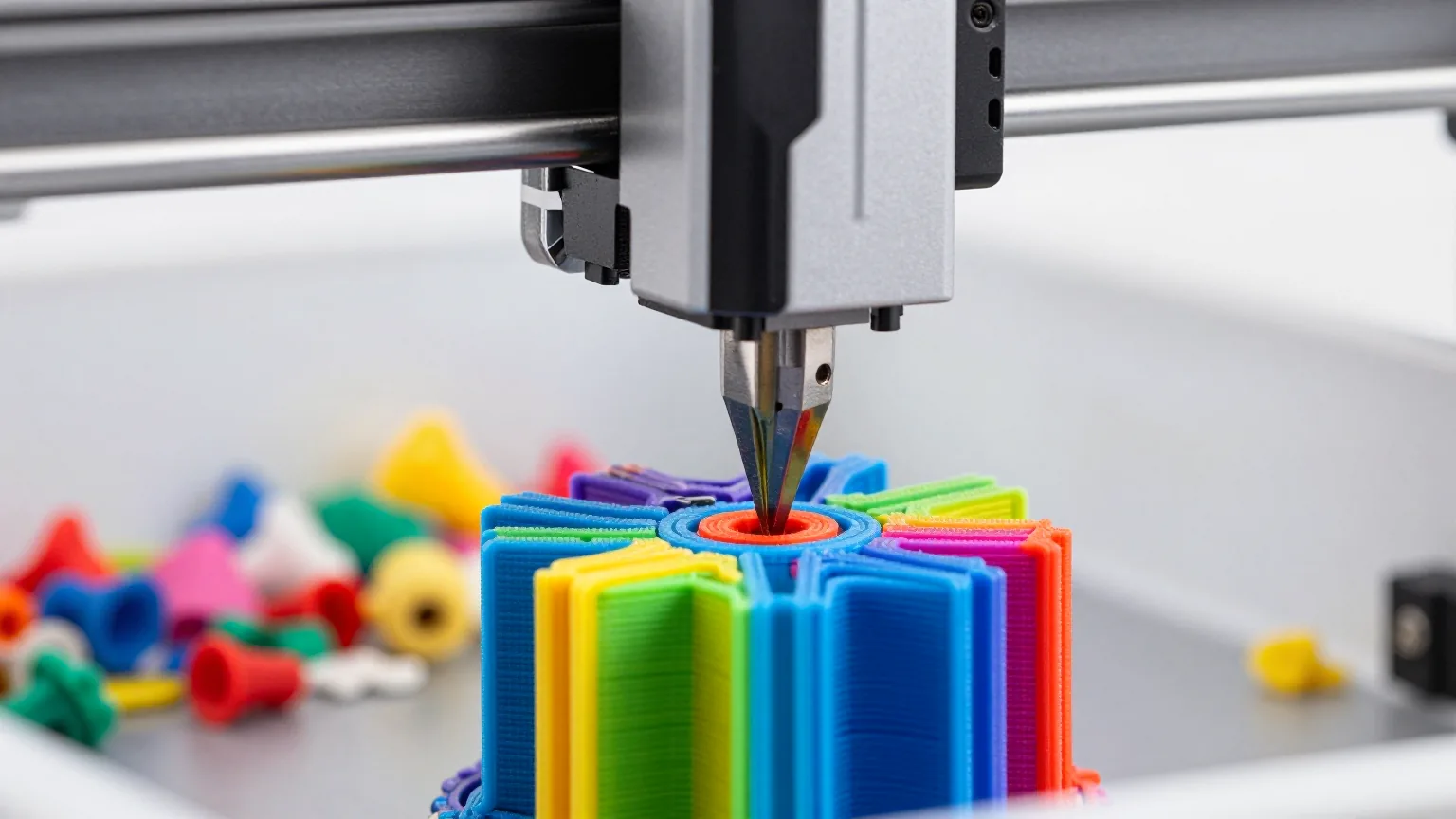
Two trends are dominating the conversation in design studios, maker spaces, and industrial floors alike: AI-driven design optimization and low-waste multicolor printing. These aren't just incremental upgrades; they are fundamental shifts in how we conceptualize and execute physical objects. The intersection of artificial intelligence and material science is creating a new breed of 3D printing that is faster, smarter, and significantly less wasteful. It is a time where the digital twin is as important as the physical object, and where the color of your print is no longer a compromise but a feature.
Let’s dive into what is actually happening in the industry this year, separating the hype from the reality, and looking at how these technologies are reshaping the way we create.
The AI Co-Pilot: From Prompt to Print
The most visible change in 2026 is the integration of generative AI directly into the design pipeline. We are no longer just using AI to slice files; we are using it to generate the geometry itself. Recent innovations highlight a move toward "AI-assisted design," where users can describe the function of a part, and the software suggests multiple geometric solutions that meet those criteria [2].
This is a massive departure from traditional CAD workflows. In the past, a designer had to manually extrude, revolve, and fillet every feature. Today, AI models trained on millions of successful print files can predict which shapes will print successfully on specific machines. If you ask an AI to "design a lightweight bracket that can hold 5kg," it doesn't just give you a box with holes. It generates organic, lattice-like structures that mimic natural growth patterns, ensuring material is only used where stress requires it.
For the average maker, this means the barrier to entry for complex geometry has dropped significantly. You don't need to be a master of parametric modeling to create a part that looks like it belongs in a sci-fi movie. The AI handles the math; you handle the intent. As industry experts note, this shift is moving 3D printing from a tool for replication to a tool for invention [3].
Generative Topology: Nature’s Algorithm in Plastic
At the heart of AI-driven design is a technique known as generative topology optimization. While the term sounds academic, the results are visually striking. The AI calculates the path of force through a part and removes any material that isn't structurally necessary. The result is often a part that looks alien—filled with intricate, web-like lattices that would be impossible to design by hand.
Historically, 3D printing was limited to "additive" in the sense that we added material to a base. Now, the AI is acting as a subtractive mind within an additive process. It decides what not to print. This has profound implications for weight reduction. In aerospace and automotive applications, this means parts that are 30-50% lighter than their traditionally machined counterparts without losing strength [4].
But it’s not just about big industry. Hobbyists are using these AI tools to create personalized prosthetics, jewelry, and architectural models. The cultural shift here is interesting: we are moving away from the "perfect box" aesthetic of the early 2010s toward an aesthetic of efficiency and organic complexity. The "ugly" lattice structure is now seen as a badge of engineering integrity. It says, "This part is exactly as strong as it needs to be, and no stronger."
The Color Revolution: Beyond Single-Color Monotony
For years, the primary complaint about FDM (Fused Deposition Modeling) 3D printing was its lack of color fidelity. You could print in red, or you could print in blue, but mixing them was a nightmare of clogging nozzles and cleaning towers. In 2026, that pain point has largely been solved by the rise of low-waste multicolor systems.
Earlier multicolor printing technologies required a "cleaning tower"—a structure that the printer had to print after every color change to purge the old ink from the nozzle. This could consume up to 30-40% of the total filament in a multi-color print. It was wasteful, expensive, and slow. The latest innovations in 2026 focus on "low-waste multicolor printing," utilizing advanced purge management algorithms and specialized nozzle designs that minimize the volume of material needed for transitions [2].
This technological leap has changed the economic equation. Printing a full-color prototype is now feasible for small businesses and individuals. You no longer need to paint your prints to achieve a professional finish. The color is baked in. This is a cultural shift as well. We are moving toward a world where the digital model and the physical object are identical in appearance, not just in geometry. The "WYSIWYG" (What You See Is What You Get) principle is finally becoming true for 3D printing.
Material Science Meets AI: Predictive Printing
AI isn't just designing the shape; it’s understanding the material. One of the hottest trends in 2026 is the use of AI to monitor print quality in real-time. Cameras and sensors on the printer feed data to an AI model that can detect warping, layer delamination, or stringing before they become critical failures [4].
If the AI detects that a layer is starting to lift from the build plate, it can automatically adjust the temperature, increase the fan speed, or even pause the print to allow for manual intervention. This is a huge win for reliability. In the early days of 3D printing, a failed print meant starting over from scratch, wasting hours of time and kilograms of filament. Now, the machine is self-correcting.
This predictive capability extends to material selection as well. AI tools can analyze your design and recommend the best filament or resin based on the desired mechanical properties. For example, if you are designing a part that needs to withstand UV exposure, the AI might suggest a specific PETG blend or a UV-stable resin, rather than letting you default to standard PLA which might degrade quickly. This democratizes materials science, allowing non-experts to make informed choices about durability and performance.
Sustainability: The Anti-Waste Movement
Let’s talk about the elephant in the room: sustainability. 3D printing has long been marketed as a "green" technology because it is additive and produces less waste than subtractive manufacturing (like CNC machining). However, the reality was often more nuanced. Failed prints, support structures, and cleaning towers generated a significant amount of plastic waste.
In 2026, the focus has shifted to "closed-loop" sustainability. AI-driven design minimizes the need for support structures by optimizing geometry for printability. If the AI knows that a 45-degree overhang can be printed without support on a specific printer, it will design the part that way. This reduces the amount of non-functional plastic that needs to be removed and discarded [2].
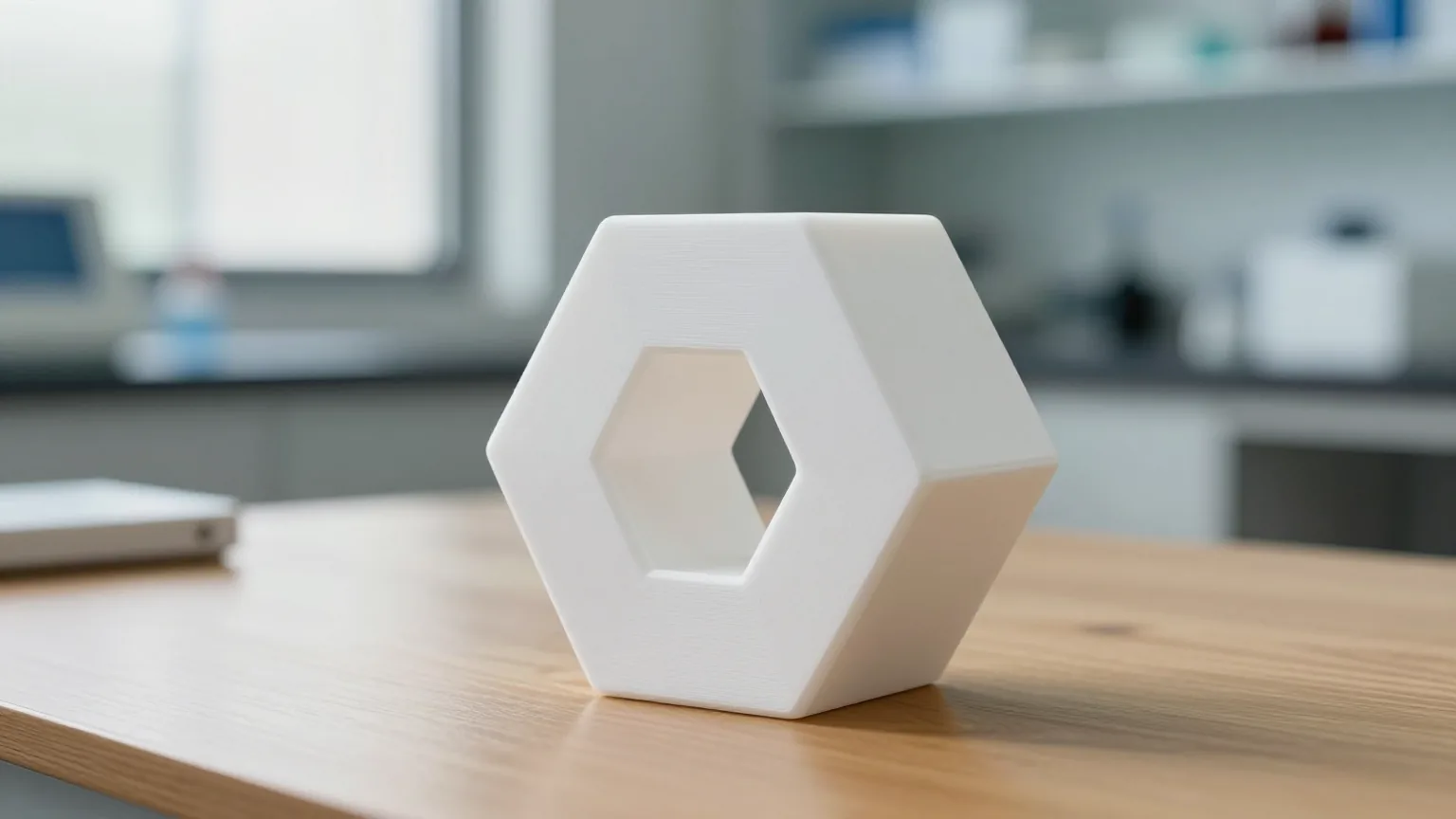
Furthermore, the low-waste multicolor systems mentioned earlier contribute to this goal. By reducing the volume of purged material, these systems save filament. Some manufacturers are now introducing "recycled" filaments that are compatible with these new high-precision nozzles, allowing makers to print with post-consumer waste materials without sacrificing quality. The narrative is changing from "3D printing creates waste" to "3D printing optimizes material usage."
Industrial Applications: From Prototyping to Production
While hobbyists are playing with AI and color, the industrial sector is leveraging these trends for mass customization. In 2026, we are seeing a blur between prototyping and production. The same AI tools that help a hobbyist design a cool phone case are being used by automotive companies to design lightweight interior components.
Consider the automotive industry. Traditionally, every car model had the same door handle shape, just in different colors. With AI-driven design and low-waste multicolor printing, manufacturers can now create door handles that are tailored to the specific body panel of each car model, printed in the exact color of the car, with zero painting required. This reduces the supply chain complexity and the environmental impact of painting processes [3].
Similarly, in healthcare, AI is being used to design patient-specific implants. The AI analyzes a patient's CT scan and generates a lattice structure that matches the patient's bone density. This implant is then printed using biocompatible materials. The result is a faster healing time and a lower risk of rejection. This is not science fiction; it is happening in clinics around the world today [4].
The Democratization of Complex Design
One of the most profound impacts of AI in 3D printing is the lowering of the skill barrier. In the past, creating a complex, functional part required years of engineering training. Now, a student, a hobbyist, or a small business owner can use AI tools to generate high-quality designs in minutes.
This is leading to a cultural shift in design education. We are seeing a move away from teaching students how to use specific CAD software commands, and toward teaching them how to define problems and evaluate AI-generated solutions. The designer’s role is shifting from "creator" to "curator." You don't draw the lines; you define the constraints and let the AI propose the solution. You then curate the best option, adjusting parameters as needed.
This democratization is empowering new voices in design. Artists who may not have strong technical skills can now create intricate, functional sculptures. Architects can test complex facade designs in real-time. The barrier to entry for high-end design is disappearing, leading to a more diverse and innovative output in the physical world.
Challenges and Limitations: The Reality Check
It would be irresponsible to paint an overly rosy picture. While the trends are exciting, there are still challenges. AI-generated designs can sometimes be difficult to interpret or modify. If the AI gives you a "black box" of a part, it can be hard to understand why it made certain design choices. This "explainability" problem is a significant hurdle for engineers who need to certify parts for safety-critical applications [2].
Additionally, while low-waste multicolor printing is better, it is still more expensive than single-color printing. The nozzles are more complex, the materials are more specialized, and the print times are often longer. For high-volume production of simple parts, traditional single-color FDM or injection molding may still be more cost-effective. The sweet spot for these new technologies is in low-volume, high-value, or highly customized applications.
There is also the issue of data privacy. If you are using cloud-based AI tools to generate designs, your proprietary design data is being uploaded to a server. For companies with strict IP protections, this can be a concern. Local, on-premise AI models are becoming more common, but they require more powerful hardware, which adds to the cost of entry.
Looking Ahead: The Next Horizon
As we look beyond 2026, the trajectory is clear. We are moving toward a world where 3D printing is invisible. The technology will be so integrated into the design and manufacturing process that we won't think of it as a separate step. You will design a product in a virtual environment, the AI will optimize it for manufacturing, and the printer will produce it with the correct materials and colors, all with minimal human intervention.
We are also likely to see the rise of "multi-material" printing, where different materials with different properties (e.g., hard plastic and flexible rubber) are printed in a single run. This will be driven by AI, which will know exactly which material to place where to achieve the desired function. Imagine printing a phone case with a hard back and a flexible bumper in one go, without any assembly required.
The cultural impact will continue to grow. As 3D printing becomes more accessible and capable, we will see a new generation of "maker-citizens" who can solve their own problems by designing and printing their own solutions. From replacement parts for broken appliances to custom tools for DIY projects, the power to create is shifting from the factory floor to the living room.
Conclusion: Embrace the Change
The 2026 3D printing landscape is defined by intelligence and efficiency. AI-driven design allows us to create parts that are lighter, stronger, and more complex than ever before. Low-waste multicolor printing allows us to create parts that are beautiful and functional, without the environmental penalty of post-processing. Together, these trends are transforming 3D printing from a niche hobby into a mainstream manufacturing technology.
For those in the industry, the message is clear: you need to adapt. Learning how to use AI tools is no longer optional; it is essential. Understanding material science and sustainability is no longer a bonus; it is a requirement. The future belongs to those who can harness the power of AI to create better, faster, and greener products.
So, what should you do next? If you are a maker, start experimenting with AI-assisted design tools. Don't be afraid to let the software surprise you. If you are a business, look into how multicolor printing can enhance your product line and reduce waste. And if you are a student, focus on learning how to work with AI, not just how to use CAD software.
The revolution is here. It is quiet, it is efficient, and it is colorful. Are you ready to join in? The only thing left to do is to start printing.