AI and Low-Waste Multicolor: 3D Printing's 2026 Tech Shift
From Single-Color Monotony to AI-Driven Spectacles: The 2026 3D Printing Revolution
If you think 3D printing is just about turning your desk into a graveyard of white plastic prototypes, you are living in the past. In fact, you might be living in the past decade. The landscape of additive manufacturing has undergone a seismic shift, and by 2026, the technology has moved far beyond the realm of "hacker tool" to become a sophisticated, intelligent, and sustainable production force. The air is no longer thick with the smell of melted ABS; it is charged with the potential of photopolymerized precision and algorithmic creativity. Two specific trends are dominating the headlines and the maker communities this year: the deep integration of Artificial Intelligence (AI) into the design and printing workflow, and the maturation of low-waste multicolor printing technologies. Together, these two forces are defining the "2026 Tech Shift," marking a transition from 3D printing as a hobbyist curiosity to a viable, high-fidelity industrial standard [2].
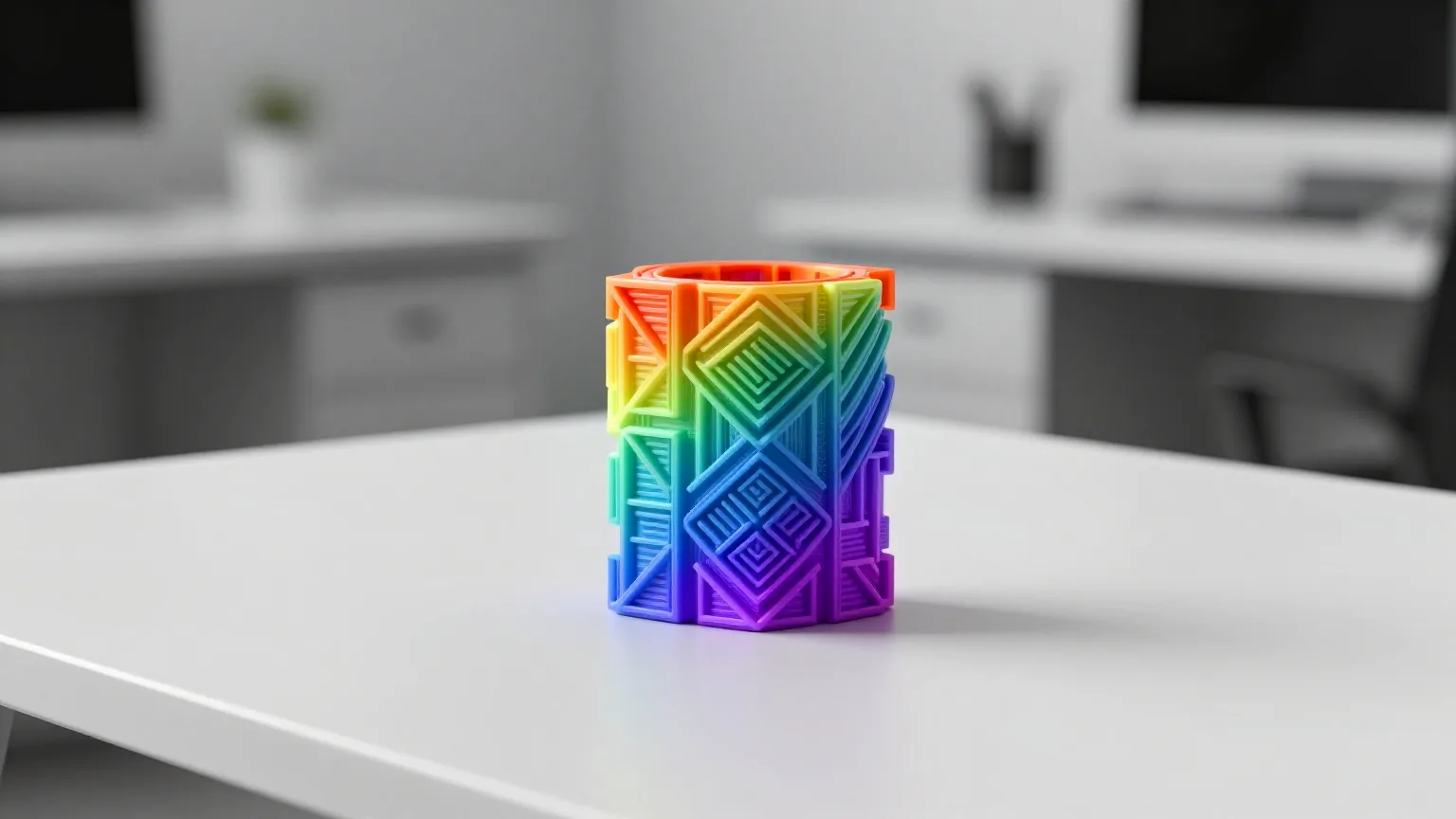
For years, the conversation around 3D printing was dominated by speed and material cost. We asked, "How fast can it print?" and "How much does the filament cost?" Today, the questions have evolved. We now ask, "How smart is the printer?" and "How little waste does it generate?" This blog post dives deep into these two pillars of the modern 3D printing revolution, exploring how AI is rewriting the rules of design and how new hardware is making multicolor printing not just possible, but efficient and economically viable. Whether you are a seasoned maker, an industrial engineer, or a curious observer of technology, understanding this shift is essential to navigating the future of manufacturing [6].
The Historical Echo: From Chuck Hull to Neural Networks
To appreciate the magnitude of the 2026 AI integration, we must look back at the origins of the technology. Stereolithography (SLA), the first 3D printing technology, was imagined in 1984 by American engineer Chuck Hull, who later founded 3D Systems [4]. Hull’s invention was a breakthrough in photopolymerization, using UV light to cure liquid resin into solid objects. For decades, this technology remained largely static in its core mechanics. We refined the lasers, we improved the resins, and we made the machines faster, but the fundamental interaction between the user and the machine remained manual. You designed a model in CAD software, you sliced it, and you prayed the print didn’t fail.
That manual dependency is what AI is dismantling. The 2026 shift represents a full-circle moment. Where early 3D printing required a human to understand the physics of layer adhesion and material behavior, modern AI systems now understand these physics better than most humans. This isn't just about automating tasks; it’s about augmenting human creativity with computational intelligence. The jump from the 1980s to the 2020s is not merely a matter of time; it is a change in the nature of the relationship between the designer and the digital fabricator [1]. We have moved from a world where we command the machine to a world where the machine collaborates with us, predicting failures before they happen and optimizing geometries in ways that defy human intuition.
AI-Assisted Design: The End of Manual Slicing
One of the most significant innovations highlighted in the 2026 landscape is AI-assisted design [2]. For years, the "slicing" process—the conversion of a 3D model into layer-by-layer instructions for the printer—was a tedious, trial-and-error exercise. Users would tweak infill percentages, adjust support structures, and modify layer heights, often spending more time on the software settings than on the design itself. In 2026, this pain point has been largely eliminated by AI-driven slicing algorithms.
Modern AI tools can now analyze a 3D model and automatically determine the optimal print parameters. They can predict where warping is likely to occur, where supports are absolutely necessary, and where the material can be saved without compromising structural integrity. This is not just a convenience feature; it is a productivity revolution. For professional shops and hobbyists alike, this means that the time spent on setup is reduced by up to 50%, allowing for more iterations and faster time-to-market for new products [6]. The AI doesn't just follow rules; it learns from millions of previous print outcomes to suggest settings that have a high probability of success. This "predictive reliability" is a game-changer for industries where downtime is expensive, such as aerospace prototyping and medical device manufacturing [3].
Generative Design: Letting the Algorithm Dream
While AI-assisted slicing optimizes the process, generative AI is transforming the design phase itself. In 2026, we are seeing a proliferation of tools that allow users to generate complex, organic geometries from simple text prompts or basic constraints. Imagine asking an AI to "design a bracket that can withstand 500 Newtons of force using the minimum amount of material." The AI will generate dozens of potential solutions, often featuring lattice structures and curved surfaces that would be nearly impossible to design by hand [2].
This capability bridges the gap between engineering requirements and aesthetic possibilities. The resulting designs are not only lighter and stronger but also visually striking, often resembling natural forms like bone or coral. This has cultural implications as well. The "machine aesthetic" is no longer about sharp, industrial edges; it is about the fluid, complex beauty of algorithmic generation. Designers are now acting less as artists drawing every line and more as curators, selecting the best output from the AI’s vast creative space. This shift is lowering the barrier to entry for complex engineering, allowing even small startups to compete with large corporations in terms of design sophistication [5].
Intelligent Monitoring: The Eyes That Never Close
Another critical aspect of the AI shift is real-time monitoring. Print failures have always been a source of frustration and waste. A clogged nozzle, a layer shift, or a power surge could ruin a print that has been running for 20 hours. In 2026, AI-powered cameras and sensors are standard features in high-end printers. These systems use computer vision to monitor the print in real-time, detecting anomalies such as spaghetti (where the print detaches from the bed) or bridging failures [6].
If an issue is detected, the printer can pause, attempt to correct the error, or alert the user via a mobile app. Some advanced systems can even adjust the print parameters on the fly to compensate for environmental changes, such as fluctuations in room temperature or humidity. This level of autonomy means that printers can run unattended for extended periods, significantly increasing throughput. For makers who run multiple printers simultaneously, this "set it and forget it" capability is invaluable. It turns 3D printing from a hands-on hobby into a hands-off production line, a crucial step for the technology to be taken seriously in industrial settings [3].
The Multicolor Dilemma: A History of Color
Let’s pivot to the second major pillar of the 2026 tech shift: multicolor printing. For a long time, adding color to a 3D print was a major hassle. In FDM (Fused Deposition Modeling) technology, changing colors required purging the nozzle, which resulted in a significant amount of waste. You would have to print a "purge tower" to clear the previous color from the extruder before starting the new one. This waste was not just an environmental concern; it was a financial one. If you were printing a large object with many color changes, the cost of the wasted filament could be substantial [2].
Resin printing offered a cleaner alternative, as color was determined by the resin used, but switching resins required cleaning the vat and changing the resin, which was also a tedious and messy process. However, the landscape has changed dramatically in recent years. The introduction of specialized multicolor FDM systems and improved resin workflows has made color integration much more seamless. But the 2026 innovation that is truly turning heads is the development of low-waste multicolor technologies that minimize or eliminate the need for purge towers [2].
Low-Waste Multicolor: The Technical Breakthrough
So, how are we achieving low-waste multicolor printing? The answer lies in a combination of hardware innovation and software optimization. Newer FDM printers feature dual or multi-extruder systems with independent heaters and nozzles, allowing for instant color changes without purging. This is a significant hardware advancement, but it is the software that truly makes the difference. AI-driven slicing software can now optimize the print path to minimize the number of color changes. It groups objects of the same color together, prints them in a specific order, and manages the toolpath to ensure that the nozzle is always in the optimal position for the next color [6].
Furthermore, some systems use a "pigment mixing" approach, where the printer mixes small amounts of different colored filaments to create the desired shade. This allows for a much wider range of colors without the need for a separate spool for each one. The result is a significant reduction in material waste. Studies have shown that these new systems can reduce waste by up to 80% compared to traditional multicolor printing methods [2]. This is not just a minor improvement; it is a fundamental change in the economics of color printing. It makes multicolor printing accessible to a wider range of users, from hobbyists to small businesses, who previously could not afford the cost of the wasted material.
Sustainability: The Green Face of 3D Printing
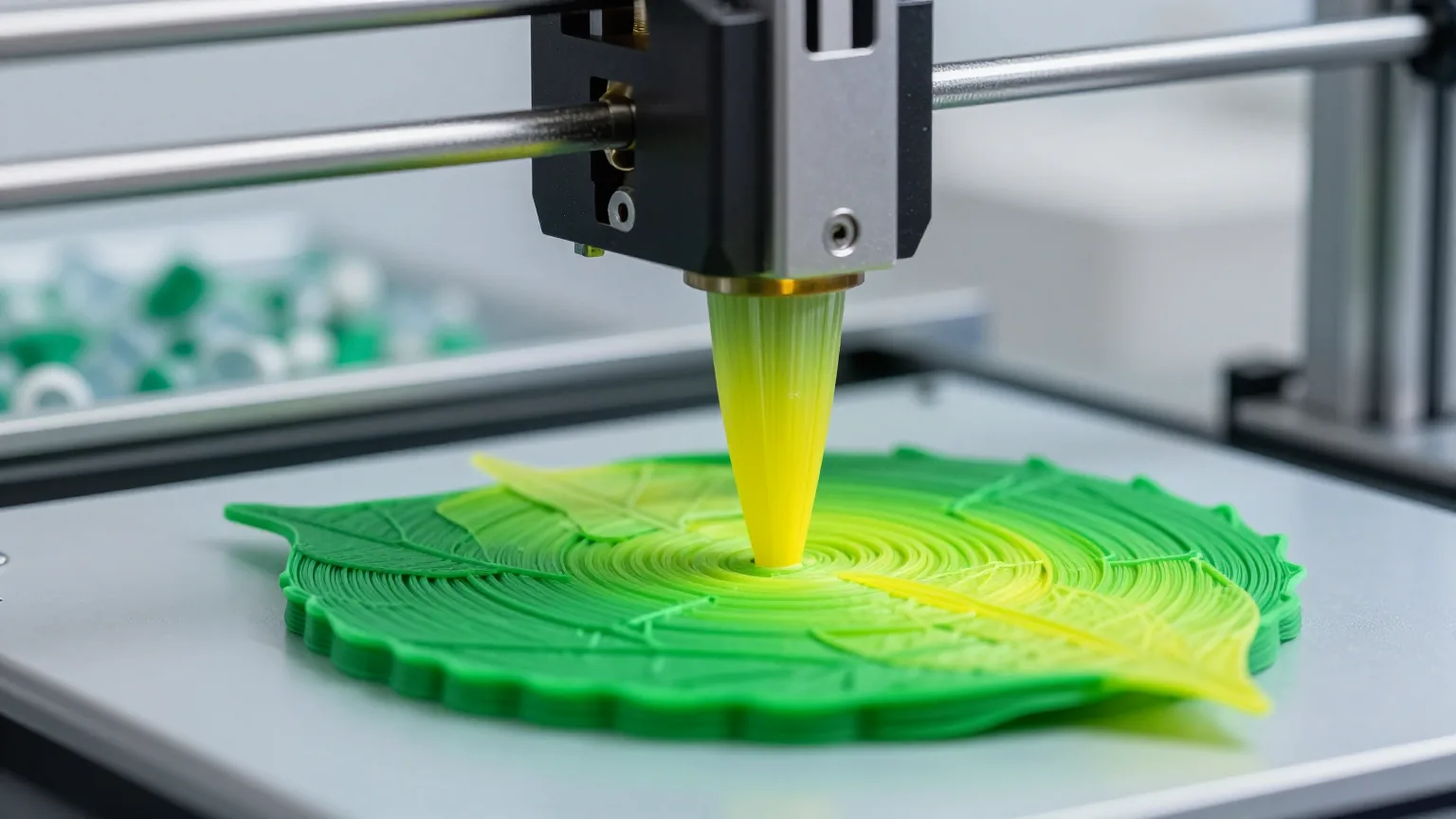
The reduction in waste is not just an economic benefit; it is an environmental one. 3D printing has long been touted as a sustainable manufacturing technology because it is additive, meaning it builds objects by adding material rather than subtracting it (as in CNC machining). However, the reality was often more nuanced. The energy consumption of 3D printers, the use of toxic resins, and the waste from failed prints and purge towers all contributed to a less-than-green footprint. In 2026, the focus on low-waste multicolor printing is helping to address this criticism [2].
By minimizing waste, 3D printing is becoming a genuinely sustainable technology. This is particularly important in industries where sustainability is a key concern, such as fashion, packaging, and consumer electronics. Companies are now using 3D printing to create products with a smaller environmental impact, and the ability to print in multiple colors without waste is a major selling point. It allows for the creation of complex, multi-material products that would be difficult or impossible to produce using traditional manufacturing methods. For example, a single 3D-printed object can combine rigid and flexible materials, or multiple colors, in a way that is both functional and aesthetically pleasing [5].
Industrial Applications: Beyond the Hobbyist
The combination of AI and low-waste multicolor printing is having a profound impact on industrial applications. In the automotive industry, for example, 3D printing is being used to create lightweight, complex parts that are both functional and visually appealing. The use of AI allows for the optimization of these parts, ensuring that they are as strong and light as possible, while the multicolor capability allows for the integration of different materials and colors in a single print [3].
In the medical field, 3D printing is being used to create personalized implants and prosthetics. The use of AI allows for the creation of custom designs that are tailored to the specific needs of the patient, while the multicolor capability allows for the use of different biocompatible materials in a single print. This is a major step forward in personalized medicine, and it is made possible by the technological advancements of 2026 [5].
Even in the construction industry, 3D printing is being used to create large-scale structures. The use of AI allows for the optimization of these structures, ensuring that they are as strong and efficient as possible, while the multicolor capability allows for the use of different materials and colors in a single print. This is a major step forward in sustainable construction, and it is made possible by the technological advancements of 2026 [1].
The Maker Community: A Cultural Shift
The 2026 tech shift is not just an industrial phenomenon; it is a cultural one. The maker community, which has been at the forefront of 3D printing for over a decade, is embracing these new technologies with enthusiasm. The ability to print in multiple colors without waste is a major boon for makers who want to create high-quality, aesthetically pleasing objects. It is also a major boon for makers who want to reduce their environmental impact [2].
The integration of AI into the 3D printing workflow is also changing the way that makers approach design. Instead of spending hours tweaking settings and troubleshooting failures, makers are now able to focus on the creative aspect of the process. This is a major shift in the culture of making, and it is one that is likely to have a lasting impact on the field. The maker community is no longer just about hacking and tinkerers; it is about innovators and creators who are using cutting-edge technology to push the boundaries of what is possible [4].
Challenges and Criticisms: A Reality Check
Of course, not everything is rosy in the 2026 3D printing world. There are still challenges and criticisms to be addressed. One of the main challenges is the cost of the new technology. AI-powered printers and low-waste multicolor systems are still more expensive than traditional 3D printers, which means that they are not yet accessible to all makers [6].
There are also concerns about the data privacy and security implications of using AI in 3D printing. As printers become more connected and intelligent, they are also becoming more vulnerable to cyberattacks. This is a major concern for industries that use 3D printing to create sensitive or proprietary objects, and it is one that needs to be addressed as the technology continues to evolve [3].
Finally, there are concerns about the environmental impact of the new technology. While low-waste multicolor printing is a step in the right direction, the production of the new hardware and the energy consumption of the AI systems still have an environmental footprint. It is important to continue to monitor and address these issues as the technology becomes more widespread [2].
Looking Ahead: The Future of Additive Manufacturing
As we look to the future, it is clear that the 2026 tech shift is just the beginning. The integration of AI and low-waste multicolor printing is likely to become even more sophisticated in the years to come. We can expect to see even more advanced AI algorithms that are able to design and print objects in real-time, and we can expect to see even more efficient multicolor printing systems that are able to use a wider range of materials and colors [6].
We can also expect to see the 3D printing industry become even more sustainable, with a greater focus on using recycled materials and reducing energy consumption. The 2026 tech shift is not just about making 3D printing faster and more capable; it is about making it more responsible and more accessible. This is a major step forward for the field, and it is one that is likely to have a lasting impact on the way that we design and manufacture objects [5].
Conclusion: Embracing the Shift
The 2026 tech shift in 3D printing is a testament to the power of innovation. By combining the intelligence of AI with the efficiency of low-waste multicolor printing, we are creating a technology that is not only more capable but also more sustainable and more accessible. This is a major step forward for the field, and it is one that is likely to have a lasting impact on the way that we design and manufacture objects [2].
For makers, the message is clear: it is time to embrace the shift. It is time to explore the new AI tools and the new multicolor printing systems. It is time to push the boundaries of what is possible and to create objects that are not only functional but also beautiful and sustainable. The future of 3D printing is bright, and it is up to us to shape it [1].
So, what are you waiting for? Dive into the world of AI-assisted design and low-waste multicolor printing. Experiment with the new tools, explore the new possibilities, and share your creations with the world. The 2026 tech shift is here, and it is just the beginning. Join the conversation, share your thoughts, and let’s build a better future, one print at a time [6].