AI Tools and Multicolor Printing: 2026's Top Innovations
AI Tools and Multicolor Printing: 2026’s Top Innovations
Imagine a world where your 3D printer doesn’t just follow instructions but actually understands your intent. Where a single print job can produce a hyper-realistic, full-color miniature of a historic building without a single post-processing step. Where the barrier between digital imagination and physical reality has been dismantled by the dual forces of artificial intelligence and advanced additive manufacturing. Welcome to 2026. If you have been keeping an eye on the 3D printing landscape, you know that the industry is no longer just about "making things." It is about making them smarter, faster, and with a level of visual fidelity that would have seemed like science fiction just five years ago.
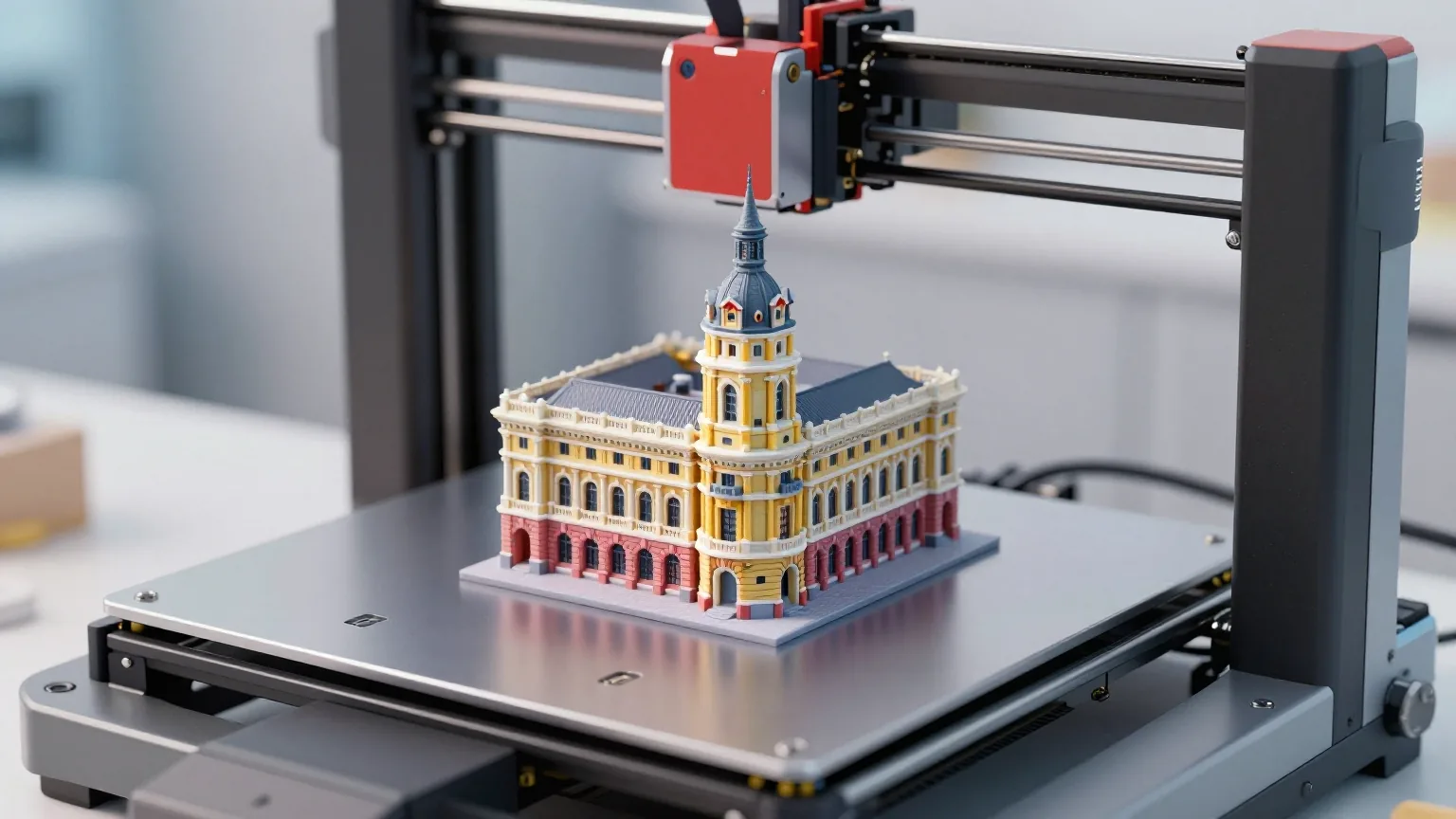
The conversation in the maker community has shifted dramatically. We are past the era of troubleshooting clogged nozzles and debating whether a 0.4mm nozzle is "good enough." Today, the discourse is dominated by two massive pillars: AI-driven design workflows and the maturation of multicolor printing technologies. These aren't just incremental updates; they are fundamental shifts in how we approach creation. As we dive into the latest news and innovations, it becomes clear that 2026 is the year the "hobbyist" and the "professional" lines blurred completely. Let’s explore what is actually happening in the lab, the workshop, and the digital cloud right now.
The Dawn of the Intelligent Nozzle
For decades, 3D printing was a linear process: you design, you slice, you print, you hope. In 2026, that loop has been closed by AI. The latest news from industry leaders highlights a significant leap in "AI-assisted design," where the software doesn't just prepare the file for the machine, but actively optimizes the design for the specific capabilities of the printer [4]. This isn't just about reducing print time; it's about predictive problem solving. New AI tools can analyze a mesh before slicing begins, identifying potential warping, weak points, or support structures that a human might overlook. The result is a higher success rate and less wasted material, a critical factor as sustainability becomes a top priority for manufacturers and hobbyists alike [4].
Think of it as having a digital engineer sitting next to you. This engineer knows the exact thermal properties of your filament, the airflow dynamics of your enclosure, and the mechanical limits of your extruder. They tweak the G-code in real-time, adjusting layer heights and infill patterns to ensure the final object is not just a replica of your digital file, but a structurally sound physical object. This shift from passive execution to active optimization is perhaps the most significant cultural change in the industry this year.
Multicolor Printing: Beyond the Hype
If AI is the brain of the 2026 3D printing revolution, multicolor printing is its voice. For a long time, full-color FDM printing was the "holy grail" that always seemed just out of reach. We had the technology, but the process was cumbersome, expensive, and often resulted in color banding or poor detail. That has changed. The 2026 landscape is defined by "low-waste multicolor printing," a term that has become a standard benchmark for new hardware releases [4].
The old method of multicolor printing involved purging the previous color into a waste spool, which could consume up to 30% of your filament. The new innovations in 2026 utilize advanced valve systems and optimized purge towers that drastically reduce this waste. This means that printing a colorful figure or a detailed diorama is no longer a luxury reserved for those with deep pockets. It is becoming accessible to the average maker. The integration of multicolor capabilities is now seen not as a gimmick, but as a core feature that expands the utility of 3D printing into fields like prototyping, education, and even small-scale manufacturing [3].
The Slicer’s New Role: AI-Driven Optimization
Let’s talk about the software, because the hardware is only half the story. The slicer, that essential piece of software that translates 3D models into machine instructions, has undergone a radical transformation. In 2026, the slicer is no longer just a tool; it is an intelligent agent. Recent news indicates that AI tools are now deeply integrated into the slicing process, allowing for dynamic adjustments based on the complexity of the geometry [3].
Imagine printing a complex, organic shape. In the past, you would have had to manually adjust settings for different sections of the model. Now, the AI can automatically detect high-detail areas and increase the layer resolution in those specific zones, while using faster, larger layers for structural parts. This "variable resolution" printing is no longer a manual, painstaking process. It is an automated feature that ensures you get the best of both worlds: speed and detail. This is a game-changer for makers who want to push the boundaries of what is possible without spending hours tweaking settings.
Material Science Meets Machine Learning
Hardware and software are useless without the right materials, and 2026 is seeing a renaissance in material science driven by AI. The ability to predict how different filaments will behave under various conditions is being enhanced by machine learning models trained on millions of print data points. This means that when you load a new spool of filament, the printer can automatically adjust its temperature and speed settings based on the specific brand and batch of material [3].
This is particularly important for multicolor printing, where consistent color reproduction is critical. Variations in filament temperature can lead to color shifts, a problem that has plagued multicolor printers for years. By using AI to monitor and adjust extrusion temperatures in real-time, manufacturers are achieving a level of color consistency that was previously impossible. This advancement is making 3D printing a viable option for industries that require precise color matching, such as fashion, automotive prototyping, and brand marketing.
The Impact on the Maker Community
How does this affect you, the everyday maker? The short answer is: it empowers you. The barrier to entry for high-quality, full-color printing has never been lower. In the past, to get a professional-looking multicolor print, you might have needed a $2,000 machine and a PhD in engineering. Today, you can achieve similar results with a mid-range printer and a bit of patience. The AI tools handle the heavy lifting, allowing you to focus on the creative aspect of design.
Moreover, the community is sharing more than just G-code. We are seeing a surge in the sharing of "AI profiles" and "material libraries." These are pre-configured settings that have been optimized by AI for specific printers and filaments. This collaborative approach is accelerating the learning curve for new users. If you are new to 3D printing in 2026, you are not starting from zero. You are starting with a head start, thanks to the collective intelligence of the community and the power of AI [2].
Historical Context: From Stratasys to Your Desk
To appreciate how far we have come, it is worth looking back. The concept of multicolor 3D printing was pioneered by companies like Stratasys in the early 2000s with their JET series machines. These machines used inkjet technology to deposit colored materials, but they were incredibly expensive and limited to specific applications. For hobbyists, the dream of full-color printing remained elusive for over two decades.
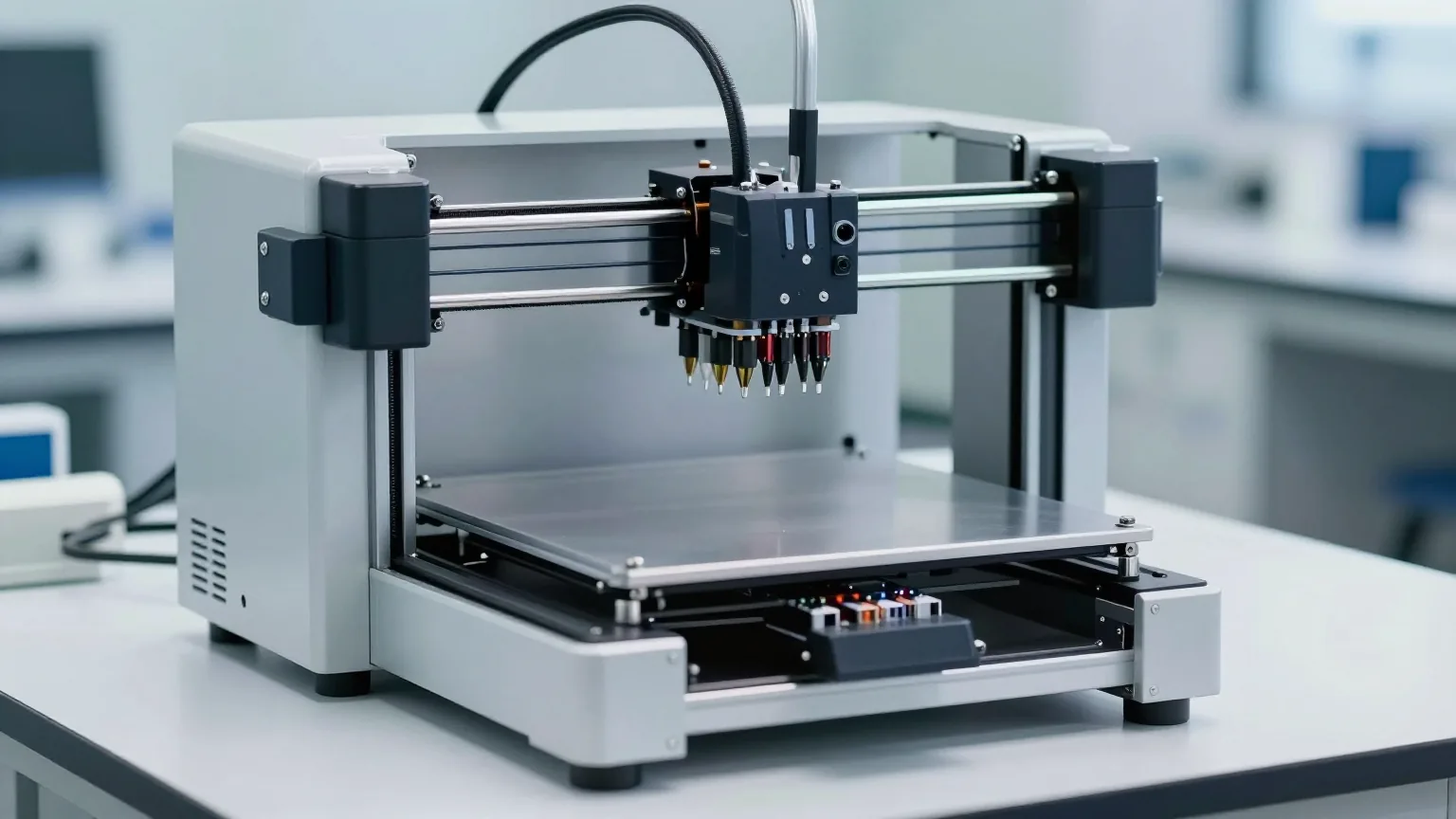
The breakthrough came with the development of the CMYK (Cyan, Magenta, Yellow, Black) and CMYK+ (adding White) filament systems in the late 2010s and early 2020s. While these systems were a step in the right direction, they still suffered from the waste issue and limited color gamut. The 2026 innovations are the culmination of these early efforts. We have moved from a niche, expensive technology to a mainstream, accessible feature. This journey mirrors the broader trajectory of 3D printing itself: from a specialized industrial tool to a household appliance.
AI in Design: Generative Workflows
While AI is transforming the printing process, it is also revolutionizing the design phase. In 2026, generative AI tools are becoming increasingly sophisticated, allowing users to create complex 3D models from simple text prompts or rough sketches. This is a huge shift in the workflow. Instead of spending hours in CAD software, you can now generate a base model in seconds, then refine it with traditional tools.
However, it is important to note that these AI-generated models are not always print-ready. They often require significant cleanup and optimization. This is where the AI-assisted design tools mentioned earlier come into play. The workflow is becoming a seamless loop: generate with AI, optimize with AI, print with AI, and analyze the results with AI. This closed-loop system is making 3D printing more efficient and accessible than ever before [4].
The Rise of Bioprinting and Medical Applications
While consumer 3D printing is getting more colorful, the industrial side is getting more serious. Bioprinting, the use of 3D printing to create biological structures, is one of the most exciting areas of research in 2026. The same AI and material science advancements that are improving consumer printers are being applied to bioprinting, leading to breakthroughs in tissue engineering and regenerative medicine [2].
Imagine a future where you can print a replacement organ or a complex tissue structure that is tailored to your specific biology. This is no longer science fiction. It is a reality that is being developed in labs around the world. The precision and control that AI provides are essential for bioprinting, as even small errors can have life-or-death consequences. This crossover between consumer and industrial 3D printing is a testament to the versatility of the technology.
Sustainability: The Green Revolution
One of the most significant trends in 2026 is the focus on sustainability. The 3D printing industry has long been criticized for its waste, particularly in the form of failed prints and support structures. AI is helping to address this issue by optimizing print paths and reducing material usage. The "low-waste multicolor printing" mentioned earlier is just one example. AI is also being used to design parts that use less material without sacrificing strength, a process known as topology optimization [4].
Furthermore, the rise of recycled filaments is being accelerated by AI. New tools can analyze the properties of recycled materials and adjust print settings accordingly, making it easier for makers to use sustainable materials. This is a positive step for the industry, as it helps to reduce the environmental impact of 3D printing. As consumers become more conscious of their environmental footprint, the demand for sustainable 3D printing solutions is only going to grow.
The Future: What’s Coming Next?
So, where do we go from here? The future of 3D printing in 2026 and beyond looks incredibly bright. We can expect to see even more integration of AI into the design and printing process. We can also expect to see more advanced materials, including self-healing filaments and filaments that change properties in response to environmental stimuli. The possibilities are endless.
One area to watch is the development of "self-driving" 3D printers. These printers will be able to monitor the print process in real-time, detect errors, and make adjustments without any human intervention. This will further reduce the barrier to entry for 3D printing, making it accessible to anyone, regardless of their technical skills. The goal is to make 3D printing as easy and intuitive as using a microwave.
Conclusion: The Power of Creation
As we stand at this crossroads in 2026, it is clear that 3D printing is no longer just a technology. It is a movement. A movement that is empowering individuals, businesses, and even nations to create things that were previously impossible. The combination of AI tools and multicolor printing is just the beginning. It is a taste of what is to come. A future where the limits of creativity are the only limits we face.
So, what should you do? If you are a maker, it is time to experiment. Try out the new AI tools. Explore the possibilities of multicolor printing. Push the boundaries of what you thought was possible. And if you are new to 3D printing, now is the perfect time to start. The barriers are lower than they have ever been, and the rewards are greater than they have ever been. The future of 3D printing is not just coming; it is here. And it is colorful, intelligent, and incredibly exciting. Join the revolution. Print the future.
Call to Action
Are you ready to take your 3D printing to the next level? Start by exploring the latest AI tools and multicolor printing technologies available in 2026. Check out the latest news and reviews to find the right equipment for your needs. Join the community, share your creations, and learn from others. The world of 3D printing is waiting for you. What will you create?