Rotterdam's Buoy: 3D Printed Seats from Recycled Harbour Rope
From Rusty Ropes to Rhythmic Seats: The Story Behind Rotterdam’s Buoy
Imagine walking through the bustling heart of Rotterdam, a city historically defined by its massive port and industrial might. You pass a series of seats that don’t just hold you up—they swing gently, inviting you to pause, dangle your feet, and listen to the hum of the harbor. These aren’t your average park benches. They are the "Buoy" seats, a striking example of how 3D printing is transforming waste into wonder. Designed by The New Raw, these swinging public seats are crafted from discarded harbor rope, recycled in the Netherlands, and printed using advanced additive manufacturing techniques [1].
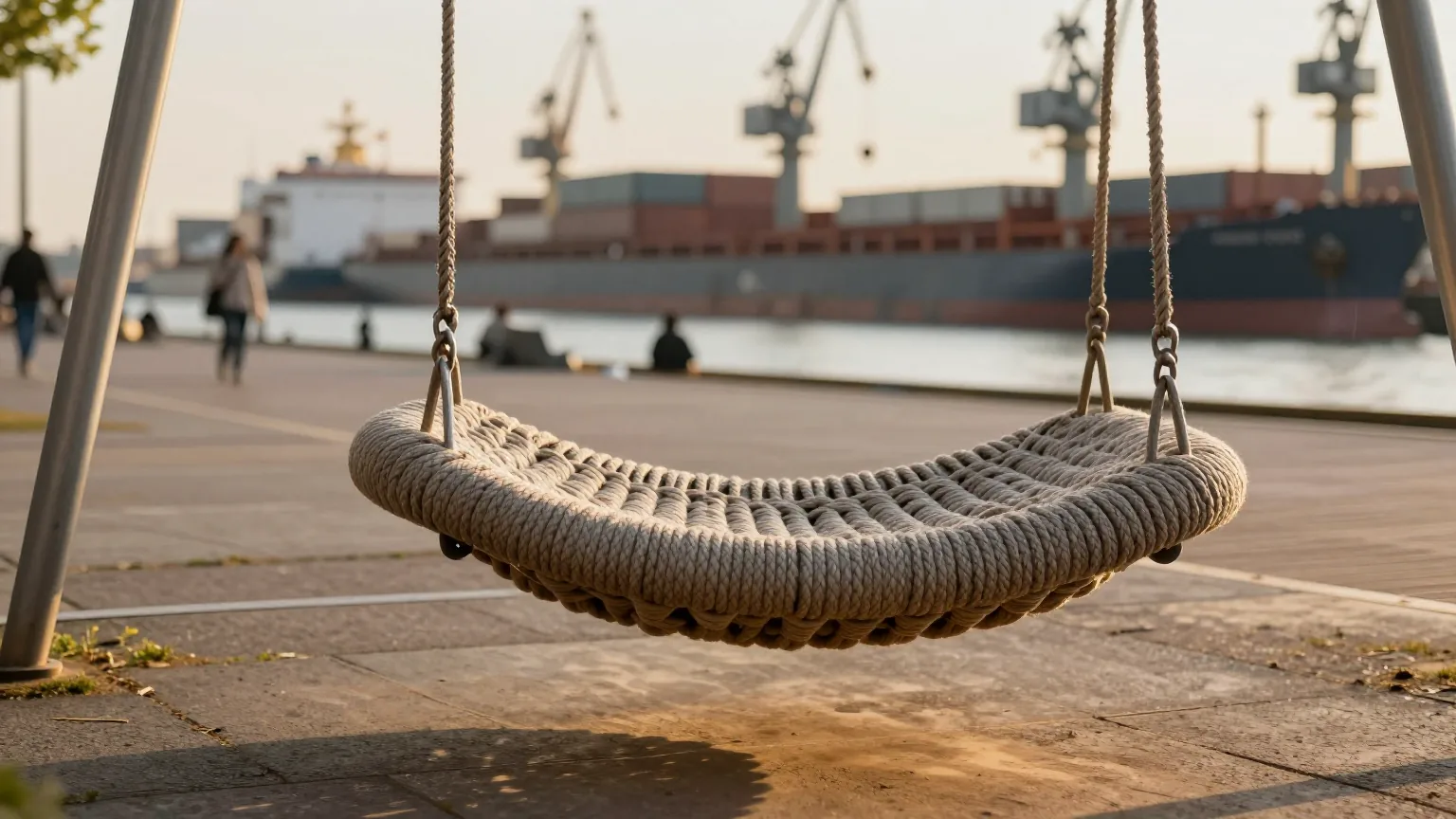
At first glance, it’s a piece of public art. But dig a little deeper, and it’s a masterclass in circular design, material science, and urban innovation. In a world where sustainability is no longer a buzzword but a necessity, projects like Buoy offer a tangible glimpse into a future where our infrastructure is not just functional, but regenerative. Let’s dive into the story of Buoy, exploring the technology, the history, and the broader implications for the 3D printing industry in 2026.
The Problem with "Good Enough" Infrastructure
For decades, the standard for public seating has been the concrete bench or the steel-framed wooden slat. They are durable, sure, but they are also static, cold, and often disconnected from the environment around them. More importantly, the materials used to create them—concrete, steel, virgin timber—carry a significant environmental footprint. Concrete production alone accounts for nearly 8% of global CO2 emissions, a statistic that keeps many urban planners up at night.
Rotterdam, a city that has rebuilt itself from the ashes of World War II, has always prided itself on innovation. But even in a city of this caliber, the question of how to make public spaces more engaging and sustainable remained. Enter The New Raw. Known for their work in regenerative design, they saw an opportunity in the very debris that defines Rotterdam: the harbor. Specifically, the thick, heavy ropes that secure ships and cranes. These ropes, once their lifespan is over, often end up in landfills or are incinerated, releasing microplastics and carbon into the atmosphere. The New Raw asked a simple but profound question: What if we could turn this waste into something that adds value to the city?
Turning Waste into Wealth: The Material Science
The transformation of harbor rope into a 3D printable filament is not a simple task. It requires a sophisticated understanding of polymer chemistry and mechanical processing. The rope, typically made of high-density polyethylene (HDPE) or polypropylene, is collected, cleaned, and shredded. The process involves melting the plastic down and extruding it into uniform strands suitable for Fused Deposition Modeling (FDM) or similar additive manufacturing processes.
This isn’t just about recycling; it’s about upcycling. By treating the rope as a primary material rather than a byproduct, The New Raw has created a closed-loop system. The material retains the structural integrity required for public seating while gaining a unique texture and aesthetic that virgin plastic cannot replicate. The result is a filament that is robust, weather-resistant, and infinitely recyclable at the end of its life. This aligns perfectly with the principles of circular economy, a concept that is gaining traction in 2026 as governments and corporations alike seek to reduce their environmental impact [1].
Why 3D Printing? The Advantages of Additive Manufacturing
You might wonder why traditional manufacturing methods, such as injection molding or casting, weren’t used for the Buoy seats. The answer lies in the flexibility and efficiency of 3D printing. Additive manufacturing allows for complex geometries that would be impossible or prohibitively expensive to produce with subtractive methods. The swinging nature of the Buoy seats requires a specific shape that distributes weight evenly and provides a comfortable, ergonomic experience. 3D printing allows for the creation of these organic, curved forms without the need for complex molds or tooling.
Furthermore, 3D printing is inherently efficient. It only uses the material necessary to create the object, minimizing waste. In the case of Buoy, this is particularly important because the material itself is already a recycled product. By using additive manufacturing, The New Raw ensures that the entire process, from waste collection to final installation, is as sustainable as possible. This is a key trend in the 3D printing industry, where companies are increasingly looking to leverage the technology’s potential for sustainability [1].
The Design Philosophy: Engaging the Public
Public seating is not just about providing a place to sit; it’s about creating an experience. The Buoy seats are designed to be interactive. The swinging motion invites play and relaxation, encouraging people to linger in the harbor area. This is a deliberate departure from the static nature of traditional benches, which often discourage prolonged use. By making the seats fun and engaging, The New Raw has created a piece of infrastructure that enhances the social fabric of the city.
This approach to design is part of a broader movement in urban planning that emphasizes "soft infrastructure." Rather than focusing solely on buildings and roads, planners are looking for ways to create spaces that promote well-being and community interaction. The Buoy seats are a perfect example of this. They are not just functional; they are emotive, inviting users to connect with the space and with each other. In a city as busy as Rotterdam, these moments of pause and play are invaluable.
Rotterdam’s Industrial Heritage and Rebirth
To understand the significance of Buoy, it’s important to understand Rotterdam’s history. The city was largely destroyed during World War II, and its post-war reconstruction was characterized by bold, modernist architecture and a focus on industrial efficiency. The port became the heart of the city, driving its economy and shaping its identity. However, as the city evolved, there was a growing desire to reclaim public spaces and make them more human-centric.
The Buoy seats are a nod to this history. They are made from the very materials that built the port, yet they serve a different purpose. They are a bridge between the past and the future, connecting Rotterdam’s industrial roots with its innovative present. This narrative of transformation is a powerful one, and it resonates with people from all walks of life. It shows that even the most utilitarian materials can be repurposed to create beauty and functionality.
The Broader Impact on the 3D Printing Industry
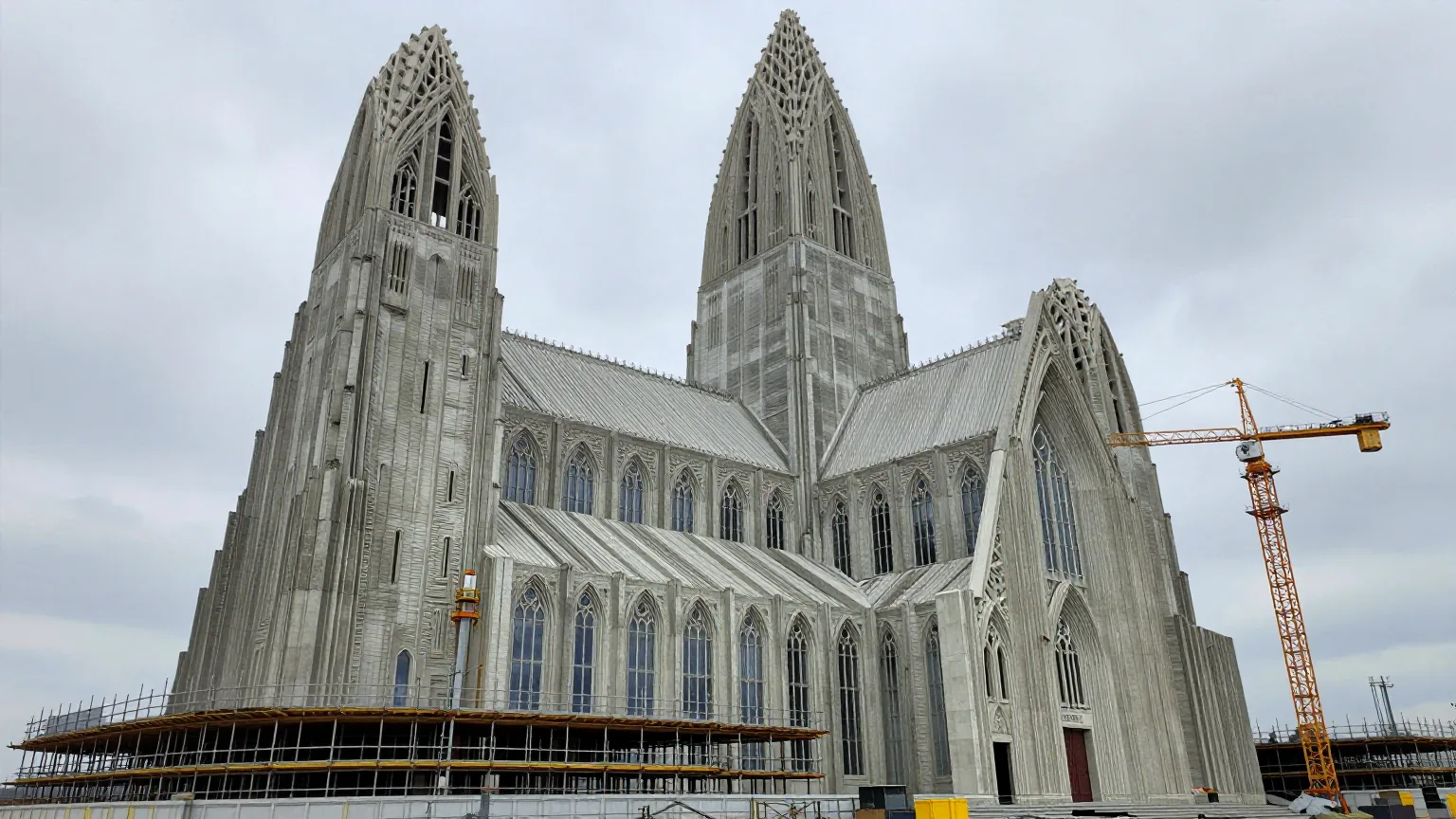
The success of the Buoy seats is not just a win for The New Raw; it’s a win for the entire 3D printing industry. It demonstrates the technology’s potential to solve real-world problems, from waste management to urban design. In 2026, we are seeing a surge in similar projects around the world. For example, in the Czech Republic, one of the largest 3D-printed churches in the world is under construction, showcasing the technology’s ability to handle large-scale, complex structures [2].
These projects are helping to shift the perception of 3D printing from a niche technology used primarily for prototyping to a mainstream manufacturing method capable of producing durable, high-quality products. They are also driving innovation in materials, as companies like The New Raw develop new filaments and composites that are tailored to specific applications. This is a positive trend, as it encourages the industry to move beyond the limitations of traditional plastics and explore more sustainable alternatives.
Economic Implications: Jobs and Growth
While the environmental and social benefits of projects like Buoy are clear, there are also significant economic implications. The 3D printing industry is creating jobs in a variety of fields, from engineering and design to materials science and installation. In the United States, for example, Tronix3D is investing nearly $4 million to expand its Pittsburgh facility, creating 47 jobs and boosting production capacity for advanced manufacturing clients [5].
These investments are not just about producing more products; they are about building a skilled workforce that can drive the industry forward. As the technology becomes more widespread, the demand for professionals who understand both the technical and creative aspects of 3D printing will only grow. This is a positive trend for the economy, as it creates high-value jobs that are difficult to automate. It also helps to diversify local economies, as 3D printing can be done locally, reducing the need for long-distance transportation and supply chains.
Challenges and Criticisms
Of course, no technology is without its challenges. 3D printing, while promising, still faces several hurdles. One of the main concerns is the scalability of the technology. While it is well-suited for small to medium-sized objects, printing large structures can be time-consuming and expensive. This is why projects like the 3D-printed church in the Czech Republic are so noteworthy; they demonstrate that the technology is capable of handling large-scale applications, but they also highlight the need for further development in this area [2].
Another challenge is the quality and consistency of the materials. While recycled materials like harbor rope are promising, they can be inconsistent in terms of composition and performance. This requires careful quality control and testing to ensure that the final product meets safety standards. Additionally, there are concerns about the environmental impact of 3D printing itself, particularly the energy consumption of the printers. However, as the technology becomes more efficient and renewable energy sources become more prevalent, these concerns are becoming less significant.
Future Applications: Beyond Public Seating
The Buoy seats are just the beginning. The principles behind the project—using recycled materials, leveraging 3D printing for complex geometries, and creating engaging public spaces—can be applied to a wide range of other applications. Imagine 3D-printed playground equipment made from recycled tires, or 3D-printed buildings made from recycled concrete. The possibilities are endless.
In the field of healthcare, 3D printing is already being used to create custom prosthetics and implants. In the automotive industry, it is being used to produce lightweight, high-performance parts. In the aerospace industry, it is being used to create complex components that would be impossible to produce using traditional methods. As the technology continues to evolve, we can expect to see even more innovative applications in the years to come.
For instance, HP Additive Manufacturing and Hyperion Materials & Technologies have signed a Strategic Preferred Partner Agreement to bring tungsten carbide additive manufacturing into commercial use [4]. This partnership highlights the industry’s move toward high-performance materials and commercial scalability, suggesting that the future of 3D printing is not just about sustainability, but also about performance and precision.
The Role of Community and Education
One of the most important aspects of projects like Buoy is their ability to engage the community. By creating public seating that is both functional and beautiful, The New Raw has created a space that people want to use and enjoy. This sense of ownership and pride in public spaces is crucial for the health of a city. It encourages people to take care of the space, to respect it, and to contribute to its maintenance.
Education also plays a vital role in the future of 3D printing. In the United States, America Makes has launched a nationwide 3D printing drone program for students [5]. This initiative aims to introduce young people to the technology and to inspire them to pursue careers in STEM fields. By providing hands-on experience with 3D printing, these programs are helping to build a pipeline of talent that will drive the industry forward. This is a positive trend, as it ensures that the technology will continue to evolve and improve in the hands of the next generation.
Conclusion: A Call to Action for Innovators
The story of Rotterdam’s Buoy seats is a powerful reminder of the potential of 3D printing. It shows that the technology can be used to solve real-world problems, from waste management to urban design. It also shows that the technology can be used to create spaces that are not just functional, but beautiful and engaging. In a world that is increasingly focused on sustainability and innovation, projects like Buoy are essential.
As we look to the future, we need to continue to push the boundaries of what is possible with 3D printing. We need to explore new materials, develop new techniques, and create new applications. We need to work together, as designers, engineers, policymakers, and citizens, to build a future that is both sustainable and innovative. The Buoy seats are a step in the right direction, but they are just the beginning. Let’s continue to innovate, to create, and to build a better world, one print at a time.
So, the next time you see a 3D-printed object, whether it’s a small prototype or a large public installation, take a moment to appreciate the technology and the people behind it. And who knows? Maybe you’ll be the one to create the next big thing. The tools are there, the materials are there, and the inspiration is everywhere. All you need is the will to start.