Russia’s 3D-Printed Missiles Hit 500mph with US Electronics
The Filin Factor: How 3D-Printed Missiles Are Reshaping the Rules of War
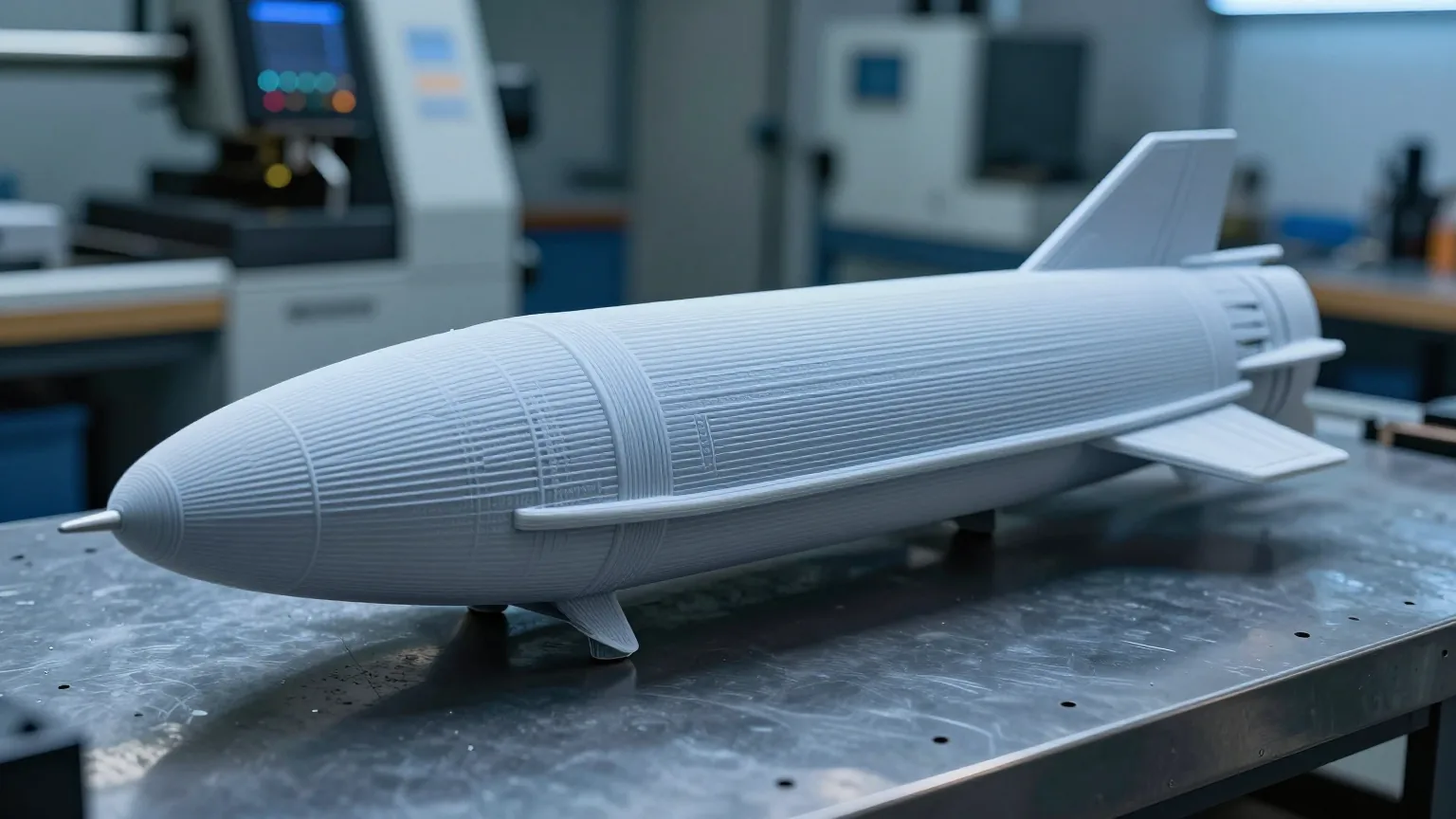
Imagine a missile that can travel at 500 miles per hour, fly for over 700 miles, and cost a fraction of its traditional counterparts. Now imagine that the heart of this weapon, the airframe that slices through the atmosphere, wasn’t cast in a foundry or machined over weeks, but printed layer by layer in a matter of hours. This is not science fiction. It is the new reality of modern conflict, and it has arrived with a speed that has left defense analysts and 3D printing enthusiasts alike scratching their heads in wonder. The deployment of the Russian "Filin" cruise missile, which reportedly utilizes 3D-printed components and commercial electronics, marks a pivotal moment in the intersection of additive manufacturing and military strategy [3].
For decades, the 3D printing industry has been defined by consumer gadgets, dental molds, and architectural models. We celebrated the ability to print a functional phone case or a complex turbine blade for an aerospace engine. But the recent news out of the Ukraine conflict suggests that the technology has leaped from the workshop to the battlefield. As we navigate the complex landscape of 2026, where AI tools are infiltrating our workflows and new industrial printers are redefining speed and precision [5], the implications of military-grade additive manufacturing are profound. This post explores how 3D printing is no longer just a tool for creation, but a vector for strategic disruption, and what this means for the future of the industry.
The Filin Missile: A Case Study in Asymmetric Warfare
Let’s dive into the specifics of the "Filin" missile. According to recent reports, this weapon was deployed between late September and early October of this year, showcasing a range of approximately 745 miles and a top speed of 500 mph [3]. These are impressive figures for any cruise missile, but the true story isn’t in the speed or the range—it’s in the cost and the complexity. The reports indicate that the Filin utilized 3D-printed parts and commercial off-the-shelf (COTS) electronics to save on costs [3].
In traditional defense manufacturing, a single component for a high-end missile could take weeks to machine from a solid block of titanium or aluminum. The supply chain is rigid, expensive, and vulnerable to disruption. By using additive manufacturing, manufacturers can produce complex geometries that are impossible to achieve with subtractive methods. This allows for lighter, stronger structures without the need for heavy fasteners or welded seams. The result is a weapon that is not only cheaper to produce but also faster to iterate. If a design flaw is found, or if a tactical requirement changes, the digital file can be updated and the next batch can be printed within days, not months.
The "Fail Fast" Philosophy in Military Manufacturing
The concept of "Fail Fast, Mold Smarter" has long been a mantra in the tech startup world, but it is now finding its way into the defense sector. A recent article from Design News highlights how micro 3D printing is driving real impact by allowing for rapid prototyping and iterative design [2]. In the context of the Filin missile, this philosophy translates to a new kind of agility. Traditional military procurement cycles are notoriously slow, often taking years to move from concept to deployment. Additive manufacturing compresses this timeline dramatically.
Consider the engineering challenges of a cruise missile. It must withstand extreme G-forces during launch, operate at high altitudes where temperatures drop significantly, and maintain structural integrity over hundreds of miles. 3D printing allows engineers to optimize the internal lattice structures of the airframe, reducing weight while maintaining strength. This is not just about making things faster; it’s about making things smarter. The ability to test, fail, and refine designs quickly means that the final product is more robust and better suited to its intended mission. It turns the manufacturing process from a linear, rigid pipeline into a dynamic, responsive loop.
The Controversy of US Electronics in Russian Weapons
Perhaps the most jarring aspect of the Filin missile story is the reported use of US electronics [3]. In a world where export controls are supposed to prevent dual-use technologies from falling into the hands of adversaries, the reality is more chaotic. Commercial electronics are ubiquitous. From smartphones to industrial sensors, American-made chips and components are embedded in devices worldwide. When these components are integrated into 3D-printed housings or integrated into the electronics bay of a missile, the line between civilian and military use blurs.
This raises significant questions about the effectiveness of current export control regimes. Can we really trace a specific microchip from a consumer device in Shenzhen to a missile in Ukraine? The answer, increasingly, is no. The 3D printing aspect adds another layer of complexity. Because the housing and structural components can be printed locally, the only "imported" part might be the electronic brain. This makes sanctions and export controls harder to enforce. It suggests that the future of defense manufacturing may rely less on the origin of the raw materials and more on the digital files and the final integration. This is a cultural and geopolitical shift that the 3D printing industry must be aware of, as our tools are becoming more critical to national security.
From Consumer Hobbies to Strategic Assets
It is easy to look at 3D printing as a hobbyist activity. We see it in the context of printing figurines, custom phone stands, or even functional replacement parts for household items. All3DP, a leading source for 3D printing news, frequently covers the latest consumer printers and software updates [4]. For instance, they recently covered the P3C, a compact, enclosed P-series printer with a seven-head tool-changing system, suggesting a future where multi-material, multi-function printing is standard in home workshops [4].
However, the capabilities of these consumer-grade machines are directly related to the industrial and military applications we are seeing today. The same technologies that allow a hobbyist to print a complex, multi-material object are the same technologies that allow a military engineer to print a lightweight, high-strength missile component. The difference lies in the scale, the precision, and the materials. Industrial printers like the UltiMaker Factor 4 Plus, which features automated quality validation, are bridging the gap between the hobbyist and the factory floor [2]. These machines are designed for high-speed, reliable production, making them ideal for defense applications where consistency and speed are paramount.
The cultural shift is equally significant. 3D printing is no longer seen as a novelty; it is a critical infrastructure. The fact that a missile can be printed, rather than forged, changes the economic and strategic calculus of war. It lowers the barrier to entry for producing advanced weaponry. This democratization of manufacturing is a double-edged sword. It allows for rapid innovation and cost reduction, but it also increases the risk of proliferation. The same technology that allows a country to quickly produce medical supplies or spare parts for its infrastructure can also allow it to quickly produce weapons of war.
The Role of AI in the Print Workflow
As we look at the broader 3D printing landscape in 2026, it is clear that AI is playing an increasingly central role. 3DLinks, a platform dedicated to industry trends, notes that AI tools are shaping the 3D printing landscape, from file format changes to workflow integration [5]. In the context of military manufacturing, AI is not just a nice-to-have; it is a necessity. Designing a missile airframe is an incredibly complex task. It requires solving thousands of equations related to aerodynamics, structural integrity, and thermal management. AI can optimize these designs in ways that human engineers simply cannot, finding solutions that are counter-intuitive but highly effective.
Furthermore, AI is transforming the print process itself. Predictive maintenance algorithms can monitor the health of industrial printers, ensuring that they are running at peak performance. Machine learning models can analyze the print data in real-time, detecting anomalies that might lead to defects. This is crucial for military applications, where a single defect can mean the difference between a successful mission and a catastrophic failure. The integration of AI and 3D printing is creating a closed-loop system where the design, manufacturing, and quality control are all optimized by intelligent algorithms. This level of automation and precision is what makes the production of weapons like the Filin missile possible at scale.
Material Science: Beyond PLA and ABS
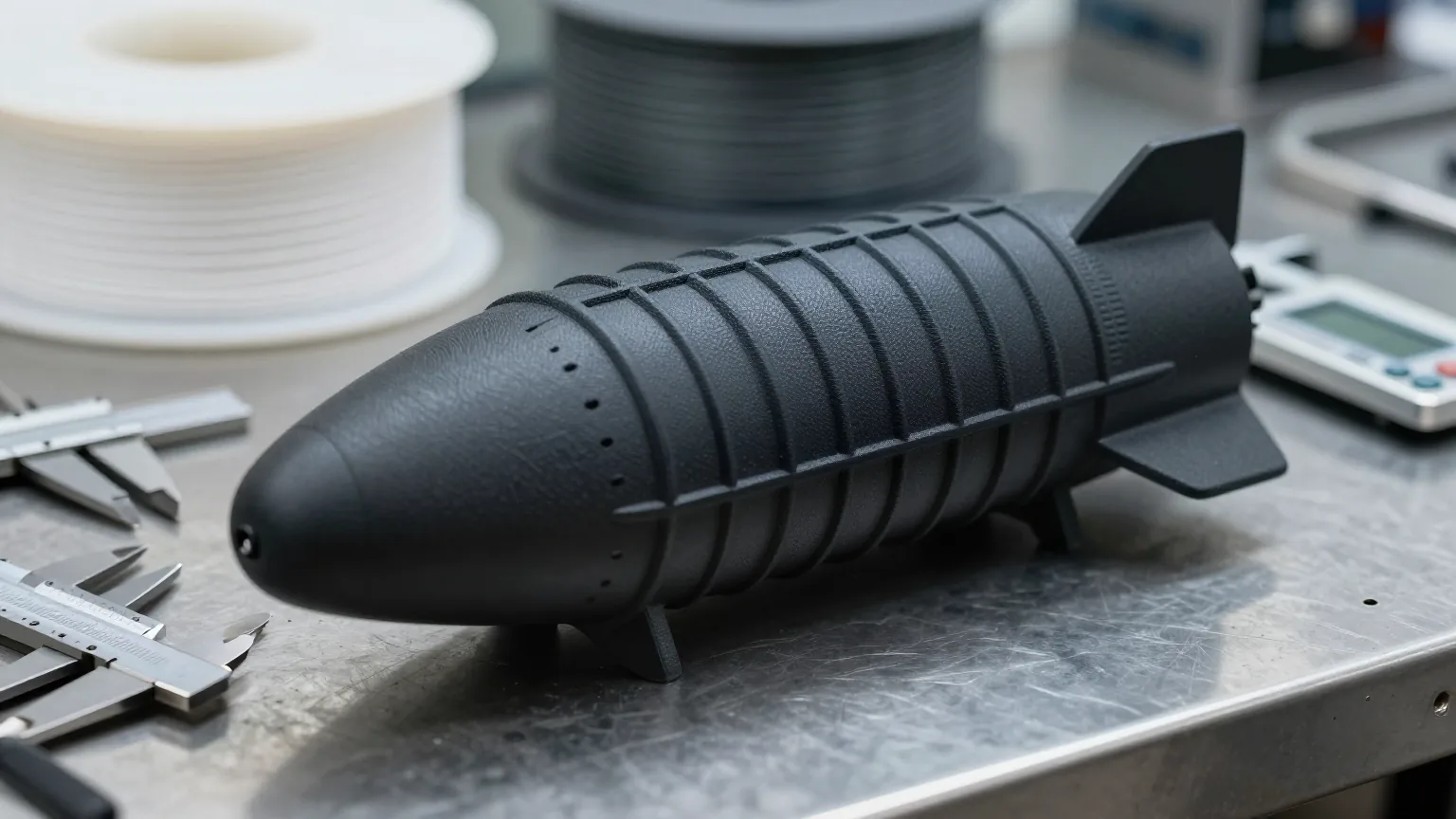
While the news focuses on the missile itself, the materials used to print it are equally important. Traditional 3D printing materials like PLA and ABS are not suitable for military applications. The Filin missile likely uses advanced polymers, metal alloys, or composites that can withstand the extreme conditions of flight. The 3D printing industry has made significant strides in material science over the last decade. We now have access to high-temperature resins, carbon fiber composites, and even metallic powders that can be sintered into dense, strong parts.
Recent research from NTU Singapore highlights the development of nontoxic photoinitiators that could replace ingredients currently being banned in the EU [1]. While this may seem like a small detail, it reflects the broader trend towards safer, more sustainable materials. In a military context, the choice of materials is not just about performance; it is also about safety and environmental impact. The ability to print with materials that are both high-performance and environmentally responsible is a key advantage of additive manufacturing. It allows for a more circular economy, where parts can be designed for disassembly and recycling, reducing the waste associated with traditional manufacturing methods.
The Economic Impact: Cost Reduction and Scale
One of the most significant advantages of 3D printing in the defense sector is the reduction in cost. Traditional manufacturing methods often involve expensive tooling, long setup times, and high labor costs. Additive manufacturing eliminates many of these costs. A 3D printer can produce a complex part in a single step, without the need for multiple machining operations or assembly processes. This leads to a significant reduction in the overall cost of production.
For the Filin missile, this cost reduction is likely a key factor in its deployment. By using 3D-printed parts and commercial electronics, Russia can produce these missiles at a fraction of the cost of traditional cruise missiles. This allows for a higher rate of production, which is crucial in a conflict where attrition is a key factor. The ability to produce weapons at scale, and at a low cost, changes the dynamics of warfare. It makes it easier to overwhelm an opponent with quantity, even if individual weapons are less sophisticated. This is a strategic shift that has far-reaching implications for global security.
Challenges and Limitations of Military 3D Printing
Despite its advantages, 3D printing is not a magic bullet. There are still significant challenges and limitations that must be addressed. One of the main challenges is the speed of production. While 3D printing is faster than traditional manufacturing for complex parts, it is still relatively slow compared to mass production methods like injection molding. For high-volume production, 3D printing may not be the most efficient method. However, for low-volume, high-complexity parts, it is unparalleled.
Another challenge is the consistency of the parts. 3D printing is a layer-by-layer process, which can lead to variations in part properties. This is particularly important in military applications, where consistency is critical. Industrial printers with automated quality validation, like the UltiMaker Factor 4 Plus, are helping to address this issue [2]. By monitoring the print process in real-time, these machines can ensure that each part meets the required specifications. However, more work is needed to fully standardize the process and ensure that 3D-printed parts are as reliable as traditionally manufactured parts.
The Future of Defense Manufacturing
Looking ahead, the future of defense manufacturing is likely to be defined by the integration of 3D printing and AI. We will see more advanced materials, faster printers, and smarter algorithms. The line between civilian and military manufacturing will continue to blur, as the same technologies are used for both. This will require new approaches to export controls and security. We will need to develop new ways to track and monitor the use of 3D printing technologies, to ensure that they are not misused.
The Filin missile is just the beginning. As 3D printing becomes more widespread, we will see more applications in the defense sector. From drones to armored vehicles, from prosthetics for wounded soldiers to medical supplies for field hospitals, 3D printing will play a critical role in the future of warfare. It is a technology that has the potential to change the way we think about manufacturing, and it is already doing so. The question is not whether 3D printing will be used in the defense sector, but how quickly it will become the standard.
Ethical Considerations and the Responsibility of Innovators
As the 3D printing industry continues to grow, it is important to consider the ethical implications of our work. The same technology that can save lives by printing prosthetics or medical devices can also be used to create weapons of mass destruction. This duality is a challenge that the industry must face. We must be mindful of the potential misuse of our technologies and work to ensure that they are used for good, not harm.
This means developing robust security measures to protect our intellectual property and our technologies. It means working with governments and international organizations to establish guidelines for the responsible use of 3D printing. And it means educating the public about the potential benefits and risks of this technology. We cannot afford to ignore the ethical dimensions of our work. As innovators, we have a responsibility to ensure that our technologies are used in a way that promotes peace, security, and human well-being.
Conclusion: A New Era of Manufacturing
The deployment of the Filin missile is a wake-up call for the 3D printing industry. It shows that our technology is no longer just a tool for creation; it is a force multiplier in the realm of national security. The ability to print complex, high-performance parts at low cost and high speed is changing the rules of war. It is also changing the way we think about manufacturing, innovation, and security.
As we move forward, we must embrace these changes with both excitement and caution. We must continue to push the boundaries of what is possible with 3D printing, while also working to ensure that our technologies are used responsibly. The future is bright, but it is also complex. It will require collaboration between industry, academia, and government to navigate. But one thing is clear: 3D printing is here to stay, and it is going to play a central role in the future of manufacturing, and perhaps, in the future of peace.
Call to Action: If you are a 3D printing enthusiast, engineer, or industry leader, I encourage you to reflect on the implications of this news. How can we ensure that our technology is used for good? What steps can we take to protect our innovations? Share your thoughts in the comments below, and let’s start a conversation about the future of 3D printing in a complex world. Together, we can shape a future where innovation serves humanity, not just conflict.