Russia's 3D-Printed Cruise Missiles: 500mph Speed & 745mi Range
Imagine a weapon that can travel 745 miles at a speed of 500 miles per hour, designed not in a sterile, high-security laboratory, but potentially in a basement or a repurposed factory floor. It sounds like the plot of a spy thriller, but it is the harsh reality of modern asymmetric warfare. For decades, the global defense industry has relied on complex, multi-billion-dollar supply chains to produce precision-guided munitions. However, the ongoing conflict in Ukraine has shattered that assumption, revealing a terrifying new paradigm where additive manufacturing—commonly known as 3D printing—is no longer just a hobbyist tool for printing figurines and prototypes. It has become a critical enabler of military capability.
Recent reports indicate that Russia has deployed a new type of cruise missile, the Filin, which utilizes 3D-printed components and commercial off-the-shelf electronics to bypass sanctions and reduce costs [4]. This development is not an isolated incident; it is part of a broader trend where 3D printing is driving real impact in high-stakes environments, from medical implants to aerospace components [2]. As we stand in 2026, looking back at the innovations that reshaped the landscape, it is crucial to understand how a technology born in university labs and maker spaces has evolved into a strategic military asset. This post explores the technical, ethical, and geopolitical implications of 3D-printed cruise missiles, analyzing what this means for the future of defense and the 3D printing industry itself.
The Filin Missile: A Technical Breakdown
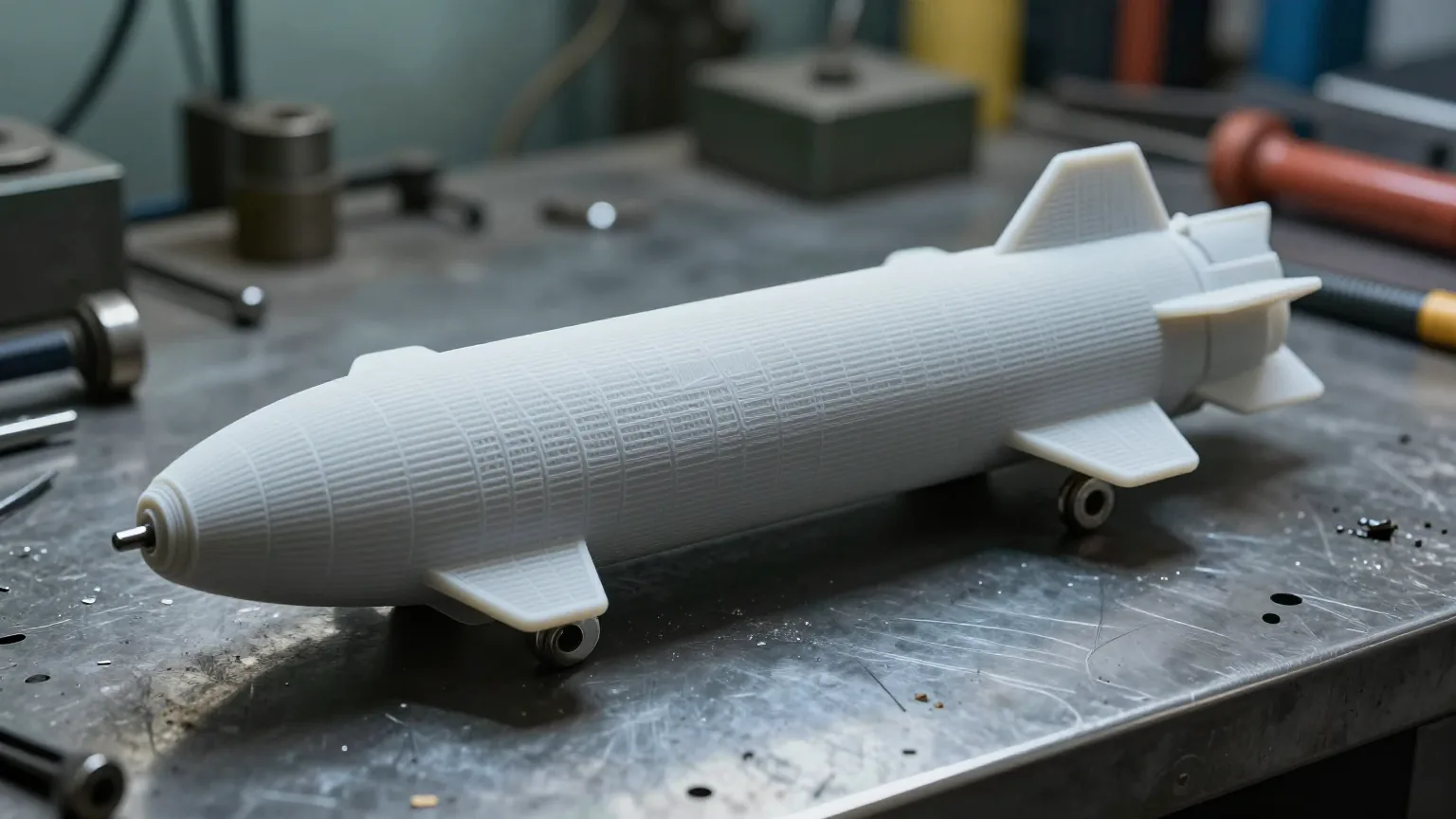
To understand the significance of this development, we must first look at the hardware. The Filin missile, reportedly deployed between late September and early October of this year, is a cruise missile that combines 3D-printed structural parts with commercial electronics [4]. The specifications are impressive for a weapon of this class: it is capable of reaching speeds of approximately 500 mph and has a reported range of 745 miles. These metrics place it firmly in the category of long-range tactical cruise missiles, a class traditionally reserved for major global powers with advanced aerospace industries.
The key differentiator, however, is not the speed or the range, but the manufacturing process. Traditional cruise missiles require intricate casting, machining, and assembly processes that are susceptible to supply chain disruptions. By using 3D printing for certain components, manufacturers can produce complex geometries in a single step, reducing the number of parts and the time required for assembly. The use of commercial electronics further complicates the picture, as it suggests a move away from hardened, military-grade chips toward consumer-grade components that are cheaper and more readily available, even under sanctions. This hybrid approach—additive manufacturing for structure, commercial electronics for brains—creates a weapon that is difficult to track and difficult to counter through traditional economic pressure.
How 3D Printing Bypasses Traditional Supply Chains
The most profound implication of 3D-printed weapons is the decoupling of production from centralized manufacturing hubs. In the past, if a country wanted to build a specific type of missile, it needed access to specialized foundries, precision CNC machines, and a vast network of subcontractors. If any one of these links in the chain was cut by sanctions or physical attack, production would halt. 3D printing disrupts this model by allowing production to be distributed.
With a 3D printer and the appropriate filament or resin, a workshop can produce structural components locally. This is a concept often discussed in the context of "Fail Fast. Mold Smarter," a philosophy that emphasizes rapid iteration and local adaptation over rigid, centralized planning [2]. In the context of warfare, this means that even if a major factory is destroyed, the knowledge to rebuild the weapon remains with the operator. The weapon becomes less of a product and more of a process. This resilience is exactly what modern conflicts demand, and it is a capability that 3D printing provides with unprecedented efficiency.
The Role of Commercial Off-The-Shelf (COTS) Electronics
While the 3D-printed components grab the headlines, the use of US electronics in Russian missiles is a detail that should not be overlooked. Reports suggest that the Filin missile uses commercial parts to save on cost [4]. This highlights a significant vulnerability in the global tech supply chain. Consumer electronics, from smartphones to drones, are ubiquitous and difficult to track once they leave the factory. A single microcontroller or sensor from a consumer device can be integrated into a military system, effectively "laundering" sanctioned technology through the global market.
This practice has been observed in other domains, such as the use of commercial drone parts in improvised explosive devices. However, its application to a precision-guided cruise missile is a step up in complexity. It suggests that Russian engineers have found ways to integrate low-cost, high-volume commercial components into high-performance military systems. This not only reduces the cost per unit but also makes it harder for intelligence agencies to detect the weapon's origin and components. It is a testament to the ingenuity of engineers who are willing to think outside the box, or in this case, outside the traditional military supply chain.
Historical Context: From Prototypes to Production
It is easy to view 3D printing in a military context as a sudden, shocking development, but the roots of this technology run much deeper. Additive manufacturing has been used in the aerospace and defense industries for decades, primarily for prototyping and low-volume production of complex parts. However, the shift to using it for end-use parts in combat situations is a recent and dramatic evolution.
In the early 2000s, 3D printing was largely confined to universities and research labs. By the 2010s, it had entered the mainstream of industrial manufacturing, with companies like GE using it to produce fuel nozzle components for jet engines. The jump from aerospace components to weaponized systems is a logical, if disturbing, progression. The technology matured, the costs dropped, and the capabilities expanded. Today, we are seeing the culmination of this trend, where 3D printing is no longer just a tool for making things faster, but a tool for making things that were previously impossible or too expensive to produce.
The Ethical Dilemma: Democratization of Destruction
The democratization of 3D printing has long been a double-edged sword. On one hand, it empowers individuals and small businesses to innovate and create. On the other hand, it lowers the barrier to entry for those who wish to do harm. The ability to 3D print a missile component is not far removed from the ability to 3D print a firearm or an explosive. As the technology becomes more accessible, the risk of misuse increases.
This raises difficult ethical questions for the 3D printing industry. Should manufacturers be responsible for the end-use of their products? Should there be stricter controls on the sale of high-performance printers and materials? These are questions that have been debated for years, but the deployment of 3D-printed missiles in Ukraine has brought them to the forefront. The industry must grapple with the reality that its tools are being used to cause significant harm, and it must decide how to respond. This is not just a technical issue; it is a moral one.
Countermeasures and the Arms Race
The development of 3D-printed missiles will inevitably lead to the development of new countermeasures. If one side can produce cheap, fast, and hard-to-detect weapons, the other side must develop ways to intercept or neutralize them. This could lead to an arms race in both offensive and defensive technologies. For example, we may see increased investment in electronic warfare capabilities to jam the commercial electronics used in these missiles. We may also see the development of new radar systems capable of detecting smaller, lower-observable targets.

However, the challenge is that 3D printing allows for rapid iteration. If a new countermeasure is developed, the opposing side can quickly redesign and print new components to evade it. This creates a dynamic environment where the balance of power can shift rapidly. It is a game of cat and mouse, where the cat has a 3D printer in its pocket. This dynamic will likely drive further innovation in both the 3D printing and defense sectors, leading to a continuous cycle of adaptation and counter-adaptation.
Impact on the 3D Printing Industry
The military application of 3D printing will have significant implications for the commercial industry. As demand for additive manufacturing grows in the defense sector, we can expect to see increased investment in research and development. This could lead to advances in materials science, printing speed, and printer reliability. These advances will likely trickle down to the commercial sector, benefiting hobbyists and businesses alike.
For example, the development of nontoxic photoinitiators that could replace banned ingredients in resins [1] is a direct result of regulatory pressure and the need for safer, more sustainable materials. Similar pressures in the defense sector, such as the need for lightweight, high-strength materials, could drive the development of new polymers and composites. Additionally, the trend toward high-speed industrial 3D printers, such as the UltiMaker Factor 4 Plus, which features automated quality validation [2], is well-suited to the demands of military production, where speed and reliability are paramount.
The Future of AI and 3D Printing in Warfare
Looking ahead, the intersection of artificial intelligence and 3D printing is likely to play a significant role in the future of warfare. AI can be used to optimize the design of 3D-printed components, reducing weight and improving performance. It can also be used to automate the printing process, allowing for continuous, unattended production. Furthermore, AI can be integrated into the weapon systems themselves, enabling autonomous decision-making and targeting.
Recent trends in 3D printing innovations, such as AI-assisted design and low-waste multicolor printing [5], suggest that the technology is becoming more intelligent and efficient. In a military context, this could lead to the development of weapons that are not only cheaper and faster to produce but also more effective and harder to defeat. The combination of AI and 3D printing represents a significant leap in capability, one that will likely reshape the nature of conflict in the coming decades.
Regulatory Challenges and Global Policy
The proliferation of 3D-printed weapons poses a significant challenge for global policy. Traditional export control regimes are designed to regulate the movement of physical goods, but they are ill-equipped to handle the digital nature of 3D printing. A file can be shared instantly across the globe, making it difficult to control the spread of weapon designs. This requires a new approach to regulation, one that focuses on the digital domain as much as the physical one.
International cooperation will be essential in addressing this challenge. Countries must work together to establish norms and standards for the use of 3D printing in the defense sector. This could include agreements on the types of materials that can be used, the types of components that can be printed, and the types of weapons that can be deployed. It is a complex and difficult task, but one that is necessary to prevent the further proliferation of these technologies.
Lessons for the Hobbyist and Maker Community
While the military application of 3D printing is a serious and concerning development, it is important to remember that the technology itself is neutral. The same printers and materials used to make missile components are also used to make medical implants, architectural models, and consumer products. The maker community plays a vital role in advancing the technology and ensuring that it is used for good.
By engaging in ethical discussions, advocating for responsible use, and developing new applications that benefit society, makers can help shape the future of 3D printing. It is also important to stay informed about the latest developments in the field, as the technology is evolving rapidly. By understanding the potential risks and benefits, makers can make informed decisions about how they use their tools and contribute to the community.
Conclusion: A New Era of Asymmetric Warfare
The deployment of Russia’s 3D-printed cruise missiles marks a turning point in modern warfare. It demonstrates that additive manufacturing is no longer just a tool for innovation, but a tool for destruction. The ability to produce complex, high-performance weapons using locally available materials and commercial electronics has changed the strategic landscape, making it more difficult for traditional powers to maintain their advantage.
As we move forward, we must grapple with the implications of this development. We must ask ourselves what kind of world we want to live in, where the tools of creation can be so easily turned into tools of destruction. The 3D printing industry has a responsibility to ensure that its technology is used responsibly, and that the benefits of innovation are shared broadly. This is not just a technical challenge; it is a moral one. Let us use this moment to reflect on the power of our tools, and to commit to using them for the betterment of humanity. The future of 3D printing is in our hands, and we must choose wisely.
Call to Action: If you are a maker, engineer, or policy maker, I encourage you to engage in the conversation about the ethical use of 3D printing. Share your thoughts, participate in community discussions, and advocate for responsible innovation. Together, we can ensure that this powerful technology is used to build a better, safer world.