3D-Printed Missiles Hit 500mph: The Filin Threat
When the Printer Becomes a Weapon: The Filin Missile and the 500mph Reality
Imagine a missile that doesn’t look like a missile. It doesn’t have the sleek, polished finish of a traditional defense weapon, nor does it carry the massive price tag that usually accompanies long-range aerial threats. Instead, it looks a bit like a high-end prototype, perhaps something you’d see on a maker’s desk, but with a terrifying purpose. In late September and early October of this year, reports emerged that Russia had deployed a new type of cruise missile in Ukraine: the Filin. And the detail that should keep every defense analyst, 3D printing enthusiast, and policy maker awake at night is this: it is reportedly built using 3D-printed and commercial parts to save on cost [5].
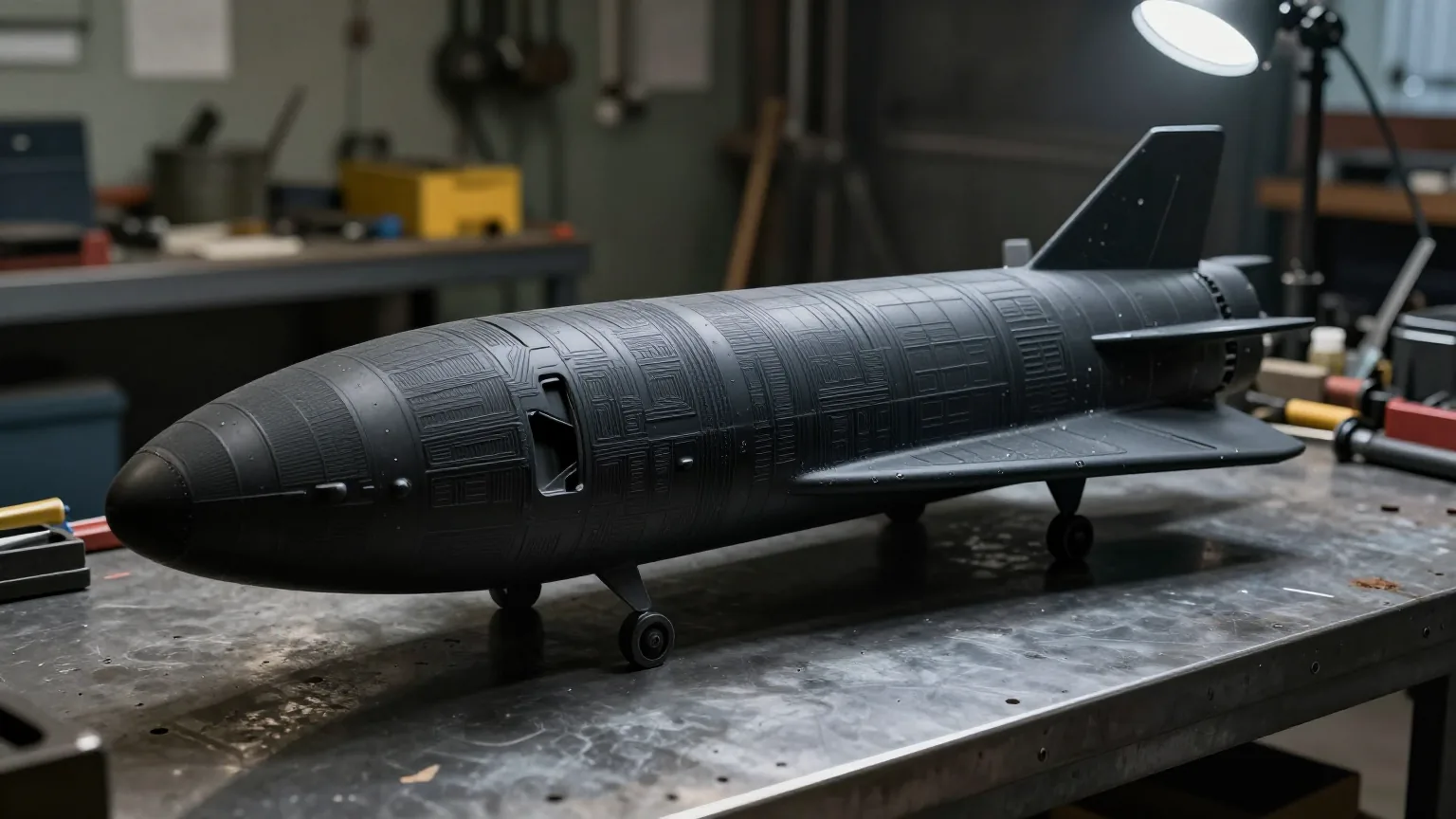
Yes, you read that correctly. A weapon capable of hitting 500 mph with a range of 745 miles is being manufactured, at least in part, by the same technology that allows you to print a miniature dragon or a custom phone case in your living room [5]. This isn’t science fiction; it’s the latest chapter in the evolving narrative of 3D printing news in 2026. As we navigate a year defined by AI-assisted design and low-waste multicolor printing innovations [1], the shadow of military application looms large. The Filin missile is not just a piece of hardware; it is a case study in how additive manufacturing is reshaping the geopolitical landscape, turning the barriers to entry for advanced weaponry into a matter of software and feedstock rather than state-level industrial capacity.
The Filin: A Beast of the Skies
To understand the gravity of the situation, we must first look at what the Filin actually is. According to recent intelligence reports, the Filin is a cruise missile deployed in Ukraine that utilizes a mix of 3D-printed components and commercially available electronics [5]. The specifications are staggering for a system that likely bypassed traditional, heavily regulated supply chains. With a top speed of 500 mph and a range of 745 miles, it is not a close-range drone; it is a strategic threat capable of striking deep behind enemy lines [5].
What makes the Filin particularly concerning is its origin story. It reportedly used 3D-printed parts specifically to save on cost [5]. In the world of defense contracting, cost savings are always a goal, but usually, they are achieved through economies of scale in mass production. Here, the savings come from the flexibility of additive manufacturing. You don’t need a massive foundry to cast a complex airframe component; you need a high-end industrial printer and a file. This shift from "how can we cast this?" to "how can we print this?" changes the economics of war entirely.
The Speed of Iteration: Why 3D Printing Matters in Conflict
Traditional manufacturing is slow. If you need to change the design of a missile fin to correct a flight instability issue, you have to create new molds, order new materials, and wait weeks or months for the next batch. In a conflict scenario, that is an eternity. 3D printing, however, operates on a different timeline. As we see in the latest 2026 innovations, the industry is moving toward AI-assisted design and rapid prototyping [1]. In a military context, this means that if a Filin missile fails or if its trajectory needs adjustment, the design can be tweaked digitally and printed again within hours, not months.
This iterative speed is the true power of the technology. It allows for "fail fast" methodologies to be applied to weapons development, a concept that is gaining traction in micro 3D printing for other industrial applications [3]. By deploying the Filin, Russia is essentially using the battlefield as a real-time testing ground, with the ability to iterate on the hardware almost instantly. This agility is something that traditional, legacy defense manufacturers struggle to match, especially when their supply chains are long and rigid.
Commercial Parts and the "Black Box" of Supply Chains
One of the most intriguing aspects of the Filin report is the mention of "US electronics" [5]. This highlights a critical vulnerability in the global supply chain. While the airframe or internal structural components may be 3D-printed, the "brain" of the missile—the guidance systems, the sensors, and the control boards—often relies on commercial off-the-shelf (COTS) components. These parts are widely available, including through the black market or via third-country intermediaries.
This blurs the line between what is considered "military-grade" and "commercial-grade." In the past, you could track weapons by their unique serial numbers and specialized components. Now, if a missile is built from a 3D-printed chassis and a $200 circuit board bought on a grey-market website, forensic analysis becomes incredibly difficult. It raises questions about export controls and how easily dual-use technology can be repurposed for offensive military use. The Filin serves as a stark reminder that the barrier between consumer electronics and military hardware is thinner than we’d like to believe.
2026 Tech Trends: From AI Design to Multicolor Efficiency
While the Filin makes headlines for its destructive potential, it’s important to look at the broader context of 3D printing in 2026. The technology is not just about making things; it’s about making them smarter and more efficiently. According to recent industry analyses, some of the biggest trends this year include AI-assisted design and low-waste multicolor printing [1].
- AI-Assisted Design: Generative AI is now capable of optimizing structures for strength-to-weight ratios, which is exactly what a missile manufacturer would want. AI can design a lattice structure that is lighter than a solid block of metal but just as strong, allowing for longer range and higher speed.
- Low-Waste Multicolor Printing: While less relevant to missiles, this trend highlights the maturity of the technology. We are moving away from the "one color, one material" limitation. This precision is what allows for the complex, multi-material parts seen in advanced industrial applications.
The same AI tools that help a designer create a more efficient chair leg are the tools that could help an engineer design a more aerodynamic missile fin. The democratization of these tools means that the knowledge required to design such components is becoming more accessible, even if the high-end industrial printers remain expensive.
The Rise of Micro 3D Printing and Precision
Not all 3D printing is about big, bulky parts. In the same news cycle, we are seeing a push for "Micro 3D Printing" driving real impact in various industries [3]. While a missile airframe is a macro-scale application, the internal components—such as the fuel injectors, valve seats, or intricate sensor housings—benefit greatly from micro-scale precision.
Micro 3D printing allows for the creation of features that are impossible to achieve with traditional machining. For a missile, this could mean more precise fuel mixing, leading to better efficiency and stability. The "Fail Fast. Mold Smarter." slogan seen in recent design news reflects a broader industry shift toward using additive manufacturing to solve problems that traditional molds cannot [3]. In the context of the Filin, this precision allows for a weapon that is not just a crude tube with an engine, but a finely tuned instrument of war.
Industrial Giants Enter the Arena
The 3D printing industry is not a static monolith; it is a competitive landscape where giants are constantly unveiling new capabilities. Recently, UltiMaker unveiled the Factor 4 Plus, a high-speed industrial 3D printer with automated quality validation [3]. This is significant because it addresses two of the biggest criticisms of 3D printing in high-stakes environments: speed and reliability.
Automated quality validation ensures that every part printed meets strict tolerances. In a consumer context, this means your phone case fits. In a military context, it means the missile doesn’t explode in the first second of flight. The fact that these high-end industrial printers are becoming more accessible and capable of high-speed production means that the "prototype" phase is disappearing. We are moving into an era where 3D printing is a primary manufacturing method, not just a prototyping tool. The Filin missile is likely a product of this shift, leveraging the reliability and speed of modern industrial printers.
Complexity and the "Seven-Head" Mystery
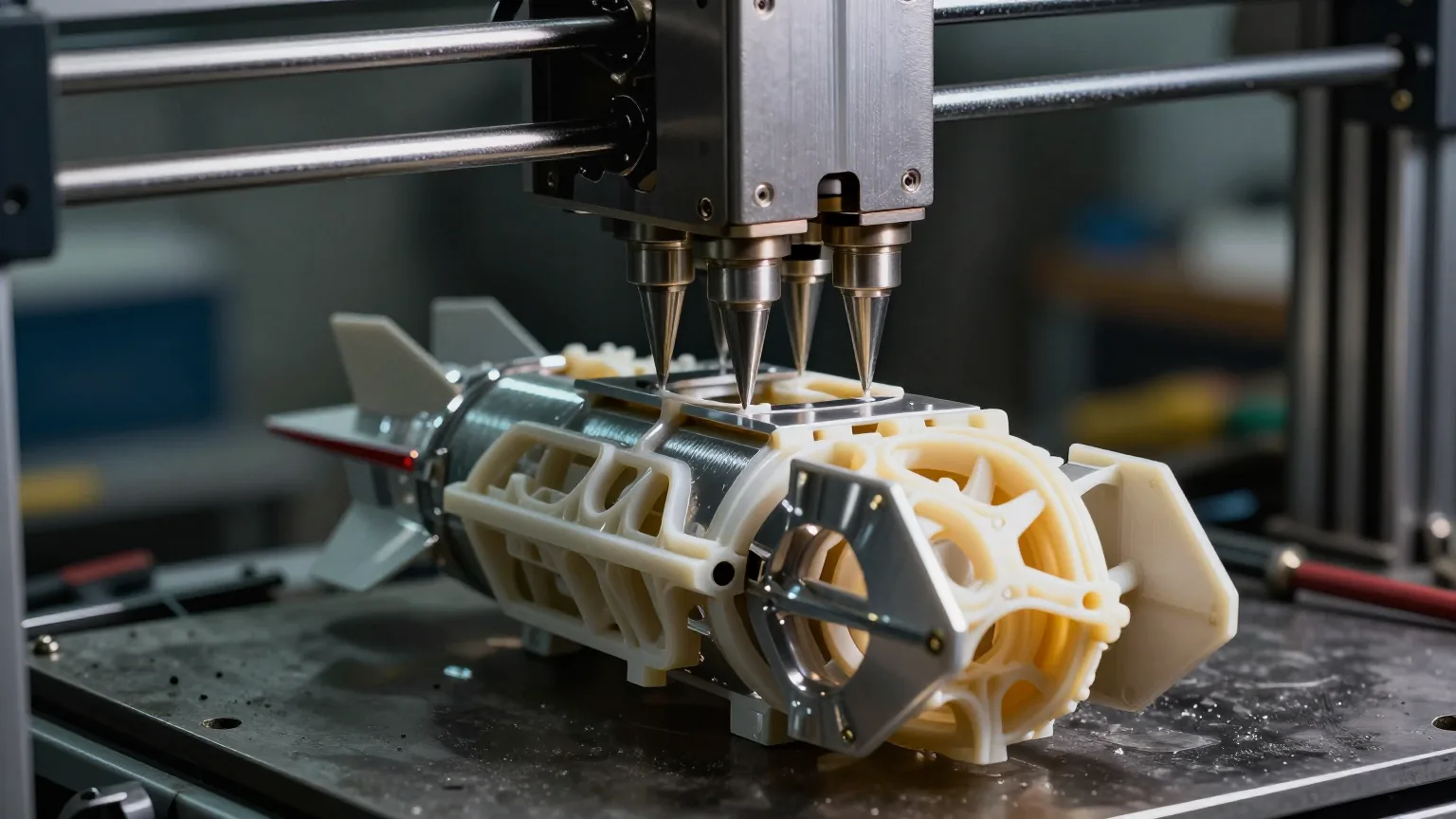
While we focus on the missile, it’s worth noting the sheer complexity of the hardware being developed in the 3D printing space. Recent certification filings revealed the P3C, a compact, enclosed P-series 3D printer with a seven-head tool-changing system [4]. Think of it as a P2S, but with "multiple personalities." This technology allows a single machine to switch between different materials and tools on the fly.
Why does this matter for the missile narrative? It highlights the trajectory of the technology. If a printer can switch between seven different tools to create a complex, multi-material object for a consumer or industrial application, imagine what it can do for a military component that requires a mix of metals, polymers, and composites in a single part. The capability to print complex, multi-material assemblies without manual intervention is a game-changer for rapid deployment and field repair. The P3C represents the kind of hardware that could theoretically be used to repair or manufacture critical missile components in the field, further extending the range and lifespan of systems like the Filin.
The AI Workflow: Hi3D and Meshy
The software side of the 3D printing equation is also evolving rapidly. With the launch of tools like Hi3D and Meshy, we are seeing an end to "siloed AI 3D tools" [4]. These platforms aim to infiltrate the entire print workflow, from initial concept to final model. For a defense contractor or a state actor, this means the time from "idea" to "printed part" is shrinking.
AI can now take a rough sketch or a set of performance parameters and generate a 3D model that is ready for printing. This removes the need for highly specialized CAD engineers for every single component. It lowers the skill barrier, making it easier for a smaller team to design and produce advanced weapons systems. The integration of AI into the workflow is a double-edged sword: it increases efficiency for legitimate industrial users, but it also lowers the barrier for those with malicious intent.
Safety, Ethics, and the EU Ban on Toxic Initiators
Amidst the high-speed missiles and AI algorithms, we must not forget the fundamental chemistry of 3D printing. Recent news from NTU Singapore highlights the development of nontoxic photoinitiators that could replace TPO and BAPO, resin ingredients now being banned in the EU [2]. This is a crucial development for the health and safety of the operators who run these machines.
In a military context, the operator’s health is often secondary to the mission. However, the shift toward nontoxic materials is a positive trend that could make 3D printing more sustainable and less hazardous in the long run. It also reflects a broader regulatory push to make the technology safer. While the EU is banning toxic ingredients for consumer and industrial health reasons, the military sector may be slower to adopt these changes due to cost and availability constraints. Nevertheless, the direction of travel is clear: the industry is moving toward safer, more sustainable materials, even as the applications become more dangerous.
Cultural Context: The Maker Movement vs. The Military Industrial Complex
To truly appreciate the irony of the Filin missile, we need to look at the cultural roots of 3D printing. The technology was born from the "Maker Movement," a grassroots initiative that celebrated creativity, open-source sharing, and the democratization of manufacturing. It was about making art, fixing broken toasters, and empowering individuals. Today, that same technology is being used to create weapons of mass destruction, albeit at a smaller scale than nuclear arms.
This dichotomy is not new. Firearms, chemical weapons, and biological agents have all gone through similar transitions from civilian to military use. However, 3D printing is unique because it is so versatile. The same printer that makes a toy for a child can make a part for a missile. This duality creates a cultural and ethical tension that society is only beginning to grapple with. We are living in a time where the tools of creation are also the tools of destruction, and the line between the two is often just a software file away.
Historical Perspective: From the Cold War to the 3D Age
Historically, the development of cruise missiles was a state-sponsored, secretive endeavor. The Cold War era was defined by massive industrial complexes, classified projects, and huge budgets. The US and the USSR spent billions to develop weapons that were difficult to produce and maintain. The Filin missile represents a break from this model. It suggests a new era where warfare is less about having the biggest factory and more about having the most efficient software and the most agile manufacturing capabilities.
This shift echoes the evolution of computing. In the 1960s, computers were room-sized machines owned by governments and corporations. Today, they are in our pockets. Similarly, 3D printing is moving from the laboratory to the field. The "room-sized" equivalent of 3D printing was the massive industrial foundry. The "pocket-sized" equivalent is the compact, high-speed printer like the Factor 4 Plus or the P3C [3][4]. The fact that a missile can be built with these tools signifies a fundamental shift in the balance of power.
Modern Perspectives: Defense, Security, and the Future
So, what does this mean for the future? From a defense perspective, the Filin missile is a wake-up call. It suggests that traditional air defense systems may need to be updated to deal with a new class of threats: cheap, rapidly produced, and hard to track. From a security perspective, it highlights the need for better monitoring of 3D printing files and hardware. If a malicious actor can download a file and print a weapon, the internet becomes a battlefield.
However, there is also a positive perspective. The same technology that allows for the rapid production of missiles also allows for the rapid production of medical devices, disaster relief supplies, and sustainable infrastructure. The key is not to ban the technology, but to understand its risks and develop robust safeguards. The 3D printing industry is already moving toward safer materials and more automated quality control [2][3], which are steps in the right direction.
The Human Element: Who Holds the Printer?
Ultimately, the story of the Filin missile is a story about people. It is about the engineers who designed it, the operators who printed it, and the politicians who deployed it. It is also about the 3D printing community, which is now inextricably linked to the defense industry. As we look at the latest news in 3D printing, from the nontoxic photoinitiators of NTU Singapore [2] to the high-speed printers of UltiMaker [3], we must remember that technology is neutral, but its application is not.
The challenge for the next decade will be to harness the power of 3D printing for good while mitigating its potential for harm. This will require international cooperation, stricter regulations on dual-use technology, and a greater awareness of the ethical implications of our innovations. The Filin missile is a reminder that we cannot ignore the military applications of our technology. We must engage with them, understand them, and find ways to ensure that the same printers that build bridges also do not build bombs.
Conclusion: A Call for Responsible Innovation
The deployment of the Filin missile is a pivotal moment in the history of 3D printing. It marks the point where the technology has moved beyond the realm of novelty and into the realm of strategic significance. As we continue to innovate, with AI-assisted design and low-waste multicolor printing leading the way [1], we must do so with a clear eye on the broader implications of our work.
Here is a call to action for the 3D printing community, policymakers, and the public:
- Advocate for Safety: Support the development of nontoxic materials and safe working environments [2].
- Push for Transparency: Demand greater transparency in how 3D printing is used in military applications.
- Educate Yourself: Understand the dual-use nature of the technology and the importance of ethical innovation.
- Stay Informed: Keep an eye on the latest news, from the high-speed printers [3] to the AI workflows [4], to understand where the technology is heading.
The 3D printer is no longer just a tool for making things; it is a tool for making history. Whether that history is one of creativity and progress or one of destruction and conflict depends on the choices we make today. Let us choose wisely. The speed of the printer is 500 mph; our ethical compass needs to be just as fast.