3D Printed Titanium Joints: The End of Welding in Aerospace?
The Sky Is No Longer the Limit (But It Is Getting Lighter)
For over a century, the story of flight has been written in metal. It is a saga of rivets, bolts, and the glorious, heat-induced art of welding. When you look at a modern commercial airliner or a military fighter jet, you see a puzzle of thousands of individual parts joined together by molten metal. It is a process that is heavy, time-consuming, and fundamentally limited by the physics of joining two separate pieces together. But what if we didn’t need to join them at all?
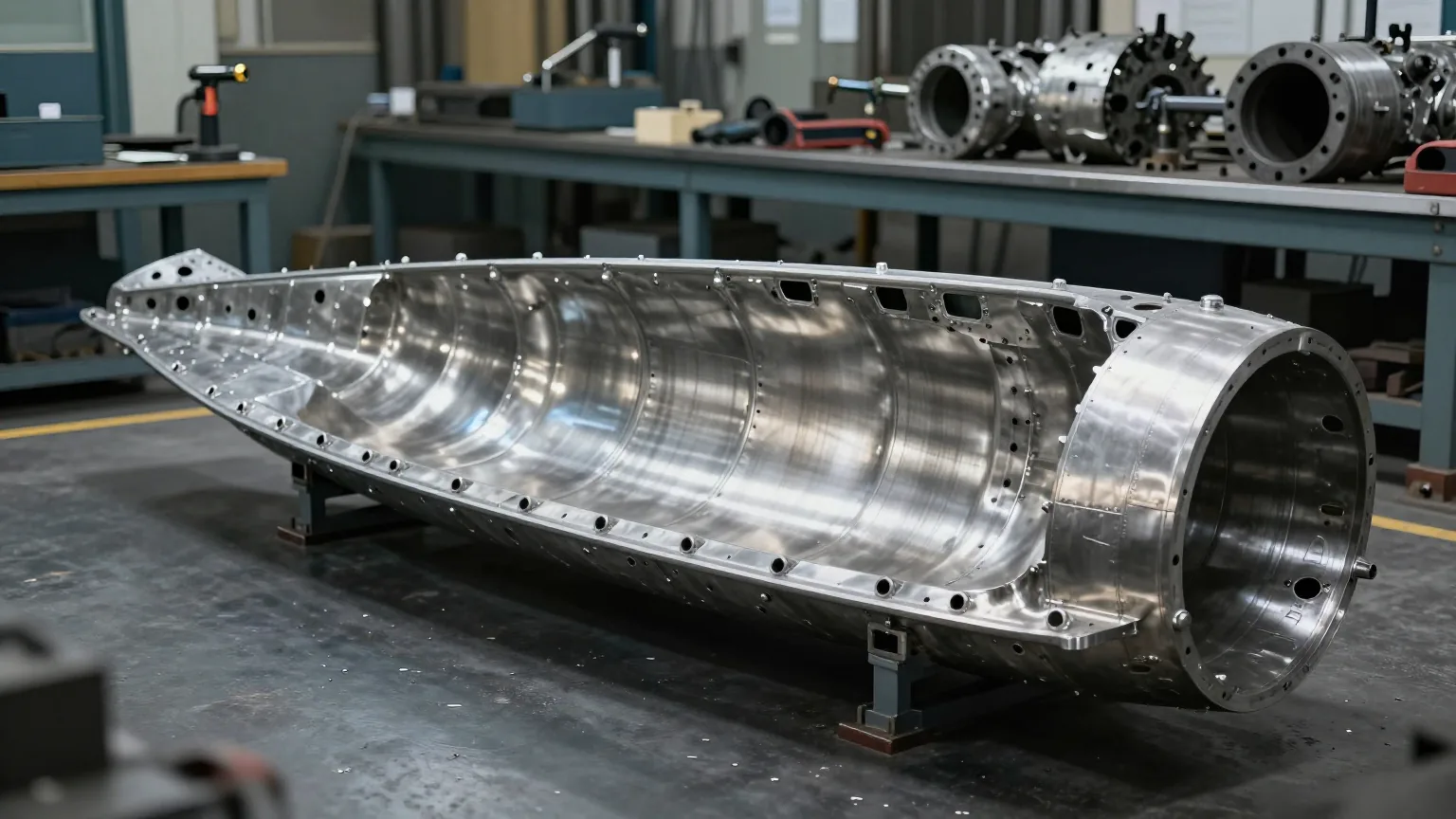
Enter additive manufacturing, or as we like to call it, 3D printing. Specifically, we are talking about the cutting-edge application of printing complex titanium joints directly. This isn’t just about making a part; it’s about reimagining the entire structural integrity of an aircraft. The question on the lips of every aerospace engineer, supply chain manager, and aviation enthusiast is no longer "Can we print this?" but rather, "Is this the end of welding in aerospace?"
The short answer is: not exactly. But the long answer is a thrilling narrative of how 3D printed titanium joints are quietly revolutionizing the industry, turning the traditional assembly line on its head. Let’s dive into the tech, the trends, and the future of flight.
Why Titanium? The Gold Standard of Aerospace
Before we get into the printing, we have to talk about the material. In the aerospace world, titanium is the king. Why? Because it offers a strength-to-weight ratio that is almost magical. It is as strong as steel but significantly lighter, and it can withstand extreme temperatures without losing its structural integrity. Furthermore, it is highly resistant to corrosion, which is crucial for aircraft that spend their lives fighting against the elements.
However, titanium has a dark side. It is notoriously difficult to machine. It is hard, it conducts heat poorly, and it is expensive. Traditional manufacturing methods involve subtractive processes—cutting away material from a solid block until you have the shape you want. This is wasteful. You might start with a 10-kilo block of titanium and end up with a 1-kilo part, throwing away 90% of the material. In an industry where every gram counts, this inefficiency is a headache.
3D printing changes the equation. Instead of subtracting, we add. We build the part layer by layer, only using the material we need. When combined with the unique capabilities of additive manufacturing, titanium stops being just a heavy metal and starts becoming a design enabler.
The Welding Bottleneck: A Historical Perspective
To understand why 3D printing is disrupting the status quo, we need to look at the history of aerospace assembly. The development of the modern aircraft was a race to join parts together faster and stronger. Welding became the go-to solution. It allows for continuous, seamless structures that can handle high stress loads.
But welding is a compromise. It requires heating the metal to extreme temperatures, which can alter the microstructure of the surrounding area, making it weaker or more brittle. It also requires extensive quality control. Every weld must be inspected, often using X-rays or ultrasonic testing, to ensure there are no cracks or porosity. A single hidden flaw in a weld can be catastrophic at Mach 2.
Furthermore, welding limits design. If you want to create a complex internal geometry, like a lattice structure that distributes weight efficiently, you can’t easily weld it. You are limited to the shapes that can be joined end-to-end. This is where the "digital thread" of additive manufacturing shines. It removes the physical constraints of joining, allowing engineers to design parts that are impossible to weld, let alone machine.
What Are 3D Printed Joints, Exactly?
So, what does a "3D printed joint" actually look like? It’s not a single, monolithic block that replaces the whole wing (though that’s the dream). Instead, it’s a specific component designed to connect two larger structures. Think of it as a structural node.
Traditional joints are often flat plates or brackets that are bolted or welded to the main structure. These add weight and create stress concentration points. A 3D printed joint, however, can be designed with a complex, organic shape that blends smoothly into the surrounding structure. It can incorporate internal cooling channels, weight-saving lattices, and optimized load paths that mimic the way nature builds bones.
For example, a joint connecting a wing spar to the fuselage can be printed with a graded lattice structure. The material is densest where the stress is highest and lighter where the load is lower. This results in a part that is not only lighter but also more fatigue-resistant than its welded counterpart. It’s like the difference between a rigid plastic box and a flexible, impact-absorbing gel.
The Technology Behind the Magic: EBM vs. PBF
Not all 3D printing is created equal. When we talk about titanium in aerospace, we are usually referring to Powder Bed Fusion (PBF) technologies. There are two main contenders in the ring: Electron Beam Melting (EBM) and Laser Powder Bed Fusion (LPBF).
Electron Beam Melting (EBM) uses a high-voltage electron beam to melt the titanium powder. This process happens inside a vacuum chamber, which prevents oxidation and allows for higher build rates. EBM is particularly good for producing parts with complex internal geometries because the vacuum environment and the specific heat distribution of the electron beam help minimize residual stresses.
Laser Powder Bed Fusion (LPBF) uses a high-powered laser to melt the powder. This technology has seen more widespread adoption in recent years due to improvements in laser power and control. LPBF offers excellent surface finish and dimensional accuracy, which is critical for aerospace parts that must fit together with micron-level precision.
Both technologies are maturing rapidly. The key difference for the end-user is often the specific alloy and the final mechanical properties. EBM parts often require less post-processing to remove stress, while LPBF parts may offer slightly better surface quality out of the box. For joints, which are critical load-bearing components, the choice of technology is a matter of precise engineering trade-offs.
Case Study: The Boeing 787 and the Shift to Additive
You might be wondering, "Is this just science fiction?" No. It’s already happening. While the Boeing 787 Dreamliner is famous for its composite materials, it also paved the way for the additive manufacturing revolution. Boeing has been a pioneer in using 3D printing for both prototypes and final flight parts.
One notable example is the use of 3D printed titanium parts in the 787’s fuselage. These parts are not just simple brackets; they are complex structural joints that connect various sections of the aircraft. By printing these joints, Boeing was able to reduce the number of parts from dozens to just a few. This simplification means fewer fasteners, less assembly time, and a lighter overall structure.
The result? A more efficient aircraft that burns less fuel and produces fewer emissions. It’s a win-win for the airline and the environment. And this is just the beginning. As the technology matures, we can expect to see more and more titanium joints appearing in new aircraft designs, from commercial jets to military drones.
The Supply Chain Revolution: From Global to Local
Let’s talk business for a moment. The aerospace supply chain is a global behemoth. Parts are sourced from dozens of countries, shipped across oceans, and assembled in massive factories. This creates vulnerabilities. A delay in one country can halt production in another. It also adds significant logistics costs and carbon footprints.
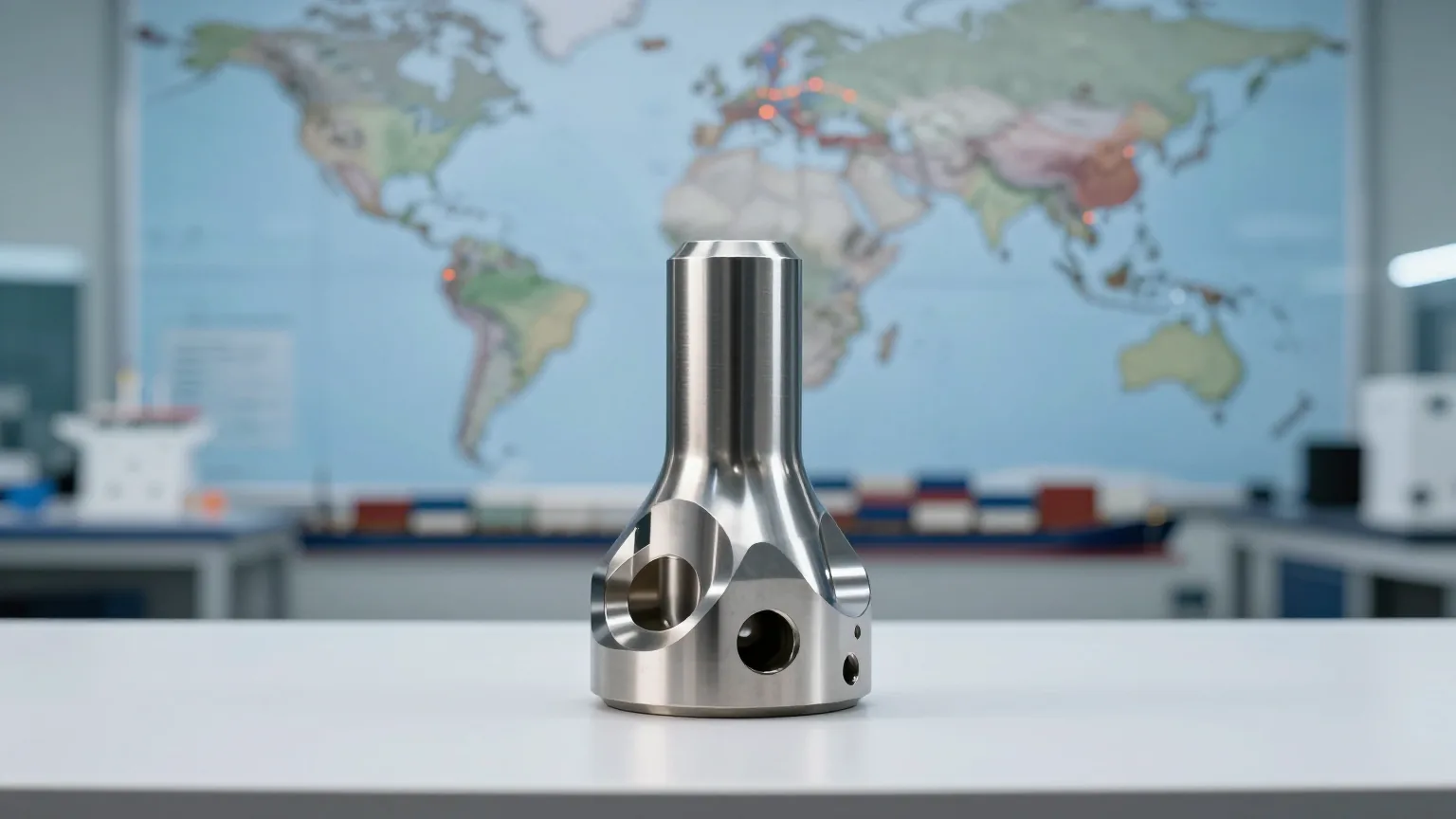
3D printing disrupts this model by enabling local manufacturing. Instead of shipping a heavy titanium block from a supplier in Germany to a factory in the US, you can ship a small, dense file of the part’s digital blueprint. Then, you can print the part locally, right where it’s needed. This reduces lead times, lowers transportation costs, and makes the supply chain more resilient.
For aerospace companies, this is a game-changer. It allows for faster iteration and easier maintenance. If a joint on a remote aircraft breaks, instead of waiting weeks for a replacement part to be machined and shipped, the airline can print a new one on-site. This is the future of maintenance: digital, fast, and localized.
Quality Control: Trusting the Process
Now, let’s address the elephant in the room: safety. In aerospace, "good enough" is not good enough. Every part must be certified to meet the highest safety standards. Can we trust a 3D printed titanium joint to hold up under the stresses of flight?
The answer is yes, but it requires a new approach to quality control. Traditional inspection methods, like visual checks and X-rays, are still used, but they are supplemented by advanced in-situ monitoring. During the printing process, sensors track the temperature, laser power, and powder flow in real-time. Any deviation from the expected parameters is flagged immediately.
Additionally, the digital nature of additive manufacturing allows for a complete "digital twin" of the part. Every parameter of the print is recorded, creating a full history of the part’s creation. This data can be used to predict the part’s performance and identify potential weaknesses before the part even leaves the printer. It’s a level of traceability that is impossible to achieve with traditional manufacturing.
Environmental Impact: A Greener Future for Flight
We can’t talk about the future of aerospace without mentioning sustainability. The aviation industry is under increasing pressure to reduce its carbon footprint. 3D printing offers a significant opportunity in this area.
First, as we mentioned, additive manufacturing reduces material waste. By using only the material needed for the part, we reduce the demand for raw titanium, which is energy-intensive to mine and process. Second, the local manufacturing model reduces transportation emissions. Third, lighter aircraft burn less fuel, which directly reduces CO2 emissions during operation.
While the 3D printing process itself consumes energy, the overall environmental benefit is substantial. It’s a small step, but in an industry as massive as aviation, small steps can add up to big changes. As the technology becomes more energy-efficient and uses more sustainable materials, the environmental case for 3D printed titanium joints will only get stronger.
Challenges and Limitations: It’s Not All Rainbows
Let’s be realistic. 3D printed titanium joints are not a silver bullet. There are still challenges to overcome.
Cost: While 3D printing can reduce costs in the long run, the initial investment in equipment and software is high. The cost of high-quality titanium powder is also significant. For high-volume production, traditional manufacturing may still be more cost-effective.
Build Size: Most industrial 3D printers have a limited build volume. If you need to print a very large joint, you may need to print it in multiple pieces and join them, which defeats the purpose of avoiding welding. However, larger printers are being developed, so this limitation is gradually disappearing.
Material Consistency: Ensuring that every batch of titanium powder has the same properties is critical. Any variation in particle size or chemistry can affect the final part’s performance. This requires rigorous quality control of the raw materials.
Regulatory Hurdles: Aviation is a heavily regulated industry. Getting new manufacturing processes certified can be a slow and expensive process. However, as more parts are approved, the regulatory framework is evolving to accommodate additive manufacturing.
The Future: Hybrid Manufacturing and Beyond
So, is this the end of welding? Not entirely. Welding will likely remain a part of the aerospace manufacturing toolkit, especially for large-scale structures where additive manufacturing is not yet practical. However, the role of welding will change. It will become more of a specialized tool for specific applications, rather than the default method for joining parts.
The future lies in hybrid manufacturing. This involves combining additive and subtractive processes in a single machine. You can print a complex titanium joint, then use a milling tool to finish the critical surfaces to the required tolerance. This hybrid approach offers the best of both worlds: the design freedom of 3D printing and the precision of traditional machining.
We can also expect to see new materials and alloys developed specifically for 3D printing. These materials will be optimized for the additive process, offering even better strength, weight, and fatigue resistance. Imagine titanium alloys that are self-healing or that can be printed with varying densities throughout the part. The possibilities are endless.
Conclusion: The Horizon is Clear
3D printed titanium joints are not just a novelty; they are a fundamental shift in how we build aircraft. They offer a path to lighter, stronger, and more efficient planes. They simplify the supply chain, reduce environmental impact, and open up new design possibilities that were previously impossible.
While we won’t see a completely weld-free aircraft any time soon, the trend is clear. Additive manufacturing is moving from the lab to the factory floor. It is becoming a standard tool in the aerospace engineer’s toolkit. The next time you board a flight, you might just be sitting on a plane that was partly printed by a machine.
As we stand on the cusp of this new era, the challenge is to embrace the change while maintaining the highest standards of safety and quality. The future of aerospace is not just about flying faster; it’s about building smarter. And 3D printed titanium joints are a key part of that story.
Call to Action: Are you an engineer, a student, or an aviation enthusiast? The future is being designed right now. Follow the developments in additive manufacturing, engage with the community, and imagine what you could build if the rules of traditional manufacturing no longer applied. The sky is not just the limit; it’s the canvas.