Seven Heads, One Printer: Bambu Lab's P3C Leak
The 3D printing industry has never been shy about secrets, but it rarely leaks them with such theatrical flair. For years, we have watched the titans of additive manufacturing—Bambu Lab, Creality, Prusa, and others—battle for supremacy in speed, precision, and user experience. We have seen the rise of the "enclosed" machine, the dominance of multi-material systems, and the integration of AI into the slicing workflow. But nothing in the last few years has sparked as much speculation, excitement, and confusion as the recent certification filings that revealed the existence of the Bambu Lab P3C. If you have been following the headlines, you likely have already seen the buzz. But what exactly are we looking at? And why does a "seemingly compact" printer with a "seven-head tool-changing system" feel like a shift in the very definition of what a desktop 3D printer can be? Let’s dive into the details, the context, and the implications of this potential game-changer [1].
The Leak That Started It All
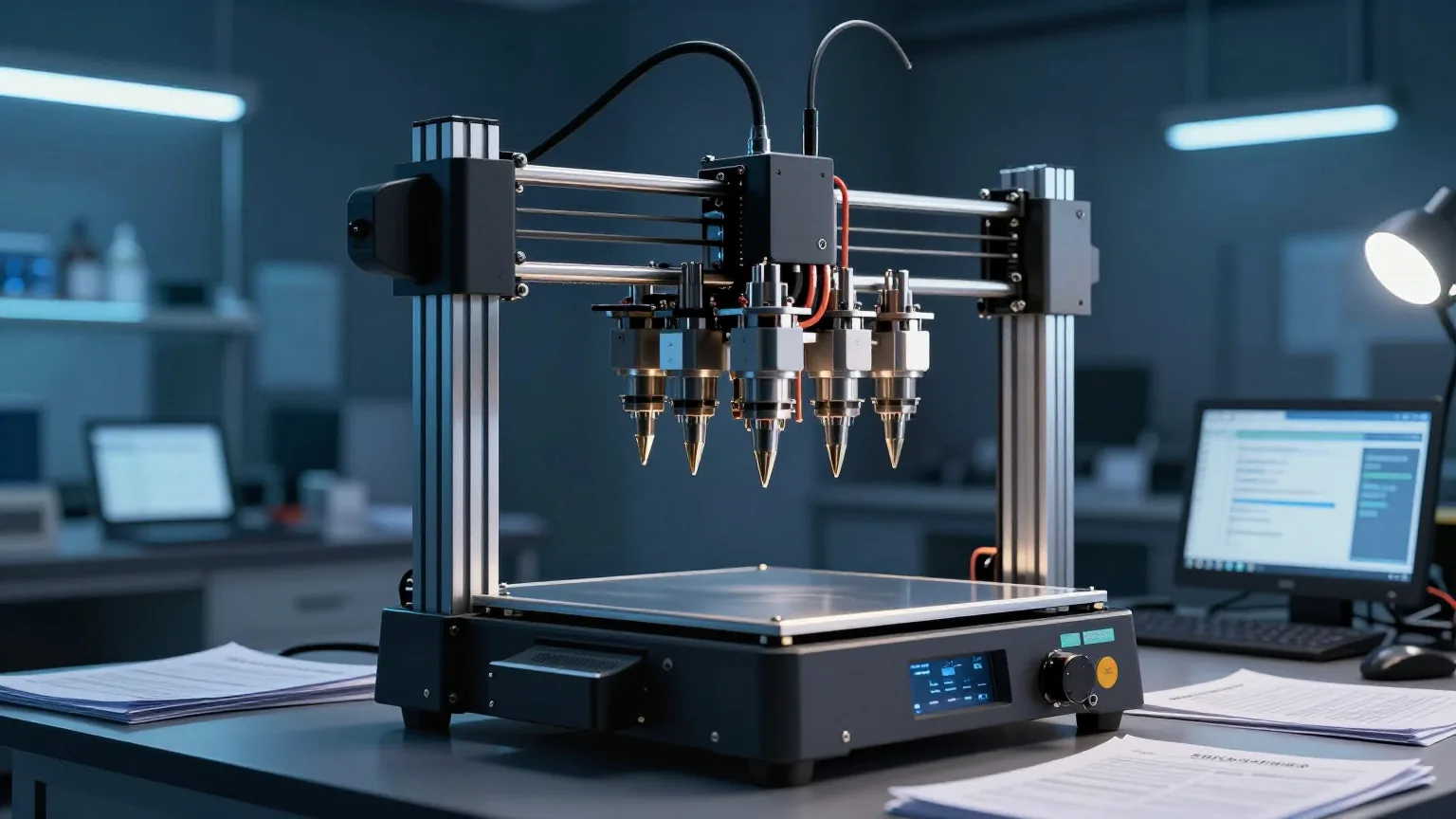
In the world of consumer electronics and high-tech manufacturing, certification filings are often the first place new hardware surfaces before an official launch. These documents are dry, technical, and usually boring to the average enthusiast. However, when images of a new device appear in these files, the community ignites. For the Bambu Lab P3C, this was no different. Photos from recent certification filings revealed a machine that looks deceptively similar to the existing P2S series, but with a significant twist: a complex, seven-head tool-changing system [1].
At first glance, the P3C appears to be a compact, enclosed unit. For those familiar with Bambu Lab’s design language, the enclosure is a familiar sight, designed to maintain temperature stability and contain fumes. But the internal architecture, as glimpsed through the leaked images, suggests a level of mechanical complexity that goes far beyond the standard dual-gear extruder or even the four-head AMS (Automatic Material System) setups we have become accustomed to. The phrase "seven heads are better than one, but none of them is talking" captures the essence of the leak perfectly. It hints at a modular, perhaps even swappable, head architecture that allows for a breadth of material processing we haven't seen in a consumer-grade desktop device [1].
Decoding the "P3C" Designation
Naming conventions in the 3D printing world can be cryptic, but Bambu Lab has generally followed a logical progression. The "P" series has historically denoted their professional or performance-oriented lines, distinct from the more consumer-focused X series. The "2S" in the P2S suggests a second-generation, high-speed variant. So, what does "P3C" mean? While Bambu Lab has not officially confirmed the nomenclature, the "3" likely indicates a third-generation architecture, while the "C" could stand for "Compact," "Core," or even "Configurable."
Given the description of the device as "seemingly compact," the "C" for Compact is a strong contender. This would position the P3C as a high-end, space-efficient solution for users who need industrial-grade capabilities without the footprint of a full-size industrial printer. This is a crucial distinction. The trend in 2026 is not just about bigger machines, but about densifying capability into smaller footprints. As we look at other innovations this year, such as low-waste multicolor printing and AI-assisted design, the focus is on efficiency and integration [2]. The P3C appears to be the physical embodiment of this trend: more power, more materials, more precision, all in a box that fits on a desk.
The Seven-Head System: A Multi-Personality Machine
The most striking feature of the P3C leak is the seven-head tool-changing system. To understand why this is revolutionary, we need to look at the limitations of current multi-material systems. Today’s top-tier consumer printers, like the Bambu Lab X1 Carbon or P1S, typically support up to four materials simultaneously via the AMS. This allows for multi-color prints, but the switching mechanism is relatively simple: a single nozzle that swaps out the filament feed. If you want to print with a dissolvable support material, a flexible material, and a rigid material, you are often limited by the physical constraints of the single nozzle and the filament path.
A seven-head system suggests a fundamentally different approach. It implies that the printer may have multiple nozzles or tool heads that can be physically swapped or selected for different tasks. This is reminiscent of industrial multi-process machines, where a single platform can switch between a standard FDM nozzle, a carbon fiber nozzle, a metal nozzle, or even a laser head. By integrating seven such heads, the P3C could potentially handle a vast array of materials and processes in a single print job. Think of it as a Swiss Army knife for 3D printing. You could print a functional part with reinforced carbon fiber, add a flexible hinge, and finish it with a high-gloss aesthetic layer, all without stopping the machine to change nozzles manually [1].
This "multiple personalities" aspect of the P3C is what sets it apart. It is not just a faster printer; it is a more versatile one. It aims to eliminate the siloed nature of current workflows, where you might need one printer for prototyping, another for aesthetic parts, and a third for functional engineering. The P3C seems designed to be the "do-it-all" machine for the advanced maker, the engineer, and the small business owner.
Contextualizing the P3C in 2026 Innovation Trends
To truly appreciate the P3C, we must look at it within the broader landscape of 3D printing innovations in 2026. The industry is currently undergoing a significant shift driven by AI, sustainability, and advanced material science. According to recent industry analyses, the top trends for this year include AI-assisted design, low-waste multicolor printing, and the integration of automated quality validation [2].
The P3C fits neatly into this ecosystem. The multi-head system is a hardware solution to the software and material challenges of 2026. AI-assisted design tools are becoming smarter, capable of predicting which materials and nozzle types are best for specific parts of a model. A printer with seven heads can physically execute these complex instructions. Similarly, the push for low-waste multicolor printing is about reducing the amount of material discarded during color changes. A sophisticated tool-changing system could optimize material usage by ensuring that each head is used only for the specific material it is designed for, minimizing purge waste and cross-contamination [2].
Furthermore, the trend of "Open the Box" and the end of siloed AI 3D tools, as highlighted by companies like Hi3D and Meshy, suggests a future where the entire print workflow—from design to post-processing—is integrated [1]. The P3C, with its complex hardware, is likely to be accompanied by a sophisticated software suite that leverages AI to manage the seven heads. Imagine a slicer that automatically assigns the best head for each section of the model, based on the material properties and the desired surface finish. This level of automation is the next frontier, and the P3C appears to be built for it.
Comparing the P3C to the P2S: Evolution, Not Revolution?
Many observers have noted that the P3C looks like a "P2S, but with a serious case of multiple personalities" [1]. This comparison is apt. The P2S is already a well-regarded machine, known for its speed, reliability, and enclosed design. The P3C seems to take this foundation and supercharge it. The core chassis, the motion system, and the user interface likely share DNA with the P2S. This is a smart strategy for Bambu Lab. By leveraging a proven platform, they reduce development risk and ensure that the P3C inherits the reliability and ease of use that made the P-series popular.
However, the addition of the seven-head system is a massive leap. It transforms the P3C from a high-speed printer into a multi-process manufacturing unit. The P2S is great for printing a lot of parts quickly. The P3C aims to be great for printing the right parts, with the right materials, in the right configuration, all in one go. This is a subtle but important distinction. It shifts the value proposition from volume to versatility. For a small business or a research lab, versatility is often more valuable than raw speed, as it reduces the need for multiple machines and the associated calibration and maintenance overhead.
The Industrial Shadow: UltiMaker and the Race to Automation
The P3C does not exist in a vacuum. It is part of a broader race between consumer and industrial 3D printing. Recently, UltiMaker unveiled the Factor 4 Plus, a high-speed industrial 3D printer with automated quality validation [3]. This move signals that the industrial sector is also focusing on speed and quality assurance. The P3C, with its multi-head system, can be seen as Bambu Lab’s response to this industrial trend, bringing some of these capabilities down to the desktop level.
Automated quality validation is a key feature of the Factor 4 Plus, and it is likely that the P3C will incorporate similar technologies. With seven heads, the potential for error increases. If one head clogs or a material feed fails, the print could be compromised. Therefore, the P3C will likely feature advanced sensors and AI-driven monitoring to detect and correct issues in real-time. This is a crucial aspect of the "end of siloed AI 3D tools" trend. The printer is not just a machine; it is an intelligent agent that manages its own operation [1].
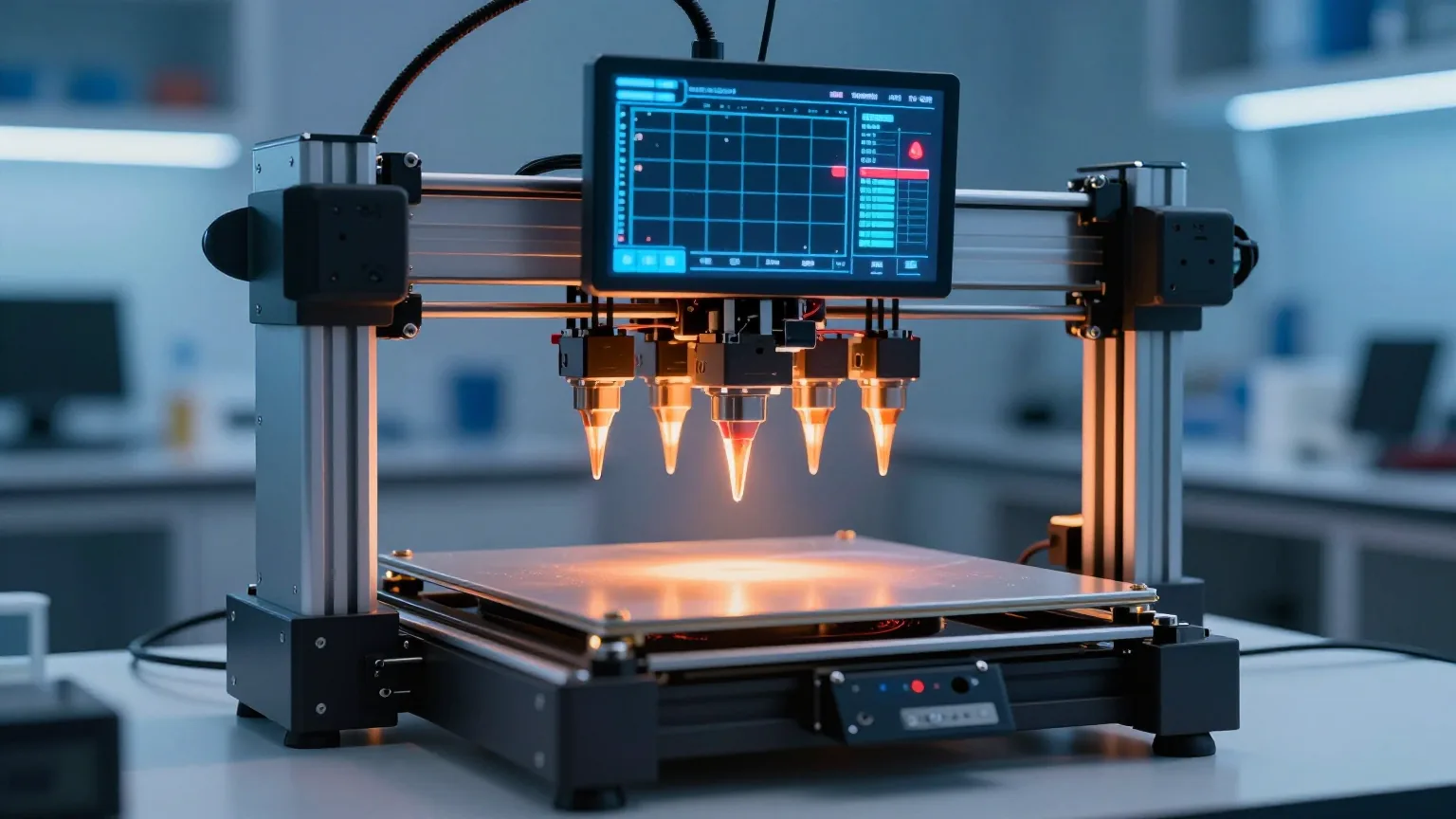
This convergence of consumer and industrial features is changing the landscape. The line between a "hobbyist" printer and an "industrial" printer is blurring. The P3C represents the culmination of this trend. It is a machine that can handle the demands of professional engineering while remaining accessible to the advanced consumer. This is a significant shift in the market, as it opens up new opportunities for individuals and small businesses who previously could not afford industrial-grade equipment.
Material Science and the P3C: What Can It Print?
The true power of the P3C lies in its potential material compatibility. With seven heads, we can speculate on the types of materials it might support. Standard PLA and ABS are likely covered by at least two or three heads. But what about the others? Carbon fiber reinforced nylon (PA-CF) is a popular choice for functional parts, and it requires a hardened nozzle. The P3C likely has a dedicated head for this. What about metal-filled filaments, which are becoming more common for high-strength applications? A head with a wider nozzle and higher temperature capability could be included. There is even the possibility of a head designed for dissolvable support materials, such as PVA or HIPS, which would allow for complex geometries without the need for support structures that are difficult to remove [2].
Furthermore, the 2026 trend of nontoxic photoinitiators and advanced resin ingredients, as seen in the work of NTU Singapore researchers, suggests that we may see similar advancements in FDM materials [4]. The P3C could be the first consumer printer to support these new, environmentally friendly materials. This would be a significant selling point, as sustainability is becoming a major concern for both consumers and businesses. By offering a printer that can handle a wide range of eco-friendly materials, Bambu Lab could position the P3C as a leader in sustainable manufacturing.
The AI Integration: Beyond Slicing
As mentioned earlier, AI is a central theme in 3D printing innovations [2]. The P3C is likely to be deeply integrated with AI tools for design and printing. Imagine a workflow where you import a 3D model, and the AI analyzes it to determine the optimal material for each section. It then generates a print file that assigns the correct head to each section. The printer then executes this file, switching heads as needed. This level of automation would dramatically reduce the time and skill required to produce complex, multi-material parts.
Moreover, AI could be used for predictive maintenance. By monitoring the performance of the seven heads, the AI could predict when a head is likely to fail and schedule a maintenance window. This would minimize downtime and ensure that the printer is always ready for the next job. This is a feature that is currently rare in consumer printers but is becoming standard in industrial machines. The P3C would bring this level of reliability to the desktop, making it a viable tool for small-scale manufacturing.
Market Implications: Who is the P3C For?
Who is the P3C really for? It is certainly not for the beginner. The complexity of a seven-head system means that the printer will likely be more expensive and require more careful maintenance. It is aimed at the advanced maker, the engineer, the designer, and the small business owner who needs a versatile, high-performance machine. It is a tool for those who are pushing the boundaries of what is possible with 3D printing.
For the hobbyist, the P3C might be out of reach, both in terms of price and complexity. However, its existence puts pressure on the rest of the market to innovate. We can expect to see other manufacturers respond with their own multi-head systems or advanced multi-material solutions. This competition is good for the consumer, as it drives down prices and improves technology. The P3C is a benchmark, a target that other companies will strive to match or exceed.
For the industrial sector, the P3C represents a threat. It offers a fraction of the cost of industrial multi-process machines, while providing a significant portion of their capability. This could disrupt the market for small-scale industrial printing, forcing larger manufacturers to reconsider their pricing and value propositions. The P3C is a democratizing force, bringing advanced manufacturing capabilities to a wider audience.
The Cultural Shift: From Hobby to Industry
The P3C leak is not just a hardware story; it is a cultural one. It reflects a shift in the 3D printing community from a hobbyist-focused culture to an industry-focused one. For years, 3D printing was associated with toys, gadgets, and personal projects. Today, it is associated with functional parts, prototypes, and small-scale manufacturing. The P3C is a symbol of this shift. It is a machine that is serious about production, with features that are relevant to industrial applications.
This cultural shift is also reflected in the way we talk about 3D printing. We no longer talk about "print time" as the primary metric of success. We talk about "material compatibility," "precision," and "automation." The P3C embodies these new values. It is a machine that is designed to be a tool for work, not just a toy for play. This is a significant change, and it marks the maturation of the 3D printing industry.
Challenges and Uncertainties
Despite the excitement, there are challenges and uncertainties surrounding the P3C. Pricing and launch timing remain a mystery [1]. The complexity of the seven-head system could lead to higher costs, both in terms of the initial purchase price and the ongoing maintenance. If the printer is too expensive, it may limit its appeal to a niche market. Additionally, the reliability of such a complex system is a concern. More moving parts mean more potential points of failure. Bambu Lab will need to ensure that the P3C is as reliable as its predecessors, or risk damaging its reputation.
There are also questions about the software. Can the slicer and the printer’s firmware handle the complexity of the seven-head system? Will the AI integration be robust enough to manage the workflow? These are significant technical challenges that will need to be overcome before the P3C can be a success. The fact that it has leaked before an official launch suggests that it is still in development, and there may be changes to the final product.
Conclusion: The Future is Multi-Headed
The Bambu Lab P3C leak is a significant event in the 3D printing industry. It represents a leap forward in hardware design, material compatibility, and automation. It is a machine that is designed for the future, with features that are aligned with the key trends of 2026, such as AI-assisted design, low-waste multicolor printing, and automated quality validation [2]. While there are uncertainties regarding pricing, launch timing, and reliability, the potential of the P3C is undeniable. It is a machine that could transform the desktop 3D printer from a hobbyist tool into a serious manufacturing asset.
For the 3D printing community, the P3C is a call to action. It is a reminder that the industry is moving fast, and that we need to keep up. It is a challenge to other manufacturers to innovate and compete. And it is an opportunity for users to explore new possibilities in 3D printing. The future of 3D printing is multi-headed, and the P3C is leading the charge.
What are your thoughts on the P3C? Do you think a seven-head system is the next step for desktop 3D printers, or is it too complex for the average user? Share your opinions in the comments below, and let’s discuss the future of 3D printing together. Stay tuned for more updates on the P3C and other 3D printing innovations in 2026.