Bambu Lab H3C Launch: 9 Swappable Tools & TPU Support
The 3D printing industry has long been a place of rapid iteration, where yesterday’s breakthrough is today’s baseline. But few releases in recent memory have generated as much buzz, speculation, and anticipation as the Bambu Lab H3C. For months, it was a ghost in the machine—a mysterious tool changer teased in vague press releases and whispered about in community forums. Now, with its official launch on November 3, 2026, the dust has settled, and the reality is even more impressive than the rumors [5].
If you have been following the news in the 3D printing sphere, you know that the landscape has shifted dramatically. We are no longer just printing objects; we are managing complex manufacturing processes. The H3C represents a pivotal moment in this evolution. It is not just another printer; it is a statement of intent from Bambu Lab to dominate the high-end consumer and prosumer market by combining speed, versatility, and intelligent automation in a way that feels almost sci-fi. Let’s dive into what makes this machine a game-changer, why the nine swappable PrintTools matter, and how the support for ultra-soft TPU changes the game for makers and engineers alike.
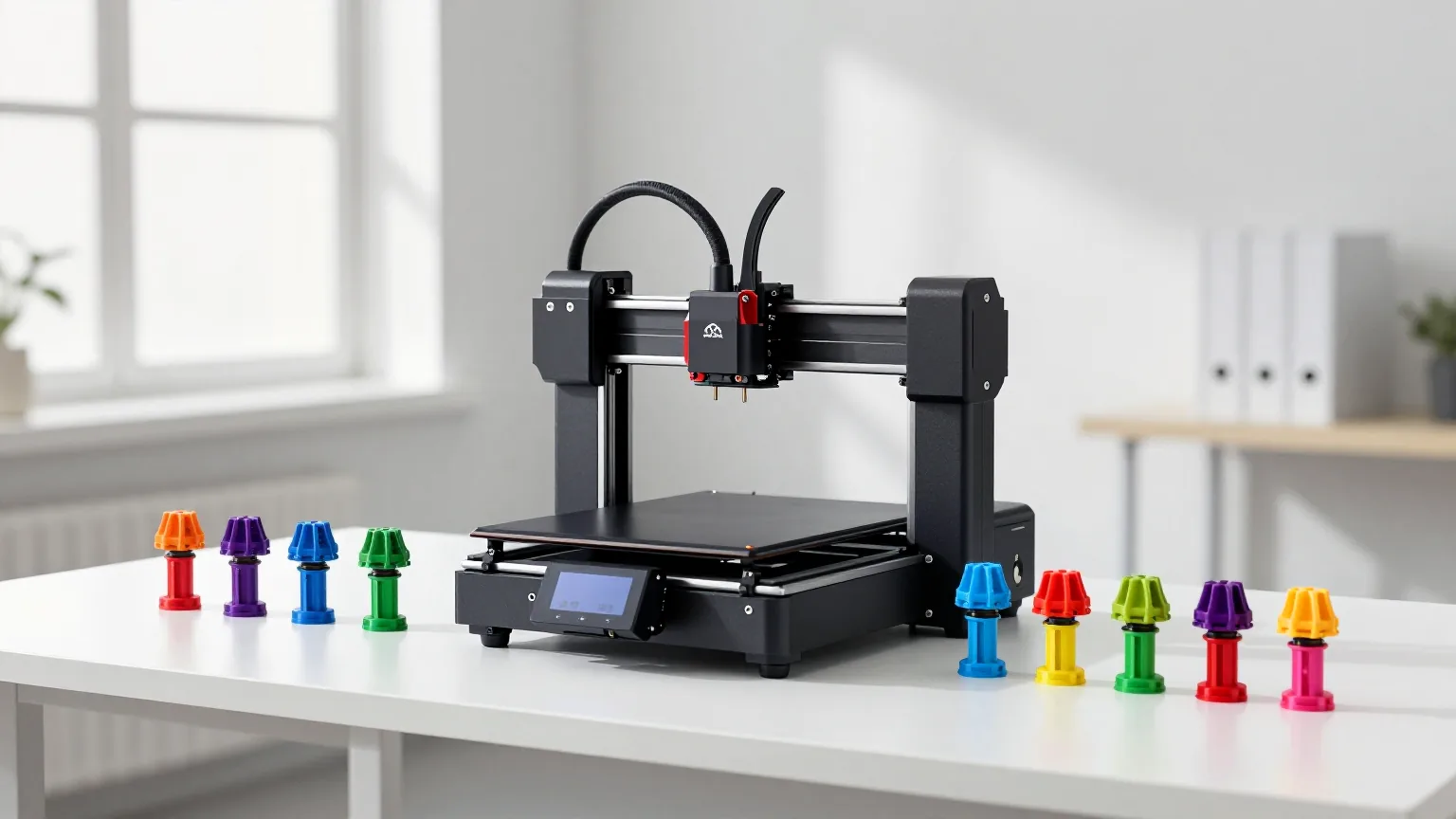
The Wait is Over: A November 3rd Debut
Patience has been a virtue required of Bambu Lab’s customer base. The company, known for disrupting the market with the X1C and P1S series, kept the H3C under wraps for an extended period. This silence was strategic. By the time the news broke that the launch was scheduled for November 3, 2026, the industry was already primed for a major shift [5].
The anticipation was fueled by leaks and teasers that hinted at a "mysterious tool changer" [5]. In the world of FDM (Fused Deposition Modeling) printing, tool changers are not new concepts—they have been a staple of industrial printing for years. However, bringing this level of complexity into a machine that is still accessible to home users and small businesses is a significant engineering feat. The launch date coincided with the broader trend of Black Friday savings sweeping the printersphere, suggesting that Bambu Lab wanted to position the H3C not just as a technical marvel, but as a value proposition for those looking to upgrade their setups during the holiday season [1].
Anatomy of the Beast: Nine Swappable PrintTools
The headline feature of the H3C is, undeniably, its nine swappable PrintTools. In traditional multi-color printing, you might have a single extruder that swaps filaments through a purge station. That works for color, but it fails when you need different materials or nozzle sizes for different parts of the same object. The H3C solves this by allowing the print head to physically swap out its tooling.
Imagine a printer that can switch from a fine 0.4mm nozzle for intricate details to a robust 0.8mm or 1.2mm nozzle for large, structural parts, all without pausing the print job for a human to intervene. This is the promise of the H3C. According to recent reports, the slicer software allows a fine nozzle to print thin layers while a larger nozzle prints thick ones, side by side on the same object [2]. This capability is a massive leap forward in efficiency. It means you can print a bracket that requires both delicate, high-resolution text and heavy-duty, load-bearing walls in a single, uninterrupted run.
The "swappable" nature also extends to specialized tools. While the exact configuration of all nine tools may vary by user preference or future software updates, the system is designed to handle a wide array of functions. This could include:
- Standard extruders for PLA, PETG, and ABS.
- Specialized nozzles for carbon fiber or metal-filled filaments.
- Tools for support material removal or polishing (in advanced configurations).
- Specific extruders for flexible materials, which we will discuss in detail later.
This modularity is a departure from the "one-size-fits-all" approach that has dominated the consumer market. It acknowledges that different projects require different tools, and forcing a single extruder to handle everything often leads to compromises in quality or speed. By offering nine distinct tools, the H3C empowers the user to optimize each stage of the print process.
Taming the Flexible: Ultra-Soft TPU Support
For years, printing with TPU (Thermoplastic Polyurethane) and other ultra-soft materials has been a headache for FDM printers. These materials are flexible, sticky, and prone to clogging standard direct-drive extruders. Many printers either cannot handle them at all, or require significant manual tuning and slow printing speeds to succeed.
The H3C changes this narrative by explicitly supporting ultra-soft TPU [1]. This is not just a minor update; it is a fundamental expansion of the material palette available to users. TPU is used for a wide range of applications, from gaskets and seals to phone cases, drone frames, and even parts of prosthetics. The ability to print these reliably, at high speeds, and alongside rigid materials in the same project is a huge win.
How does the H3C achieve this? The key lies in the dedicated tooling and the integrated filament management system. The extruder designed for TPU likely features a unique gear system and a heated path that prevents the material from cooling and retracting inside the nozzle, a common issue with flexible filaments. Furthermore, the integrated filament management system ensures that the filament is fed smoothly and consistently, reducing the risk of jams that often plague flexible materials [1].
This support also opens up new design possibilities. Imagine a single print job that includes a rigid frame made of PETG and a flexible hinge made of TPU. Previously, this would require printing two separate parts and assembling them manually. With the H3C, you can print the entire assembly in one go, with the printer automatically switching tools as needed. This level of integration is something we have only seen in high-end industrial machines, and bringing it to the consumer level is a testament to the advances in 3D printing technology.
Integrated Filament Management: The Brain Behind the Brawn
Hardware is only as good as the software that drives it. The H3C’s integrated filament management system is a critical component that makes the nine-tool system viable. Managing nine different filaments, each potentially with different properties and requirements, is a complex logistical challenge. A manual system would be prone to errors, tangles, and inconsistencies.
The integrated system automates the process, ensuring that the correct filament is loaded into the correct tool at the right time. This reduces the user’s workload and minimizes the risk of human error. It also allows for more complex multi-material prints, where the printer can switch between up to nine different materials or colors without user intervention.
This system also plays a crucial role in maintaining print quality. By ensuring consistent filament tension and feed rate, it helps to prevent issues like under-extrusion or over-extrusion, which are common in multi-tool systems. The result is a more reliable and predictable printing experience, even for complex jobs.
Slicer Software: The Key to Unlocking Potential
Hardware and software are two sides of the same coin. The H3C’s capabilities are fully realized through its slicer software, which has been specifically optimized for the nine-tool system. Recent news highlights the ability of the slicer to manage different nozzles and layer heights simultaneously [2].
For example, you can set up a print job where the base of the object is printed with a large nozzle at a thick layer height for speed and strength, while the top features are printed with a fine nozzle at a thin layer height for detail. The slicer handles the tool changes automatically, ensuring a seamless transition between modes. This level of control is powerful but also requires a certain level of user understanding. Bambu Lab has likely invested heavily in making this software user-friendly, with intuitive interfaces and presets that guide users through the process.
The slicer also integrates with the filament management system, allowing users to specify which filament is loaded into which tool. This simplifies the setup process and reduces the chance of errors. Additionally, the software likely includes advanced features such as AI-assisted design and optimization, which are becoming increasingly common in 2026 [4]. These features can help users design parts that are optimized for the H3C’s capabilities, ensuring that they get the best possible results from their prints.
Contextualizing the H3C: Where It Fits in the Market
To appreciate the significance of the H3C, it is important to understand the competitive landscape. The 3D printing market in 2026 is crowded, with players like Creality, Prusa, and Formlabs all vying for market share. Creality, for instance, has been pushing innovations in AI-assisted design and low-waste multicolor printing [4]. Prusa is known for its reliability and community support. Formlabs dominates the SLA (Stereolithography) market with its high-resolution resin printers.
The H3C positions itself at the intersection of these trends. It offers the speed and reliability associated with Bambu Lab, the versatility of a multi-tool system, and the material flexibility to handle TPU. This makes it a strong competitor to both FDM and SLA printers, depending on the user’s needs. For those who need the strength and durability of FDM but the detail and flexibility of SLA, the H3C offers a compelling alternative.
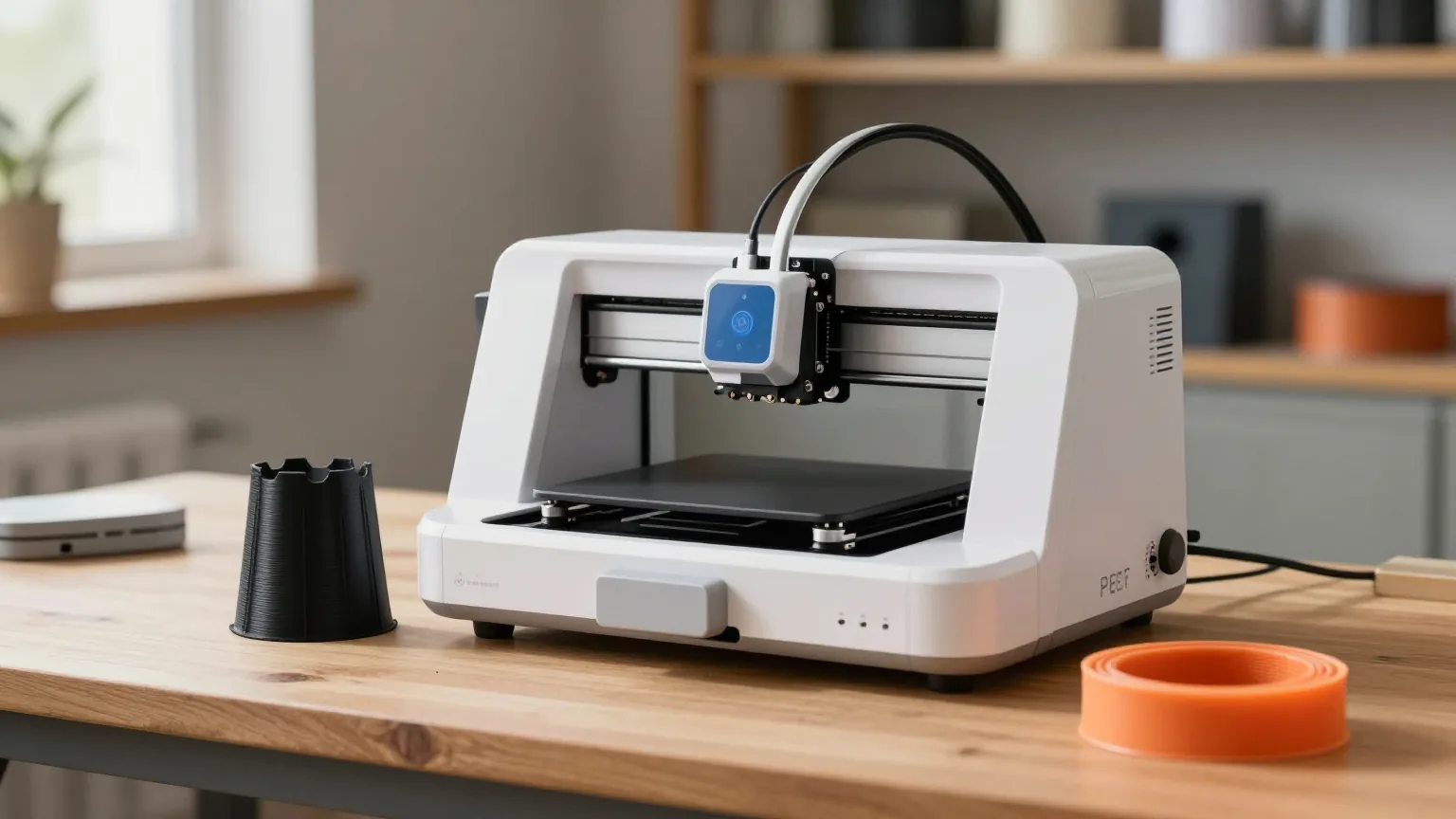
It is also worth noting that the H3C is not just a consumer product. Its capabilities make it suitable for small businesses, prototyping labs, and even educational institutions. The ability to print complex, multi-material parts quickly and reliably can save time and money in these settings. As such, the H3C is likely to find a place in a wide range of applications, from hobbyist projects to professional engineering.
Historical Perspective: The Evolution of Tool Changers
The concept of tool changers in 3D printing is not new. In the early days of industrial 3D printing, machines like those from Stratasys and 3D Systems featured multi-extruder systems that could swap tools. However, these machines were expensive, large, and complex to operate. They were designed for high-volume production, not for the individual maker.
Over the years, the technology has evolved, becoming smaller, cheaper, and more user-friendly. The H3C represents the culmination of this evolution. It takes the core concept of tool changing and refines it for the modern user. The integration of advanced software, automated filament management, and support for a wide range of materials makes it a far cry from its industrial predecessors.
This evolution reflects a broader trend in 3D printing: the democratization of advanced technology. What was once the province of large corporations is now accessible to individuals and small businesses. This shift has had a profound impact on innovation, allowing more people to experiment with new ideas and bring them to life. The H3C is a testament to this trend, offering a level of capability that would have been unimaginable just a decade ago.
Cultural Impact: The Maker Movement and Beyond
The launch of the H3C also has cultural implications. The maker movement, which has been a driving force behind the 3D printing industry, is all about creativity, innovation, and community. The H3C, with its versatile tooling and material support, empowers makers to push the boundaries of what is possible. It encourages experimentation and exploration, allowing users to try new materials and techniques without the fear of failure.
This has a ripple effect on the broader culture. As more people gain access to advanced 3D printing technology, they are more likely to engage in creative projects, solve problems, and contribute to their communities. The H3C, by making these capabilities more accessible, plays a role in this cultural shift. It is not just a machine; it is a tool for empowerment and creativity.
Furthermore, the H3C’s support for sustainable materials like TPU and its efficient printing processes align with the growing emphasis on sustainability in the maker community. As more people become aware of the environmental impact of traditional manufacturing, they are looking for ways to reduce waste and use more sustainable materials. The H3C, with its ability to print with a wide range of materials, including recycled and biodegradable options, supports this shift towards more responsible manufacturing.
Modern Applications: From Runoff Filters to Rocket Motors
The applications of the H3C are as diverse as the materials it can print. One particularly interesting example comes from the field of environmental engineering. UT San Antonio engineers are using 3D-printed backbones from Sargassum seaweed collected on the Texas coast to make reusable runoff filters [2]. While the H3C itself may not be used in this specific project, it highlights the kind of innovative applications that are becoming possible with advanced 3D printing technology. The ability to print with unusual materials, such as seaweed-based composites, opens up new possibilities for solving environmental challenges.
Another example is in the defense sector. The US Army is using 3D-printed rocket motors for low-cost cruise missiles, with X-Bow Systems tapped to 3D-print the motors [5]. While this is a far cry from the home printer, it demonstrates the potential of 3D printing in high-stakes applications. The H3C, with its precision and reliability, could be used in similar applications, where the ability to print complex, high-performance parts quickly and accurately is essential.
In the consumer space, the H3C is likely to be used for a wide range of projects, from custom phone cases and cosplay props to functional parts for home appliances. The ability to print with TPU makes it ideal for creating flexible parts, such as grips, gaskets, and seals. The multi-tool system allows for complex designs that would be impossible with a single-extruder printer. This versatility makes the H3C a valuable tool for any maker, hobbyist, or small business.
Challenges and Considerations
Despite its many advantages, the H3C is not without its challenges. The complexity of the nine-tool system means that it is likely to be more expensive than a standard single-extruder printer. The integrated filament management system also adds to the cost and complexity of the machine. For users who do not need the full range of tools and materials, a simpler printer may be a more cost-effective option.
Additionally, the learning curve for the H3C’s slicer software may be steep for some users. Managing nine different tools and materials requires a certain level of understanding and expertise. While Bambu Lab has likely done a good job of making the software user-friendly, it is still a more complex system than a standard printer. Users may need to invest time in learning how to optimize their print jobs for the H3C’s capabilities.
There are also concerns about maintenance. A machine with nine swappable tools and an integrated filament management system is more complex to maintain than a single-extruder printer. Users may need to perform regular maintenance to ensure that the tools are clean and functioning properly. This is a trade-off for the versatility and capability that the H3C offers.
The Future of 3D Printing: What Comes Next?
The launch of the H3C is a significant milestone, but it is also a stepping stone to the future of 3D printing. As technology continues to advance, we can expect to see even more innovative features and capabilities. AI-assisted design, for example, is becoming increasingly common, with software that can automatically optimize designs for 3D printing [4]. This will make it easier for users to create complex, high-performance parts without needing to be experts in design and engineering.
We can also expect to see more sustainable materials and processes. As the 3D printing industry matures, there will be a greater emphasis on reducing waste and using more environmentally friendly materials. The H3C, with its support for a wide range of materials, is well-positioned to take advantage of these trends. In the future, we may see printers that can print with recycled materials, biodegradable plastics, and even living cells.
The H3C also points to a future where 3D printing is more integrated into our daily lives. As the technology becomes cheaper, faster, and more reliable, it will become a standard tool for manufacturing, prototyping, and even personal customization. We may see a world where we can print our own replacement parts, custom furniture, and even food, all from the comfort of our homes.
Conclusion: A New Era for Makers
The Bambu Lab H3C is more than just a printer; it is a symbol of the progress and potential of the 3D printing industry. With its nine swappable PrintTools, integrated filament management system, and support for ultra-soft TPU, it offers a level of versatility and capability that was previously only available in industrial machines. It is a machine that empowers users to push the boundaries of what is possible, to experiment with new materials and techniques, and to bring their ideas to life in ways that were previously unimaginable.
For makers, engineers, and businesses alike, the H3C is a tool that can save time, money, and effort. It is a machine that can handle a wide range of projects, from simple hobbyist prints to complex, multi-material prototypes. And it is a machine that points to a future where 3D printing is an integral part of our lives, from the way we manufacture products to the way we solve problems.
So, what should you do next? If you are a maker or a business owner looking to upgrade your 3D printing capabilities, the H3C is worth considering. It is a machine that will serve you well for years to come, and it will open up a world of new possibilities. If you are not ready to make the jump, keep an eye on the 3D printing news. The industry is moving fast, and there are many other innovations on the horizon. But one thing is certain: the future of 3D printing is bright, and the H3C is a key part of that future.
Join the conversation. Share your thoughts on the H3C in the comments below. What features do you think are most important in a 3D printer? How do you think the H3C will impact the industry? Let’s explore the possibilities together.