Bambu Lab’s H3C Just Put 9 Print Tools in One Box
The Era of the "All-in-One" Printer: Why Bambu Lab’s H3C Changes the Game
Imagine walking into a professional workshop where the machine you need to print a delicate, flexible phone case is the exact same machine you use to print a rigid, structural bracket for a drone. In the past, this required two different printers, two different setups, and a lot of manual swapping. Now, imagine doing all of that with a single device that doesn’t just swap nozzles, but swaps entire print heads. This is not science fiction; this is the reality introduced by Bambu Lab’s latest release, the H3C.
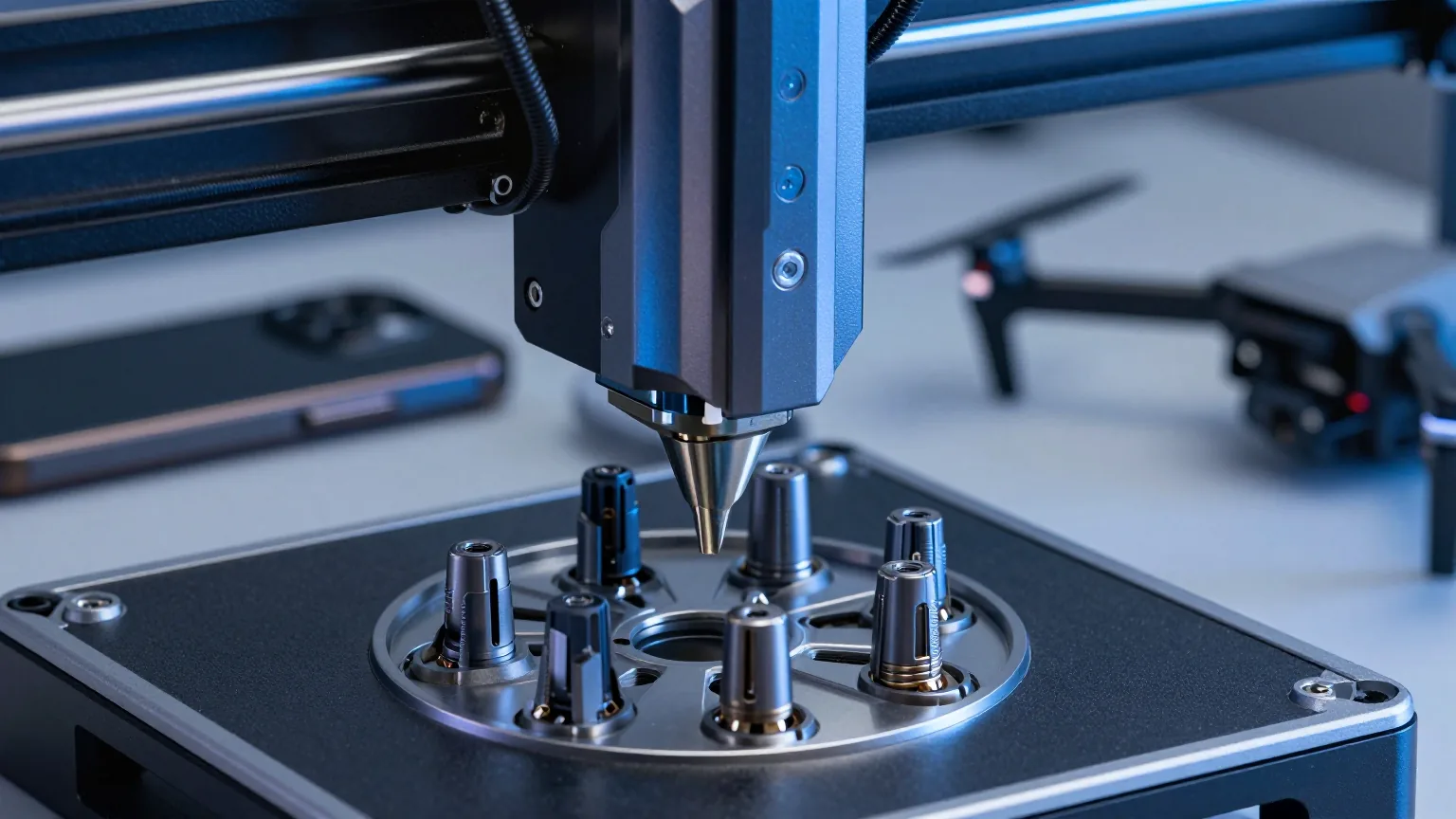
In the fast-moving world of additive manufacturing, few brands have disrupted the consumer and prosumer market as aggressively as Bambu Lab. By combining high-speed CoreXY mechanics with intuitive user interfaces, they have arguably done more to normalize 3D printing in the last few years than any other manufacturer. But their latest move, the H3C, marks a significant shift in philosophy. It is no longer just about speed; it is about versatility and system integration. As the first printer in Bambu Lab’s third generation, the H3C introduces a nine-tool tool changer, fundamentally altering how we think about multi-material printing [1].
What is the H3C? A Deep Dive into the Hardware
At its core, the H3C is a beast of a machine, but it is a beast with manners. Bambu Lab has designed it to be a "third-generation" flagship, meaning it builds upon the lessons learned from the X1C and P1S series. The headline feature, however, is the nine-tool tool changer. Unlike traditional multi-material systems that rely on a single extruder with a mixing chamber or a simple nozzle swap, the H3C uses a carousel system where nine distinct print tools dock into a central mechanism [1].
These "PrintTools" are not just nozzles. They are complete extrusion units. This distinction is crucial. By swapping the entire tool, the printer can handle materials with vastly different physical properties without the risk of cross-contamination or clogging that often plagues shared hotends. The system supports a wide range of materials, including the notoriously difficult ultra-soft TPU, which has historically been a nightmare for multi-material printers [3].
The inclusion of an integrated filament management system further cements the H3C’s status as an all-in-one solution. You are no longer juggling spools on the floor or dealing with tangled filaments. The printer manages the feed, the tension, and the storage, ensuring that the printing process is as smooth as the final output. This level of integration is what separates a "printer" from a "manufacturing system."
The Nine-Tool Changer: More Than Just Color
For years, the primary argument for multi-material printing was color. You wanted a white base with a blue logo, or a black part with red text. While the H3C certainly excels at this, the nine-tool system opens up a much deeper dimension of capability. Each of the nine tools can be configured for a specific material or a specific nozzle size. This means you can have a 0.4mm nozzle for general purpose printing, a 0.2mm for fine detail, and a 0.8mm for large, fast prints, all within the same job.
This flexibility is a game-changer for complex assemblies. Imagine printing a hinge mechanism where the pivot point requires a wear-resistant material like PETG, while the body is printed in a softer, more flexible material. With a traditional setup, you would need to print these parts separately and assemble them. With the H3C, the printer can switch tools mid-print, allowing for true multi-material, multi-function parts in a single run. The ability to dock nine tools means the user is limited only by their imagination, not by the hardware [1].
Furthermore, the tool changer is designed to be user-friendly. Swapping tools is a matter of plugging them in, and the printer automatically detects which tool is present. This eliminates the guesswork and the potential for human error. It is a small detail, but one that significantly lowers the barrier to entry for complex multi-material printing.
Taming the TPU Beast
If there is one material that has long been the bane of 3D printer owners’ lives, it is TPU (Thermoplastic Polyurethane). TPU is flexible, durable, and ideal for things like phone cases, seals, and gaskets. However, it is also notoriously difficult to print. It is sticky, it clogs nozzles, and it requires precise temperature and tension control. For multi-material printers, TPU was often a no-go zone. If you tried to print TPU in a multi-material system, the material would often stick to the nozzle or the mixing chamber, causing clogs that could ruin the entire print and sometimes the printer itself.
Bambu Lab’s H3C changes this narrative. By supporting ultra-soft TPU through its dedicated tool system, the H3C allows users to print flexible parts without the usual headaches [3]. The integrated filament management system likely plays a key role here, as it can control the feed rate and tension with a precision that manual setups simply cannot match. This is a significant step forward for the industry. It means that designers can now specify flexible materials in their models without worrying about the printer’s ability to handle them. The H3C is not just a printer; it is a material-agnostic manufacturing platform.
Historical Context: From Hacks to Hardware
To appreciate the significance of the H3C, we must look back at how multi-material printing has evolved. In the early days of 3D printing, multi-material printing was a hack. Users would modify their printers, add extra extruders, and use complex software to manage the switching. These setups were fragile, expensive, and difficult to maintain. They were the domain of tinkerers and engineers, not the average user.
The first generation of commercial multi-material printers, such as the Stratasys J-series, were industrial machines that cost tens of thousands of dollars. They were powerful, but they were out of reach for most hobbyists and small businesses. The introduction of the Bambu Lab X1C and P1S series changed this by bringing multi-material printing to the consumer market at a price point that was accessible. However, these early models were limited to four materials and used a shared nozzle system that had its limitations.
The H3C represents the next logical step in this evolution. It is the result of years of R&D, user feedback, and technological advancement. It is a testament to the fact that 3D printing is no longer a niche hobby; it is a mainstream manufacturing technology. The H3C is not just a product; it is a milestone. It marks the point at which multi-material printing became a standard feature, not a luxury add-on.
The Ecosystem Effect: How Anycubic and Others are Responding
The launch of the H3C does not exist in a vacuum. It is part of a broader trend in the 3D printing industry where manufacturers are moving beyond simple hardware sales and into ecosystem building. Take, for example, Anycubic. Recently, Anycubic made a "very quiet but potentially important ecosystem move" [4]. While the specifics of this move are not fully detailed in the news, it suggests that other manufacturers are recognizing the value of creating a cohesive user experience that goes beyond the printer itself.
This ecosystem approach is about more than just selling printers. It is about creating a network of compatible materials, software, and accessories that make the user’s life easier. Bambu Lab has been a pioneer in this area, with its Bambu Studio software and its own filament line. The H3C is the latest piece of this puzzle. It is designed to work seamlessly with Bambu Lab’s ecosystem, from the filament to the software to the support services.
This is a significant shift in the industry. In the past, 3D printers were open systems. You could use any filament, any slicer, and any tool. While this flexibility was a strength, it also led to a lot of frustration and inconsistency. The new trend is towards closed ecosystems that offer a higher level of integration and reliability. This is not necessarily a bad thing. For many users, the convenience and reliability of a closed ecosystem are worth the trade-off in flexibility. The H3C is a prime example of this trend.
Applications: Where the H3C Shines
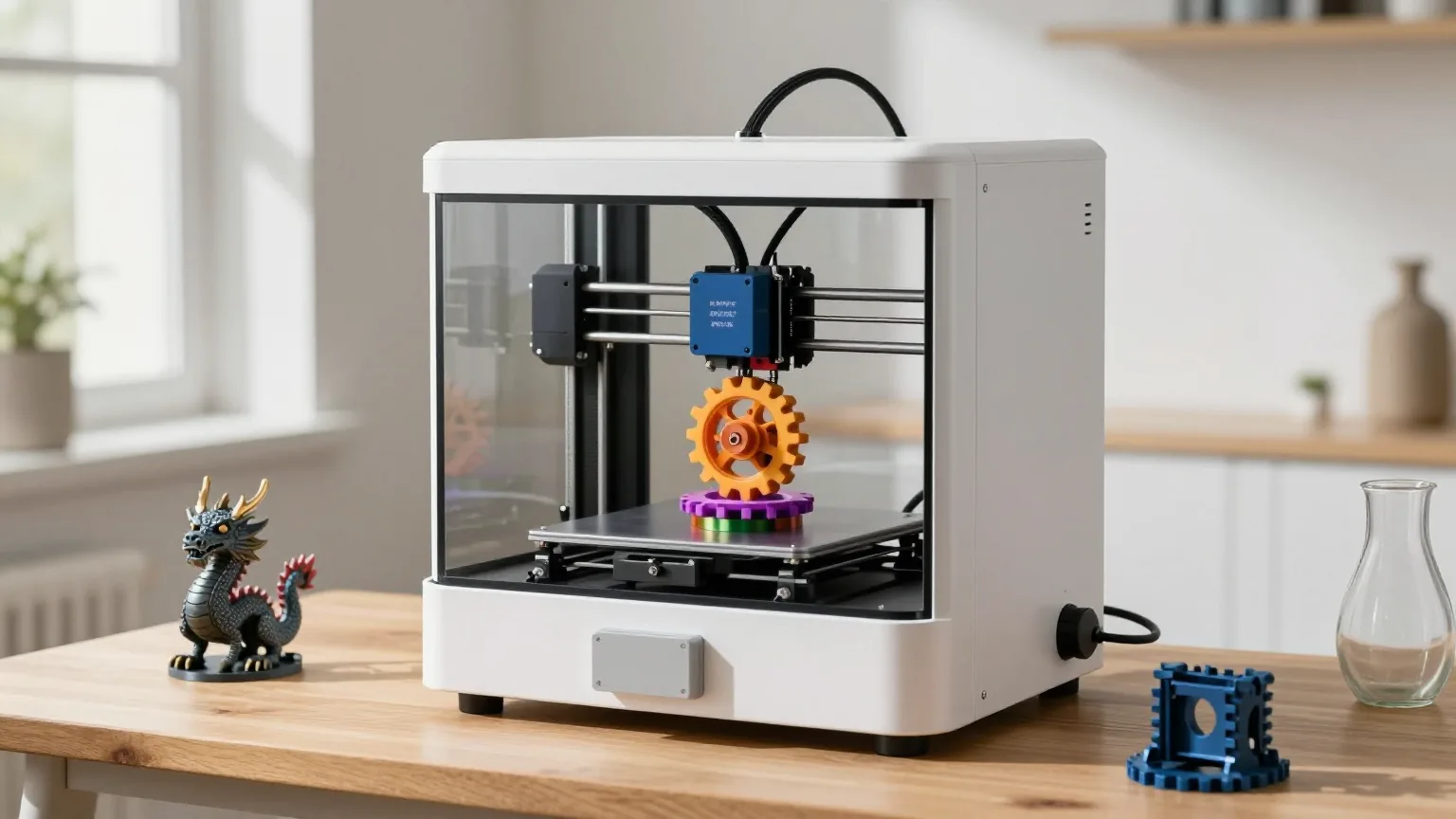
So, who is the H3C for? And what can you do with it? The answer is: everyone, and almost anything. But there are a few specific applications where the H3C truly excels.
- Product Prototyping: Designers can now prototype complex products with multiple materials in a single print. This speeds up the design process and allows for more accurate testing of the final product.
- Custom Jewelry: The high level of detail and the ability to use different materials make the H3C ideal for custom jewelry. You can print a ring with a flexible band and a rigid setting in one go.
- Automotive Parts: The ability to print wear-resistant and flexible parts makes the H3C a great tool for automotive enthusiasts. You can print custom gaskets, seals, and brackets that are tailored to your specific needs.
- Art and Sculpture: Artists can use the H3C to create complex sculptures with multiple colors and textures. The nine-tool system allows for a level of detail and variety that was previously impossible.
- Education: The H3C is an excellent tool for education. It can be used to teach students about different materials and their properties. The user-friendly interface makes it easy for students to get started.
The H3C is not just a printer; it is a tool for creation. It empowers users to bring their ideas to life in ways that were previously unimaginable. It is a testament to the power of 3D printing and the endless possibilities it offers.
The Competitive Landscape: Who Else is in the Ring?
While Bambu Lab is making waves with the H3C, they are not alone in the ring. Other manufacturers are also pushing the boundaries of what is possible in 3D printing. Take, for example, ELEGOO, a Chinese 3D printing brand that has recently launched the M1 Ultra, its first all-in-one smart 3D scanner [5]. While the M1 Ultra is a scanner, not a printer, it shows that ELEGOO is also focused on creating a comprehensive ecosystem. By offering both scanning and printing capabilities, ELEGOO is positioning itself as a one-stop shop for 3D printing enthusiasts.
Then there is EOS, a leader in industrial 3D printing. EOS wants to make a laser powder bed fusion part with two different laser personalities [4]. This is a fascinating development. By using two different lasers, EOS can achieve different levels of detail and strength in a single part. This is a similar concept to the H3C’s nine-tool system, but applied to a different technology. It shows that the idea of multi-functionality is a universal trend in the industry, not just a Bambu Lab innovation.
Finally, we have PathOn Robotics, which has released print files for a three-finger, four-motor 3D printed robot [1]. This is a great example of how 3D printing is being used to create new products. The H3C could be used to print parts for robots like this, allowing for rapid prototyping and customization. The H3C is not just a printer; it is a tool for innovation.
Underwater Infrastructure and the Future of Printing
While the H3C is a consumer and prosumer printer, the technology behind it is part of a larger trend that is changing the world. Charles R. Goulding and Preeti Sulibhavi have been diving into the emerging technology that could let robots build and repair underwater infrastructure using materials found on the seafloor [4]. This is a fascinating application of 3D printing. By using local materials, robots can build and repair structures without the need to transport materials from the surface. This is a significant step towards sustainable and efficient infrastructure development.
The H3C, with its ability to handle a wide range of materials, could be a key part of this future. Imagine a robot that can print a replacement part for an underwater pipeline using a material that is compatible with the surrounding environment. The H3C’s multi-material capability makes this possible. It is a small step, but it is a step in the right direction.
The Cultural Shift: 3D Printing as a Creative Tool
3D printing has always been about technology, but it is also about culture. It has changed the way we think about creation. In the past, if you wanted to make a custom object, you had to find a craftsman or a factory. Now, you can make it yourself. This shift has empowered a new generation of creators. They are not limited by the tools or the materials available to them. They are limited only by their imagination.
The H3C is a symbol of this cultural shift. It is a tool that allows anyone to create complex, multi-material objects. It is a tool that democratizes manufacturing. It is a tool that changes the world. The H3C is not just a printer; it is a revolution.
Challenges and Considerations
Of course, no technology is perfect. The H3C, for all its advantages, has its challenges. The nine-tool system is complex, and it requires a high level of maintenance. The printer is also expensive, and it may not be within the budget of every user. The integrated filament management system, while convenient, can be a single point of failure. If the system fails, the entire printer is out of commission.
There is also the issue of material compatibility. Not all materials are compatible with the H3C. Users need to be careful to choose materials that are specifically designed for the printer. Using incompatible materials can damage the printer and void the warranty. This is a common challenge with all closed ecosystems, but it is a significant one. Users need to be aware of the limitations of their system and make informed decisions.
Despite these challenges, the H3C is a significant step forward. It is a printer that offers a level of capability and convenience that was previously unavailable. It is a printer that is changing the way we think about 3D printing. It is a printer that is shaping the future.
Conclusion: The Future is Multi-Material
The launch of the Bambu Lab H3C is a landmark moment in the history of 3D printing. It is a printer that represents the future of additive manufacturing. It is a printer that is fast, versatile, and user-friendly. It is a printer that is changing the way we create and build. The H3C is not just a product; it is a promise. It is a promise that the future of 3D printing is bright, and that it is within reach of everyone.
As we look to the future, we can expect to see even more innovation in this space. We can expect to see printers that are even faster, even more versatile, and even more user-friendly. We can expect to see new materials that are stronger, lighter, and more sustainable. We can expect to see new applications that we have not yet imagined. The H3C is just the beginning.
So, what should you do? If you are a 3D printing enthusiast, I encourage you to look into the H3C. If you are a business owner, I encourage you to consider how the H3C can help you create new products and services. If you are an artist, I encourage you to use the H3C to create new works of art. The H3C is a tool for everyone. It is a tool for the future. It is a tool for you.
The era of the "all-in-one" printer has arrived. The question is not whether you will join it, but how you will use it. The future is multi-material, and it is here. Welcome to the era of the H3C.