AI Cracks NASA Alloy Code in Just 40 3D Print Experiments
AI Cracks NASA Alloy Code in Just 40 3D Print Experiments: A New Era of Additive Manufacturing
Imagine being a materials scientist working for NASA. You have a high-performance alloy that is critical for the next generation of spacecraft, but its behavior during 3D printing is a black box. You know it works, but you don’t know why it works, nor do you know the precise settings that will yield the strongest, most reliable parts. Traditionally, finding these settings would require months of trial and error, burning through expensive metal powder and time. Now, imagine an artificial intelligence system scanning through more than 100 million possible configurations, narrowing them down, and identifying the optimal parameters after only 40 physical experiments. That is not science fiction; that is reality as of late August 2026 [5].
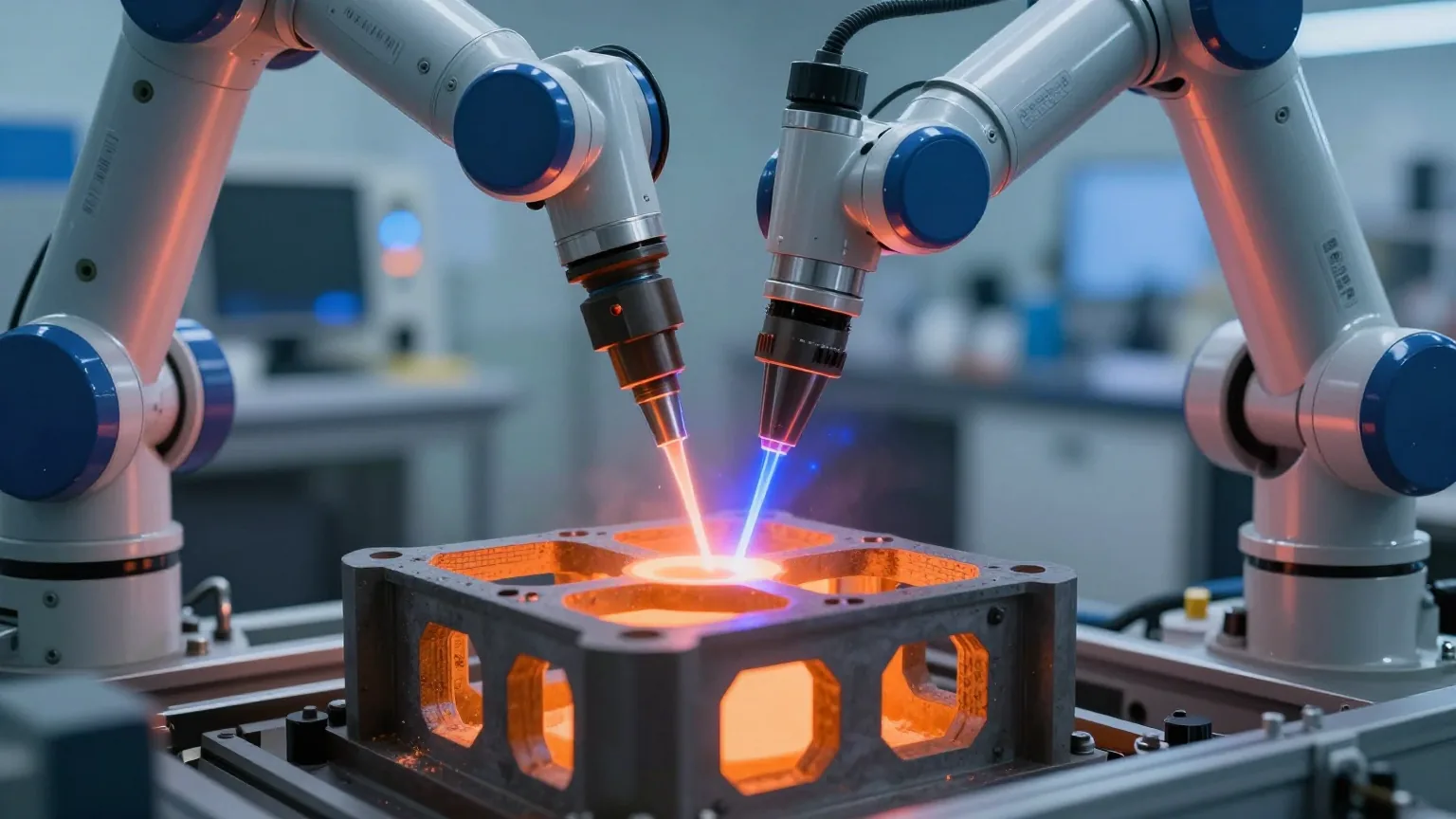
This breakthrough represents a seismic shift in the world of additive manufacturing. It moves 3D printing from a craft of intuition and empirical testing into the realm of predictive, data-driven engineering. As we navigate the landscape of 2026, where AI-assisted design is becoming standard [2], this specific achievement highlights how machine learning is no longer just a tool for design, but a core engine for material science itself. Let’s dive into how this happened, why it matters, and what it means for the future of the industry.
The 40-Experiment Miracle: What Actually Happened?
In late August 2026, researchers published findings detailing a collaboration between AI systems and 3D printing hardware that defied conventional efficiency metrics [5]. The goal was to optimize the 3D printing process for a specific high-performance NASA alloy. In the world of metal additive manufacturing, "optimization" is a euphemism for a painful process. You tweak the laser power, you adjust the scan speed, you change the hatch spacing, and you print a test coupon. Then you break it, test it, and see if it holds up. If it doesn’t, you tweak one variable again and print another. It is slow, expensive, and often yields diminishing returns.
The team involved in this study took a different approach. They fed a vast theoretical space of over 100 million possible parameter combinations into an AI model. Think of each combination as a unique recipe: a specific temperature, a specific speed, a specific layer height. The AI’s job was to predict which of these 100 million "recipes" would result in the highest-performance material. However, instead of guessing blindly, the AI used a strategy known as active learning or Bayesian optimization. It didn’t just pick random settings; it picked the settings that would provide the most information to refine its model. After running just 40 physical print experiments, the system had identified six specific configurations that stood out as high-performing [5].
To put this in perspective, if a human scientist had tried to explore this parameter space manually, they might have printed a few dozen coupons in the first week and still be guessing at month three. The AI compressed this timeline into a fraction of the cost and effort. This is not just about saving money; it is about accelerating the pace of innovation in aerospace, where every kilogram of weight saved and every degree of strength gained is a matter of life and death.
Why Metal 3D Printing Has Always Been the "Dark Art"
To appreciate this breakthrough, we need to understand why 3D printing metals is so difficult. Unlike plastic (FDM) or resin (SLA), where the material is relatively forgiving, metal additive manufacturing is a battle of thermodynamics. When a laser melts a thin layer of metal powder, it creates a tiny pool of molten metal that cools almost instantly. This rapid cooling creates internal stresses, porosity (tiny air bubbles), and microstructural inconsistencies that can weaken the final part [3].
For decades, the industry has relied on "process maps" developed by specific machine manufacturers. These maps are essentially guidelines saying, "Use these settings for this alloy on this machine." But these maps are often proprietary, limited to specific hardware, and rarely account for the subtle variations in metal powder chemistry or environmental conditions. If you want to print a new alloy, or if you want to push the performance of an existing alloy to its absolute limit, the standard maps are not enough. You need to dig deeper. That digging is what the AI did. It didn’t just follow the map; it redrew it based on real-time data and predictive modeling [5].
The Role of AI in Modern 3D Printing: Beyond the Hype
By 2026, the narrative around AI in 3D printing has matured. We are past the phase of "AI generates cool shapes" and into the phase of "AI solves complex engineering problems." Recent industry reports highlight that AI-assisted design is now a key innovation that makers and engineers need to know about [2]. But this NASA alloy story takes it a step further. It is not just about designing a part; it is about understanding the material itself.
AI is now being used in three distinct layers of the 3D printing workflow:
- Pre-Processing: Generating optimal support structures and slicing parameters to minimize material waste and print time [2].
- In-Process: Monitoring the print in real-time using cameras and sensors to detect defects like lack of fusion or warping before they become catastrophic [6].
- Post-Processing/Material Science: As seen in the NASA study, using AI to decode the relationship between process parameters and material properties [5].
This tripartite approach means that AI is no longer a single tool but a pervasive infrastructure. The "40 experiments" result is a testament to the power of the third layer. It shows that AI can act as a surrogate for the physical experiment, allowing us to learn from the machine without needing to run the machine a million times. This is a profound change in how we view the relationship between digital models and physical reality.
Historical Context: From Chuck Hull to Neural Networks
It is worth pausing to appreciate the journey we have come to reach this point. Stereolithography (SLA), the first 3D printing technology, was imagined in 1984 by American Chuck Hull, who later founded 3D Systems [4]. At the time, the concept of using light to cure liquid resin into solid objects was revolutionary. It was a mechanical and chemical process, governed by physics and chemistry, but not by data science. There was no "AI" in the loop because the data infrastructure simply did not exist. The process was deterministic: light in, solid out. If it failed, it was because of a flaw in the resin, the light source, or the mechanics of the machine.
Fast forward to 2026, and the landscape has transformed. While the basic principles of photopolymerization or laser melting remain the same, the intelligence surrounding them has exploded. The early days of 3D printing were about proving that the technology worked. The middle decades were about making it faster, cheaper, and more accessible. The current era is about making it smarter. The transition from Chuck Hull’s mechanical prototypes to AI-optimized aerospace alloys is a testament to the fact that 3D printing is not just a manufacturing method; it is a data-rich environment waiting to be mined [4].
How the AI "Search" Works: A Simplified Explanation
For those who are not data scientists, the concept of searching through 100 million settings can sound intimidating. Let’s break it down. Imagine you are trying to find the perfect recipe for a cake. You have ten ingredients (variables) and a range of amounts for each. The total number of combinations is astronomical. You cannot bake every single cake to see which one is the best.
Traditional testing is like baking random cakes and hoping one tastes good. It’s slow and inefficient. The AI approach is like having a chef who has read every cookbook in the world and understands the chemistry of baking. The AI doesn’t bake every cake. It simulates thousands of recipes in its "mind" (the model). It picks the five recipes that seem most promising based on its initial understanding. It asks the human (or the robot) to bake just those five. It analyzes the results (taste, texture, structure). Then, it updates its understanding. It realizes that recipe #3 was good, but it needs a bit more sugar. It predicts the next five best recipes to test. This loop of prediction, testing, and refinement is what allowed the researchers to find the optimal alloy settings in just 40 experiments [5].
This method is known as active learning. It is particularly powerful in scenarios where physical experiments are expensive and time-consuming, such as in aerospace or bioprinting [6]. By focusing the physical effort on the most informative experiments, the AI maximizes the value of every single print.
The Impact on Aerospace and Defense
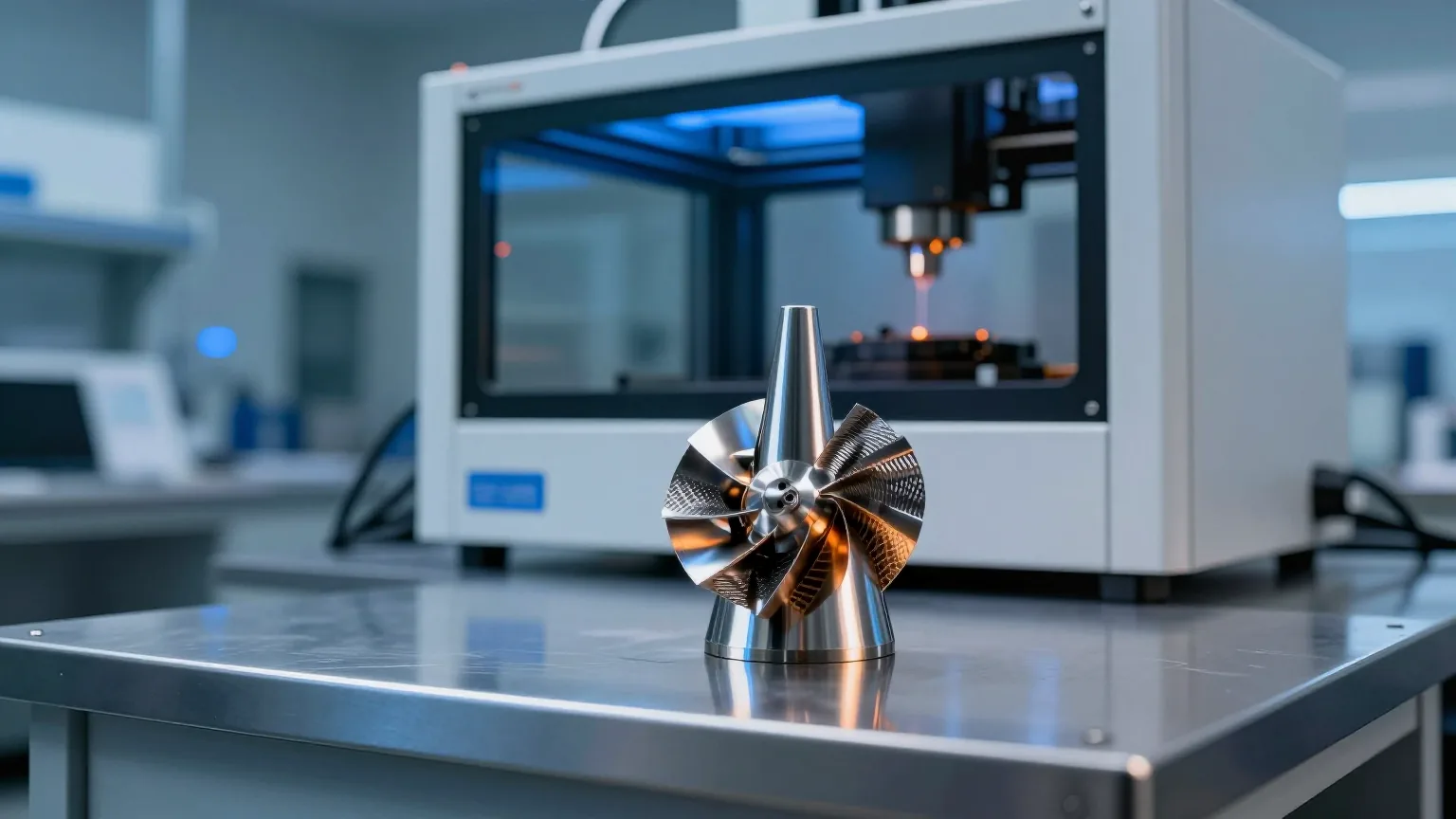
NASA is not the only agency interested in this technology, but it is a leader in pushing the boundaries of what is possible. The aerospace industry is one of the most demanding sectors for 3D printing. Parts must be lightweight, strong, and reliable. There is no room for error. A single flaw in a turbine blade or a structural component can lead to catastrophic failure. The ability to optimize alloy performance through AI-driven experimentation allows engineers to push the limits of material strength without the risk of empirical guesswork [5].
This has significant implications for the development of next-generation spacecraft. For example, if an AI can identify that a specific alloy performs 10% better under high-heat conditions when printed with a specific scan pattern, that 10% improvement can translate to longer engine life, higher thrust, or reduced weight. In the context of space exploration, where every gram of weight saved reduces launch costs, these incremental gains are massive. Furthermore, this technology can be applied to the repair and maintenance of spacecraft in orbit. If a part breaks, engineers can use AI to quickly determine the best settings to print a replacement using the available metal stock, without needing to send down a new set of instructions or wait for a ground-based test [3].
Beyond Aerospace: Medical and Industrial Applications
While the NASA study is a headline-grabber, the technology behind it has broad applications. In the medical field, bioprinting is emerging as a frontier where AI is crucial. Bioprinting involves using "bio-inks" to create tissue structures. The parameters for bioprinting are even more complex than metal printing, involving cell viability, scaffold structure, and nutrient delivery. AI can help optimize these parameters to ensure that the printed tissues are not just structurally sound, but biologically functional [6].
In the industrial sector, companies are using AI to reduce waste. One of the latest innovations in 2026 is low-waste multicolor printing, where AI algorithms optimize the path of the printer to minimize material usage [2]. While this is different from the material science optimization seen in the NASA study, it highlights a broader trend: AI is making 3D printing more efficient, sustainable, and cost-effective across the board. For small businesses and makers, this means that the high costs associated with failed prints and material waste are gradually decreasing, making the technology more accessible [2].
The Challenge of Data Quality and Standardization
However, it is important to temper the excitement with a dose of reality. AI is only as good as the data it is fed. The success of the NASA study relied on high-quality data from the 3D printing process. If the sensors are inaccurate, if the metal powder is inconsistent, or if the environmental conditions are not controlled, the AI’s predictions will be flawed. This is a significant challenge for the industry. We need standardized ways to collect, store, and share data from 3D printing processes [3].
Currently, data from 3D printers is often siloed. Each manufacturer has its own format, its own sensors, and its own software. This makes it difficult to build large-scale AI models that can learn from a wide variety of printing scenarios. The industry needs to move toward open standards for data exchange. Imagine a world where a 3D printer from one manufacturer could share its process data with an AI model trained on data from printers made by a different manufacturer. That would be a game-changer. It would allow for the creation of universal material models that are not tied to specific hardware. Until this happens, the full potential of AI in 3D printing will remain partially unlocked [6].
Ethical and Safety Considerations
As AI becomes more integrated into critical manufacturing processes, ethical and safety considerations come to the forefront. If an AI determines that a certain setting is optimal for a medical implant, who is responsible if the implant fails? Is it the AI developer, the 3D printer manufacturer, the materials supplier, or the engineer who approved the print? This is a complex legal and ethical question that the industry is still grappling with. Regulation is lagging behind technology, and we need clear frameworks for accountability [3].
Furthermore, there is the issue of bias. AI models can inherit biases from the data they are trained on. If the data used to train an AI model comes primarily from one type of metal or one type of printer, the model may not perform well with other types. This could lead to unexpected failures in diverse applications. Ensuring that AI models are robust, transparent, and fair is a critical area of research that must go hand-in-hand with technological development [5].
The Future: Self-Optimizing Factories
Looking ahead, the trajectory is clear. We are moving toward self-optimizing 3D printing factories. In these factories, the AI will not just suggest settings; it will continuously adjust the printing process in real-time based on live data. If the metal powder starts to clog, the AI will adjust the laser power. If the temperature in the build chamber fluctuates, the AI will compensate. This level of autonomy will drastically improve yield rates and reduce the need for human intervention. It will also enable the mass production of complex, customized parts at a cost that is competitive with traditional manufacturing methods [2].
This future is not far off. The foundations are being laid now, with breakthroughs like the NASA alloy study serving as milestones on the roadmap. The next step is to integrate these AI systems with supply chain management, logistics, and quality control to create a fully autonomous manufacturing ecosystem. In this ecosystem, the 3D printer is not just a tool, but an intelligent node in a larger network of production [6].
What This Means for Makers and Engineers
For the average maker or engineer, this news might seem distant, focused on high-end aerospace applications. However, the ripple effects will be felt across the entire industry. As AI tools become more affordable and accessible, they will trickle down to smaller businesses and hobbyists. We are already seeing this with AI-assisted design tools that help users generate support structures and slice models more efficiently [2]. In the future, we can expect AI tools that help users select the right material and settings for their specific project, based on a database of millions of previous prints. This will lower the barrier to entry for 3D printing, making it easier for people to create high-quality parts without needing to be experts in materials science [6].
Moreover, the emphasis on data will change how we approach 3D printing. Makers will be encouraged to document their processes, share their data, and contribute to a collective knowledge base. This collaborative approach will accelerate innovation and drive down costs. The "maker" mindset of open sharing will be amplified by the power of AI, creating a virtuous cycle of improvement and accessibility [3].
Conclusion: A New Chapter in Additive Manufacturing
The story of AI cracking the NASA alloy code in just 40 experiments is more than a technical achievement; it is a symbol of a new era in 3D printing. It marks the transition from a technology driven by mechanical precision to one driven by intelligent optimization. It shows that the future of additive manufacturing is not just about printing faster or printing bigger, but about printing smarter. By leveraging the power of AI, we can unlock the full potential of materials, reduce waste, and create products that were previously impossible to make [5].
As we look to the future, the possibilities are endless. From personalized medical implants to lightweight aerospace components, from sustainable industrial parts to artistic sculptures, AI will play a central role in shaping what we can create. The challenge now is to ensure that this technology is developed responsibly, with a focus on safety, ethics, and accessibility. The road ahead is exciting, and the 3D printing community is well-positioned to lead the way.
Call to Action
Are you ready to be part of this revolution? Whether you are a professional engineer, a hobbyist maker, or a student interested in technology, there has never been a better time to get involved in 3D printing. Start by exploring the latest AI tools available for design and slicing. Look for opportunities to contribute to open-source data projects. And keep an eye on the research coming out of institutions like NASA and leading universities. The future of manufacturing is being written right now, and you have the opportunity to add your own chapter. Dive into the resources available on 3D Printing News or follow the latest innovations on Creality’s blog to stay informed. The next breakthrough might be your idea.