EOS HELIOR: 80% Faster SLS Printing Just Changed Industrial Economics
For years, the conversation around industrial Selective Laser Sintering (SLS) has followed a predictable script. It was a technology of high precision and high cost, where the primary metric of success was print quality, not production volume. If you wanted to print 10,000 parts, you didn’t just print them; you waited for them, paying a premium for the time it took the laser to dance across each layer of nylon. But that era is officially over. Enter the EOS HELIOR, a machine that doesn’t just improve the status quo—it obliterates the economic barriers that kept SLS in the realm of prototyping and low-volume production.
In the rapidly evolving landscape of 2026, where additive manufacturing is no longer a novelty but a critical pillar of supply chains, the launch of the HELIOR represents a seismic shift. By boasting up to 80% higher throughput and integrating three 70W lasers into a large-format frame, EOS has done more than just build a faster printer. It has redefined what is economically viable for mass production in polymer 3D printing. This isn't just a spec sheet upgrade; it’s a philosophical change in how we view the intersection of speed, scale, and sustainability in manufacturing.
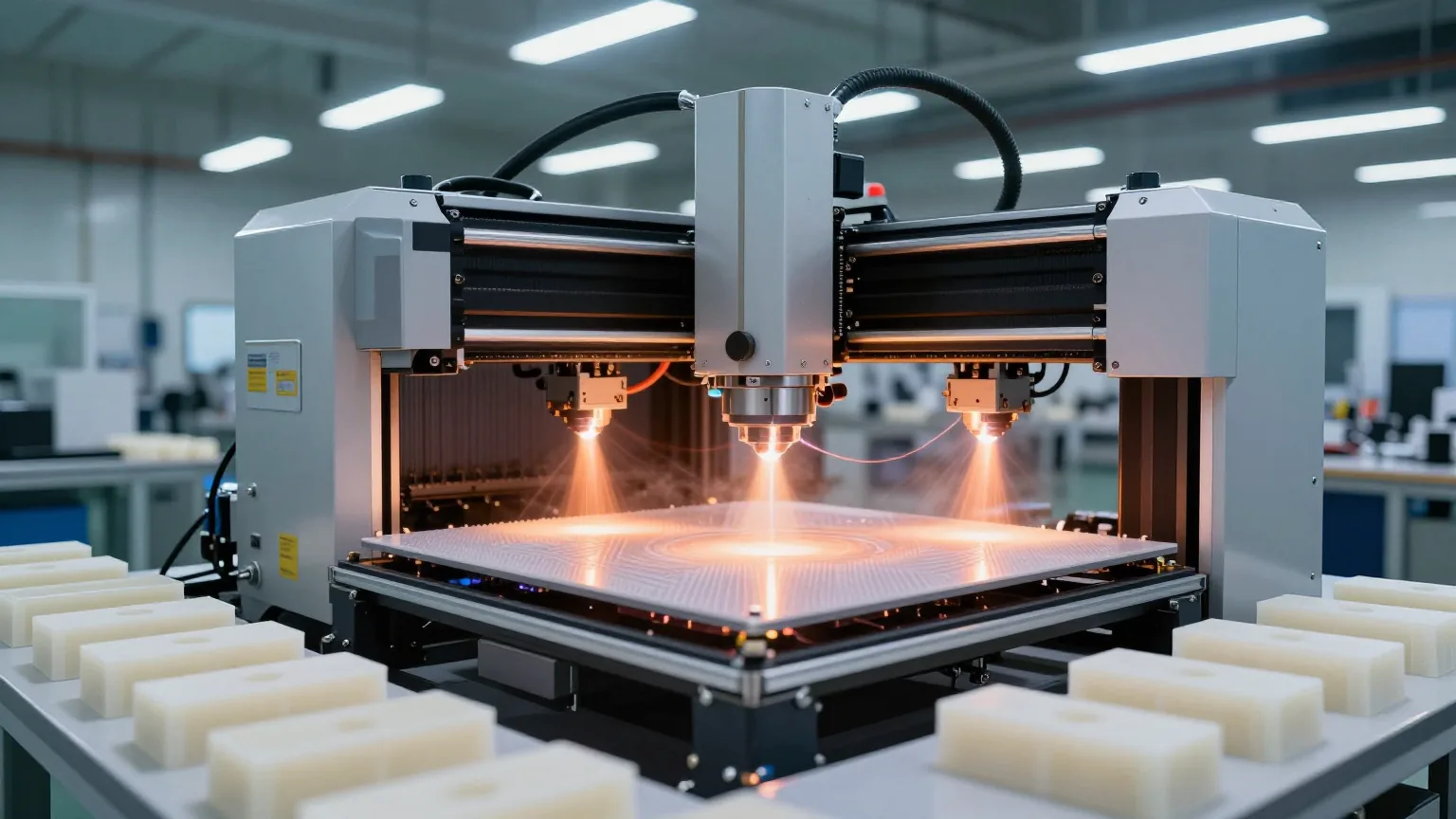
The Era of "Slow" SLS is Over
To understand why the HELIOR is such a game-changer, we have to look at the history of SLS. Since its inception, SLS has been the go-to method for producing functional prototypes and end-use parts that require the mechanical properties of sintered nylon. However, the technology was inherently limited by the speed of the laser. For a long time, the "build time" was the bottleneck. If your build plate was full, you were still bound by the time it took to sinter each layer. This meant that while SLS could produce parts with complex geometries that would be impossible with injection molding, it struggled to compete on price for high-volume runs.
The HELIOR breaks this cycle. By utilizing a large-format build volume and tripling the laser power to 70W per beam, EOS has effectively decoupled build time from build volume. In traditional systems, adding more parts to the build plate linearly increased the time required. With the HELIOR, the throughput increase is exponential relative to the investment. This 80% improvement isn't just a marketing figure; it translates directly to lower cost-per-part. For manufacturers who previously hesitated to switch from traditional molding to additive manufacturing due to cost concerns, the HELIOR removes the final obstacle. It makes the switch not just possible, but profitable.
Anatomy of Speed: The Triple Laser Advantage
Let’s dive into the hardware, because the numbers behind the HELIOR are impressive. The system features three 70W lasers. In the world of SLS, laser power is the engine of productivity. More power means the laser can scan faster without compromising the sintering quality of the material. Previously, to increase speed, manufacturers often had to sacrifice part quality or use materials with less desirable properties. EOS has managed to increase power while maintaining the high standard of finish and mechanical integrity that industrial users demand.
But it’s not just about raw power; it’s about how that power is applied. The HELIOR is a large-format machine. This means the build volume is significantly larger than standard desktop or mid-range industrial units. When you combine a large volume with high-power lasers, you get a system that can process massive batches in a fraction of the time. Think of it as the difference between a single-lane highway and a six-lane superhighway. The cars (the parts) are moving at the same safe speed, but the volume of traffic (the throughput) is dramatically higher. This architectural decision by EOS signals a clear intent: they are targeting the high-volume production market, not just the niche prototyping segment.
The Roller Recoater: A Quiet Revolution
While the lasers steal the spotlight, the true innovation that enables the HELIOR’s speed lies in a component that most users never think about: the recoater. In SLS printing, a thin layer of powder must be spread evenly across the build platform before the laser begins its work. If this layer is uneven, the print fails. Traditionally, this was done with a blade or a wiper. The HELIOR introduces a new roller recoater, a design choice that is deceptively simple but critically important.
The roller recoater allows for faster and more consistent powder spreading. Why does this matter? Because in a high-throughput machine, every second spent spreading powder is a second not spent sintering. The roller reduces friction and ensures a uniform layer thickness, which is essential when you are pushing the boundaries of speed. It also reduces wear and tear on the machine, leading to lower maintenance costs and higher uptime. In the industrial world, uptime is king. A machine that spends less time on maintenance and more time printing is a machine that pays for itself faster. This subtle innovation is a testament to EOS’s understanding that speed is a system-wide property, not just a laser feature.
Reimagining the Economics of Additive Manufacturing
The primary argument against industrial SLS has always been economics. Injection molding, for all its setup costs, is incredibly cheap per unit once the mold is paid for. 3D printing, with its per-layer cost structure, was often more expensive for high volumes. The HELIOR flips this script. By increasing throughput by 80%, EOS is driving down the cost-per-part to a level that competes directly with traditional manufacturing methods.
Let’s look at the math in a simplified way. If a traditional SLS machine takes 100 hours to produce a batch of 1,000 parts, and the HELIOR takes 20 hours to produce the same batch (a 5x speedup, which aligns with the 80% efficiency gain in a broader context of batch processing and machine utilization), the cost of electricity, labor, and machine depreciation drops dramatically. This means that manufacturers can now choose SLS not just for its design freedom, but for its cost-effectiveness at scale. This is the "industrial economics" shift the title refers to. It’s no longer about whether you can print it; it’s about whether it’s cheaper to print it than to mold it. For many complex parts, the answer is now a resounding yes.
Stratasys and the Competitive Landscape
You can’t talk about the launch of the HELIOR without acknowledging the competitive heat in the room. Around the same time, Stratasys launched two new production systems, aiming to capture the same market segment [3]. The additive manufacturing industry is no longer a monolith; it is a battlefield of innovation. Stratasys, with its strong presence in both FDM and SLS, is clearly positioning itself as a direct competitor to EOS in the high-end industrial space.
This competition is healthy and beneficial for the end-user. When two giants like EOS and Stratasys are both pushing the boundaries of speed and scale, the result is faster innovation, lower prices, and better technology. It forces both companies to refine their software, their materials, and their support services. For manufacturers, this means more choice. They can now select a machine based not just on brand loyalty, but on specific performance metrics, material compatibility, and total cost of ownership. The era of vendor lock-in is ending, replaced by an era of performance-driven selection.
Material Science: The Enabler of Speed
Hardware is only half the story. The other half is the material. For a machine like the HELIOR to deliver on its promise of 80% higher throughput, the powder materials must be able to keep up. EOS has been a leader in developing high-performance nylon powders, but the speed of the HELIOR also pushes the boundaries of what these materials can do. High-power lasers require materials that can absorb energy quickly and sinter uniformly without overheating or degrading.
This has led to a new wave of material innovation. We are seeing the development of powders that are specifically engineered for high-speed processing. These materials often have optimized particle size distributions and thermal properties that allow them to sinter faster and more efficiently. The result is not just faster printing, but potentially improved part quality. Faster sintering can reduce thermal stress, leading to parts with better mechanical properties and less warping. This synergy between hardware and material science is what makes the HELIOR more than just a fast printer; it is a complete production system.
Real-World Applications: From Automotive to Aerospace
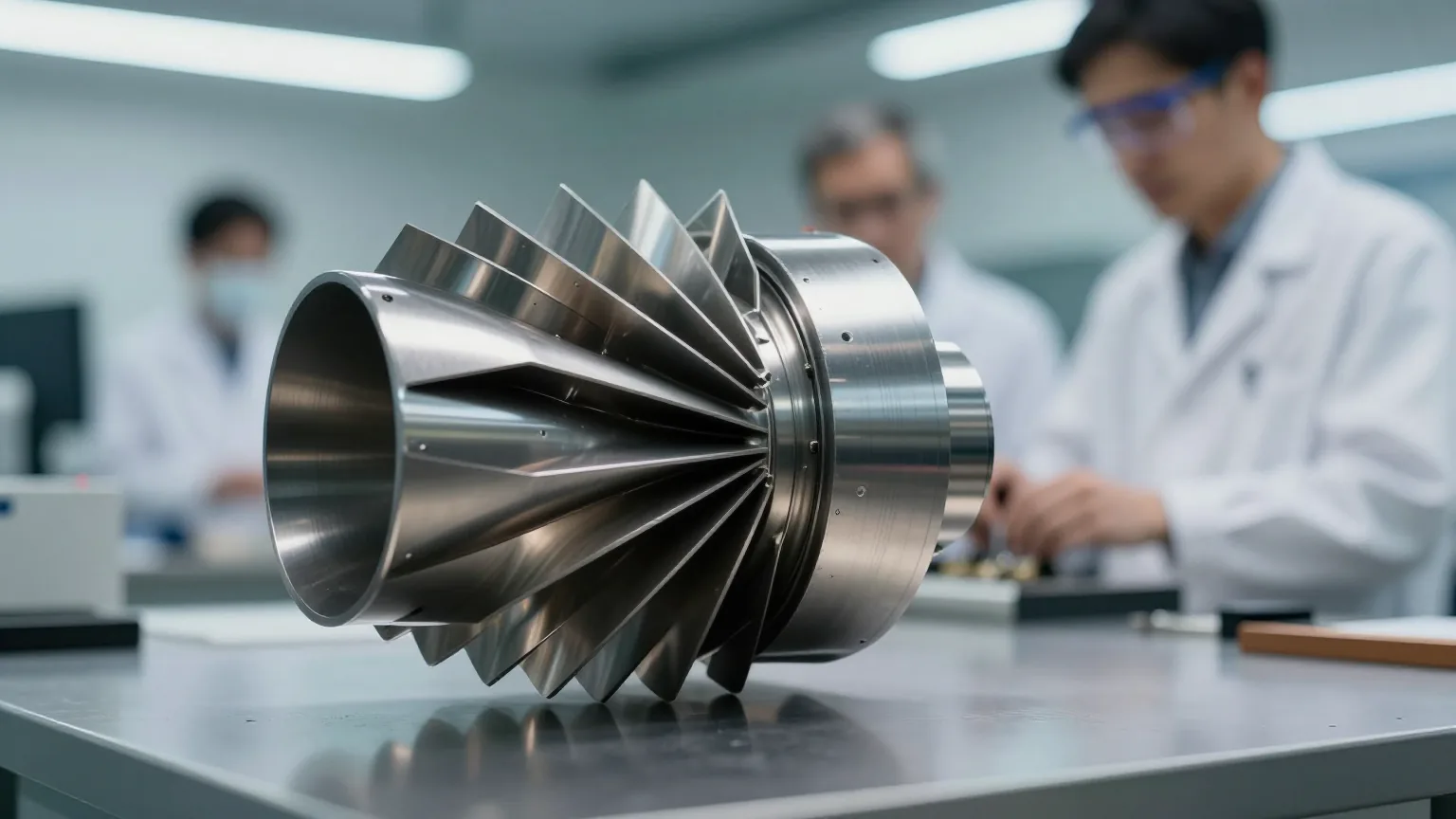
So, who is going to buy a machine like the HELIOR? The applications are vast. In the automotive industry, for example, manufacturers are increasingly using SLS for production parts like interior components, brackets, and even functional fluid systems. The speed of the HELIOR means that these parts can be produced in-house, reducing supply chain risks and allowing for rapid iteration. Instead of waiting weeks for a shipment from a supplier, a car manufacturer can print the needed parts on-site, just-in-time for assembly.
In aerospace, where weight and strength are critical, SLS is already a preferred method for producing complex, lightweight structures. The HELIOR allows aerospace companies to produce these parts in larger batches, reducing the cost of each component. This is particularly important for new aircraft programs, where the volume of parts is high, and the cost of each part is a significant factor in the overall program budget. The ability to produce high-quality, lightweight parts quickly and cost-effectively is a major competitive advantage in the aerospace sector.
Sustainability: The Green Side of Speed
One of the often-overlooked benefits of faster 3D printing is sustainability. When you print faster, you use less energy per part. The HELIOR’s efficiency means that less electricity is required to produce the same number of parts as a traditional SLS machine. This has a direct impact on the carbon footprint of the manufacturing process. In a world where companies are under increasing pressure to reduce their environmental impact, this is a significant selling point.
Furthermore, SLS is a near-net-shape manufacturing process. This means that very little material is wasted. The unsintered powder can be recycled and reused, reducing the amount of waste generated. When you combine the low waste of SLS with the high efficiency of the HELIOR, you get a manufacturing process that is not only fast and cheap but also environmentally responsible. This aligns with the broader trends in industry towards circular economy models and sustainable manufacturing practices.
The Human Factor: Automation and Integration
While the HELIOR is a marvel of engineering, it is not a magic box that prints parts without human intervention. The true value of the machine is realized when it is integrated into a larger automated workflow. This is where the trend towards automation in 3D printing comes into play. Companies are increasingly looking for ways to automate the entire process, from powder loading to part removal and cleaning.
Recent news in the 3D printing services sector highlights this trend. For instance, AM Solutions has introduced a more compact solution for automated cleaning, and 3D People has integrated threaded inserts into its online quoting tool [2]. These developments show that the industry is moving towards a fully automated, end-to-end production line. The HELIOR is designed to be part of this ecosystem. Its large build volume and high throughput make it an ideal candidate for integration with robotic systems that can load and unload build plates, handle post-processing, and manage inventory. The result is a lights-out manufacturing environment where parts are produced with minimal human oversight, further driving down costs and increasing reliability.
Challenges and Considerations
Of course, no technology is without its challenges. The HELIOR, with its high power and large format, requires a significant investment. Not every company will be able to afford or utilize the full capacity of the machine. For smaller businesses, the cost-per-part may still be higher than traditional methods, especially for very simple geometries. Additionally, the speed of the HELIOR requires a high level of expertise in process optimization. To get the best results, users need to understand how to pack the build plate, how to manage the thermal history of the parts, and how to optimize the laser parameters. This requires a skilled engineering team, which is a barrier to entry for some companies.
There is also the issue of software. The speed of the HELIOR is only as good as the software that controls it. EOS has invested heavily in its EOSMATE software, which offers a range of tools for optimizing build orientation, support structures, and laser parameters. However, users still need to invest time in learning and mastering this software. The transition from traditional SLS to the HELIOR is not just a hardware upgrade; it is a process change that requires training and adaptation.
The Future of Industrial SLS
Looking ahead, the launch of the HELIOR sets the stage for the next generation of industrial SLS. We can expect to see even faster machines, with higher laser powers and larger build volumes. We can also expect to see a greater focus on multi-material printing, where different materials can be used in the same build to create parts with varying properties. The HELIOR is a stepping stone towards a future where additive manufacturing is the default choice for many industrial applications, not just a niche alternative.
The impact of the HELIOR will be felt across the entire supply chain. As the cost of SLS parts drops, we will see more companies adopting the technology. This will lead to a greater demand for SLS materials, driving further innovation in powder chemistry. It will also lead to a greater demand for post-processing services, as the volume of parts produced increases. The entire ecosystem of 3D printing will grow and mature, creating new job opportunities and business models.
Conclusion: A New Era of Industrial Printing
The EOS HELIOR is more than just a faster printer. It is a statement of intent. It says that additive manufacturing is ready for the big leagues. It says that speed and scale are no longer the enemy of quality. It says that the economics of industrial SLS have finally caught up with its potential. For manufacturers, the message is clear: the time to adopt SLS for production is now. The barriers that once held you back have been removed. The machine is here, the technology is proven, and the economics are favorable.
As we move further into 2026 and beyond, the HELIOR will likely become the benchmark for industrial SLS. Competitors will be forced to respond, driving further innovation and lowering costs for everyone. The result will be a more efficient, more sustainable, and more flexible manufacturing industry. The future of production is being printed, one layer at a time, and it’s faster than you think.
Call to Action: If you are a manufacturer looking to optimize your production costs, it’s time to evaluate your additive manufacturing strategy. Consider the potential of high-throughput SLS for your next product launch. Reach out to your suppliers, explore the capabilities of the HELIOR, and start the conversation about how you can leverage this technology to stay ahead of the curve. The future is fast, and it’s being printed right now.