3D Printing Breakthrough: 10x Faster Concrete Structures
Imagine a world where building a house takes days, not months. Where a hospital wing is constructed in a weekend, and a disaster relief shelter is printed on-site before the rain even starts. For decades, this sounded like science fiction, the kind of thing you’d see in a futuristic blockbuster where the hero builds a base with a handheld device. But now, it is knocking on the door of reality, and it is doing so with a speed that might just make traditional construction crews reach for their hard hats in a mix of awe and mild panic.
The construction industry has been notoriously slow. It is the industry where "on time" often means "two years late," and where a single missed delivery of rebar can halt a project for weeks. But a recent breakthrough in 3D concrete printing technology has shattered these expectations. Researchers and engineers have developed a new method that allows for the printing of concrete structures at speeds up to 10 times faster than previous iterations. This isn't just a marginal improvement; it is a paradigm shift that could redefine how we build our cities, our homes, and our infrastructure.
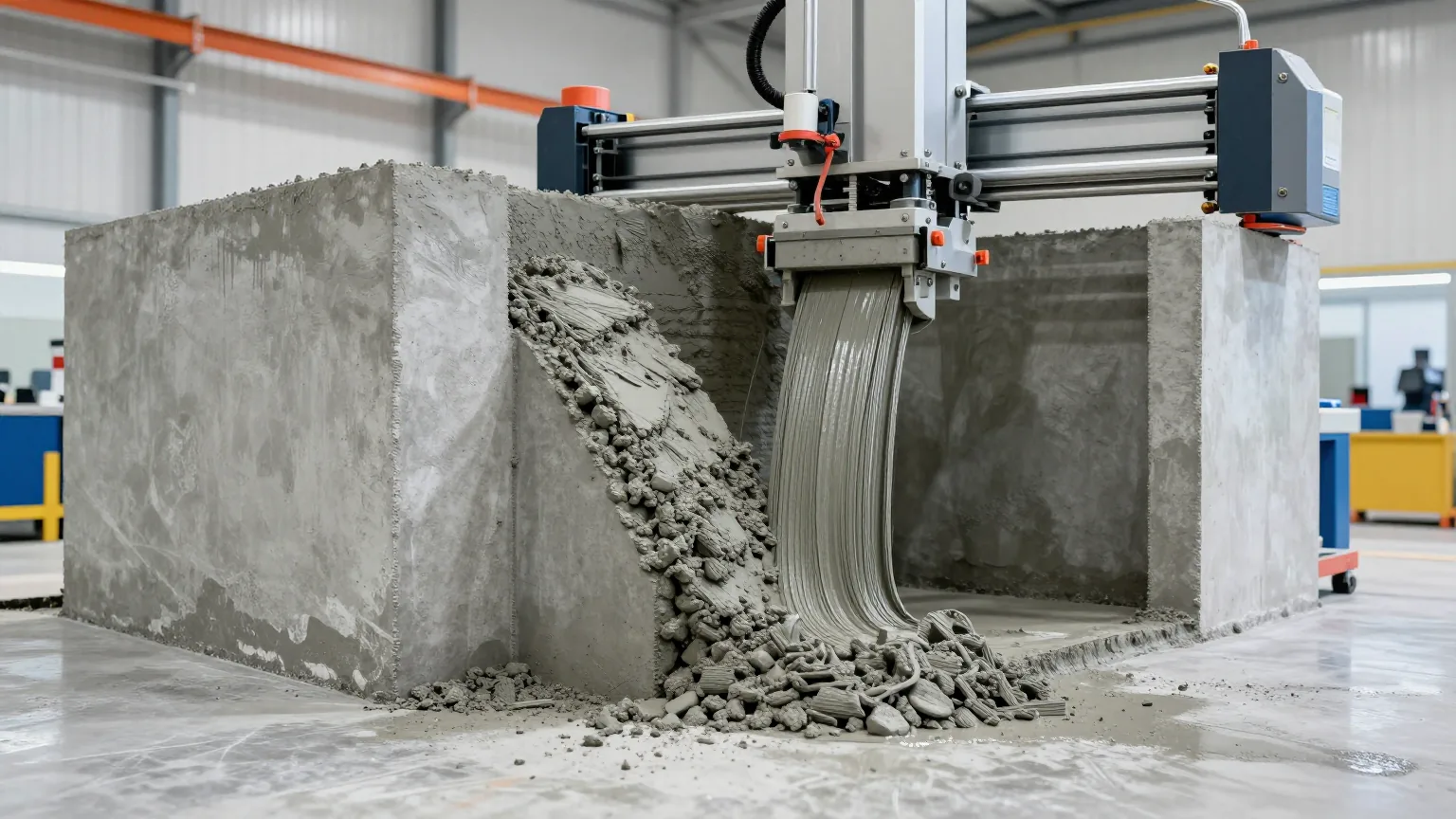
So, what does this actually mean? How does it work, and why should you care if you aren't an architect? Stick around. We are about to dive into the nitty-gritty of this technological leap, exploring the science behind the speed, the cultural shifts it will trigger, and the potential to reshape our built environment. Buckle up, because the future of construction is no longer just about laying bricks one by one; it is about printing them all at once.
The Era of the Slow Pour: Why Construction Has Been Stuck in the 20th Century
To appreciate the magnitude of a 10x speed increase, we first need to understand the baseline. Traditional concrete construction is a logistical nightmare. It involves mixing, transporting, pouring, and curing. Each step is a bottleneck. You need a crane, you need a formwork (the mold that holds the wet concrete), and you need a crew of skilled laborers to assemble the formwork before the concrete arrives. If the concrete arrives before the formwork is ready, it sets. If the formwork is ready but the concrete is late, the crew is paid to stand around and wait.
This process has been the backbone of modern architecture for over a century. From the brutalist concrete monoliths of the 1960s to the sleek residential towers of today, the method has remained largely unchanged. We have gotten better at designing with concrete, but we haven't gotten much better at placing it. The result is a construction process that is labor-intensive, slow, and highly susceptible to weather delays and supply chain disruptions. It is a perfect storm of inefficiency that has kept building costs high and timelines long. Now, enter 3D printing, which promises to decouple the speed of construction from the speed of human labor.
Breaking the Bottleneck: How 10x Speed is Actually Achieved
So, how do you print concrete ten times faster? It’s not just about turning up the dial on the extruder. The breakthrough lies in a combination of material science, robotic kinematics, and software optimization. Traditional 3D concrete printers are often limited by the "layer time." If you print a wall layer by layer, and each layer takes an hour to print, a ten-story building takes a long time.
The new approach utilizes multi-head extrusion systems and advanced path-planning algorithms. Instead of a single nozzle moving back and forth in a slow, serpentine pattern, multiple nozzles work in parallel, depositing material simultaneously across different sections of the structure. Think of it like the difference between one person painting a wall versus ten people painting it at the same time, but with the precision of a laser. Furthermore, the concrete mix itself has been engineered to have a much faster initial setting time. This "early strength" allows the printer to move on to the next layer almost immediately, rather than waiting for the previous layer to cure sufficiently to support the weight of the next.
There is also the factor of "continuous flow." Older printers often had to stop to adjust pressure or clear clogs. The new systems use real-time feedback loops that monitor the viscosity and flow rate of the concrete, adjusting the extrusion speed on the fly. This eliminates the downtime that previously plagued 3D printing operations. It’s the difference between a typewriter that jams every few words and a high-speed printer that just keeps rolling. The result is a machine that doesn't just print faster; it prints continuously, seamlessly, and with a level of efficiency that was previously impossible.
The Material Magic: Specialized Concrete Mixes
You can't just throw standard ready-mix concrete into a 3D printer and expect it to work at 10x speed. Standard concrete is too heavy, too wet, and too slow to set. For high-speed 3D printing, engineers have developed proprietary mixes that are essentially tailored for the machine. These mixes often include accelerators and polymers that enhance early strength and reduce water content. A lower water content means the concrete is stiffer, allowing it to hold its shape immediately after extrusion. This is crucial for overhangs and complex geometries that would simply slump and collapse with traditional concrete.
These specialized mixes are often referred to as "digital concrete." They are designed to be printed, not poured. They have a rheology (flow behavior) that is optimized for extrusion through nozzles. Some mixes even include fibers to add tensile strength, reducing the need for internal rebar in certain applications. This not only speeds up the process by eliminating the laborious task of tying rebar cages but also creates a more uniform structural element. The material is no longer just a passive substance; it is an active component in the digital fabrication process. This shift in material science is as important as the robotics themselves. Without the right concrete, the fastest printer in the world would just be making a very expensive, very fast mess.
From Formwork to Freeform: The Design Revolution
One of the most exciting aspects of this speed breakthrough is what it does to architectural design. In traditional construction, formwork is expensive and rigid. You can only build what you can mold. If you want a curved wall, you need curved plywood or metal forms, which are costly and time-consuming to fabricate. With 3D printing, the "form" is the machine itself. This allows for "freeform" design, where architects can create complex, organic shapes that would be impossible or prohibitively expensive to build using traditional methods.
Think of the intricate lattice structures of a spider's web or the smooth, flowing curves of a Zaha Hadid building. In the past, these were often just aesthetic facades over a simpler structural core. With high-speed 3D printing, these complex geometries can be the structure itself. The machine can print a wall with varying thickness, thinner where the load is low and thicker where it is high. This is known as "topology optimization," and it allows for the use of less material without sacrificing strength. Less material means less weight, less cost, and a smaller carbon footprint. It’s a win-win-win situation that is starting to change how architects approach the blank canvas.
The Labor Dilemma: Will Robots Take Our Jobs?
Let’s address the elephant in the room: labor. Construction is a labor-intensive industry, and it is facing a severe shortage of skilled workers. In many countries, the average age of a construction worker is rising, and few young people are entering the trade. A 10x speed increase in concrete printing could be seen as a threat to jobs, but it is more likely to be a transformation of them. The role of the construction worker is shifting from manual laborer to machine operator and quality inspector. Instead of mixing concrete and carrying bags, workers will be monitoring the printers, checking for defects, and managing the digital files that drive the machine.
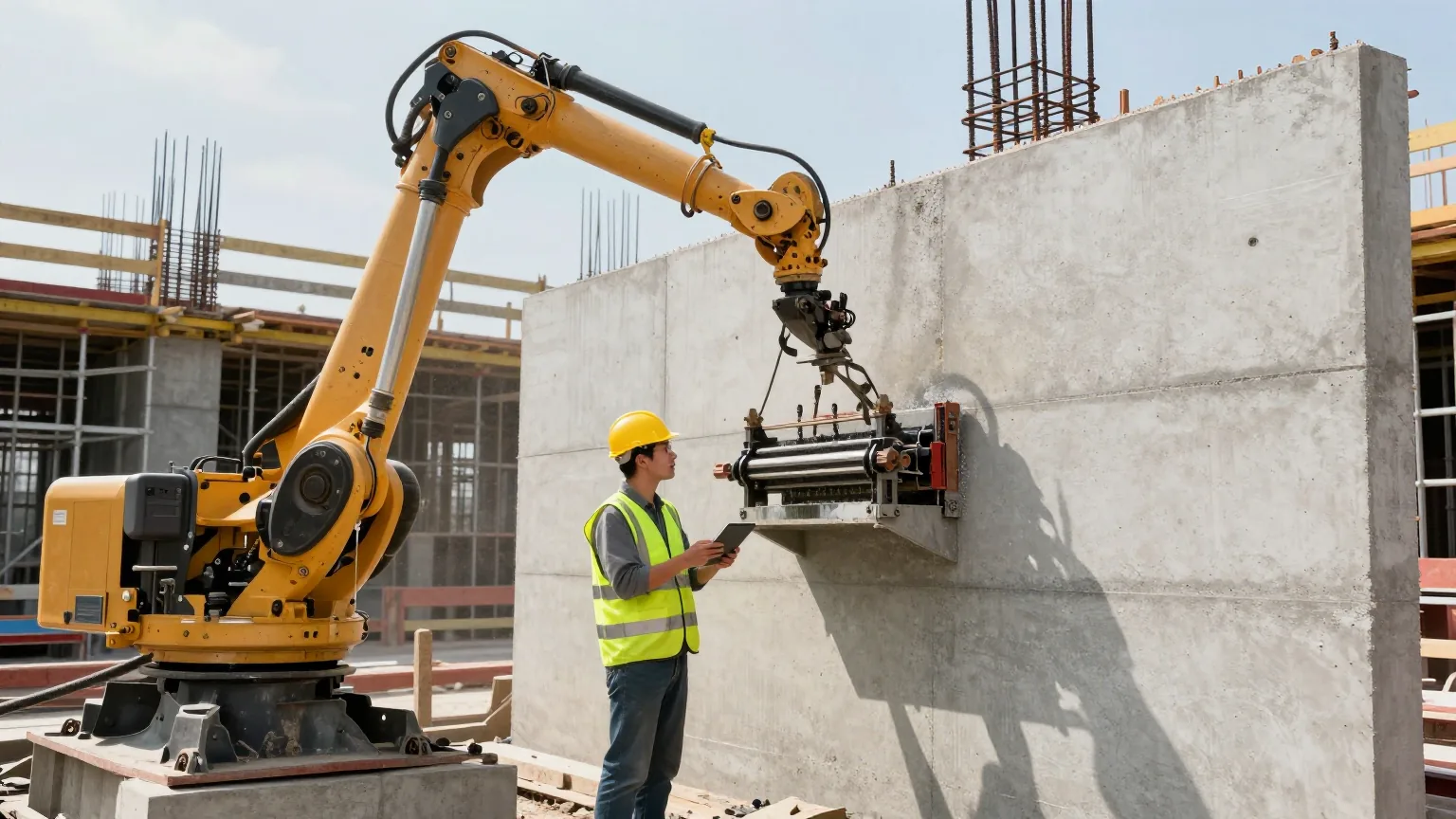
This is similar to the shift in manufacturing over the last few decades. When CNC machines were introduced, many feared that machinists would become obsolete. Instead, the role evolved. Machinists became programmers and technicians. In construction, we will likely see a new breed of "print technicians" who understand both the physical properties of concrete and the digital logic of the printer. This could actually make the industry more attractive to younger generations who are comfortable with technology but less interested in the physical toil of traditional construction. It’s not about replacing humans; it’s about augmenting them, allowing them to focus on the higher-value tasks that require human judgment and creativity.
Speed to Shelter: The Humanitarian Impact
Perhaps the most compelling application of this technology is in disaster relief and humanitarian aid. When a natural disaster strikes, such as an earthquake or a hurricane, time is of the essence. Traditional construction methods are too slow to meet the immediate needs of displaced populations. Tents are temporary and vulnerable to weather, while permanent buildings take months or years to build. 3D printing offers a middle ground: durable, permanent housing that can be built in a matter of days.
Organizations like ICON and others have already demonstrated this potential by printing small-scale shelters in disaster zones. With the 10x speed breakthrough, this capability becomes scalable. Imagine a fleet of mobile 3D printers rolling into a disaster zone, printing entire neighborhoods of homes in a week. These homes would be structurally sound, insulated, and ready for occupancy. This isn't just about efficiency; it’s about saving lives and restoring dignity to those who have lost everything. The speed of construction becomes a factor in survival, and 3D printing is poised to change that equation. It’s a powerful example of how technology can serve a higher good, turning a logistical challenge into a solvable problem.
Space Construction: The Ultimate Test
If you think building on Earth is challenging, wait until you try it on the Moon or Mars. NASA and other space agencies are heavily invested in 3D printing technology for off-world construction. The idea is to use local regolith (moon dust or Martian soil) mixed with a binder to print structures on-site. This eliminates the need to transport massive amounts of building materials from Earth, which is incredibly expensive. The 10x speed breakthrough is crucial here, as mission time is limited and resources are scarce. A printer that can build a habitat in a few days rather than weeks could be the difference between a successful mission and a catastrophic failure. The lessons learned in terrestrial high-speed printing are directly applicable to space exploration, making this breakthrough a key enabler for humanity’s expansion into the cosmos.
Environmental Implications: Building Greener
Construction is one of the largest contributors to global carbon emissions. It accounts for roughly 40% of energy use and a significant portion of waste. Traditional concrete production is particularly carbon-intensive, with cement manufacturing alone responsible for about 8% of global CO2 emissions. 3D printing can help mitigate this impact in several ways. First, it uses less material because it deposits concrete only where it is needed, reducing waste. Second, the optimized geometries allow for thinner walls and more efficient structural designs, further reducing material use. Third, the speed of construction means that the project footprint is smaller and the equipment is on-site for a shorter time, reducing fuel consumption and emissions from heavy machinery.
Furthermore, 3D printing can utilize alternative materials, such as recycled aggregates or even agricultural waste, to create concrete mixes. This circular economy approach could significantly reduce the environmental impact of construction. As we face the challenges of climate change, the ability to build faster, cheaper, and greener is not just a nice-to-have; it is a necessity. 3D printing is emerging as a key tool in the fight against climate change, offering a path to sustainable construction that aligns with our planetary boundaries.
Regulatory Hurdles: The Bureaucratic Slowdown
While the technology is moving at 10x speed, the regulatory framework is moving at 0.1x. Building codes and regulations are typically designed for traditional construction methods. They specify how walls must be built, how rebar must be placed, and how concrete must be cured. 3D printing challenges these assumptions. How do you inspect a 3D printed wall? How do you certify its structural integrity? The regulatory landscape is lagging behind the technology, creating a bottleneck that can slow down adoption. However, this is also an opportunity. As more 3D printed buildings are constructed and monitored over time, data will accumulate, allowing for the development of new standards and codes specific to 3D printed concrete. This will take time, but it is a necessary step in the maturation of the technology. The goal is to create a regulatory framework that is flexible enough to accommodate innovation but rigorous enough to ensure safety.
The Future is Printed: What’s Next?
Where do we go from here? The 10x speed breakthrough is just the beginning. We can expect to see even faster printers in the coming years, possibly reaching 50x or 100x the speed of traditional methods. We can also expect to see the integration of other materials, such as wood, metal, and composites, into the printing process, allowing for multi-material structures that combine the strengths of different materials. We may even see the emergence of "smart" buildings, where sensors are embedded in the concrete during the printing process, allowing the building to monitor its own structural health in real time. The possibilities are limitless, and the pace of innovation is accelerating.
The cultural shift will be just as significant. As 3D printing becomes more common, our perception of buildings will change. We will no longer see them as static, monolithic objects, but as dynamic, adaptable structures that can be modified and updated over time. We will see a democratization of design, where homeowners can customize their homes with a level of detail and complexity that was previously reserved for the wealthy. The barrier to entry for construction will lower, making housing more accessible and affordable for everyone.
Conclusion: The Foundation of a New Era
The 3D printing breakthrough in concrete construction is more than just a technical achievement; it is a societal catalyst. It promises to make building faster, cheaper, greener, and more accessible. It challenges the status quo, disrupts traditional industries, and opens up new possibilities for human creativity and resilience. While there are still hurdles to overcome, particularly in terms of regulation and public acceptance, the direction is clear. The future of construction is being printed, and it is arriving faster than we ever imagined.
So, what can you do? If you are a consumer, start looking for 3D printed buildings in your area. Support companies and projects that are pushing this technology forward. If you are a professional, consider learning about digital fabrication and 3D printing. The skills of the future are being written in code and concrete. And if you are just curious, keep an eye on the news. The next time you see a crane on a construction site, imagine it being replaced by a sleek, robotic arm, printing a building layer by layer, at a speed that defies belief. The future isn't just coming; it's being printed right now. And it looks pretty good.