Bambu Lab H3C: One Nozzle, Two Layer Heights, Zero Compromise
The Day We Stopped Choosing Between Speed and Detail
For nearly two decades, the 3D printing community has been locked in a battle of compromises. You wanted fast? You printed thick. You wanted detail? You printed slow. It was the eternal trade-off, the "you can't have it all" mantra that governed every slice of our digital reality. Well, hold onto your spools, because that rule just got broken. Enter the Bambu Lab H3C, a machine that promises to shatter the fundamental physics of FDM printing by allowing a single nozzle to print two different layer heights simultaneously. [2]
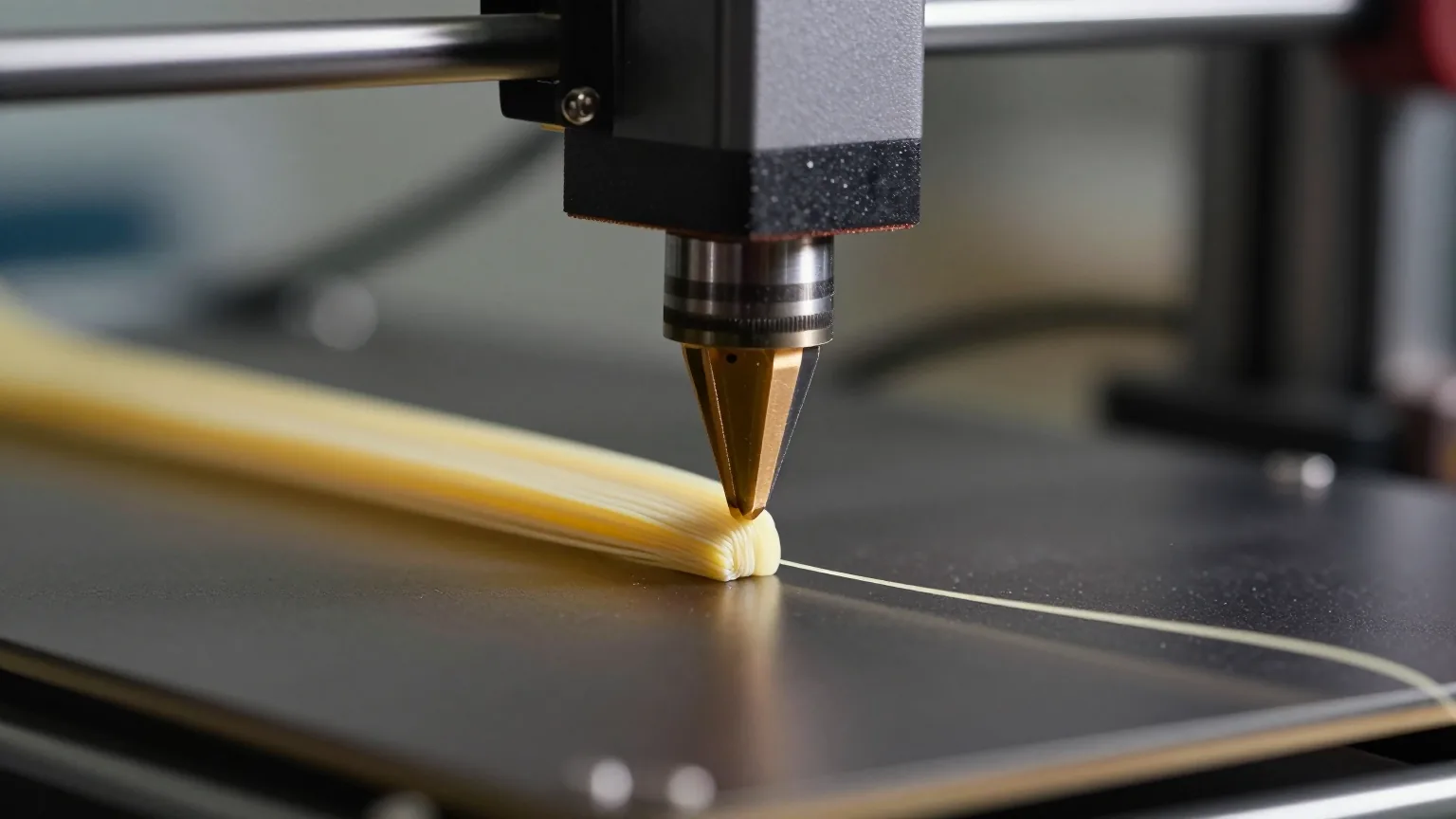
It sounds like magic. It sounds like a marketing gimmick. But in the rapidly evolving landscape of additive manufacturing, where AI is turning voice commands into finished parts [1] and seaweed is becoming structural material [2], the H3C represents a genuine leap forward. It is not just a new printer; it is a philosophical shift in how we think about the printing process. Let’s dive into the news, the technology, and the implications of this "zero compromise" machine.
Breaking the Binary: The Problem with Traditional FDM
To understand why the H3C is such a big deal, we have to look at the history of FDM (Fused Deposition Modeling). Since the 1990s, the layer height has been the primary dial for quality. A 0.2mm layer is standard for "high quality," while 0.4mm or 0.5mm is used for "draft" or structural speed. These are binary choices. You slice your file at one height, and every single layer in that print adheres to that standard. [2]
This creates a bottleneck. Imagine you are printing a complex figurine with fine facial features but also a large, solid base for stability. In a traditional printer, you are forced to choose: do you print the whole thing at 0.2mm to get the face right, sacrificing hours of print time on the base? Or do you print at 0.4mm to save time, ruining the facial details? It is a lose-lose scenario. The H3C changes the equation by decoupling layer height from the global setting, allowing the slicer to dictate different heights for different parts of the model within the same print job. [2]
How the H3C Achieves the Impossible
So, how does one nozzle print two different thicknesses at the same time? The secret lies in the slicer software and the mechanical precision of the H3C. According to recent news reports, the H3C’s slicer allows a fine nozzle to print thin layers and a larger nozzle to print thick ones, side by side on the same build plate. [2] While the phrasing "fine nozzle" and "larger nozzle" might suggest a dual-nozzle system, the core innovation is in the dynamic control of the extrusion width and layer height in real-time.
In practice, this means the printer can switch between a 0.1mm layer height for intricate details and a 0.4mm layer height for bulk material within the same Z-axis move, or in rapid succession, without the need for a full pause or a change in mechanical configuration. This is not just about speed; it is about resource optimization. By using thick layers for 80% of a model and thin layers for the critical 20%, you achieve a print that looks high-resolution but prints at a speed close to draft mode. It is the holy grail of efficiency.
The Slicer as the New Brain
Hardware is only as good as the software that drives it. The H3C’s breakthrough is not just in the motion system, but in the intelligence of its slicing engine. In the past, slicers were static tools: you set a parameter, and it applied it uniformly. The H3C’s slicer is dynamic. It analyzes the geometry of the model and automatically suggests—or allows the user to define—zones where high detail is required and zones where speed is preferred. [2]
This mirrors a broader trend in 3D printing where software is becoming the star of the show. We are seeing AI systems that can identify successful experimental parameters from hundreds of trials [3], and tools that turn a simple voice command into a 3D part without any CAD knowledge [1]. The H3C fits into this ecosystem of "smart printing." It assumes the user wants the best possible result with the least amount of manual tweaking. It removes the cognitive load from the print engineer, allowing them to focus on design rather than dialing in extrusion rates and layer heights manually.
Contextualizing the H3C in 2026
It is 2026, and the 3D printing industry is no longer a niche hobbyist market. It is a critical component of aerospace, pharmaceuticals, and even environmental science. When we look at the H3C, we cannot view it in isolation. We must view it against the backdrop of what is happening in the industry right now. [5]
Consider the recent news from the aerospace sector. SWISSto12 has cleared the critical design review for phased array antennas on 5G demonstration satellites. [2] These are complex, high-precision structures where weight and detail are paramount. While the H3C is a consumer/semi-prosumer machine, the technology behind its variable layer height processing is the same technology that is trickling down from industrial metal and high-performance polymer printing. The ability to optimize material usage and print time while maintaining specific geometric tolerances is a requirement in aerospace. The H3C brings this industrial-grade optimization to the desktop.
Similarly, in the medical and pharmaceutical fields, we are seeing 3D printed peptide products and reusable runoff filters made from Sargassum seaweed. [2][4] These applications require specific surface finishes and structural integrity. A filter made from seaweed needs to be porous enough to let water through but strong enough to hold the structure. A variable layer height printer could potentially print the structural backbone with thick layers for strength and the filtration mesh with thin layers for precision, all in one go. The H3C is not just a toy; it is a prototype for future multi-material, multi-resolution manufacturing.
The "Aurora" Effect and the Race to Simplicity
While the H3C focuses on technical precision, the broader market is focusing on accessibility. The news cycle is dominated by the launch of the Aurora 3D printer, which claims to turn a photo, a few words, or a voice command into a finished part without CAD or slicing software. [1] This might seem like a contradiction to the H3C’s technical depth, but it is actually part of the same story. The industry is bifurcating.
On one end, we have the "magic box" for the casual user who wants a trophy or a replacement part and doesn't care about the process. On the other end, we have the H3C for the maker, the engineer, and the creator who does care about the process and wants to push the boundaries of what is possible. The H3C is the answer to the power user who is tired of the compromises. It validates the idea that 3D printing is a serious manufacturing technology, not just a novelty. It offers a tool that respects the user's time and their desire for quality.
Historical Context: The Evolution of Nozzle Technology
To appreciate the H3C, we must look back at the history of nozzles. For years, the standard 0.4mm brass nozzle was the king. Then came the 0.2mm nozzle for "high resolution," and the 0.6mm/0.8mm nozzles for speed. The problem was that changing nozzles was a hassle. You had to clean, swap, and recalibrate. Dual-nozzle printers solved this by having two nozzles, but they introduced new problems: clogging, cross-contamination, and the need for a purge station. [5]
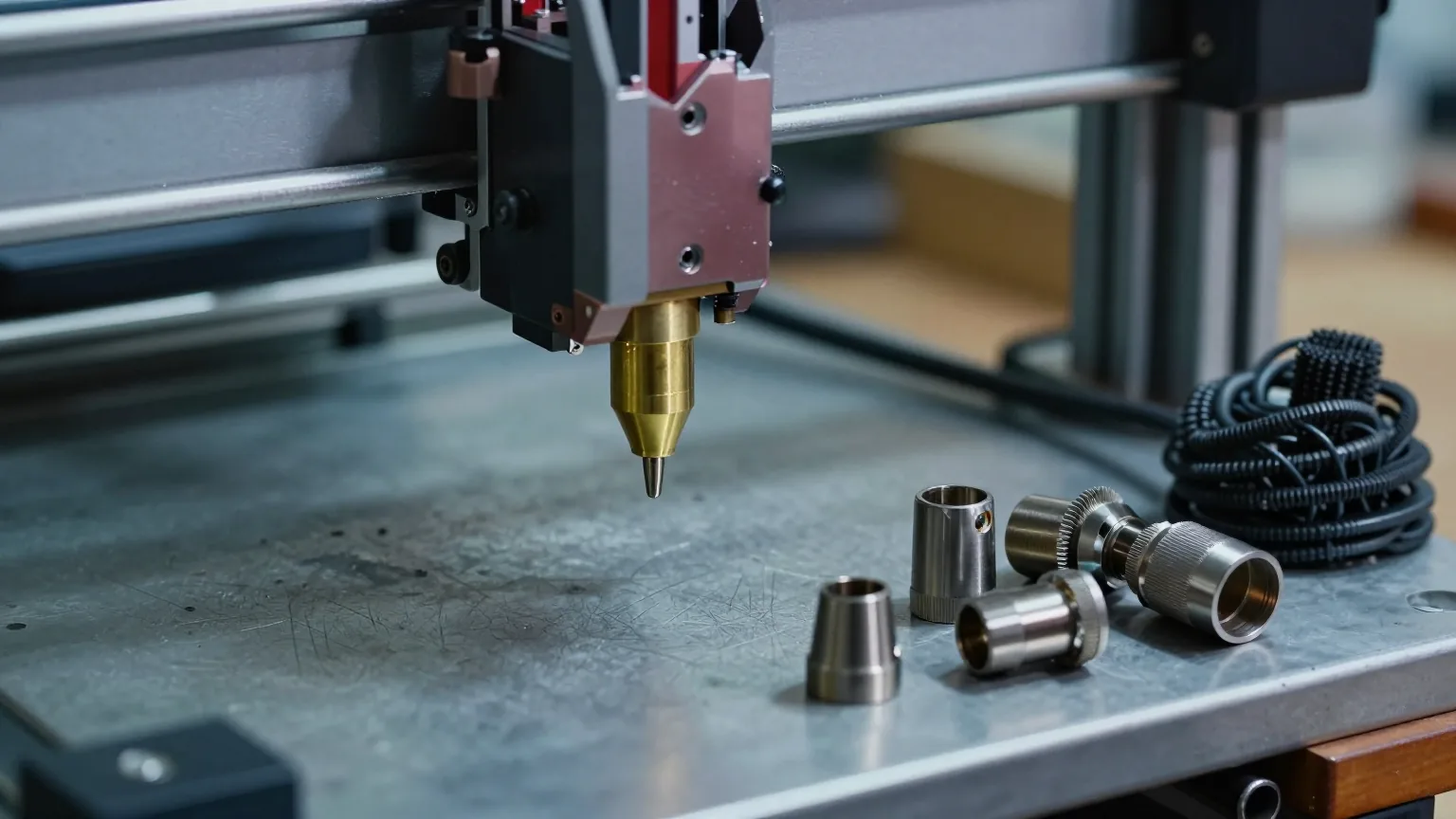
The H3C represents a return to simplicity, but with a twist. By using a single nozzle that can dynamically adjust its effective print width and layer height via software and motion control, it avoids the mechanical complexity of dual extruders. It is a testament to the fact that the best technology is often the technology that removes complexity rather than adding it. It reminds us of the early days of 3D printing, when the focus was on making the machine work reliably, not on adding more features. The H3C brings that reliability back, but with the intelligence of 2026.
Real-World Applications: Beyond the Toy
What does this mean for the average user? Let’s look at some practical examples.
- Architectural Models: Architects often need models with fine details on the facade but solid, quick-printed bases. The H3C can print the intricate window frames at 0.1mm and the solid massing at 0.4mm, reducing print time by up to 50% while maintaining visual fidelity. [2]
- Functional Parts: A gear or a hinge needs high precision on the teeth and low friction on the shaft. A variable layer height print can ensure the teeth are smooth and precise, while the shaft is printed quickly with strong, thick layers. This eliminates the need for post-processing to smooth the shaft.
- Art and Sculpture: Artists can focus their high-resolution efforts on the face or hands of a sculpture, while the body or background is printed in draft mode. This allows for larger, more complex pieces to be printed in a reasonable timeframe without sacrificing the artistic intent of the focal points. [5]
These applications show that the H3C is not just about speed; it is about intent. It allows the printer to align its resources with the artistic or engineering intent of the user. It is a machine that thinks like a human designer, prioritizing what matters.
The Economic Impact: Cost and Time
Let’s talk money. 3D printing is an additive process, which means it is generally more material-efficient than subtractive manufacturing. However, time is money. In a professional setting, the cost of a machine sitting idle while it prints a 20-hour draft model is significant. The H3C reduces this cost by optimizing the print time for the critical sections only. [5]
For a business, this means higher throughput. You can produce more parts per day with the same level of detail on the important surfaces. For a hobbyist, it means less frustration. No more waiting overnight for a print that only needs 4 hours of high-detail printing and 4 hours of draft printing. The H3C democratizes high-quality printing by making it more accessible in terms of time and energy consumption. It is a subtle but profound economic shift in the maker space.
Challenges and Limitations
Of course, no technology is perfect. The H3C is not without its challenges. The dynamic switching of layer heights requires precise control of the Z-axis and the extrusion flow. If the timing is off by even a millisecond, you could get a shift in the layers, leading to a "step" artifact where the thin layers meet the thick layers. This requires a very stable mechanical structure and a highly accurate stepper motor driver. [2]
Additionally, the slicer software must be incredibly smart. It needs to understand the topology of the model to know where to apply the thin layers. If the user makes a mistake in the design, the slicer might not detect it, leading to a print that is fast but lacks the necessary detail in critical areas. This puts a new burden on the user to understand not just the geometry, but the printing strategy. It is a learning curve, but one that is worth climbing for the rewards.
There is also the issue of material compatibility. Not all filaments behave the same way. A flexible TPU might not respond well to rapid changes in layer height, while a rigid PLA or PETG might handle it perfectly. Users will need to experiment with different materials to find the optimal settings for the H3C. This is part of the fun of 3D printing, but it is also a barrier to entry for the less technical user.
The Cultural Shift: From Hacking to Engineering
The H3C is part of a broader cultural shift in the 3D printing community. We are moving away from the "hacker" mindset, where the goal was to modify the hardware to make it work, to an "engineer" mindset, where the goal is to use the tools provided to solve problems efficiently. The early days of 3D printing were about building your own printer, modifying the firmware, and fighting the machine. Today, the machine is fighting for you. [5]
The H3C embodies this shift. It is a closed, integrated system that offers a specific solution to a specific problem. It doesn't ask you to hack the firmware to enable variable layer height; it just does it. This reflects a maturation of the industry. We are no longer in the Wild West; we are in the age of refinement. The focus is on usability, reliability, and performance. The H3C is a symbol of this maturity. It says: "We have solved the basic problems. Now, let us solve the advanced ones."
Conclusion: The Future is Hybrid
The Bambu Lab H3C is more than just a new printer. It is a statement of intent. It declares that the era of compromise is over. It promises a future where we can have the speed of draft printing and the detail of high-resolution printing, all in one go. It is a testament to the ingenuity of the 3D printing community and the rapid pace of innovation in additive manufacturing. [2][5]
As we look to the future, we can expect to see more machines like the H3C. We will see AI-driven printers that automatically optimize layer heights based on the model. We will see materials that respond differently to different print speeds and layer heights. We will see a world where 3D printing is not just a way to make things, but a way to make things better.
The H3C is a step in that direction. It is a tool that empowers the maker, the engineer, and the artist. It is a reminder that technology should serve us, not the other way around. So, the next time you are staring at a 20-hour print time, wondering if you can afford the luxury of high detail, remember the H3C. It is the proof that you don’t have to choose. You can have it all.
Call to Action: Are you ready to say goodbye to compromise? Share your thoughts on the H3C in the comments below. Have you tried variable layer height printing before? What would you print first? Let’s start the conversation.