Bambu Lab Unveils H3C Tool Changer & Enters 3D Scanning
Bambu Lab Unveils H3C Tool Changer & Enters 3D Scanning: A New Era for the Desktop
The 3D printing industry has long been defined by a peculiar tension: the relentless march of hardware capability versus the stagnation of the user experience. For years, enthusiasts have watched as industrial giants perfected multi-material printing, only for that technology to remain locked behind six-figure price tags and complex engineering requirements. That status quo, however, appears to be shattering. As we navigate the landscape of late 2026, two distinct announcements from Bambu Lab have sent ripples through the community, signaling a shift from "good enough" to "industrial standard" for the desktop maker. First, the long-awaited H3C, a printer featuring a tool changer that promises to democratize multi-material and multi-nozzle workflows, officially launched on November 3, 2026 [1]. Second, in a move that blurs the line between fabrication and digitization, Bambu Lab is preparing to enter the 3D scanning market with the S1, its first device of this type, scheduled for release in November 2026 [5].
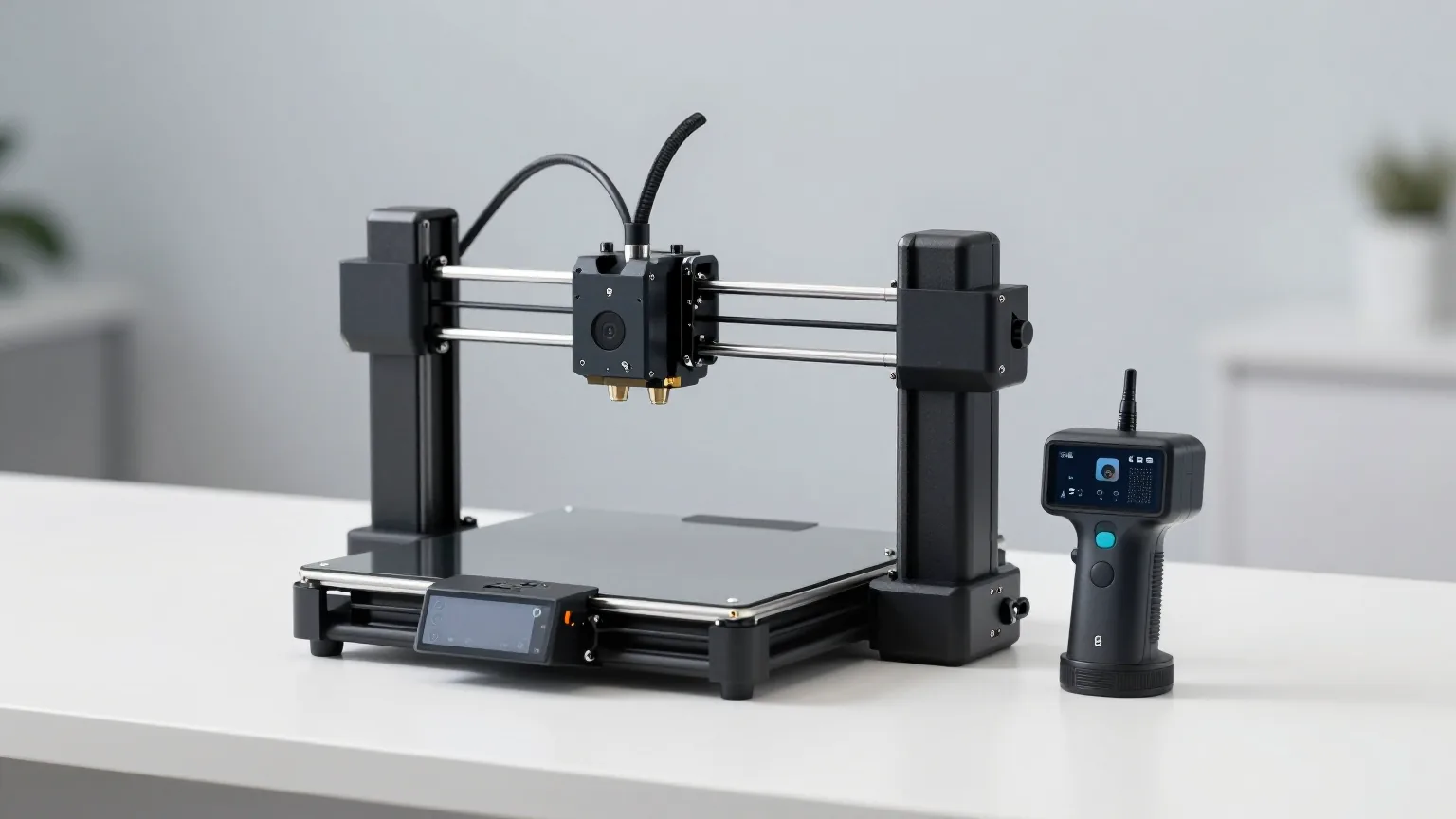
These are not just incremental upgrades; they are structural shifts. The H3C represents the culmination of years of community debate about the viability of tool-changing mechanisms in consumer-grade printers, while the S1 signals a strategic pivot toward a closed-loop ecosystem where scanning and printing are inextricably linked. In this post, we will unpack the technical implications, the market context, and the broader cultural impact of these releases. Buckle up, because the next five years of 3D printing are about to look very different.
The H3C: Finally, the Holy Grail Arrives
For the uninitiated, the "holy grail" of FDM (Fused Deposition Modeling) 3D printing has historically been the ability to print multiple materials or use different nozzles for different parts of the same object without manual intervention. For years, this was the domain of expensive industrial machines or complex, hacky modifications to open-source printers. Enter the H3C. Launched on November 3, 2026, this machine features a tool changer, a mechanism that physically swaps nozzles or extruder heads during the print process [1].
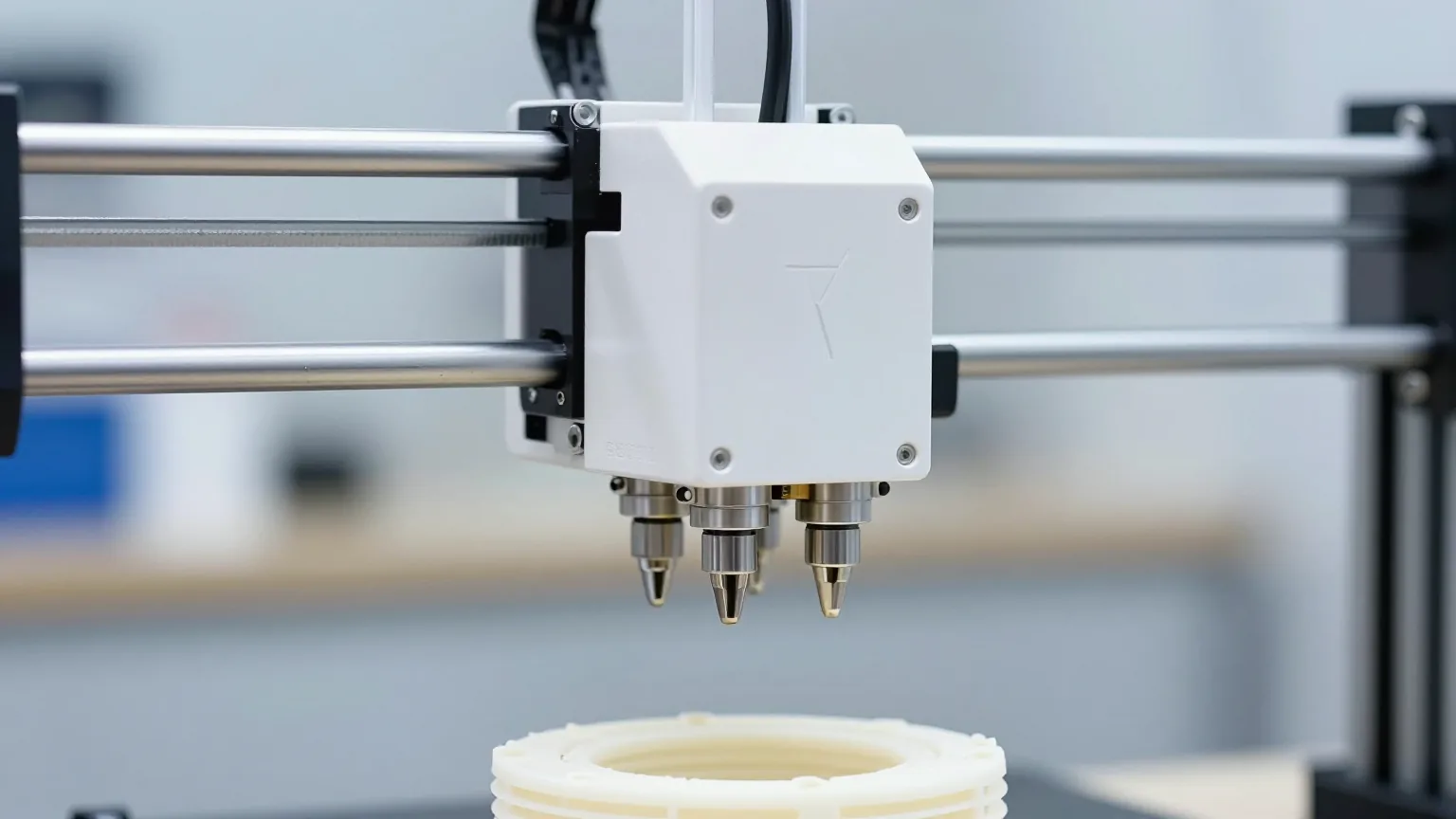
Why is this such a big deal? Traditional multi-material printers often rely on a single nozzle with a purge tower to clear material between switches. This process is messy, time-consuming, and often results in clogs or color bleeding. A tool changer, by contrast, physically moves the old nozzle out of the way and swaps in a new one. This allows for true isolation of materials. You can print a part in ABS on one side and TPU on the other, or use a 0.4mm nozzle for fine details and a 0.8mm nozzle for speed, all within the same print file. The H3C brings this industrial capability to the desktop, likely at a price point that is accessible to serious hobbyists and small businesses. It is a testament to the maturation of the technology, moving from a laboratory curiosity to a mainstream product.
Historical Context: The Long Road to Multi-Material
To appreciate the H3C, we must look back at the history of multi-material printing. The concept dates back to the early 2000s, with systems like the "Bowden" tube experiments and early multi-extruder setups. However, the real breakthrough came with the advent of the IDEX (Independent Dual Extrusion) system, popularized by companies like Voron and later adopted by Bambu Lab in their X1 Carbon series. IDEX allowed for two independent nozzles to print simultaneously, enabling techniques like "ghosting" or printing two identical parts at once.
Yet, IDEX had limitations. It was still limited to two materials and often required a complex purge system. The tool changer concept, inspired by CNC machining centers, offered a more elegant solution. By mechanically swapping tools, it eliminated the need for purging entirely. The H3C is the first widely accessible consumer printer to implement this robustly. It marks a shift from "software-defined" multi-material (where the slicer manages the purge) to "hardware-defined" multi-material (where the machine physically changes its head). This is a philosophical shift as significant as the move from single to dual extrusion was a decade ago.
Technical Deep Dive: How the Tool Changer Works
While specific technical details of the H3C are still being revealed in the wake of its November 3 launch, the general architecture of a tool changer involves a mechanical arm or a carriage that holds multiple nozzles. When the slicer detects a material change, the printer pauses, retracts the current filament, and the tool changer mechanism physically ejects the current nozzle and inserts the next one. This process is rapid, often taking less than a second, and is integrated seamlessly into the print sequence.
The key advantage here is cleanliness. Because the nozzles are physically separated, there is no cross-contamination of materials. This is crucial for engineering applications where material compatibility is critical. For example, printing a hinge with a hard plastic body and a flexible rubber pivot requires precise material isolation. The H3C makes this possible without the user needing to manage purge towers or worry about clogs. This level of automation is what separates a "hobby" printer from a "production" tool, and it is likely that the H3C will be adopted by small manufacturing firms and prototyping labs as a result.
The S1: Bridging the Gap Between Reality and Digital
While the H3C is about making things, the S1 is about understanding things. Scheduled for release in November 2026, the S1 is Bambu Lab’s first entry into the 3D scanning market [5]. This is a strategic move that speaks to the company’s vision of a complete digital fabrication ecosystem. For years, 3D scanning has been a separate niche, often associated with high-end photogrammetry or structured light scanners that are expensive and difficult to use. By bringing scanning into the Bambu Lab lineup, the company is lowering the barrier to entry for digitization.
The implications of this are profound. Imagine a workflow where you scan a broken part from a vintage appliance, edit the digital model to fit your specific needs, and then print a replacement on the same desk. The S1 makes this "scan-to-print" pipeline seamless. It transforms the 3D printer from a standalone device into a hub for digital manufacturing. This is not just about convenience; it is about empowerment. It allows users to interact with the physical world in a new way, capturing data with the same ease that they output objects.
Ecosystem Synergy: The Power of Integration
The simultaneous release of the H3C and the S1 is not a coincidence. It is a deliberate strategy to create a closed-loop ecosystem. Bambu Lab has long been known for its tight integration between hardware, firmware, and software. By adding scanning capabilities, they are extending this integration upstream. The S1 will likely be compatible with Bambu’s slicer software, allowing for direct import of scanned data into print files. This reduces the friction of the workflow and encourages users to stay within the Bambu ecosystem.
This is a classic move in the tech industry: create a product that is good on its own, but better when paired with other products. The H3C is a powerful printer, but it becomes a production line when paired with the S1. The S1 is a useful scanner, but it becomes a manufacturing tool when paired with the H3C. Together, they form a complete solution for rapid prototyping, reverse engineering, and small-batch production. This synergy is what will likely drive adoption, as users realize that the sum is greater than the parts.
Market Impact: Disrupting the Industrial Space
The introduction of the H3C and the S1 is likely to disrupt the lower end of the industrial 3D printing market. For years, small businesses have had to choose between expensive industrial machines with limited flexibility or cheap consumer printers with limited capabilities. The H3C offers a middle ground: a machine with industrial-grade multi-material capabilities at a consumer-friendly price. This will force industrial competitors to either lower their prices or differentiate their offerings in other ways, such as material certification or support services.
Furthermore, the entry of Bambu Lab into scanning is a direct challenge to established scanning companies. By leveraging their brand recognition and customer base, Bambu Lab can quickly gain market share in the scanning space. This will likely lead to a price war in the scanning market, benefiting consumers and accelerating the adoption of 3D scanning in general. The result is a more competitive market, with more options and lower prices for everyone.
Real-World Applications: Beyond the Hobbyist
So, what can you actually do with these new tools? The applications are vast. In the medical field, the H3C can be used to print custom prosthetics with different material properties in different areas. For example, a prosthetic hand might have a rigid structure and a flexible grip, both printed in a single process. The S1 can be used to scan a patient’s hand to create a perfect fit, reducing the time and cost of custom prosthetics.
In the automotive industry, the H3C can be used to print functional prototypes with multiple materials, such as a car interior part with a hard shell and a soft touch surface. The S1 can be used to scan existing parts for reverse engineering or quality control. In the electronics industry, the H3C can be used to print enclosures with integrated cable channels, using different materials for structural strength and flexibility. The S1 can be used to scan electronic components for digital archiving or repair.
These are just a few examples. The possibilities are limited only by the imagination of the user. The key point is that these tools are not just for hobbyists; they are for professionals. They are for engineers, designers, and manufacturers who need to solve real-world problems quickly and efficiently. The H3C and the S1 are enablers of innovation, and their impact will be felt across many industries.
The Role of AI and Automation
Underpinning both the H3C and the S1 is the growing role of artificial intelligence and automation. The H3C likely uses AI to optimize the tool changing process, predicting when a change is needed and adjusting the print speed accordingly. The S1 likely uses AI to enhance the quality of the scans, filling in gaps and removing noise. This level of automation is what makes these tools accessible to non-experts. You don’t need to be a mechanical engineer to use the H3C, and you don’t need to be a photogrammetry specialist to use the S1.
AI is also playing a role in the slicer software. As we saw in the news briefs from November 7, 2026, platforms like Makeronline are launching dedicated collaboration sections to make it easier for users to go from picking a model to getting it ready to print [3]. This suggests a trend toward "no-code" 3D printing, where the user simply selects a model and the software handles the rest. The H3C and the S1 are part of this trend, automating the complex parts of the process and allowing the user to focus on the creative or engineering aspects.
Challenges and Considerations
Of course, no new technology is without its challenges. The H3C, with its complex mechanical tool changer, is likely to be more prone to mechanical failure than simpler printers. Users will need to be willing to perform regular maintenance to keep the machine running smoothly. Additionally, the cost of the machine and the multiple nozzles required for multi-material printing may be a barrier for some users.
The S1, on the other hand, may face challenges in terms of accuracy and resolution. While it is likely to be a significant improvement over previous consumer scanners, it may not match the precision of high-end industrial scanners. Users will need to be aware of these limitations and choose the right tool for the job. Additionally, the data privacy implications of 3D scanning are worth considering. Scans contain detailed information about objects, and users need to be careful about how they store and share this data.
Despite these challenges, the benefits of the H3C and the S1 far outweigh the drawbacks. They represent a step forward in 3D printing technology, and they are likely to be widely adopted by users who are looking for more power and flexibility in their workflow.
The Future of Desktop Manufacturing
Looking ahead, the release of the H3C and the S1 is just the beginning. We can expect to see further integration of scanning and printing in the coming years. We may see printers that can scan and print in a single process, or scanners that can directly output print files. We may also see the development of new materials and techniques that take advantage of the multi-material capabilities of the H3C. For example, we might see the development of "smart" materials that change their properties in response to environmental stimuli, which could be printed using the H3C.
The future of desktop manufacturing is bright. The barriers to entry are lowering, and the capabilities are rising. The H3C and the S1 are a testament to this trend. They are tools that empower users to create, innovate, and solve problems in new ways. As we move forward, we can expect to see even more exciting developments in the 3D printing space, driven by the continued innovation of companies like Bambu Lab.
Conclusion: A Call to Action
The unveiling of the H3C Tool Changer and the S1 Scanner is a landmark moment for the 3D printing industry. It marks the transition from a hobbyist technology to a mainstream manufacturing tool. The H3C brings industrial-grade multi-material printing to the desktop, while the S1 bridges the gap between the physical and digital worlds. Together, they form a powerful ecosystem that empowers users to create, scan, and manufacture with unprecedented ease and efficiency.
For those in the 3D printing community, this is a time to get excited. The tools are here, and the possibilities are endless. Whether you are a hobbyist looking to expand your capabilities, a professional looking to streamline your workflow, or a business looking to innovate, the H3C and the S1 are worth considering. The future of 3D printing is now, and it is more accessible than ever before.
So, what are you waiting for? Dive into the new features, explore the applications, and start creating. The 3D printing revolution is not just coming; it is here. And it is better than we ever imagined.