Bambu Lab H3C Tool Changer Launches: 3D Printing's Biggest Shift
The 3D printing industry has long been defined by a singular, somewhat stubborn philosophy: one machine, one material, one job. For years, the dream of seamless multi-material printing existed largely in the realm of high-end industrial equipment, costing tens of thousands of dollars and requiring dedicated maintenance teams. But on November 3, 2026, that paradigm was shattered. Bambu Lab officially launched the H3C, a tool changer 3D printer that promises to bring the complexity of industrial multi-material workflows to the desktop and prosumer markets [2]. This is not just another spec sheet update; it is a fundamental shift in how we perceive the capabilities of additive manufacturing. The H3C represents the moment 3D printing stopped being a hobbyist’s experiment and started becoming a true production platform for the average engineer, designer, and maker.
The End of the Single-Color Era
To understand why the H3C is such a massive deal, we have to look back at the history of 3D printing. For the first decade of FDM (Fused Deposition Modeling) printing, color was an afterthought. You printed in black, white, or gray, and if you wanted something colorful, you painted it by hand. When multi-color systems like the Prusa MMU or the Bambu Lab AMS (Automatic Material System) emerged, they were revolutionary, but they came with significant trade-offs. These systems relied on purge towers, complex filament paths, and frequent maintenance to prevent clogs. They were capable, yes, but they were finicky. They were the "luxury car" of 3D printing: impressive, but requiring a lot of attention to keep running smoothly.
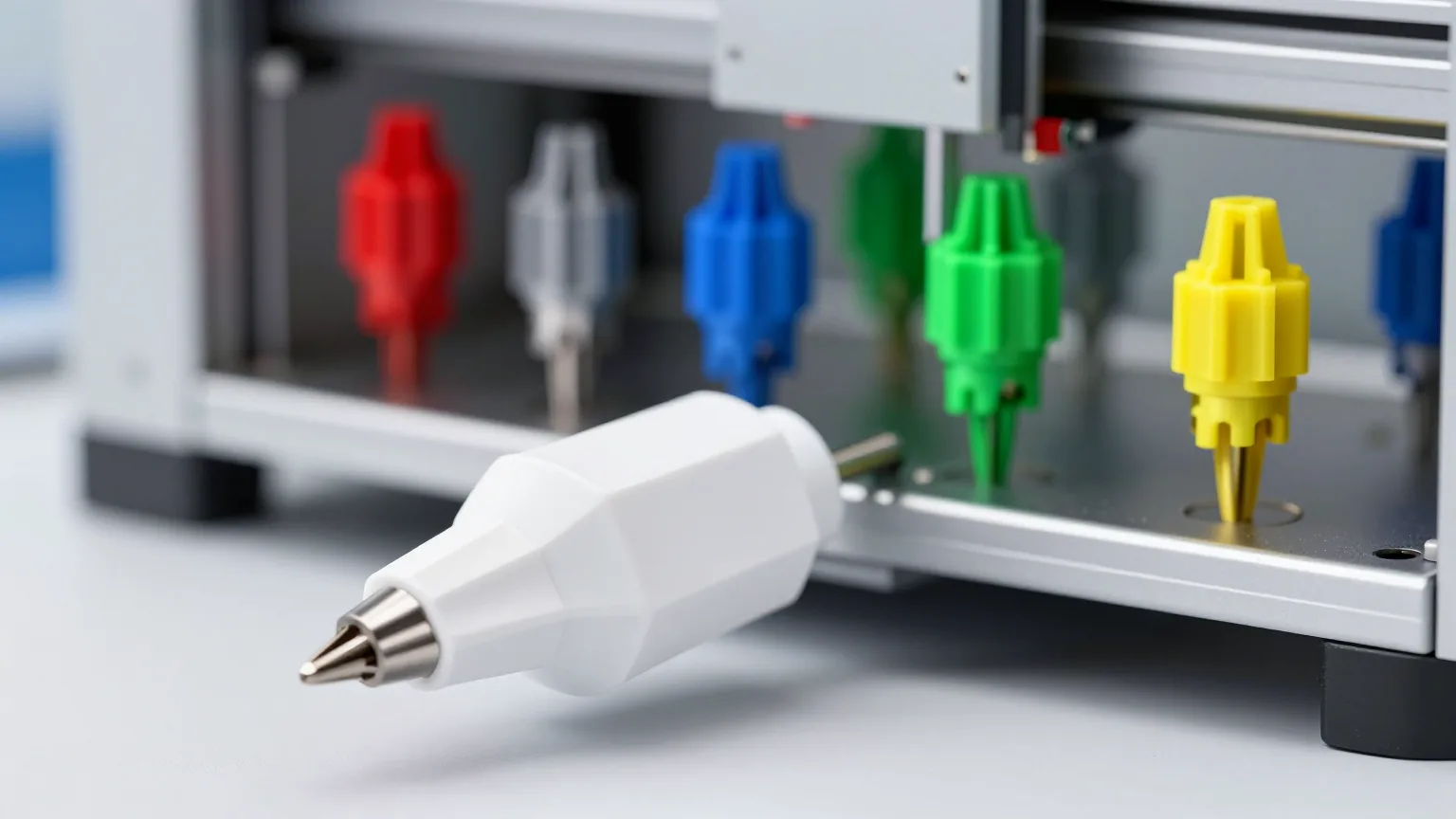
The H3C changes the game by introducing a tool changer mechanism. Think of it like a CNC machine that has multiple drill bits, but instead of bits, it has entire print heads. By physically swapping out the extruder, the H3C eliminates many of the friction points that plagued previous multi-material systems. It allows for true, independent extrusion of different materials without the need for complex purge towers that waste filament and time. This is the kind of innovation that moves the needle from "cool gadget" to "essential tool." It suggests that the future of desktop 3D printing is not just about printing faster, but about printing smarter, with greater material versatility and less user intervention.
What Is a Tool Changer, Really?
For those new to the technical jargon, a tool changer is a mechanical system that allows a printer to switch between different toolheads. In traditional 3D printing, the toolhead is fixed. You can change the filament, but the mechanics of the extruder remain the same. With the H3C, the printer can dock and undock different print heads, each potentially optimized for different materials. One head might be designed for high-temperature engineering plastics like PEEK or Ultem, while another is tuned for flexible TPU or standard PLA. This modularity is borrowed directly from the world of CNC machining, where tool changers have been standard for decades. By bringing this technology to the 3D printing realm, Bambu Lab is effectively industrializing the desktop experience. It’s a bold move, signaling that the line between hobby and industry is not just blurring, but disappearing entirely.
The H3C: A Glimpse into the Future
While the full technical specifications of the H3C are still rolling out, the initial teasers and launch details reveal a machine that is obsessed with efficiency and precision. The core appeal of the H3C is its ability to handle multiple materials in a single print job without the traditional downtime associated with material changes. In the past, switching materials meant pausing the print, clearing the nozzle, loading new filament, and dealing with potential contamination. With a tool changer, this process is automated and seamless. The printer simply swaps the head, and the print continues. This is a game-changer for anyone who has ever tried to print a multi-material part that requires both rigid structural components and flexible hinges. It’s no longer a nightmare; it’s a standard feature.
The H3C also appears to be built with a focus on reliability. Bambu Lab has built its reputation on "just works" technology, and the H3C seems to follow that ethos. The mechanical design of the tool changer is likely engineered to withstand the rigors of frequent swapping, ensuring that the printer remains consistent over time. This is crucial for anyone using 3D printing for production runs. If you are printing fifty parts a day, you cannot afford downtime. The H3C’s design philosophy suggests that Bambu Lab is targeting not just hobbyists, but small businesses and engineering teams who need reliable, multi-material capabilities without the cost of industrial-grade systems.
Context: The Race for Multi-Material Dominance
The launch of the H3C does not happen in a vacuum. It is part of a broader trend in the 3D printing industry where major players are competing to offer more advanced features at lower price points. In 2026, the landscape is crowded with innovation. Companies like Creality are pushing the boundaries of AI-assisted design and low-waste multi-color printing, signaling that the entire industry is moving toward greater automation and efficiency [1]. The H3C fits into this narrative as a flagship offering that pushes the envelope of what is possible on a desktop scale. It is not just a product; it is a statement. It says that the future of 3D printing is not about one-size-fits-all, but about specialized, modular, and intelligent systems.
This competition is driving rapid progress. Just a few years ago, the idea of a consumer-facing tool changer printer was science fiction. Today, it is reality. This acceleration is beneficial for the entire ecosystem. As companies like Bambu Lab, Creality, and others compete, they are driving down costs, improving reliability, and expanding the range of materials that can be used. The result is a more accessible and powerful technology that can be applied to a wider variety of problems. Whether you are a student designing a prosthetic limb, an engineer prototyping a new drone, or a maker creating a custom home decor item, the H3C and its competitors are giving you more tools to do your job better.
Beyond Filament: The Broader Ecosystem
It is worth noting that the H3C is not just about printing. It is part of a larger ecosystem of tools that Bambu Lab and other manufacturers are developing. In 2026, 3D printer brands are increasingly looking beyond the printer itself. Companies like Bambu Lab and Elegoo are introducing laser cutters, scanners, and CNC machines, aiming to pack out the workbench with more than just 3D printers [5]. This shift reflects a deeper understanding of the maker workflow. 3D printing is rarely a standalone activity. It is often part of a larger process that involves scanning, cutting, assembling, and finishing. By offering a suite of tools that work together, manufacturers are creating a more cohesive and efficient workflow. The H3C, in this context, is the centerpiece of a modular manufacturing setup. It is the engine that drives the creation of complex, multi-material parts, while other tools handle the rest of the process.
This ecosystem approach is a significant cultural shift in the 3D printing community. It moves away from the idea of the printer as a standalone object and toward the idea of the printer as part of a system. This is a more mature and industrial perspective, one that recognizes that the value of 3D printing lies not just in the act of printing, but in the overall workflow. By integrating the H3C into a broader ecosystem, Bambu Lab is encouraging users to think about their processes holistically. This is a win for the industry, as it leads to more efficient and effective use of the technology.
Industrial Implications: From Hobby to Production
The launch of the H3C has significant implications for the industrial sector. For years, the divide between hobbyist and industrial 3D printing has been defined by cost and capability. Industrial printers were expensive, slow, and limited in their material options. Hobbyist printers were cheap, fast, and flexible, but lacked the precision and reliability needed for production. The H3C bridges this gap. It offers the flexibility of a hobbyist printer with the capability of an industrial one. This means that small businesses and startups can now access multi-material 3D printing without having to invest in expensive industrial equipment. This democratization of technology is a powerful force for innovation. It allows more people to experiment with new materials and designs, leading to faster iteration and better products.
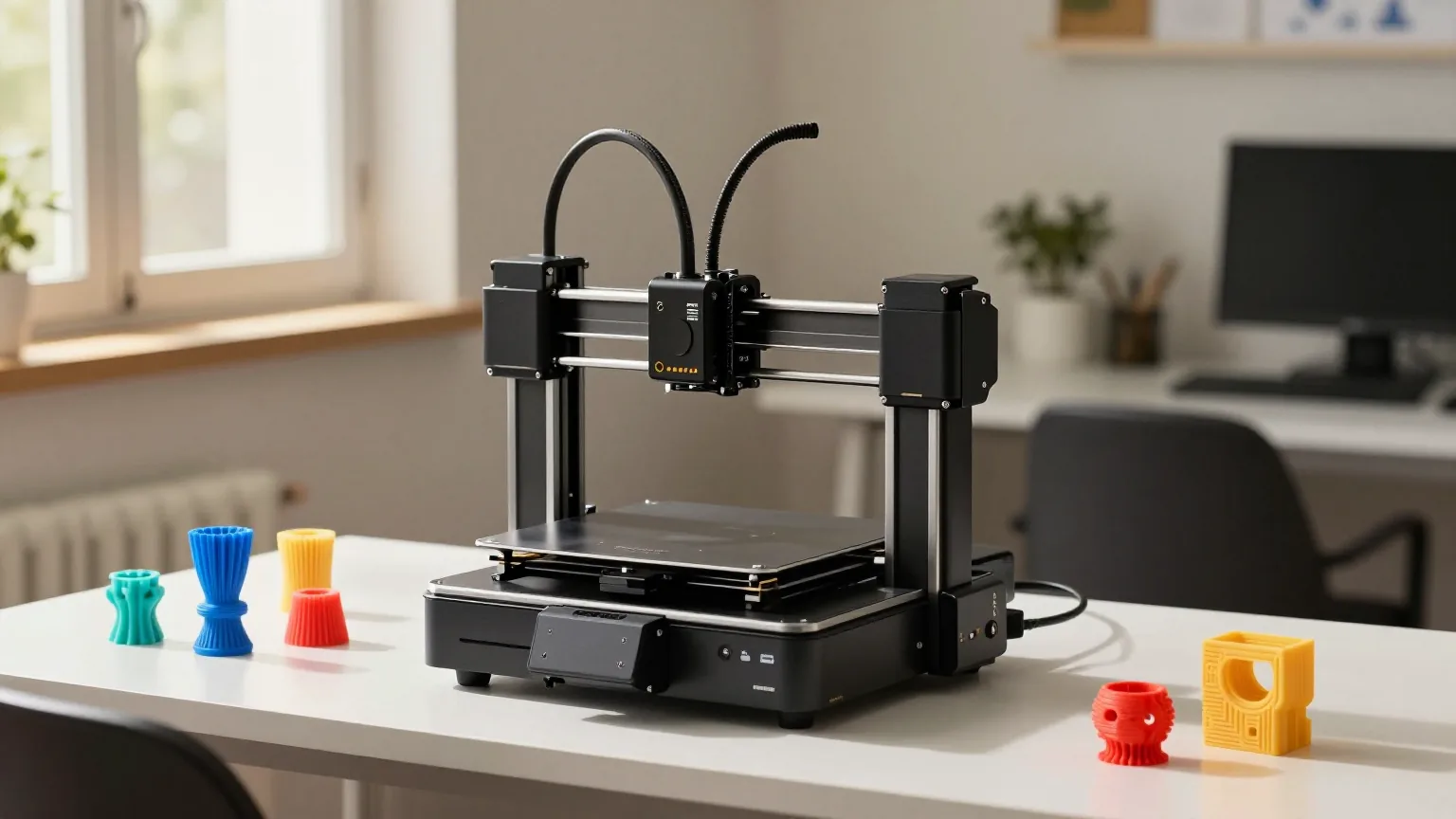
Consider the case of a small aerospace startup. In the past, they might have had to outsource their multi-material prototypes to a service bureau, incurring high costs and long lead times. With the H3C, they can print their prototypes in-house, iterating quickly and reducing costs. This is a huge advantage in a competitive market. The H3C is not just a tool for makers; it is a tool for innovation. It is enabling a new generation of companies to compete with larger, more established players. This is a positive development for the economy, as it fosters entrepreneurship and drives down the cost of innovation.
The Role of AI and Automation
While the H3C is a mechanical marvel, its true power lies in its software. In 2026, AI-assisted design and automation are key trends in 3D printing [1]. The H3C is likely to benefit from these advancements. Imagine a printer that can automatically detect the material in each head, adjust the printing parameters accordingly, and even suggest design optimizations based on the material properties. This is not science fiction; it is the future of 3D printing. By integrating AI into the H3C, Bambu Lab can offer a more intelligent and user-friendly experience. The printer can learn from its previous jobs, identifying potential issues and proactively addressing them. This level of automation is a significant step forward, making 3D printing more accessible to users who may not have extensive technical expertise.
The integration of AI also opens up new possibilities for design. Designers can use AI to generate complex structures that would be impossible to create by hand. These structures can then be printed using the H3C, taking advantage of its multi-material capabilities. This synergy between AI and 3D printing is a powerful force for innovation. It allows for the creation of parts that are lighter, stronger, and more efficient than their traditional counterparts. The H3C is a key enabler of this trend, providing the hardware needed to bring these AI-generated designs to life.
Cultural Context: The Maker Movement 2.0
The launch of the H3C is also a reflection of the evolution of the maker movement. In its early days, the maker movement was about DIY culture, about building things yourself with your own hands. It was a grassroots movement, driven by passion and curiosity. Today, the maker movement has evolved into something more sophisticated. It is about professional-grade tools, about efficiency, and about innovation. The H3C is a symbol of this evolution. It is a tool for the professional maker, for the engineer, for the designer. It is a tool that respects the user’s time and expertise, offering a high level of automation and precision. This shift is not a loss of the maker spirit; it is an evolution of it. The maker movement is maturing, and the H3C is a testament to that maturity.
This cultural shift is also reflected in the way we talk about 3D printing. We no longer talk about it as a hobby; we talk about it as a technology. We no longer talk about it as a toy; we talk about it as a tool. This change in language reflects a change in perception. 3D printing is now seen as a serious technology, capable of solving real-world problems. The H3C is a key part of this perception, offering a level of capability that was previously reserved for industrial applications. It is a tool that can be used to solve complex engineering challenges, to create innovative products, and to drive economic growth. This is a significant shift, and it is one that is likely to accelerate in the coming years.
Challenges and Considerations
Of course, the H3C is not without its challenges. The introduction of a tool changer adds complexity to the printer’s design. This complexity can lead to new failure modes, such as mechanical wear, misalignment, or software glitches. Bambu Lab will need to invest heavily in quality control and support to ensure that the H3C is reliable and easy to use. Additionally, the cost of the H3C is likely to be higher than that of standard 3D printers. This may limit its accessibility to some users, particularly those in the hobbyist segment. However, the value proposition of the H3C is strong. For users who need multi-material capabilities, the H3C offers a significant advantage over traditional 3D printers. It is a tool that can save time, reduce waste, and improve the quality of the final product. For these users, the cost is justified.
Another consideration is the availability of materials. The H3C’s tool changer design may require specific types of filament or print heads. This could limit the user’s options, particularly if they are using less common materials. Bambu Lab will need to work with filament manufacturers to ensure that a wide range of materials is compatible with the H3C. This is a crucial step, as the value of the H3C lies in its ability to handle multiple materials. If the range of compatible materials is limited, the H3C’s appeal will be diminished. However, given Bambu Lab’s track record, it is likely that they will work to expand the range of compatible materials over time.
The Future of 3D Printing
The launch of the H3C is a significant milestone in the history of 3D printing. It represents a shift from a technology that is limited by its hardware to one that is enabled by its software and ecosystem. It is a tool that offers a level of capability that was previously reserved for industrial applications. It is a tool that is accessible to a wide range of users, from hobbyists to professionals. It is a tool that is driving innovation in a variety of fields, from aerospace to healthcare. The H3C is not just a product; it is a symbol of the future of 3D printing. It is a future that is more advanced, more accessible, and more powerful than ever before.
As we look to the future, it is clear that the H3C is just the beginning. We can expect to see more tool changer printers, more advanced AI integration, and more sophisticated ecosystems. We can also expect to see the cost of 3D printing continue to fall, making it even more accessible to a wider range of users. The H3C is a catalyst for this change, driving the industry forward and setting a new standard for what is possible. It is a tool that is changing the way we think about manufacturing, and it is a tool that is shaping the future of innovation.
Call to Action
If you are a maker, an engineer, or a designer, the H3C is a tool that you should be paying attention to. It is a tool that can help you solve problems faster, create better products, and drive innovation. Whether you are printing a single part or a thousand, the H3C offers a level of capability that is unmatched. It is a tool that is worth investing in, not just for its immediate benefits, but for its long-term potential. The future of 3D printing is here, and it is more advanced, more accessible, and more powerful than ever before. The H3C is a key part of that future, and it is a tool that you should be exploring today. Don’t wait for the future; build it. The H3C is your tool, and the possibilities are limitless.