Bambu Lab H3C: 9-Tool Changer Changes 3D Printing
The 3D printing industry has long been defined by a certain type of patience. For years, the dream of multi-material printing was a journey of slow, painstaking progress. You would wait for a printer to finish printing one color, watch it change the nozzle, clean the lines, and then pray that the next color didn’t bleed into the previous one. It was a process that rewarded the stoic and punished the impatient. But on November 3, 2026, that era of waiting effectively ended. [2]
Bambu Lab, a name that has become synonymous with reliability and innovation in the consumer and prosumer 3D printing space, officially launched the H3C. This is not just another printer; it is the first device in Bambu Lab’s third generation and, more importantly, the first in its class to feature a nine-tool tool changer. [1] The launch marks a pivotal moment in the evolution of additive manufacturing, moving the technology from a niche hobbyist tool to a serious contender for industrial and professional design workflows. In this post, we will dive deep into what the H3C means for the future of 3D printing, exploring the technology, the market context, and the broader trends shaping 2026.
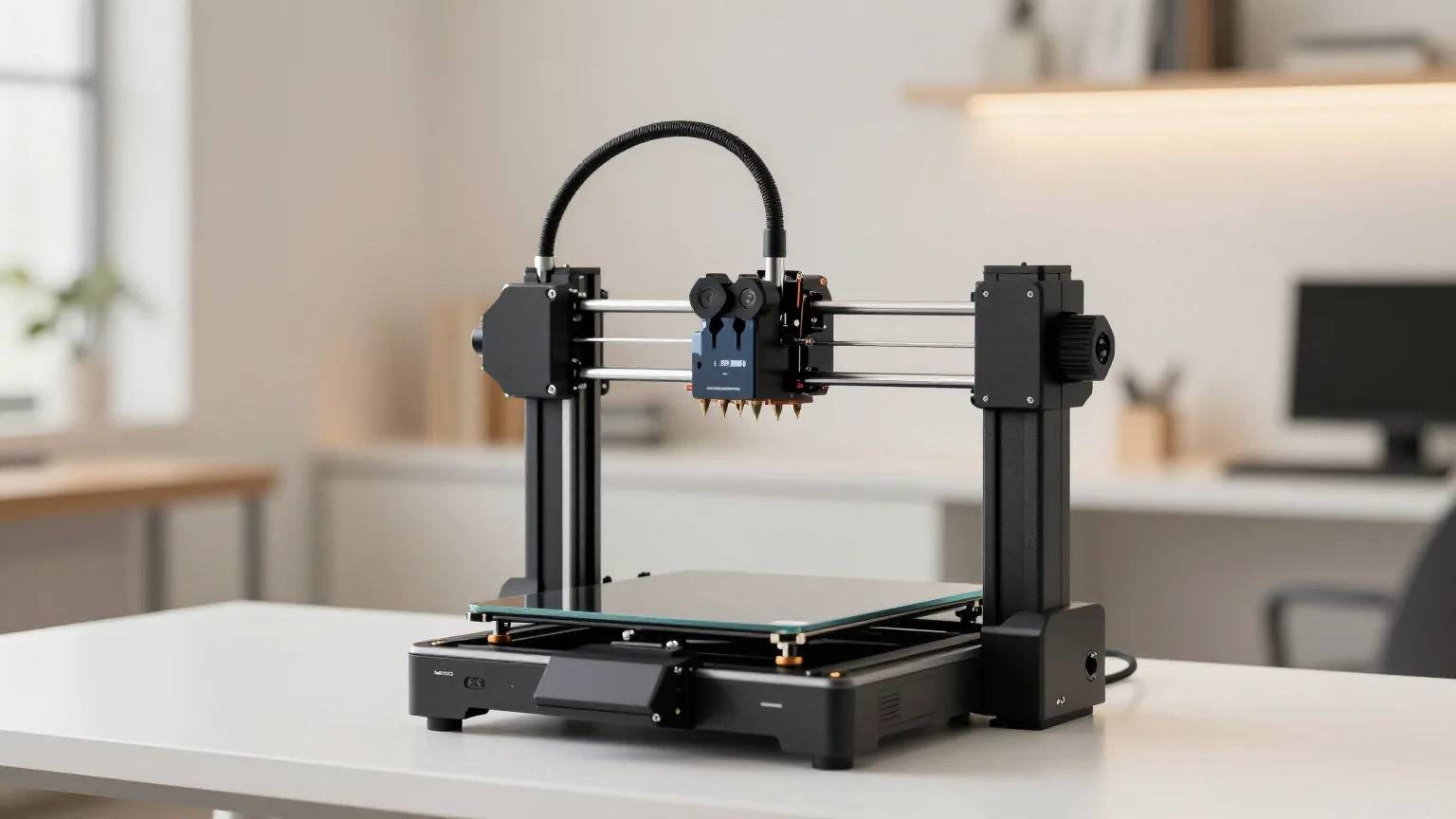
The End of the "One Nozzle" Era
To understand the magnitude of the H3C, we have to look at where we were just a few years ago. For most of the 2020s, multi-material printing was the realm of the high-end industrial machines or the highly modified DIY builds. The concept of a "tool changer" was not new—companies like Prusa and others had experimented with multi-nozzle heads—but the complexity and cost were prohibitive for the average user. [3]
The H3C changes the game by making a nine-tool system accessible. Nine print tools dock in the printer, allowing for a staggering variety of materials and finishes in a single print job. [1] This isn't just about printing in nine different colors. It’s about combining materials with different properties. Imagine printing a part that requires a rigid structural frame in carbon fiber-reinforced nylon, a flexible hinge in TPU, and a glossy, smooth surface in a high-detail PLA, all without stopping the print. The H3C is designed to handle these complex material interactions with a level of precision that was previously reserved for six-figure industrial machines. [1]
This shift represents a fundamental change in how designers think about 3D printing. It is no longer just about adding a second color to a model; it is about functional multi-material design. The ability to switch between nine tools means that the printer can now handle a wider range of engineering challenges, from snap-fit joints to aesthetic multi-finish products, all in one go. [1]
Understanding the Tool Changer Mechanism
So, how does a nine-tool changer actually work? The mechanism is a marvel of modern engineering. The H3C uses a docking system where each of the nine tools is a self-contained unit. These tools are not just nozzles; they are complete print heads that can be swapped in and out. [1] When the printer needs to switch materials, the current tool retracts, and the new tool is docked into the carriage. This process is automated, fast, and designed to minimize waste and oozing.
The challenge with multi-tool systems has always been cleanliness. When you switch from a high-temperature material like ABS to a low-temperature material like PLA, residual material can clog the new nozzle. Bambu Lab has addressed this with advanced purging algorithms and hardware design that ensure the transition is as clean as possible. [1] This is crucial for high-detail prints, where even a small amount of cross-contamination can ruin the surface finish. The H3C’s tool changer is designed to handle these transitions with minimal user intervention, making it a true "set it and forget it" machine for complex jobs. [1]
Furthermore, the nine-tool setup allows for a level of redundancy and flexibility that was previously impossible. If one tool becomes clogged or worn out, it can be swapped out without taking the entire printer offline. This is a significant advantage for professional users who rely on their printers for production runs. The H3C is not just a hobbyist toy; it is a production tool that can handle the demands of a busy workshop. [1]
The Context of 2026: A Year of Innovation
The launch of the H3C does not happen in a vacuum. It is part of a broader trend of innovation in the 3D printing industry in 2026. The year has been marked by significant advancements in AI-assisted design, low-waste multicolor printing, and the integration of 3D printing into industrial applications. [3] The H3C fits squarely into this narrative, offering a solution to one of the biggest pain points in the industry: the complexity of multi-material printing.
According to recent reports, the 3D printing industry is seeing a surge in demand for printers that can handle complex, multi-material jobs. [3] This is driven by the growing use of 3D printing in product development, where designers need to create prototypes that accurately represent the final product’s materials and finishes. The H3C is perfectly positioned to meet this demand, offering a level of versatility that was previously only available in high-end industrial machines. [1]
Moreover, the H3C launch coincides with other major developments in the industry. For example, the US Army has begun using 3D-printed rocket motors for low-cost cruise missiles, demonstrating the technology’s potential in high-stakes, high-performance applications. [2] While this is a far cry from consumer 3D printing, it highlights the broader trend of 3D printing becoming a critical technology in various sectors. The H3C is a step in the same direction, bringing industrial-grade capabilities to the consumer and prosumer market. [1]
Comparing the H3C to Its Predecessors
To appreciate the H3C, it’s helpful to compare it to its predecessors. Bambu Lab’s previous generation printers, such as the X1C and P1S, were already highly regarded for their speed, reliability, and ease of use. [1] However, they were limited to single-material printing or, in the case of the X1C, a multi-material system that was limited to four or five colors. The H3C takes this a step further, offering a nine-tool system that is more versatile, more reliable, and more user-friendly. [1]
One of the key improvements in the H3C is its build volume. The printer is designed to handle larger prints, making it suitable for a wider range of applications. [1] This is a significant advantage over previous models, which were limited in size. The H3C’s larger build volume, combined with its nine-tool system, makes it a powerful tool for professional users who need to print large, complex parts. [1]
Another key improvement is the printer’s software. Bambu Lab has always been known for its user-friendly software, and the H3C is no exception. The printer comes with an intuitive interface that allows users to easily manage their print jobs, monitor the printer’s status, and troubleshoot any issues. [1] This is a significant advantage over many other multi-material printers, which can be complex and difficult to use. The H3C’s software is designed to be as easy to use as a single-material printer, making it accessible to users of all skill levels. [1]
The Impact on the Hobbyist Community
For the hobbyist community, the H3C is a game-changer. For years, hobbyists have been limited to single-material printing or, at best, a two or three-color multi-material system. The H3C offers a level of versatility that was previously only available to professionals. [1] This means that hobbyists can now create more complex, more detailed, and more functional prints than ever before. [1]
The H3C is also a step towards making 3D printing more accessible. By offering a multi-material system that is easy to use and affordable, Bambu Lab is making it easier for hobbyists to get into the world of multi-material printing. [1] This is a significant development, as it opens up new possibilities for creative expression and functional design. [1]
Moreover, the H3C is a testament to the growing maturity of the 3D printing industry. The fact that a consumer-grade printer can now offer a nine-tool system is a sign that the technology has reached a level of sophistication that was previously unimaginable. [1] This is a positive development for the hobbyist community, as it means that they can now access technology that was previously only available to large corporations and government agencies. [1]
Industrial Applications and Beyond
While the H3C is a significant development for the hobbyist community, its impact on the industrial sector is even more profound. The ability to print complex, multi-material parts in a single job is a game-changer for industries such as automotive, aerospace, and medical. [3] These industries are increasingly using 3D printing to create prototypes and end-use parts that require a combination of different materials. [3]
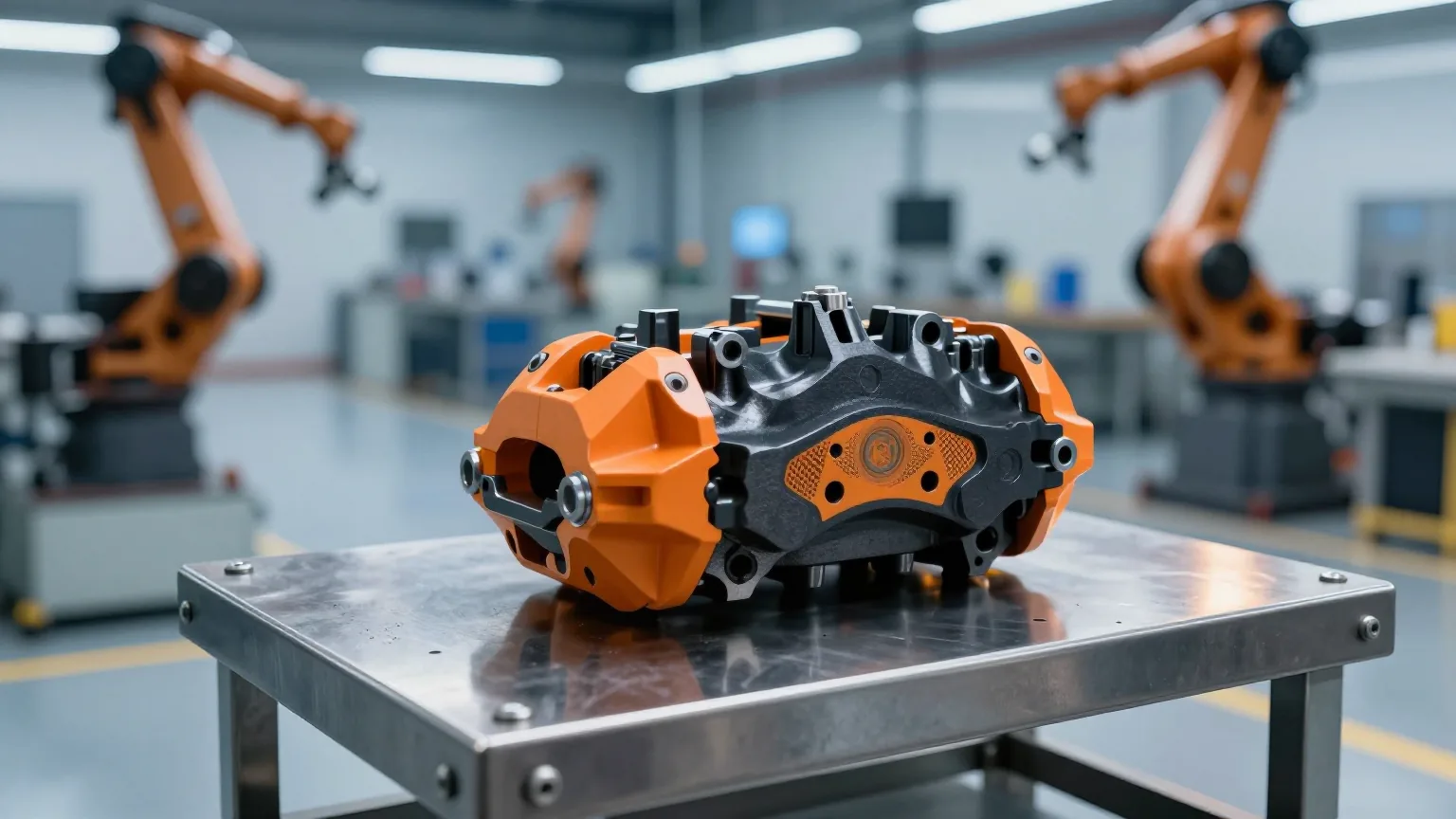
The H3C’s nine-tool system is perfectly suited for these applications. For example, in the automotive industry, designers can use the H3C to create prototypes that combine rigid structural components with flexible seals and soft-touch interior parts. [3] This can significantly reduce the time and cost of developing new products, as designers can create more accurate prototypes in fewer steps. [3]
In the medical field, the H3C can be used to create custom prosthetics and implants that combine different materials to meet specific patient needs. [3] For example, a prosthetic limb can be printed with a rigid carbon fiber frame, a flexible TPU joint, and a soft-touch silicone skin, all in a single print job. [3] This can significantly improve the comfort and functionality of medical devices, as they can be tailored to the individual patient’s needs. [3]
The H3C is also a step towards the future of 3D printing, which is increasingly being integrated into the manufacturing process. [3] By offering a multi-material system that is fast, reliable, and affordable, Bambu Lab is making it easier for manufacturers to integrate 3D printing into their production lines. [1] This is a significant development, as it means that 3D printing can now be used to produce end-use parts, not just prototypes. [3]
Challenges and Criticisms
Despite its many advantages, the H3C is not without its challenges. One of the main criticisms of multi-material printers is their complexity. The more tools a printer has, the more things that can go wrong. [3] The H3C’s nine-tool system is a marvel of engineering, but it is also a complex system that requires regular maintenance. [1] This can be a burden for users who are not experienced with 3D printing, as they may not know how to troubleshoot issues or perform maintenance. [1]
Another criticism is the cost. The H3C is a high-end printer, and its price tag reflects its advanced features. [1] While it is more affordable than industrial multi-material printers, it is still a significant investment for the average hobbyist. [1] This means that the H3C is not accessible to everyone, and its impact on the hobbyist community may be limited to those who are willing to make a significant financial commitment. [1]
Furthermore, the H3C’s nine-tool system requires a significant amount of space. The printer is large, and it requires a dedicated area for operation. [1] This can be a problem for users who have limited space, such as those who print in their home or small workshop. [1] The H3C is a powerful tool, but it is not a compact one, and users need to be prepared to dedicate a significant amount of space to it. [1]
The Role of AI in 3D Printing
The H3C is not just a hardware innovation; it is also a software one. Bambu Lab has integrated AI into the H3C’s print process, allowing it to optimize print settings in real time. [3] This is a significant development, as it means that the printer can adjust its settings based on the material being used, the part being printed, and the environment in which it is operating. [3]
AI-assisted design is one of the key trends in 3D printing in 2026. [3] The H3C is a perfect example of this trend, as it uses AI to optimize the print process and improve the quality of the final product. [3] This is a significant advantage over traditional 3D printers, which require users to manually adjust print settings. [3] The H3C’s AI system can learn from past prints and adjust its settings accordingly, resulting in faster, more reliable, and higher-quality prints. [3]
Moreover, AI is being used to improve the design process itself. Designers can use AI to generate designs that are optimized for 3D printing, taking into account the specific capabilities of the printer. [3] This can significantly reduce the time and effort required to create 3D-printable designs, as designers can rely on AI to generate optimized models. [3] The H3C is a perfect example of this trend, as it is designed to work seamlessly with AI-assisted design tools. [1]
The Future of Multi-Material Printing
The launch of the H3C is a sign of the future of multi-material printing. [1] As the technology continues to evolve, we can expect to see even more advanced multi-material systems that are faster, more reliable, and more affordable. [3] The H3C is a step in this direction, but it is far from the end. [1]
In the future, we can expect to see multi-material printers that can handle even more tools, allowing for a wider range of materials and finishes. [3] We can also expect to see improvements in the software and AI systems that control these printers, allowing for even more automated and optimized print processes. [3] The H3C is a glimpse into this future, and it is a promising one. [1]
Moreover, the H3C is a step towards the integration of 3D printing into the broader manufacturing process. [3] As the technology becomes more affordable and more accessible, we can expect to see it being used in a wider range of industries and applications. [3] The H3C is a powerful tool, and it is a sign of the things to come. [1]
Conclusion: A New Era for 3D Printing
The Bambu Lab H3C is more than just a printer; it is a statement. It is a statement that 3D printing has moved beyond the realm of the hobbyist and into the realm of the professional. [1] It is a statement that multi-material printing is no longer a niche technology, but a mainstream one. [3] It is a statement that the future of 3D printing is bright, and that it is here now. [1]
The H3C’s nine-tool system is a game-changer for the industry, offering a level of versatility and capability that was previously only available in high-end industrial machines. [1] It is a tool that is accessible to hobbyists, professionals, and industries alike, and it is a sign of the growing maturity of the 3D printing industry. [1]
As we look to the future, the H3C serves as a reminder of the incredible progress that has been made in the field of additive manufacturing. [3] It is a testament to the ingenuity and innovation of the companies and individuals who are pushing the boundaries of what is possible with 3D printing. [1] The H3C is not just a printer; it is a new era for 3D printing, and it is one that we are all fortunate to be a part of. [1]
If you are a 3D printing enthusiast, a professional designer, or an industry leader, the H3C is a tool that you should be paying attention to. [1] It represents the future of multi-material printing, and it is a tool that will change the way we design, prototype, and manufacture. [3] So, keep an eye on the H3C, and get ready for the future of 3D printing. [1]
Call to Action: Are you excited about the future of multi-material 3D printing? Share your thoughts in the comments below. What do you think the H3C will mean for your workflow? And what features would you like to see in the next generation of 3D printers? Let’s start a conversation about the future of additive manufacturing. [3]