Jet Turbine 3D-Printed Plane Aims for Mach 0.8 World Record
Breaking the Sound Barrier of Imagination: The Jet Turbine Plane That Wants to Go Mach 0.8
Imagine a world where the difference between a design concept and a physical reality is measured not in months, but in hours. Now, imagine that reality is a tiny, screaming aircraft powered by a jet turbine, built almost entirely on a 3D printer, and it’s aiming for a speed that would make a commercial airlight jealous. This isn’t science fiction; it’s the latest headline in the additive manufacturing world. The recent news of the world’s first 3D-printed remote control aircraft equipped with a jet turbine taking flight, with sights set on a Mach 0.8 world record for the fastest model aircraft, marks a pivotal moment in our hobby and industry [3].
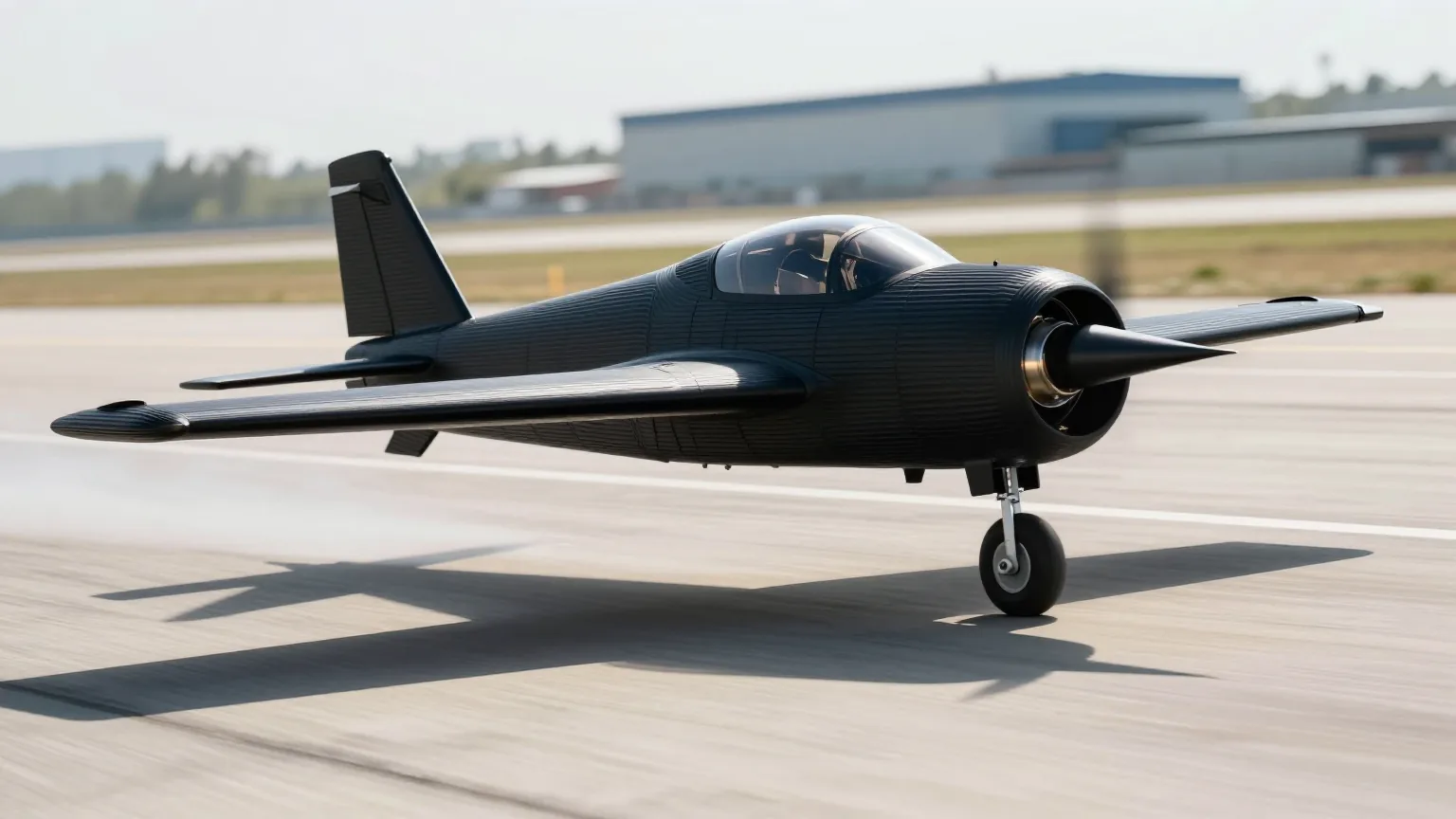
At first glance, a "Mach 0.8" claim for a model plane might sound like hyperbole. After all, Mach 1 is the speed of sound, and reaching 80% of that speed in a small RC plane seems like a feat reserved for jet fighters, not garage-built models. However, when you consider the engineering constraints of small-scale aerodynamics and the thermal limitations of traditional materials, this achievement is nothing short of revolutionary. It signals that 3D printing has moved far beyond printing figurines and replacement parts. We are now in the era of high-performance, high-temperature, and high-stress applications where additive manufacturing is not just a tool, but a necessity.
From Desk Toys to Supersonic Dreams: A Brief History
To appreciate the magnitude of this news, we need to look back at where 3D printing started. In the early days, FDM (Fused Deposition Modeling) printers were limited to printing in PLA and ABS. These materials are great for prototypes and toys, but they melt at relatively low temperatures. If you were to build a jet turbine engine from PLA, it would literally melt into a puddle the moment the exhaust gases touched it. The material science simply wasn’t there.
For years, the RC (remote control) community relied on traditional manufacturing methods for high-performance parts. Engines were cast, airframes were carved from balsa or built from foam, and metal components were CNC machined. While effective, these processes were slow, expensive, and offered limited design flexibility. You couldn’t easily create complex internal cooling channels in a turbine nozzle if you had to cast it. You had to work with the constraints of the material and the mold.
3D printing changed the game by introducing "design for additive manufacturing." This philosophy allows engineers to create parts that are geometrically impossible with traditional methods. Internal cooling channels, lattice structures for weight reduction, and complex aerodynamic shapes can be printed in a single operation. This shift has been gradual, moving from low-stress applications to high-stress ones. The jet turbine RC plane is the culmination of that gradual evolution. It represents the point where additive manufacturing became not just "good enough," but superior to traditional methods for specific high-performance niches [4].
The Engine of the Beast: Why Jet Turbines?
Why choose a jet turbine for a model plane? Most RC enthusiasts know that electric motors or two-stroke gasoline engines are the standard. They are reliable, easy to maintain, and relatively quiet (by RC standards). Jet turbines, however, offer a distinct advantage: specific power. A jet turbine can produce a massive amount of thrust relative to its size and weight. For a small aircraft aiming for extreme speeds, the continuous, high-energy flow of a turbine is far superior to the pulsating thrust of a piston engine.
However, jet turbines are notoriously complex. They involve high-temperature combustion, rapid rotation speeds, and delicate balance requirements. In the past, building a micro-turbine was a feat reserved for specialized workshops or university labs. The advent of high-temperature 3D printing materials, such as high-temperature resins, carbon fiber-reinforced composites, and metal powders, has made it possible for a skilled maker or a small team to design and print the critical components of a turbine engine [5].
The key here is not just printing the engine, but printing it as a functional, integrated system. Traditional manufacturing would require assembling dozens of small parts, welding them together, and then machining them to fit. 3D printing allows for the creation of the turbine housing and internal components with precision that minimizes assembly errors. This reduces the risk of failure during the high-stress test flights that are inevitable when pushing a machine to its limits.
Material Science: Surviving the Heat
The most critical aspect of this project is the material choice. To reach Mach 0.8, the aircraft will experience significant aerodynamic heating, and the turbine engine will generate intense exhaust temperatures. Standard 3D printing materials like PLA or even standard ABS would fail catastrophically. The project likely utilizes advanced materials such as high-temperature resins (HT Resins), which can withstand temperatures well above 200°C, or even metal 3D printing for the core turbine components [2].
High-temperature resins are particularly interesting because they offer a balance between printability and thermal resistance. They allow for the creation of complex, thin-walled structures that are essential for aerodynamic efficiency. Additionally, the use of carbon fiber or glass fiber fillers in the composite materials can significantly increase the tensile strength of the airframe, allowing it to withstand the aerodynamic forces at such high speeds without deforming or breaking apart.
It is worth noting that the "low-waste" nature of 3D printing is also a factor. In traditional manufacturing, a large block of metal or plastic might be machined down to a small part, resulting in significant material waste. 3D printing is an additive process, meaning you only use the material that is in the final part. This is not only cost-effective but also more sustainable, a growing concern in the engineering community [5].
Aerodynamics at the Edge of Reason
Designing an aircraft to fly at Mach 0.8 is not just about having a powerful engine. It is about managing the aerodynamics of compressible flow. As an aircraft approaches the speed of sound, the air in front of it begins to compress, creating shock waves that can cause drag to increase dramatically and stability to decrease. This is known as the "drag divergence" regime.
3D printing allows for the creation of airframes with extremely precise aerodynamic profiles. Traditional methods, such as carving foam or bending sheet metal, often introduce small imperfections that can disrupt airflow. A 3D-printed wing can have a smooth, continuous surface that is optimized for high-speed flight. Furthermore, the ability to print complex internal structures means that the aircraft can be lightweight yet rigid, a critical requirement for high-speed flight where every gram of weight counts [6].
The remote control aspect adds another layer of complexity. At Mach 0.8, the reaction time of the pilot is negligible. The aircraft must be inherently stable, or it must be controlled by an advanced flight controller that can make adjustments faster than a human can. This suggests that the project likely involves sophisticated avionics, possibly including GPS, inertial measurement units (IMUs), and automated control systems. The integration of these electronic components into a 3D-printed airframe is another advantage of additive manufacturing, as custom housings and mounts can be printed to fit the electronics perfectly.
The Role of AI and Simulation
Behind the scenes of this project, there is likely a significant amount of computational work. Modern 3D printing is often paired with Computer-Aided Engineering (CAE) and Artificial Intelligence (AI) to optimize designs before a single layer is printed. AI-assisted design tools can analyze thousands of design variations to find the one that offers the best balance of strength, weight, and aerodynamic efficiency [5].
For a jet turbine plane, this means simulating the thermal loads on the engine components, the aerodynamic forces on the airframe, and the structural integrity of the entire assembly. These simulations can predict potential failure points, allowing the designer to reinforce weak areas or adjust the geometry to distribute stress more evenly. This iterative design process, known as "design for additive manufacturing," is a hallmark of modern engineering. It allows for a level of optimization that would be impossible with traditional methods, where changes to the design often require new molds or tooling.
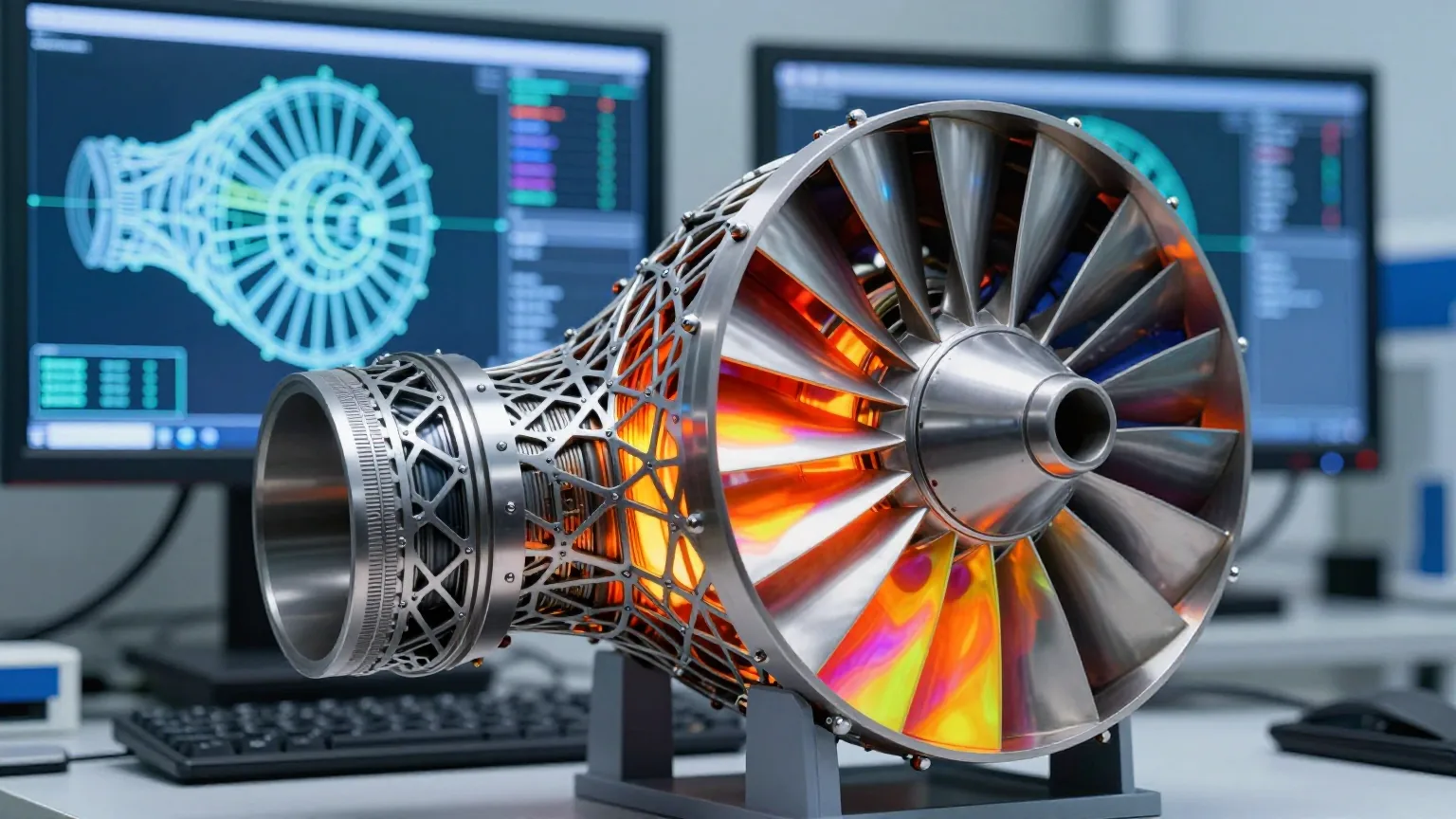
The use of AI in this context is not just a buzzword; it is a practical tool that accelerates the development cycle. What might have taken months of trial and error in the past can now be done in days. This speed is crucial for projects like this, where the goal is to push the boundaries of what is possible. The ability to rapidly prototype and test different designs allows for a faster feedback loop, leading to better results in a shorter time.
Cultural Context: The Maker Movement’s Next Chapter
This project is not just a technical achievement; it is a cultural statement. The maker movement, which has been a driving force behind the popularization of 3D printing, is evolving. We are moving from a phase of "making things for fun" to a phase of "making things that matter." The jet turbine RC plane is a symbol of this shift. It shows that 3D printing is no longer a toy for hobbyists; it is a serious engineering tool that can be used to solve complex problems and achieve ambitious goals.
There is also a historical parallel to the early days of rocketry. In the 1920s and 1930s, rocketry was a hobby for a small group of enthusiasts, such as the Rocket Society. They were dismissed by the mainstream as dreamers. Today, rocketry is a multi-billion dollar industry that has taken humans to the moon and is preparing for missions to Mars. Similarly, 3D printing is often dismissed as a novelty, but its potential is vast. The jet turbine RC plane is a small step, but it is a step in the right direction. It shows that the technology is ready for more challenging applications, such as aerospace, automotive, and medical devices.
The community response to this news has been overwhelmingly positive. On forums and social media, makers are sharing their own ideas for high-performance 3D-printed projects. There is a sense of excitement and possibility, a feeling that the limits of what can be done with 3D printing are being pushed further every day. This community spirit is a driving force behind the progress of the technology, as makers share their knowledge, techniques, and failures, helping each other to improve [1].
Challenges and Limitations
While the news is exciting, it is important to acknowledge the challenges and limitations of 3D printing. Not all parts can be printed, and not all materials are suitable for every application. For example, while high-temperature resins are good for many applications, they may not be suitable for extremely high-temperature environments, such as the core of a jet turbine. In such cases, metal 3D printing may be required, which is more expensive and requires specialized equipment.
Additionally, 3D printing is still a relatively new technology, and there are many unknowns. The long-term durability of 3D-printed parts under high stress and high temperature is not well understood. There is a risk that a part may fail unexpectedly, which could be dangerous in a high-speed aircraft. This is why testing and validation are so important. The team behind the jet turbine plane will likely be conducting extensive testing before attempting the world record, to ensure that the aircraft is safe and reliable.
There are also regulatory and safety concerns. Flying an aircraft at Mach 0.8, even if it is a model, is a high-risk activity. The noise, the speed, and the potential for failure all pose risks to the pilot and bystanders. The team will need to ensure that they are following all local regulations and safety guidelines, and that they are taking all necessary precautions to minimize the risk of accident.
Modern Applications and Future Potential
The technology demonstrated by the jet turbine RC plane has applications far beyond the hobbyist world. The ability to 3D print high-performance, high-temperature parts is valuable in many industries. In the aerospace industry, for example, 3D printing is already being used to make engine components, fuel nozzles, and other parts that are subject to high stress and high temperature. The jet turbine RC plane shows that this technology is accessible and affordable, which means that it can be used by smaller companies and startups that may not have the resources to invest in traditional manufacturing methods [2].
In the automotive industry, 3D printing is being used to make lightweight, high-strength parts that improve fuel efficiency and performance. The ability to print complex, integrated parts reduces the number of components needed, which reduces weight and improves reliability. In the medical industry, 3D printing is being used to make custom implants and prosthetics that are tailored to the individual patient. The jet turbine RC plane is a reminder that the same technology that can make a life-saving implant can also make a world-record-breaking aircraft.
Looking to the future, we can expect to see even more ambitious projects. Imagine a 3D-printed drone that can fly at supersonic speeds, or a 3D-printed satellite that is launched into orbit. The possibilities are endless. As the technology continues to improve, and as the materials continue to evolve, the limits of what can be done with 3D printing will continue to be pushed. The jet turbine RC plane is just the beginning.
The Human Element: Passion and Perseverance
Behind every great engineering achievement is a team of people who are passionate about what they do. The team behind the jet turbine RC plane is likely made up of engineers, designers, and hobbyists who have spent countless hours working on this project. They have faced failures, setbacks, and challenges, but they have persisted. Their passion and perseverance are the driving force behind the project.
This is an important reminder that technology is not just about machines and algorithms; it is about people. The best technology is created by people who care about what they are doing, who are willing to put in the hard work, and who are not afraid to take risks. The jet turbine RC plane is a testament to the power of human ingenuity and determination. It shows that with the right tools and the right mindset, anything is possible.
Conclusion: The Sky Is No Longer the Limit
The news of the world’s first 3D-printed remote control aircraft with a jet turbine taking flight, and aiming for a Mach 0.8 world record, is a significant milestone in the history of 3D printing. It shows that the technology has matured to the point where it can be used for high-performance, high-stress applications. It is a testament to the ingenuity and perseverance of the team behind the project, and it is a inspiration to the entire maker community.
As we look to the future, we can expect to see even more ambitious projects that push the boundaries of what is possible with 3D printing. The sky is no longer the limit; it is just the beginning. So, what are you waiting for? Grab your 3D printer, design something amazing, and push the boundaries of what you thought was possible. The future is being printed, one layer at a time [4].
Call to Action: Are you interested in learning more about 3D printing? Subscribe to our newsletter for the latest news, reviews, and breakthroughs in additive manufacturing. Share this article with your friends and family, and let them know that the future is here. And if you have a project that pushes the boundaries of 3D printing, we want to hear about it. Send us your stories, your photos, and your ideas. Together, we can build a better future, one print at a time.