Bambu Lab Hit With $27.6M Verdict in Stratasys Patent Fight
Bambu Lab Hit With $27.6M Verdict in Stratasys Patent Fight: A Wake-Up Call for the 3D Printing World
Imagine this: You’ve just spent the last few years building a business, developing a product that has become a household name in your industry, and suddenly, a jury in Texas hands down a verdict that costs you more than $27 million. It’s a scenario that keeps CEOs up at night, and for Bambu Lab, it has become a reality. In a move that has sent ripples through the additive manufacturing community, a Texas jury found Bambu Lab liable for patent infringement in the creation of its X1, P1, and A1 series of 3D printers, awarding Stratasys, Inc., $27.6 million in damages [6].

At first glance, $27.6 million might not sound like the end of the world for a well-funded tech company. However, in the context of the 3D printing industry—a sector that has traditionally operated in the shadows of corporate giants and relied on open-source collaboration—this verdict is a seismic event. It signals a shift from the "wild west" era of rapid prototyping to a more regulated, legally complex landscape. As we navigate 2026, where 3D printing is no longer just for hobbyists but a critical tool for manufacturing, healthcare, and aerospace, understanding the implications of this legal battle is crucial for makers, businesses, and investors alike.
The Anatomy of the Verdict: What Happened in Texas?
To understand the magnitude of this ruling, we have to look at the specifics. The trial took place in Texas, a jurisdiction known for its business-friendly environment but also for its robust enforcement of intellectual property rights. The jury’s decision was not a mere slap on the wrist; it was a significant financial penalty that reflects the perceived value of the infringed patents [6].
Stratasys, the company behind the technology, argued that Bambu Lab’s designs for the X1, P1, and A1 series violated specific patents related to core printing mechanisms. While the exact technical details of the patents in question are often kept under tight legal wraps until final appeals are exhausted, the outcome suggests that Bambu Lab’s approach to high-speed, high-precision printing encroached on proprietary technology held by the industry veteran. This is not an isolated incident; it is part of a broader trend where established players are asserting their rights against newer, agile competitors who have disrupted the market with superior user experience and cost-efficiency.
Stratasys vs. Bambu Lab: David vs. Goliath (Or Is It?)
For years, the narrative in 3D printing was clear: Stratasys was the Goliath. As one of the pioneers of Fused Deposition Modeling (FDM) and other additive technologies, Stratasys held the patents, the government contracts, and the enterprise market. Bambu Lab, on the other hand, was the David—a relatively new entrant that captured the hearts of the maker community by offering printers that were fast, reliable, and significantly cheaper than their corporate counterparts.
However, the roles have shifted in recent years. Bambu Lab has grown into a formidable force, dominating the consumer and prosumer segments with its innovative ecosystem. Stratasys, meanwhile, has faced its own challenges in staying relevant in a market that has moved at breakneck speed. This lawsuit, therefore, is not just about money; it is about market share, relevance, and the future direction of the industry. By securing a major verdict, Stratasys is sending a message: "We are still here, and our intellectual property is protected."
The X1, P1, and A1 Series: The Engines of Disruption
To appreciate why this verdict matters, we must look at the products at the center of the storm: the X1, P1, and A1 series. These printers are not just machines; they are cultural icons in the 3D printing world. The X1 Carbon, in particular, revolutionized the market by introducing multi-color printing, AI-assisted monitoring, and speeds that were previously thought impossible for FDM printers.
According to recent industry analyses, these printers have been instrumental in bringing 3D printing into the mainstream [5]. They lowered the barrier to entry, making it easier for non-experts to achieve professional-grade results. The P1 series brought similar innovations to a more affordable price point, while the A1 series expanded the ecosystem to include smaller, more compact options for desktop use. By targeting these specific models, Stratasys has effectively placed a legal cloud over the very products that defined Bambu Lab’s success in the mid-2020s.
Patent Wars: The Historical Context of 3D Printing
Patent disputes are not new to the 3D printing industry. In fact, they have been a constant undercurrent since the technology emerged in the 1980s and 1990s. Stereolithography (SLA), the first 3D printing technology, was imagined in 1984 by American Chuck Hull, later founder of 3D Systems [3]. Since then, the industry has been shaped by a series of legal battles over who owns the rights to various printing processes and materials.
In the early days, these disputes were often between the major players: 3D Systems, Stratasys, and a handful of others. As the industry democratized, with open-source projects like RepRap and companies like Creality and Prusa entering the fray, the legal landscape became more complex. Many of these newer companies operated in the gray areas of patent law, relying on the sheer volume of innovation to outpace enforcement. The Bambu Lab verdict marks a turning point where these gray areas are being scrutinized more closely by the courts.
Implications for the Maker Community
For the millions of hobbyists and makers who rely on 3D printing for personal projects, this verdict might seem distant. After all, most users are not directly involved in the manufacturing of the printers. However, the impact is far-reaching. If Bambu Lab is forced to pay significant damages or modify its products, it could lead to increased costs for consumers. These costs might be passed on through higher printer prices, more expensive replacement parts, or reduced features in future models.
Furthermore, the uncertainty created by such legal battles can chill innovation. Developers and engineers may be hesitant to push the boundaries of design if they fear that their work could be deemed infringing. This is particularly concerning in a field where rapid iteration is key to progress. The maker community, which has always valued open collaboration and shared knowledge, may find itself navigating a more restrictive environment where every new feature requires a careful legal review.
The Role of AI and Modern Innovations
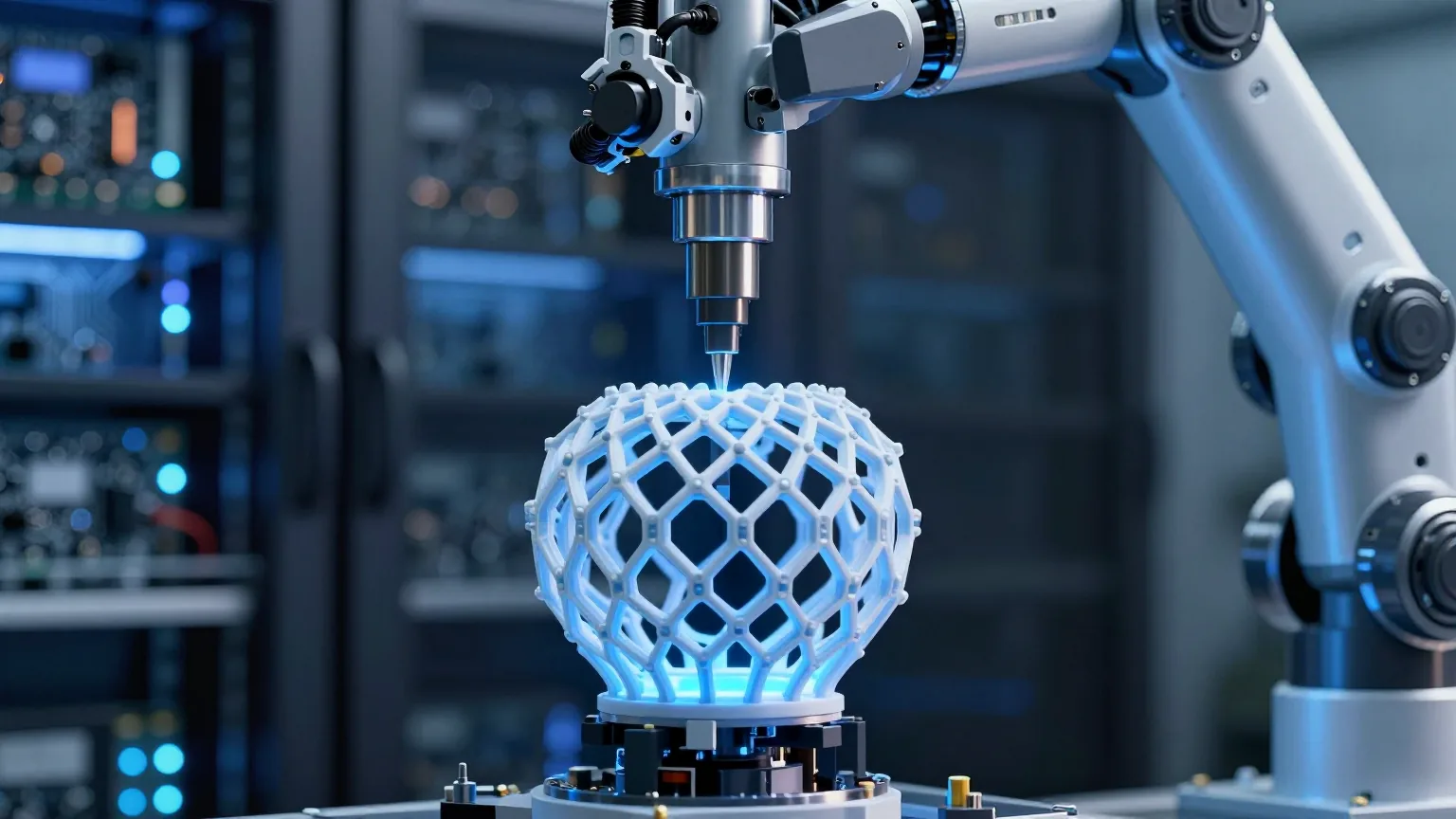
One of the most significant aspects of Bambu Lab’s success has been its integration of artificial intelligence into the printing process. Features like AI-assisted design, automatic calibration, and predictive maintenance have set the standard for modern 3D printing [5]. These innovations are not just marketing fluff; they solve real problems for users, such as failed prints, inconsistent quality, and the steep learning curve associated with 3D printing.
However, AI also adds a layer of complexity to patent law. If a printer uses AI to optimize its performance, does that constitute infringement? The answer is not always clear. The Stratasys lawsuit may have focused on mechanical or structural patents, but future disputes could easily center on the software and AI algorithms that drive these modern printers. As 3D printing becomes more intelligent, the legal battles will likely become more technical and nuanced, requiring experts in both engineering and computer science to navigate.
Industry Trends: Consolidation or Competition?
The 3D printing industry is currently at a crossroads. On one hand, there is a trend toward consolidation, with larger companies acquiring smaller startups to gain access to new technologies and market segments. On the other hand, there is a fierce competition to offer the best user experience at the lowest price. The Bambu Lab verdict could accelerate both trends.
Companies that are not ready for the legal heat may find themselves vulnerable, leading to potential acquisitions by larger players who have the resources to defend their patents. Conversely, the threat of litigation may encourage smaller companies to focus on niche markets where they can innovate without directly challenging the patent portfolios of the giants. This could lead to a more fragmented industry, with specialized printers for specific applications, such as bioprinting, metal printing, or low-waste multicolor printing [2][5].
Looking Ahead: What’s Next for Bambu Lab?
So, what happens now for Bambu Lab? The company has several options. It could choose to pay the damages and continue operating as usual, absorbing the cost as a business expense. Given its financial backing, this is a viable option, but it would set a precedent that patent infringement is a manageable risk. Alternatively, Bambu Lab could appeal the verdict, arguing that the jury’s decision was based on a misinterpretation of the patents. An appeal could take years, during which the company would need to operate under the cloud of potential liability.
Another possibility is that Bambu Lab will modify its products to avoid infringement. This could mean redesigning the X1, P1, and A1 series or discontinuing certain features. While this might be necessary to stay compliant with the law, it could also weaken the company’s competitive edge in a market that values innovation and speed. The outcome of this case will likely influence how other companies approach their product development, with a greater emphasis on patent clearance and legal diligence.
The Broader Impact on Additive Manufacturing
Beyond the specific companies involved, this verdict has implications for the entire additive manufacturing sector. As 3D printing moves from a niche technology to a mainstream manufacturing tool, the need for clear and enforceable intellectual property rights becomes more critical. Investors and stakeholders need to know that their investments are protected from unauthorized use. The Stratasys victory provides some of that protection, but it also highlights the risks associated with the rapid pace of innovation.
In industries like aerospace, automotive, and healthcare, where 3D printing is used to produce critical components, the reliability and legality of the technology are paramount. A lawsuit like this one can erode confidence in the supply chain if it suggests that key products might be subject to legal challenges. To mitigate this risk, companies in these sectors may need to diversify their supplier base or invest in in-house printing capabilities to reduce dependence on third-party hardware that could be affected by patent disputes.
Lessons for New Entrants
For startups and new entrants looking to join the 3D printing market, the Bambu Lab case offers valuable lessons. First, conduct thorough patent searches before launching a product. Understanding the existing patent landscape can help you identify potential pitfalls and design around them. Second, consider building your own patent portfolio. While this is expensive and time-consuming, it can provide leverage in negotiations and protection against lawsuits. Third, stay informed about legal developments in the industry. The 3D printing space is evolving rapidly, and what is legal today may not be tomorrow.
Finally, don’t be afraid to collaborate. Many of the most successful companies in the industry have grown through partnerships and alliances. By working together, companies can share the costs of legal defense and pool their resources to drive innovation. The days of operating in isolation are over; the future of 3D printing is collaborative, but it is also legally complex.
A Call to Action: Stay Informed and Engaged
As the 3D printing community, we have a responsibility to stay informed about these developments. Whether you are a hobbyist, a business owner, or an investor, the legal landscape affects your ability to create, innovate, and grow. Follow the news, read the analyses, and engage in discussions about the future of the industry. By staying engaged, we can ensure that the 3D printing sector continues to thrive, balancing the need for intellectual property protection with the spirit of innovation that has defined it from the start.
The Bambu Lab verdict is a reminder that while technology moves fast, the law can be slow to catch up. But as we move further into 2026 and beyond, the two are becoming increasingly intertwined. Let’s hope that this case serves as a catalyst for clearer guidelines and fairer practices in the 3D printing industry, allowing us to focus on what we do best: creating the future, one layer at a time.