Top Resin 3D Printers of 2026: What’s New in SLA?
Remember the days when 3D printing meant waiting for days, only to receive a model with visible layer lines that looked like topographic maps of a very rough terrain? Those days are officially in the rearview mirror. As we stand in October 2026, the landscape of additive manufacturing has shifted dramatically, and while FDM (Fused Deposition Modeling) still holds its ground for structural parts, the real revolution in detail, speed, and material versatility is happening in the world of resin. Specifically, in the realm of Stereolithography (SLA).
If you are new to the scene, or perhaps you’ve been lurking in the hobbyist community for a decade, you might be wondering what has actually changed. The answer is: everything, and then some. From bioprinting living tissue to producing jewelry with microscopic precision, resin 3D printing has matured from a niche hobby into a critical industrial tool. Today, we are diving deep into the top resin 3D printers of 2026, exploring the technological breakthroughs that have redefined what is possible, and looking at why SLA remains the undisputed king of high-fidelity production.
The Resurgence of the Original: SLA’s Historical Comeback
To understand where we are, we have to look back at where it all began. Stereolithography, better known by the abbreviation SLA, became the first 3D printing technology when it was imagined in 1984 by American Chuck Hull, later founder of 3D Systems [3]. For decades, SLA was the exclusive domain of high-end industrial labs and expensive commercial setups. It was the technology that promised "liquid light" shaping, using ultraviolet (UV) lasers to cure photopolymerized resins layer by layer.
However, the story of the last ten years has been one of democratization. What started as a high-budget industrial standard has trickled down to the consumer and prosumer markets, evolving into what we now call Masked SLA (MSLA) or Low-Power SLA (LP-MSLA). But in 2026, the distinction is blurring. The "hobbyist" machines have grown so powerful, and the "industrial" machines have become so accessible, that the line between the two is nearly invisible. This resurgence isn't just about lower prices; it's about a fundamental shift in how we view the technology. It is no longer just a way to make prototypes; it is a primary manufacturing method for end-use products.
Understanding the Mechanics: How Photopolymerization Works in 2026
At its core, the process is still based on the photopolymerization of a UV-sensitive resin [3]. But the mechanics have become incredibly sophisticated. In a typical modern SLA printer, a build platform moves up and down inside a vat of liquid resin. A light source—whether it’s a laser in high-end industrial units or a high-resolution LCD screen in prosumer models—projects an image of the cross-section of your model onto the resin. The UV light causes the resin to harden, or "cure," into a solid layer. The platform then lifts slightly, peels the new layer off the vat, and the process repeats.
In 2026, the biggest breakthroughs have occurred in the light sources and the resin chemistry. We have moved beyond simple monochromatic UV light. Multi-wavelength curing allows for the use of complex resins that can be tuned for specific properties, such as extreme flexibility, high heat resistance, or even biocompatibility. This means that the "material" is no longer just a liquid that turns solid; it is a programmable medium. You can essentially "print" different materials within the same job by changing the exposure parameters, a technique known as multi-material SLA, which has become more reliable and accessible this year.
The Rise of Multi-Material and Color Resins
One of the most exciting trends in 2026 is the widespread adoption of multi-material printing. For years, color was an afterthought, achieved through post-processing dyeing or painting. That is no longer the case. Modern SLA printers now feature sophisticated resin handling systems that can switch between different colored resins mid-print. Imagine printing a complex mechanical assembly where the gears are black, the housings are white, and the warning labels are red, all in a single, continuous process.
This isn't just for aesthetics. It’s for functionality. Engineers are using multi-material prints to create parts with varying stiffness levels, embedding soft rubber-like components into hard plastic frames without the need for assembly. This capability has transformed industries like medical device prototyping, where understanding the interaction between soft tissue and hard implant materials is crucial. The ability to visualize and test these interactions directly on the printer has accelerated development cycles significantly.
Speed Wars: How Fast Can We Go Now?
Historically, SLA was criticized for its slow build times. If you printed a large object, it could take days. In 2026, that narrative has been obliterated. The introduction of high-intensity, high-refresh-rate LCD panels and advanced laser array systems has pushed build speeds to record highs. We are now seeing printers that can produce functional prototypes in hours, not days.
How is this possible? It’s a combination of faster curing resins and smarter software. Modern slicers can optimize the exposure time for every single pixel of the image, ensuring that the resin cures just enough to be stable but not so much that it over-cures and becomes brittle. Additionally, the "peel" phase—the moment when the print separates from the vat glass—has been optimized through improved adhesion layers and dynamic lift speeds. This reduces the risk of print failure, which was a major bottleneck in high-speed printing. The result is a technology that is not only fast but also reliable, making it viable for small-batch production runs.
Precision Redefined: Micro-Details and Jewelry
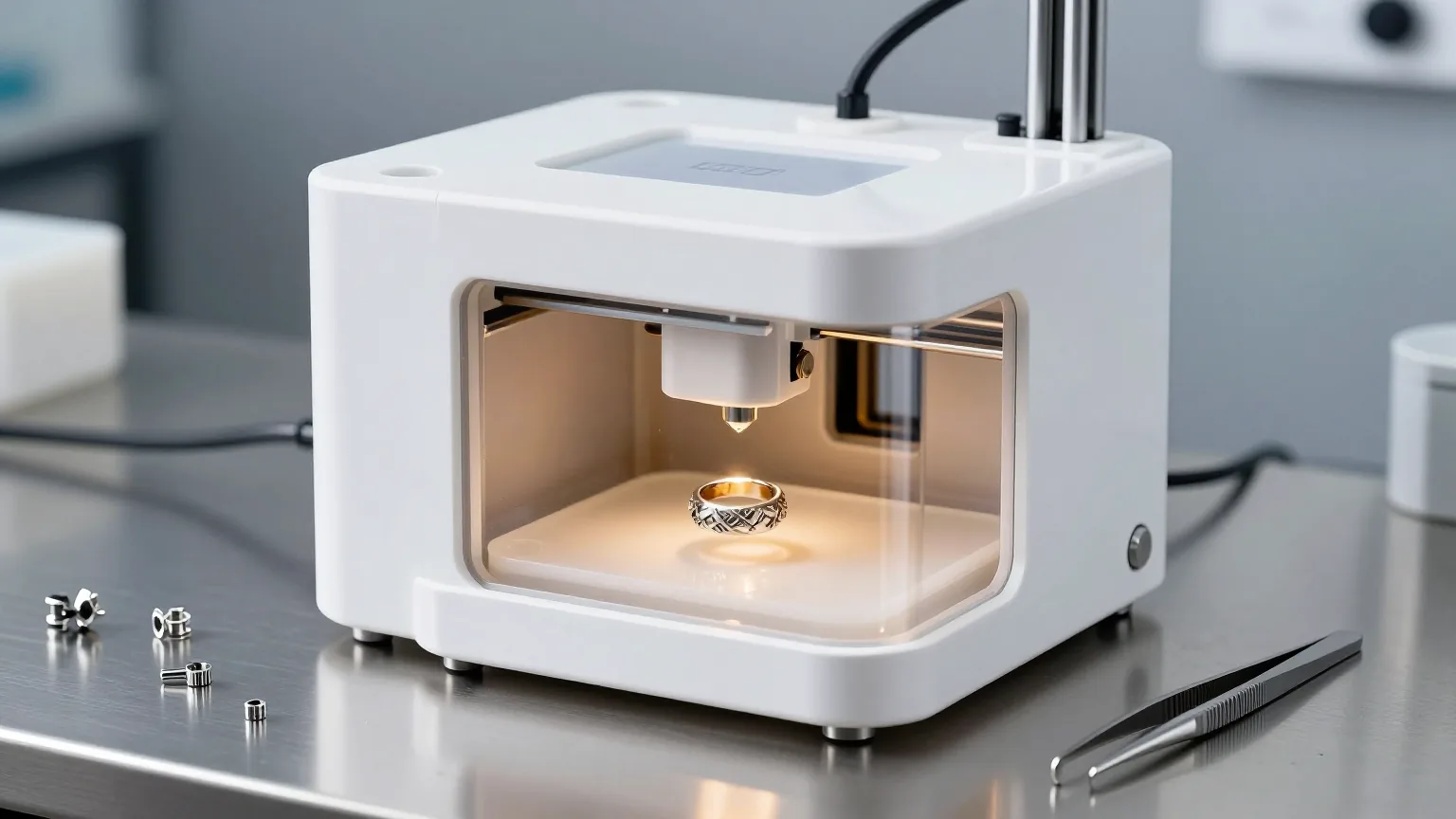
If there is one area where SLA has always dominated, it is precision. And in 2026, that dominance has been cemented. The resolution of consumer and prosumer SLA printers has pushed past the 25-micron mark, with some specialized industrial machines achieving sub-10-micron detail. What does this mean in practical terms? It means that the intricate filigree of a vintage watch face, the delicate veins of a botanical study, or the complex lattice structures of an aerospace component can be printed with a level of fidelity that was previously only possible with CNC machining or lost-wax casting.
The jewelry industry has been a major beneficiary of this progress. Traditional casting methods often require expensive molds and have high material waste. With SLA, jewelers can print intricate master models in resin, which are then burned out in a kiln, leaving a perfect void in the investment material. The molten metal is then poured into this void. The result is a piece of jewelry with level of detail that is often indistinguishable from hand-carved masterpieces, but produced in a fraction of the time. This has democratized high-end jewelry design, allowing independent designers to compete with major houses.
Bioprinting: The Next Frontier
Perhaps the most profound application of SLA technology in 2026 is in the field of bioprinting. While traditional 3D printing builds with plastics and metals, bioprinting uses "bio-inks" made from living cells and biomaterials. SLA is uniquely suited for this task because the process is gentle on cells and allows for the creation of complex, vascularized structures that other technologies cannot achieve.
Recent breakthroughs have seen researchers successfully printing functional liver tissue, heart valves, and even small sections of skin. The key innovation here is the use of light-curable bio-inks that are safe for human cells. By carefully controlling the UV exposure, scientists can "print" living tissue layer by layer, creating structures that mimic the natural architecture of human organs. This is not science fiction; it is happening in labs around the world right now. The potential for personalized organ transplants, where a patient’s own cells are used to grow a replacement organ, is moving from theory to clinical trials. SLA is the backbone of this revolution, providing the precision and control needed to build life itself.
Material Science: Beyond Standard Resins
The resin ecosystem in 2026 is vast and diverse. We are no longer limited to a few standard gray or white resins. The market is flooded with specialized materials that offer specific properties:
- High-Temperature Resins: Capable of withstanding temperatures above 200°C, making them suitable for automotive and aerospace applications where heat resistance is critical.
- Flexible Resins: Ranging from soft rubber-like textures to tough, elastic materials, these are used for grips, seals, and wearable technology.
- Conductive Resins: Embedded with carbon nanotubes or silver particles, these resins allow for the printing of functional electronic components, such as antennas and sensors.
- Engineering Resins: Designed to mimic the mechanical properties of ABS or nylon, these resins are used for functional end-use parts that require strength and durability.
- Water-Soluble Support Resins: A game-changer for complex geometries, these resins dissolve in water, eliminating the need for tedious manual support removal.
This diversity means that for almost any application, there is a resin that is tailored to the specific needs of the project. The material selection process has become as important as the design process, and manufacturers are constantly innovating to push the boundaries of what resin can do.

The Role of AI and Automation in Post-Processing
Printing is only half the battle. Post-processing—washing, curing, and finishing the print—has traditionally been a manual, time-consuming, and often messy process. In 2026, this has changed dramatically with the integration of AI and automation. Many modern SLA setups now include automated washing stations that use ultrasonic baths to clean the prints, followed by automated curing stations that use UV light to fully harden the material.
AI algorithms are also being used to monitor the printing process in real-time. Cameras and sensors inside the printer can detect potential failures, such as delamination or resin starvation, and adjust the printing parameters on the fly to prevent a failed job. This "self-healing" capability has significantly reduced the rate of failed prints, saving time and material. For small businesses and hobbyists, this level of automation means that 3D printing is no longer a full-time job; it is a tool that can be managed alongside other work.
Sustainability: The Green Revolution in Resin
For years, 3D printing has faced criticism for its environmental impact, particularly regarding the waste generated by failed prints and the use of non-biodegradable plastics. In 2026, the industry has made significant strides toward sustainability. The development of biodegradable resins, made from plant-based sources, is a major step forward. These resins have similar mechanical properties to traditional petrochemical resins but can be composted at the end of their life cycle.
Additionally, the efficiency of modern SLA printers has reduced material waste. Since SLA is an additive process, it only uses the material needed to build the part, unlike subtractive methods like CNC machining which can generate up to 90% waste. Combined with the ability to recycle failed prints by melting them down and reusing the resin, the environmental footprint of SLA is shrinking. Manufacturers are also focusing on energy efficiency, with new models consuming significantly less power than their predecessors. This shift toward sustainability is not just a marketing ploy; it is a response to increasing regulatory pressure and consumer demand for greener manufacturing practices.
Industrial Adoption: From Prototyping to Production
While hobbyists and small businesses are driving innovation, it is the industrial sector that is truly putting SLA to the test. In 2026, SLA is no longer just for prototyping. It is being used for small-batch production of end-use products. Companies in the medical, automotive, and aerospace industries are using SLA to produce final parts that would traditionally be manufactured using injection molding or CNC machining.
The key advantage here is speed and flexibility. With traditional manufacturing, setting up a production line can take months and require significant capital investment. With SLA, you can go from design to production in days, with no tooling costs. This allows companies to respond quickly to market changes, customize products for individual customers, and produce low-volume parts that would not be economical using traditional methods. The result is a more agile and responsive supply chain, one that is better suited to the demands of the modern economy.
Challenges and Limitations: What’s Still to Solve?
Despite the incredible progress, SLA is not without its challenges. The most significant limitation is still the build volume. While large-format SLA printers exist, they are expensive and complex. For most users, the build volume is limited to a few hundred millimeters in each dimension. This makes SLA less suitable for large-scale structural parts, where FDM or other technologies are still more practical.
Another challenge is the post-processing time. While automation has reduced the time required for washing and curing, it is still a necessary step that adds to the overall production time. Additionally, the use of UV-sensitive resins requires careful handling, as exposure to sunlight or UV light can cause the resin to cure prematurely. This means that users must work in a controlled environment, which can be a barrier for some hobbyists.
Finally, the cost of high-end SLA printers and specialized resins can still be prohibitive for some users. While the price of entry-level machines has dropped, the cost of industrial-grade equipment and advanced materials remains high. However, as the technology continues to mature and the market expands, we can expect these costs to decrease further, making SLA even more accessible.
The Future of SLA: Where Do We Go From Here?
As we look to the future, the trajectory of SLA is clear. We can expect to see even faster build speeds, higher resolutions, and more diverse material options. The integration of AI and automation will continue to improve, making the technology more user-friendly and reliable. We will also see further advancements in bioprinting, with the potential for printing more complex and functional tissues.
Perhaps the most exciting development is the potential for multi-material, multi-property printing. Imagine a single printer that can produce a part with a hard, rigid frame, a soft, flexible grip, and a conductive electronic circuit, all in one go. This level of integration will open up new possibilities for product design, allowing for the creation of devices that are more compact, efficient, and functional than ever before.
The future of SLA is not just about making things faster or cheaper; it is about making things better. It is about enabling new forms of innovation, solving complex engineering problems, and pushing the boundaries of what is possible. As we stand in 2026, we are witnessing the dawn of a new era in manufacturing, one where the liquid light of SLA is illuminating the path to a more precise, sustainable, and innovative future.
Conclusion: Your Next Print Awaits
The world of resin 3D printing in 2026 is a fascinating place. It is a technology that has matured from a niche hobby into a powerful tool for innovation, capable of producing everything from intricate jewelry to living tissue. The top resin 3D printers of this year are not just faster and more precise; they are smarter, more sustainable, and more versatile than ever before.
Whether you are a hobbyist looking to bring your creative visions to life, a designer seeking to prototype your next big idea, or an engineer looking to streamline your production process, there has never been a better time to explore the world of SLA. The barriers to entry are lower than they have ever been, and the possibilities are limitless.
So, what are you waiting for? Dive into the world of resin 3D printing. Explore the latest models, experiment with new materials, and push the boundaries of what you can create. The future is being printed, one layer at a time, and you have the power to be part of it. Grab your resin, load your printer, and let’s see what you can make.