Practical Insights: news in the 3D printing
Practical Insights: Navigating the Rapid Evolution of 3D Printing in 2026
Imagine a world where your car manufacturer doesn’t just sell you a vehicle, but also provides the digital files to print your own custom cupholders, storage boxes, and cable organizers for free. Or picture a robot in a factory not just assembling parts, but printing them on the fly to fix a design flaw before the next unit rolls off the line. This isn’t science fiction; it is the reality of 3D printing in late 2026. The technology has quietly shed its reputation as a slow, hobbyist-only tool for making plastic trinkets and has become a critical infrastructure component for industries ranging from automotive to robotics. But how did we get here, and what does it actually mean for the rest of us? To understand the current landscape, we need to look beyond the flashy headlines and dig into the practical insights that are reshaping how we design, produce, and interact with physical objects. The story of 3D printing in 2026 is one of maturation, regulatory scrutiny, and a surprising blend of high-tech innovation and everyday domestic utility.
From Niche Hobby to Household Staple
One of the most striking shifts in the past few years is the normalization of 3D printing in the home. It is no longer just for engineers and tinkerers. A recent viral trend highlights this shift perfectly: a US mother who prints pretend play toys for her two-year-old son at home. Her Instagram Reel about these custom, safe, and personalized toys went viral among parents, sparking a wave of interest in the practical, non-industrial applications of the technology [1]. This isn't just about making a toy; it’s about the empowerment of individuals to create exactly what they need, when they need it, without the markup of a retail store. The barrier to entry has lowered significantly, with affordable LCD printers, inexpensive resin, and compact wash-and-cure stations becoming accessible to a broader market [4]. This democratization means that the "maker movement" is no longer a fringe subculture but a mainstream lifestyle choice for many families and hobbyists.
The Automotive Industry Embraces Additive Manufacturing
While home users are printing toys, the automotive giants are printing the future of vehicle ownership. Škoda Auto has made a bold move by offering free 3D printable accessories for both current and discontinued models on the Printables platform [1]. This is a strategic shift from selling physical goods to providing digital services. By allowing owners to print their own cupholders and organizers, Škoda is fostering a deeper community connection and reducing the logistics costs associated with shipping small plastic parts. It is a clever play that acknowledges the reality that many car owners are now comfortable with, or even eager to engage in, additive manufacturing. This approach transforms the owner from a passive consumer into an active participant in the vehicle's ecosystem, a concept that is becoming increasingly common in the automotive sector.
Speed and Efficiency in Robotics
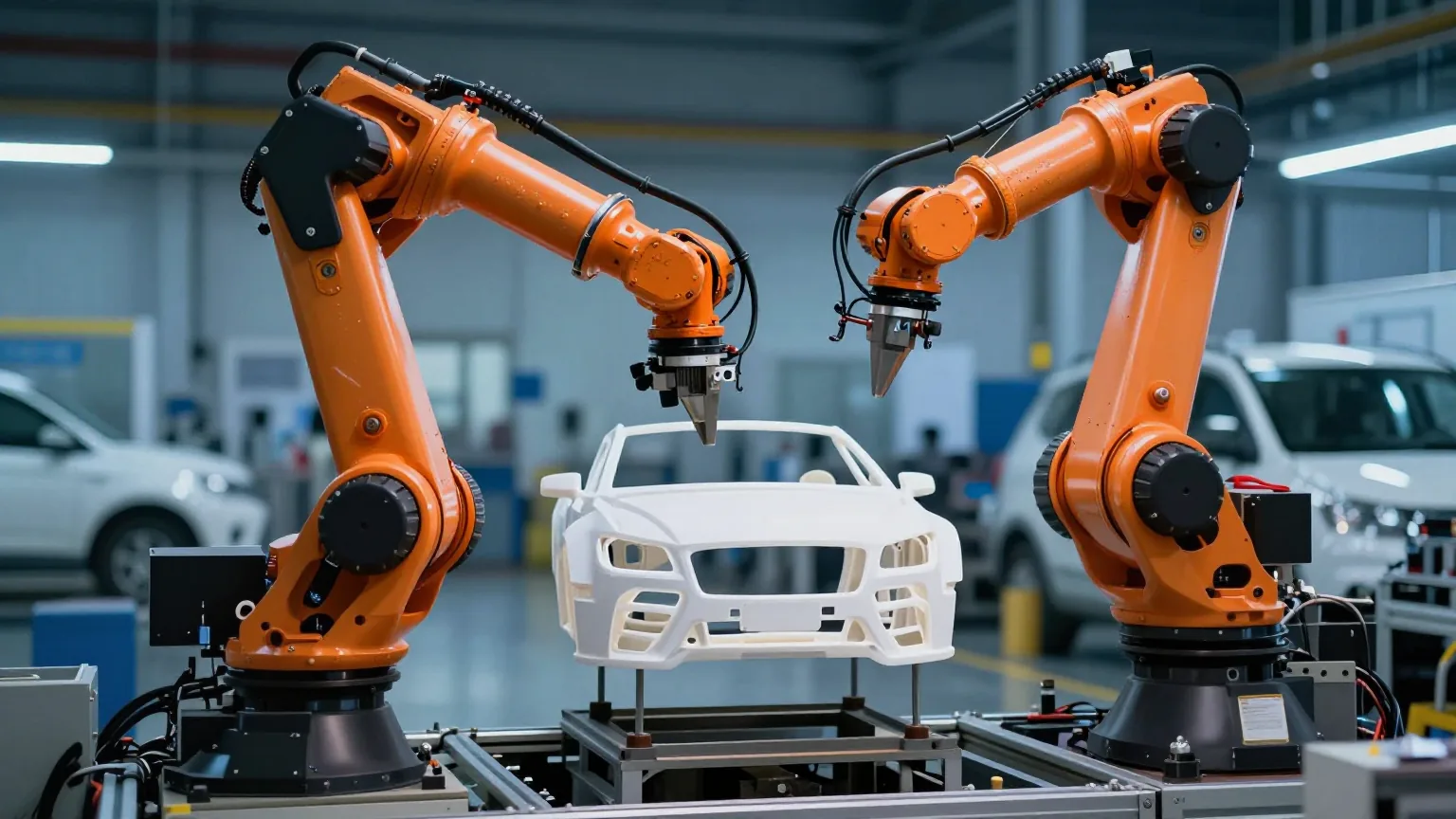
In the high-stakes world of robotics, time is the most valuable currency. Robot companies are now prioritizing speed in 3D printed parts for both design and production phases [2]. This isn't just about making parts faster; it's about iterating faster. In the past, a design change in a robotic arm might require weeks of tooling for traditional manufacturing. Now, a new joint or housing can be printed overnight. This agility allows robotics firms to test, fail, and refine their designs at a pace that traditional manufacturing simply cannot match. The integration of 3D printing into the robotics supply chain is a testament to the technology's maturity. It is no longer a prototyping tool but a production tool that offers a unique blend of speed and cost-effectiveness for complex geometries that are difficult to machine.
General Motors and the Stratasys Partnership
The deployment of 3D printing across a major production network is a significant milestone. General Motors has deployed Stratasys 3D printing across its production network, signaling a full-scale industrial adoption [2]. This is not a pilot program; it is a core part of GM's manufacturing strategy. By integrating 3D printing into their existing production lines, GM is able to produce specialized parts on demand, reduce inventory costs, and customize vehicles more easily. This partnership highlights a key trend in 2026: the convergence of traditional manufacturing and additive manufacturing. Rather than seeing 3D printing as a replacement for injection molding or machining, companies like GM are using it as a complementary tool that fills in the gaps where traditional methods fall short. This hybrid approach is the most practical and efficient way to leverage the technology in large-scale production.
AI-Assisted Design: The New Frontier
As we look at the latest innovations in 2026, one trend stands out for its potential to change how we interact with 3D printing: AI-assisted design [3]. The ability to use artificial intelligence to generate complex, optimized structures that a human might never conceive is transforming the design process. AI can analyze stress points, material flow, and aesthetic preferences to create parts that are not only functional but also lightweight and efficient. This is particularly relevant in fields like aerospace and automotive, where every gram saved matters. However, it is also trickling down to consumer applications, where AI can help users with limited design skills create complex models. The challenge, as noted in recent analyses, is that while the technology is real, it still needs work in terms of user interface and reliability [3]. But the direction is clear: the future of 3D printing is not just about printing better, but about designing smarter with the help of algorithms.
Low-Waste Multicolor Printing
Sustainability is no longer a buzzword; it is a business imperative. One of the most practical innovations in 2026 is the advancement of low-waste multicolor printing [3]. Traditional multicolor printing often involved significant material waste, especially when using FDM technology with purge towers. Newer technologies and printer designs have minimized this waste, allowing for vibrant, multi-material prints without the environmental and financial penalty. This is a game-changer for the hobbyist market, where cost and material usage are always a concern. It is also important for industrial applications where using multiple materials in a single print can reduce assembly time and improve part performance. The move toward low-waste processes reflects a broader industry commitment to sustainability, recognizing that the environmental impact of 3D printing must be minimized to justify its widespread adoption.
The Ghost Gun Controversy and Regulatory Scrutiny
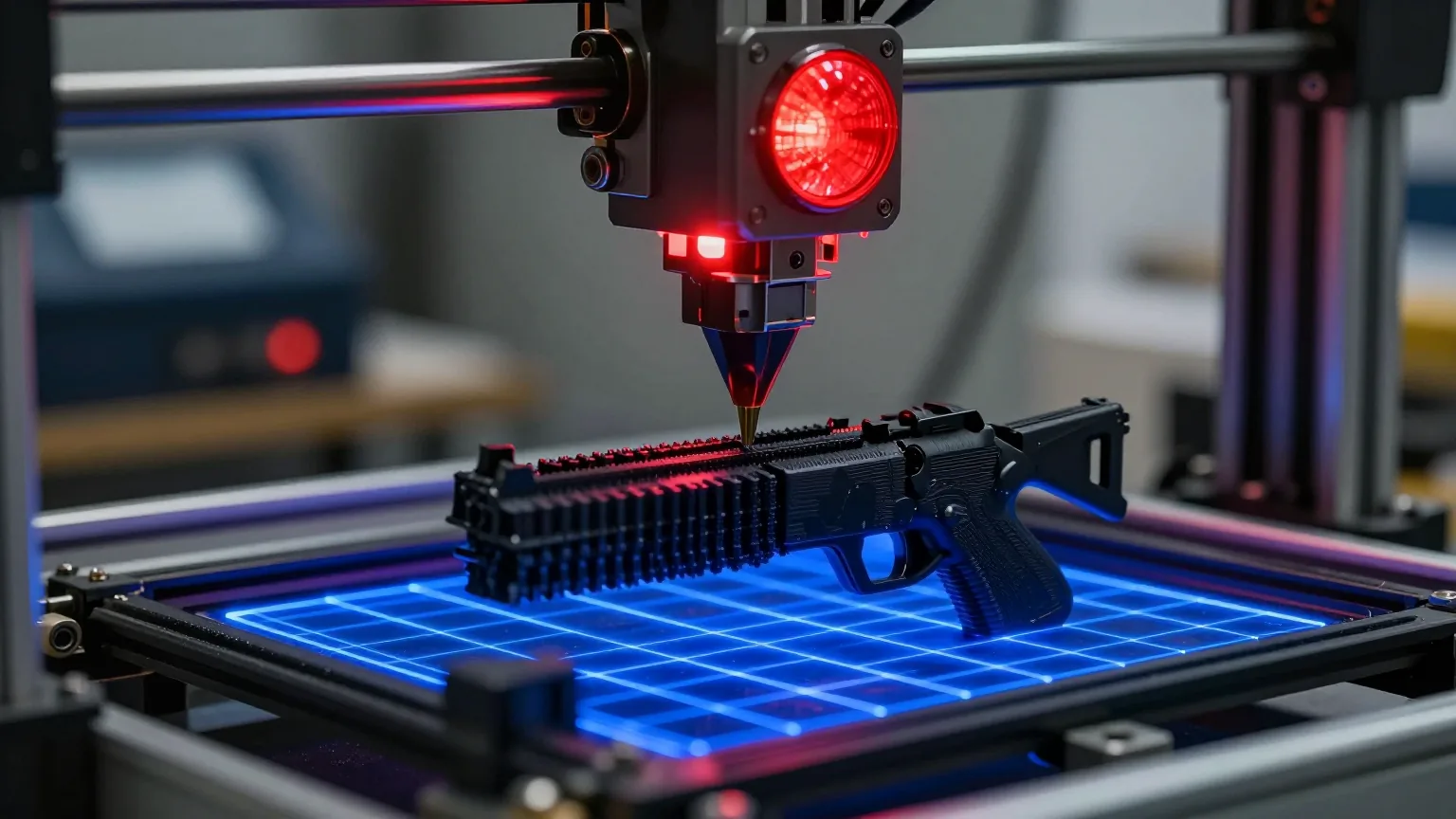
Not all news in the 3D printing world is positive. The technology’s power to create complex objects has also attracted attention from law enforcement and regulatory bodies. The State of California has sued 3D printer filament company Polymaker for promoting ghost guns by marketing to the 3D-printed gun community [5]. This case highlights the growing tension between the freedom to create and the public safety concerns associated with 3D printing. The newly formed Consumer Fairness and Public Protection Division is also targeting other major tech companies, indicating a broader crackdown on platforms that may facilitate the creation of illegal items [5]. This is a critical moment for the 3D printing industry. It must navigate this regulatory landscape carefully, balancing innovation and open access with responsibility and safety. The industry is likely to see increased scrutiny and new regulations in the coming years, which will shape how 3D printing is marketed and used.
Material Science Breakthroughs
Behind the scenes, material science is driving some of the most exciting developments in 3D printing. Researchers have found that C-shaped joints can make a big difference in the structural integrity of printed parts [4]. This kind of fundamental research is crucial for expanding the range of applications for 3D printing. By understanding how different geometries and materials interact, engineers can design parts that are stronger, lighter, and more durable. Additionally, new materials are being developed that offer unique properties, such as higher heat resistance, greater flexibility, or even self-healing capabilities. These material breakthroughs are what allow 3D printing to move beyond simple plastic prototypes into the realm of functional, end-use parts. The future of 3D printing is not just about the printers; it’s about the materials that go into them.
The Rise of Professional Affordable Hardware
The market for 3D printing hardware is becoming increasingly segmented. On one end, we have the high-end industrial machines that cost tens of thousands of dollars. On the other end, we have the consumer-grade printers that are affordable and easy to use. But in the middle, there is a growing market for professional affordable hardware. A professional 3D printing manufacturer is going after this new market with an affordable LCD printer, $29 resin, and a compact wash-and-cure station [4]. This is a sweet spot for small businesses, startups, and advanced hobbyists who need professional-quality results without the industrial price tag. This trend is democratizing high-end 3D printing, making it accessible to a wider range of users who previously could not afford the technology. It is a sign of the industry’s maturation, as it becomes more competitive and consumer-focused.
Historical Context: From Lab to Living Room
To appreciate where we are in 2026, it is helpful to look back at where we started. 3D printing began in the 1980s as a rapid prototyping technology, primarily used in engineering and design. For decades, it was a tool for making models, not final products. The cost of printers and materials was prohibitive for most people, and the technology was slow and limited in the types of materials it could handle. The 2010s saw a revolution in open-source hardware, with the emergence of the RepRap project and the MakerBot, which brought 3D printing into the home. The 2020s saw the rise of resin printing and the integration of 3D printing into industrial supply chains. Now, in 2026, we are seeing the full realization of this potential: 3D printing is a versatile, efficient, and accessible technology that is integrated into every aspect of our lives, from the toys in our children’s hands to the parts in our cars.
Cultural Impact and the Maker Mindset
The cultural impact of 3D printing cannot be overstated. It has fostered a "maker mindset" that encourages creativity, problem-solving, and self-sufficiency. People are no longer passive consumers of mass-produced goods; they are active creators of their own environment. This shift is evident in the viral success of the mom printing toys for her son [1]. It is also evident in the growth of online communities where users share designs, tips, and tricks. These communities are not just about sharing files; they are about sharing knowledge and inspiration. The 3D printing community is a vibrant and diverse group, spanning all ages, backgrounds, and interests. This cultural shift is one of the most important aspects of the 3D printing revolution. It is not just about the technology; it is about the people and the values that it empowers.
Future Outlook: What’s Next?
As we look to the future, several trends are likely to shape the next phase of 3D printing. First, we can expect further integration of AI into the design and printing process, making it even easier for non-experts to create complex parts [3]. Second, we will see continued advances in material science, with new materials that offer superior properties and sustainability [3]. Third, we will likely see increased regulatory scrutiny, as governments around the world grapple with the implications of 3D printing for public safety and intellectual property [5]. Finally, we can expect 3D printing to become even more integrated into everyday life, with applications in healthcare, construction, and fashion. The possibilities are endless, and the pace of innovation is accelerating. The 3D printing industry is at a pivotal moment, and the next few years will be crucial in determining its long-term impact on society.
Conclusion: Embracing the Additive Future
The story of 3D printing in 2026 is a story of transformation. It has moved from the lab to the living room, from the prototype to the production line, and from the niche to the mainstream. The practical insights we have explored today—from the viral toys of a US mom to the industrial deployments of General Motors and Škoda—show that 3D printing is not just a technology; it is a force for change. It is changing how we design, how we produce, and how we interact with the physical world. But it is also a technology that comes with challenges, including regulatory scrutiny and environmental concerns. As we navigate this complex landscape, it is important to stay informed, engaged, and critical. The 3D printing revolution is not over; it is just getting started. So, what is your next step? Whether you are a hobbyist, a business owner, or just someone curious about the future, there is a place for you in the additive world. Start by exploring the resources available to you, joining a community, or even printing your first part. The future is being printed, one layer at a time, and you can be part of it.