NSWC 3D Prints Safer Submunition Clips for Disposal Teams
When Defense Meets Desktop: The Story Behind the Safer Submunition Clip
Imagine you are a disposal technician standing in the middle of a field, staring at a cluster of submunitions. Your heart is pounding. The stakes could not be higher. For decades, handling these weapons of mass destruction has been a high-risk endeavor, relying on manual dexterity and immense courage. But what if the solution to making this process safer wasn't a new type of bomb, but a small, unassuming clip? What if that clip was made on a machine that looks more like a high-end kitchen appliance than a military powerhouse?
Enter the National Security Weapons Center (NSWC) Corona Division. In a move that highlights the quiet revolution happening in additive manufacturing, engineers have designed a 3D printable clip specifically to lock submunition arming parts. This innovation allows disposal teams to handle these dangerous devices with significantly greater safety and confidence [1]. It is a perfect microcosm of where 3D printing is heading in 2026: not just for consumer toys or architectural models, but for critical, life-saving applications in the defense sector.
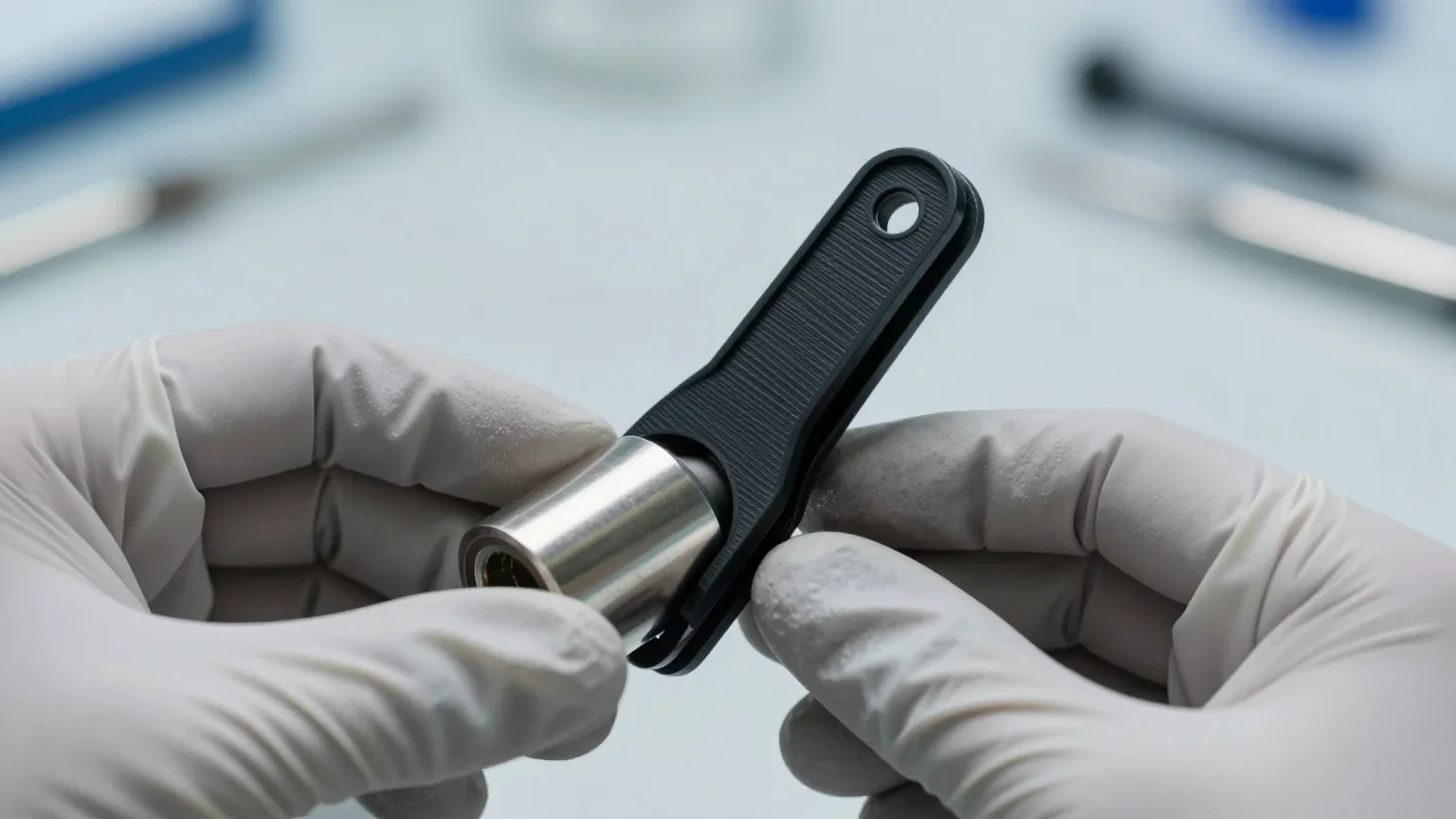
Today, we are going to dive deep into this specific innovation, but we are also going to zoom out to understand the broader context. How did we get here? Why is 3D printing becoming indispensable in military logistics? And what does this tell us about the future of industrial additive manufacturing as we move through the rest of the decade? Let’s put on our safety goggles and explore the intersection of defense, technology, and safety.
The High-Stakes World of Munitions Disposal
To appreciate the genius of the NSWC Corona Division’s clip, we first need to understand the nightmare scenario it solves. Submunitions are small explosive projectiles designed to spread over a wide area. They are complex, fragile, and terrifyingly unpredictable. For disposal teams, the primary danger lies in the arming mechanisms. These are the parts that, if triggered accidentally, turn a dormant piece of metal into an active weapon.
Traditionally, securing these arming parts required manual intervention. Technicians had to physically manipulate delicate components, often under time pressure and in hostile environments. It was a game of inches. A slip of the hand, a tremor from stress, or a misjudgment of a mechanism could have catastrophic consequences. The human factor is the weakest link in any high-stress operation, and in munitions disposal, that weakness is measured in lives.
The NSWC team recognized that they needed a way to "freeze" the arming parts in a safe state without requiring the technician to perform intricate, high-risk manual work. They needed a passive, reliable, and rapidly deployable solution. Enter additive manufacturing. By designing a clip that mechanically locks the arming components, they shifted the burden from human precision to engineering precision. It’s a shift from "hope I don’t make a mistake" to "the design ensures I can’t make a mistake."
Why 3D Printing? The Logic Behind the Choice
You might be wondering: why not just machine this clip out of steel or aluminum? After all, defense contractors have been using CNC machining for decades. The answer lies in the unique requirements of the disposal environment and the rapid nature of modern military operations.
First, consider logistics. Disposal teams often operate in remote or forward-deployed locations. Shipping pre-machined, high-precision metal clips to every potential deployment site is logistically heavy and slow. 3D printing, however, is digital. You can send the file to a printer located near the point of need. This reduces the supply chain from a global network to a local one.
Second, consider the material properties. The clip needs to be strong enough to hold the arming parts securely but also lightweight enough not to add significant weight to the disposal kit. 3D printing allows for the use of advanced engineering polymers or lightweight metal alloys that can be tuned for specific strength-to-weight ratios. Furthermore, the geometry of a 3D printed part can be optimized in ways that traditional machining cannot easily achieve. You can create internal channels, lattice structures, or complex locking mechanisms that would be incredibly difficult, if not impossible, to mill by hand.
Finally, there is the speed of iteration. If a technician finds that the clip doesn’t fit a specific variant of a submunition perfectly, they can tweak the digital model and print a new one in hours, not weeks. This agility is a hallmark of the additive manufacturing era, and it is a game-changer for field operations.
NSWC Corona: A Hub of Innovation
The NSWC Corona Division is not just a random office in the desert. It is a premier center for ordnance and munitions development. For years, they have been at the forefront of integrating new technologies into military hardware. Their work on the 3D printable clip is part of a broader trend within the Department of Defense to embrace additive manufacturing.
The Navy and other branches of the military have been increasingly looking to 3D printing to solve "last-mile" problems. These are the small, critical issues that arise in the field that standard supply chains cannot address quickly enough. By empowering engineers at NSWC Corona to use 3D printing, the military is decentralizing innovation. It’s no longer just about building the next fighter jet; it’s about enabling the soldier on the ground to solve problems in real-time.
This approach reflects a cultural shift in defense engineering. The old model was "build to spec, deploy, hope for the best." The new model is "deploy, observe, iterate, and improve." The 3D printable clip is a testament to this agile mindset. It’s a small part, but it represents a massive leap in operational safety and efficiency.
The 2026 Landscape: Where 3D Printing Stands
It is helpful to place this specific innovation in the broader context of the 3D printing industry in 2026. We are no longer in the "hype" phase where every new plastic printer was a miracle. We are in the "industrial maturity" phase. The technology has stabilized, and it is being used for serious, high-value applications.
According to recent market data, the global 3D printing market reached approximately $29.3 billion in 2025 and is projected to maintain a Compound Annual Growth Rate (CAGR) exceeding 18% through 2026 [4]. This growth is not driven by consumer printers selling $200 figurines. It is driven by industrial adoption in aerospace, healthcare, automotive, and, as we see here, defense. The money is flowing into production-oriented systems and controlled workflows, not just hobbyist gadgets.
A survey by VDMA in 2026 indicates that additive manufacturing is stabilizing while serial production becomes more important [2]. This is a crucial point. It means companies are moving beyond prototyping. They are using 3D printing to make final, functional parts that go into service. The NSWC clip is not a prototype; it is a tool intended for use by disposal teams. It is a production part, made with production-grade reliability. This shift from "prototype" to "product" is the defining characteristic of the 2026 3D printing landscape.
Process Control and Quality Assurance
In the defense sector, quality is not optional. It is a matter of life and death. A 3D printed part that fails in the field is not just a inconvenience; it is a catastrophe. So, how do we ensure that a 3D printed clip is as reliable as a machined one?
The answer is process control. Modern industrial 3D printers are equipped with sensors and software that monitor every layer of the print. They track temperature, humidity, material flow, and layer adhesion in real-time. If something goes wrong, the machine stops. This level of control was unimaginable a decade ago. Today, additive manufacturing workflows are governed by strict quality assurance protocols, often meeting or exceeding the standards required for traditional manufacturing [2].
Furthermore, the materials used in these prints are rigorously tested. Whether it’s a high-strength nylon, a carbon-fiber reinforced polymer, or a metal alloy, the material specifications are known and verified. This means that the NSWC engineers can trust the part. They can know, with scientific certainty, that the clip will hold the arming parts secure under the expected loads. This reliability is what makes 3D printing viable for critical applications like munitions disposal.
Material Science: The Unsung Hero
Let’s talk about materials, because the magic of 3D printing is only as good as the material you feed it. For the NSWC clip, the choice of material is critical. It needs to be durable, resistant to environmental factors like heat, cold, and moisture, and strong enough to withstand the mechanical forces involved in handling submunitions.
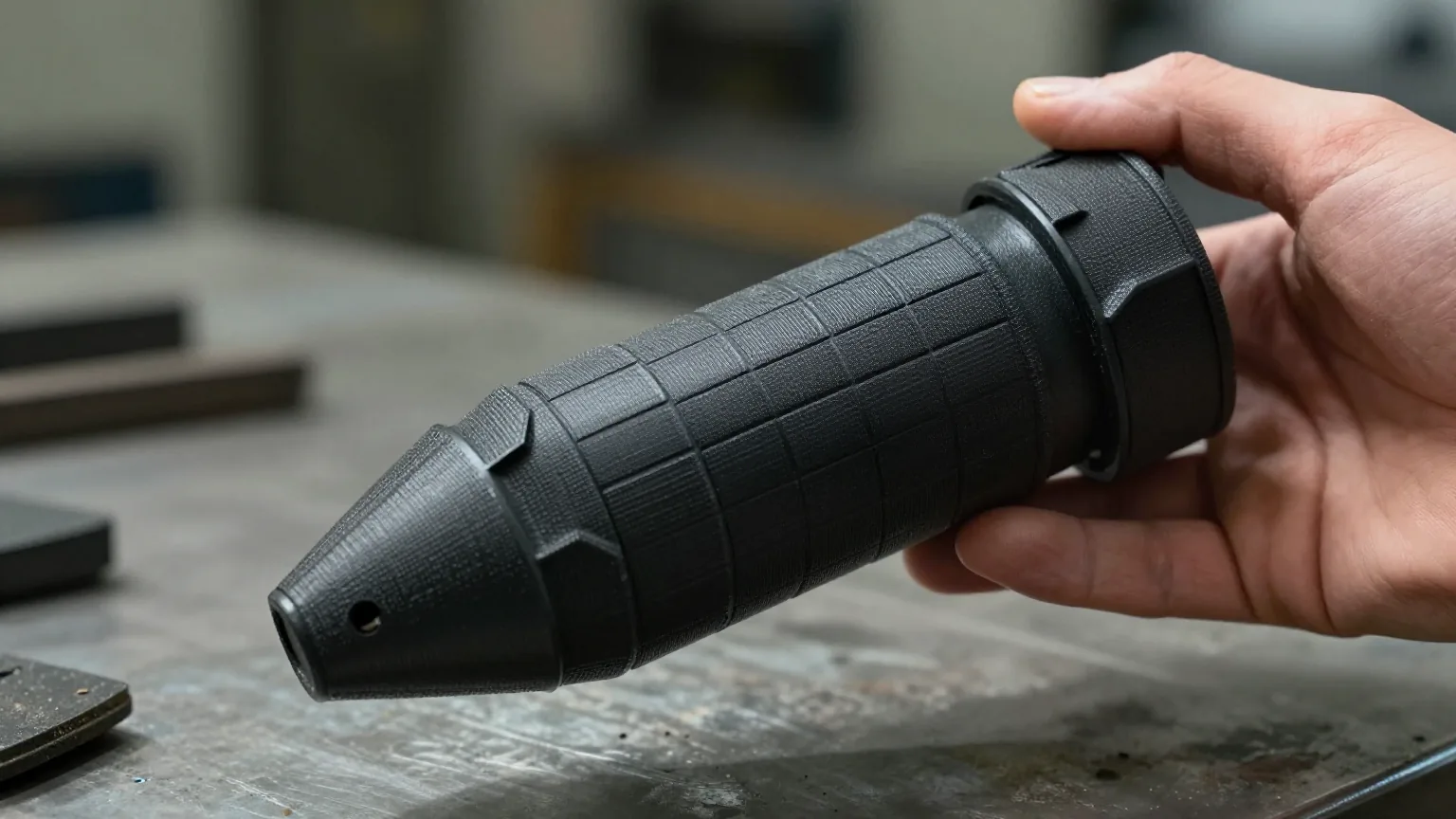
In 2026, we have access to a wide array of engineering filaments and resins. We are seeing the rise of new engineering filaments that offer properties previously only available in metals [5]. These materials can be designed to have specific tensile strengths, flexibility, and temperature resistance. For a disposal clip, you might choose a material that is slightly flexible to absorb shock but rigid enough to maintain its shape. You might also look at materials that are resistant to UV degradation, ensuring the clip doesn’t become brittle after sitting in a sun-baked field for days.
Additionally, there is the trend of continuous carbon-fiber printers, which can produce parts with exceptional strength-to-weight ratios [5]. While a carbon-fiber clip might be overkill for some applications, it highlights the breadth of options available to engineers today. The ability to select the perfect material for the job is a key advantage of additive manufacturing. You are not stuck with what’s on the shelf; you can design the material properties to match the application.
The Human Element: Safety and Trust
Technology is only as good as the people who use it. For disposal teams, trust is everything. If they don’t trust the clip, they won’t use it. And if they don’t use it, the safety benefit is lost. So, how do you build trust in a 3D printed part?
It starts with transparency. Engineers need to communicate clearly with the end-users. They need to explain how the clip works, why it’s safe, and what its limitations are. They need to provide training and demonstrations. It’s about showing, not just telling. When a disposal technician sees the clip in action, when they feel its sturdiness, when they understand the engineering behind it, trust is built.
It also starts with reliability. The clip has to work every time, in every condition. If it fails once, trust is gone. This is why the focus on process control and quality assurance is so important. The clip must be a tool that the technician can rely on, just like their boots or their radio. It becomes part of their kit, an extension of their body. This integration of technology into the human workflow is a key aspect of modern defense innovation.
Comparing to Other Industrial Applications
The NSWC clip is not an isolated case. It is part of a larger trend of 3D printing being used to solve specific, high-value problems in various industries. In aerospace, for example, we are seeing 3D printed parts being used in satellites and aircraft. Proteus Space, for instance, collaborated with NASA JPL to achieve a successful on-orbit payload deployment using additive manufacturing [3]. This shows that 3D printed parts can withstand the extreme conditions of space, which is a testament to their reliability.
In the medical field, 3D printing is used to create custom implants and surgical guides. These are critical parts that go inside the human body. The fact that 3D printing is trusted in such high-stakes environments speaks to its maturity. If it can be used to save lives in a hospital, it can certainly be used to save lives in a disposal field. The common thread is precision, customization, and reliability.
Even in the consumer space, we are seeing the benefits of 3D printing. New production-oriented systems are allowing for controlled additive manufacturing workflows that can produce high-quality parts at scale [2]. This means that the technology is becoming more accessible and affordable, which will only drive further adoption in sectors like defense. As the cost of 3D printing decreases and the quality increases, more organizations will look to it as a solution for their most challenging problems.
The Future of Defense Additive Manufacturing
Where do we go from here? The future of defense additive manufacturing is bright. We are likely to see more "digital thread" integration, where the design of a part is directly linked to its manufacturing and maintenance data. This means that if a clip is printed, its entire history is recorded. Who printed it? When? With what material? Under what conditions? This data can be used for quality control, maintenance, and even re-engineering.
We are also likely to see more autonomous printing. Imagine a disposal team in the field with a small, rugged 3D printer. They can scan a damaged or non-standard part, and the printer can automatically generate a replacement. This level of autonomy will further enhance the agility and resilience of military operations. It will allow teams to be self-sufficient in ways that were previously impossible.
Furthermore, we are seeing a shift toward multi-material printing, which allows for parts with varying properties in a single print [5]. This could lead to clips that have a soft, grippy surface on the outside for easy handling, but a hard, rigid core for structural integrity. This level of design freedom is only possible with 3D printing, and it will lead to even more innovative solutions in the future.
Challenges and Considerations
Of course, it’s not all smooth sailing. There are challenges to overcome. One of the biggest is standardization. Different military branches, and even different units within the same branch, may use different printers, materials, and software. This can lead to compatibility issues and confusion. There is a need for common standards and protocols to ensure that 3D printed parts are interchangeable and reliable across the board.
Another challenge is security. 3D printing files are digital, and they can be hacked or stolen. In the defense sector, this is a serious concern. If an adversary were to obtain the design files for a critical part, they could potentially replicate it or use it for nefarious purposes. Robust cybersecurity measures are essential to protect the digital assets of the additive manufacturing supply chain.
Finally, there is the issue of training. 3D printing is a new technology, and not everyone is familiar with it. There is a need to train engineers, technicians, and operators on the best practices for design, printing, and quality control. This requires investment in education and development, but it is a necessary step to ensure the widespread adoption of the technology.
Conclusion: A Small Clip, A Big Difference
The 3D printable clip from NSWC Corona may seem like a small thing. It’s just a clip, after all. But it represents a significant shift in how we approach safety, efficiency, and innovation in the defense sector. It shows that 3D printing is no longer just a tool for prototyping or hobbyists. It is a serious, industrial-grade technology that can save lives and solve complex problems.
As we move further into 2026 and beyond, we can expect to see more applications like this. We will see 3D printing being used to create custom tools, spare parts, and even entire systems in the field. We will see a greater integration of digital and physical manufacturing, leading to more agile and resilient supply chains. And we will see a greater emphasis on safety, reliability, and quality, as the technology matures and becomes more mainstream.
So, the next time you see a 3D printed object, whether it’s a toy, a prototype, or a critical component, take a moment to appreciate the journey it has taken. It represents a decade of innovation, a shift in mindset, and a promise of a future where technology works for us, making our lives safer, easier, and better. The NSWC clip is a small step in that journey, but it’s a step that matters. It’s a reminder that even the smallest innovations can have the biggest impact.
Now, it’s your turn. How do you think 3D printing will change your industry? What are the biggest challenges you see in its adoption? Share your thoughts in the comments below. Let’s continue the conversation and explore the exciting future of additive manufacturing together.