Non-Planar Slicing Goes Mainstream: PancakeSlicer Changes Everything
The history of 3D printing is, at its core, a story of layers. For over three decades, since the days of stereolithography and early FDM, we have been told that to build a complex shape, we must stack flat, horizontal slices. It is a digital equivalent of a lasagna: simple, predictable, and fundamentally limited by the fact that every layer must be parallel to the build plate. But what if the lasagna could be folded? What if the layers could flow, curve, and twist around the geometry of the part itself?
For years, non-planar slicing was the stuff of academic papers, high-end research labs, and expensive, niche software that required a PhD in computational geometry to operate. It was a "magical thinking" concept—impressive in theory, but largely impractical for the average maker or even the industrial engineer [3]. However, the landscape is shifting. In late 2026, a new player has entered the arena that promises to democratize this technology: PancakeSlicer. Described as a self-hostable, non-planar 3D printing slicer, it might finally make non-planar slicing more accessible to the masses [4]. This isn't just another software update; it is a potential paradigm shift in how we think about additive manufacturing.
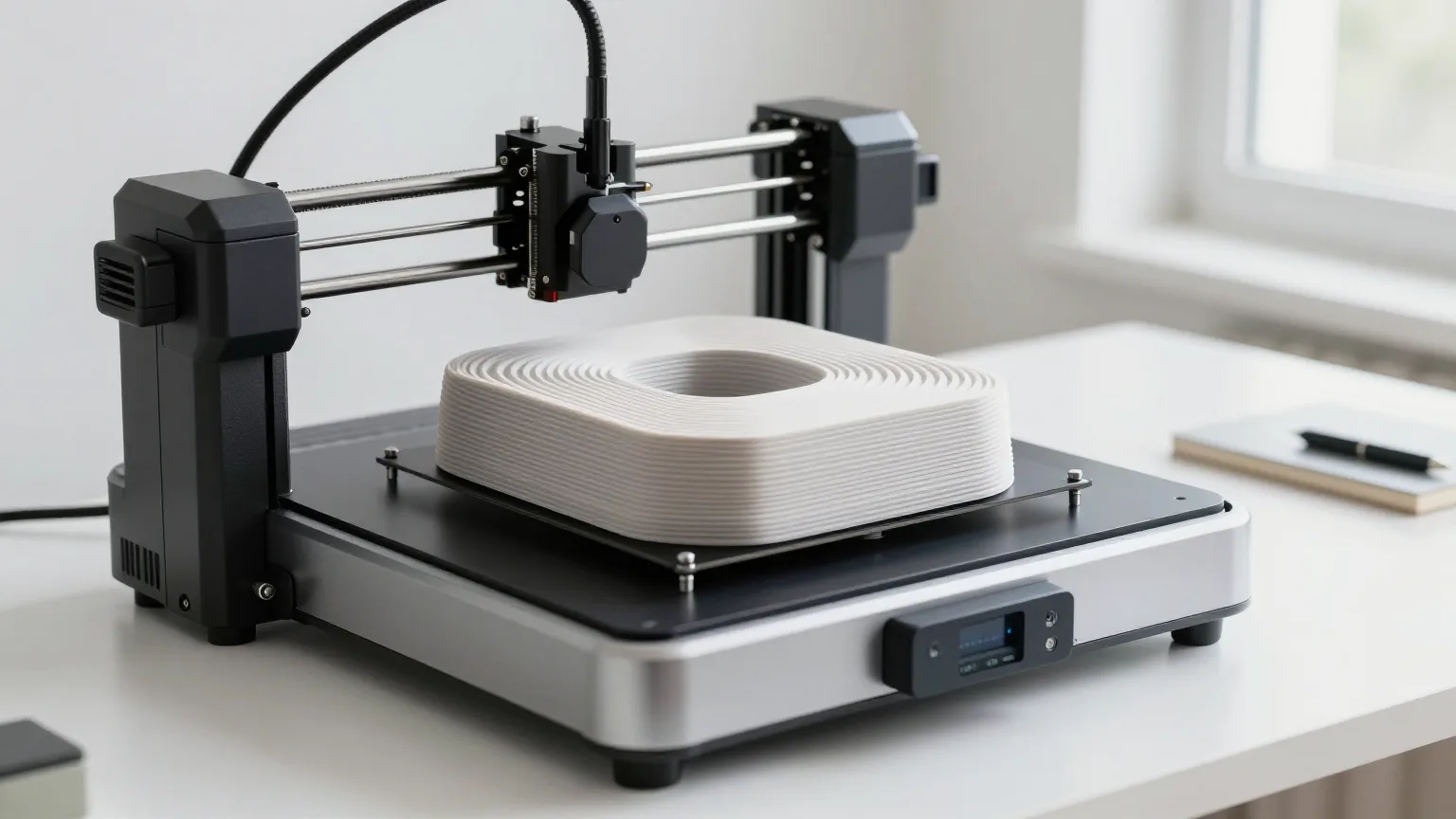
The Gridlock of Planar Slicing
To understand why PancakeSlicer is such a big deal, we first need to appreciate the limitations of the status quo. Standard slicers like Cura, PrusaSlicer, and Simplify3D operate on a Cartesian grid. They take a 3D model and chop it into thin, horizontal slices. While this works brilliantly for simple geometries, it struggles with complex, organic shapes. Imagine trying to print a curved vase or a part with significant undercuts using only flat layers. The result is often a part held together by "stair-stepping" artifacts, weak inter-layer adhesion, and print failures due to overhangs that are too steep for the nozzle to bridge.
For industrial applications, these limitations translate into wasted material, longer print times, and parts that require extensive post-processing. The industry has been stuck in a loop where hardware gets faster and more precise, but the software logic remains rigidly horizontal. This rigidity is what the 3D printing industry has been battling for years, often resorting to clever workarounds like manual model rotation or support structures that add cost and complexity [1].
What Is Non-Planar Slicing, Really?
Non-planar slicing, often referred to as "flowing" or "adaptive" slicing, allows the layers to follow the surface of the model rather than sticking to a strict horizontal plane. Instead of cutting the object into flat discs, the software calculates the optimal path for the extruder to take, allowing the layers to curve and bend. This means that on a curved surface, the layers will also be curved, maximizing the contact area between layers and reducing the number of "steps" needed to approximate the shape.
The benefits are twofold. First, there is a significant improvement in surface finish. The "stair-step" effect, which is the hallmark of FDM prints, is drastically reduced. Second, and perhaps more importantly, there is a structural advantage. By aligning the layers with the principal stress directions of the part, non-planar slicing can produce parts that are stronger and more resistant to failure. It is the difference between laying bricks in a straight wall versus laying them in a dome; the latter distributes weight and stress far more effectively.
The Academic Era and the "Magical Thinking" Gap
Non-planar slicing is not a new invention. Researchers have been exploring adaptive layering for over a decade. However, for most of that time, it remained in the realm of "magical thinking." A recent analysis of the industrial 3D printing landscape in 2026 noted that the sector was characterized by a year of "magical thinking," where companies promised breakthroughs that often fell short of practical, scalable implementation [3].
The barrier to entry was high. Early non-planar slicers required massive computational power, often taking hours to generate a G-code file for a single part. They were also notoriously fragile; a slight change in the model geometry could cause the algorithm to fail, resulting in unprintable toolpaths. For a hobbyist or a small business, the learning curve and the risk of failure were simply too high. The technology was impressive, but it was not usable. It was a solution looking for a problem that the market was willing to pay to solve.
Enter PancakeSlicer: The Game Changer
That changes with the emergence of PancakeSlicer. According to recent news from Tom's Hardware, PancakeSlicer is a self-hostable non-planar 3D printing slicer that aims to make this advanced technology accessible to the masses [4]. The name itself is a nod to the problem it solves: instead of a stack of flat pancakes, the layers are allowed to "fold" and "flow" around the object. The emphasis on "self-hostable" is crucial. In an era where cloud-based solutions dominate, the ability to run this complex algorithm locally on your own hardware ensures data privacy, reduces latency, and eliminates subscription fees.
What sets PancakeSlicer apart is its focus on accessibility. It is not designed for a supercomputer in a university lab; it is designed for the desktop of a maker or the workstation of an engineer. By optimizing the algorithms for modern consumer-grade hardware, it bridges the gap between academic research and practical application. This is the moment where the "magical thinking" becomes tangible reality [3].
Technical Breakthroughs: How It Works
While the specific code is proprietary, the underlying principles of PancakeSlicer likely rely on advanced mesh processing and path planning algorithms. The slicer analyzes the surface normals of the 3D model and generates a toolpath that follows these normals, rather than intersecting the model at fixed heights. This requires solving complex optimization problems to ensure that the extruder can physically reach all points without colliding with itself or the build plate.
The self-hostable nature of the software suggests that it is built on open-source foundations, possibly leveraging libraries like OpenSCAD or custom C++ engines for geometry processing. The fact that it is available for download and installation implies a community-driven development model, where users can contribute to bug fixes and feature enhancements. This is a significant departure from the closed-source, black-box approach of many industrial software vendors. It invites transparency and collaboration, which are essential for driving innovation in the maker community [1].
Performance vs. Tradition: A Comparative Look
How does PancakeSlicer stack up against traditional planar slicers? In terms of print time, non-planar slicing can be counter-intuitive. Some might assume that flowing layers would result in longer paths, but in reality, the reduction in retraction and travel moves often offsets the increased path length. More importantly, the quality of the print is superior. Users report that parts printed with non-planar slicing have smoother surfaces and require less sanding or finishing work.
Consider a simple curved part, like a handle. With a planar slicer, the handle is built up in horizontal steps, resulting in a rough surface. With PancakeSlicer, the layers flow along the curve of the handle, resulting in a smooth, continuous surface. The difference is not just cosmetic; it is functional. A smooth surface is less likely to trap bacteria or wear down unevenly. In medical applications, for example, this level of precision is critical. A dental crown or a prosthetic joint must fit perfectly, and non-planar slicing can achieve that level of accuracy that planar slicing simply cannot [4].
Industrial Implications: Beyond the Maker Space
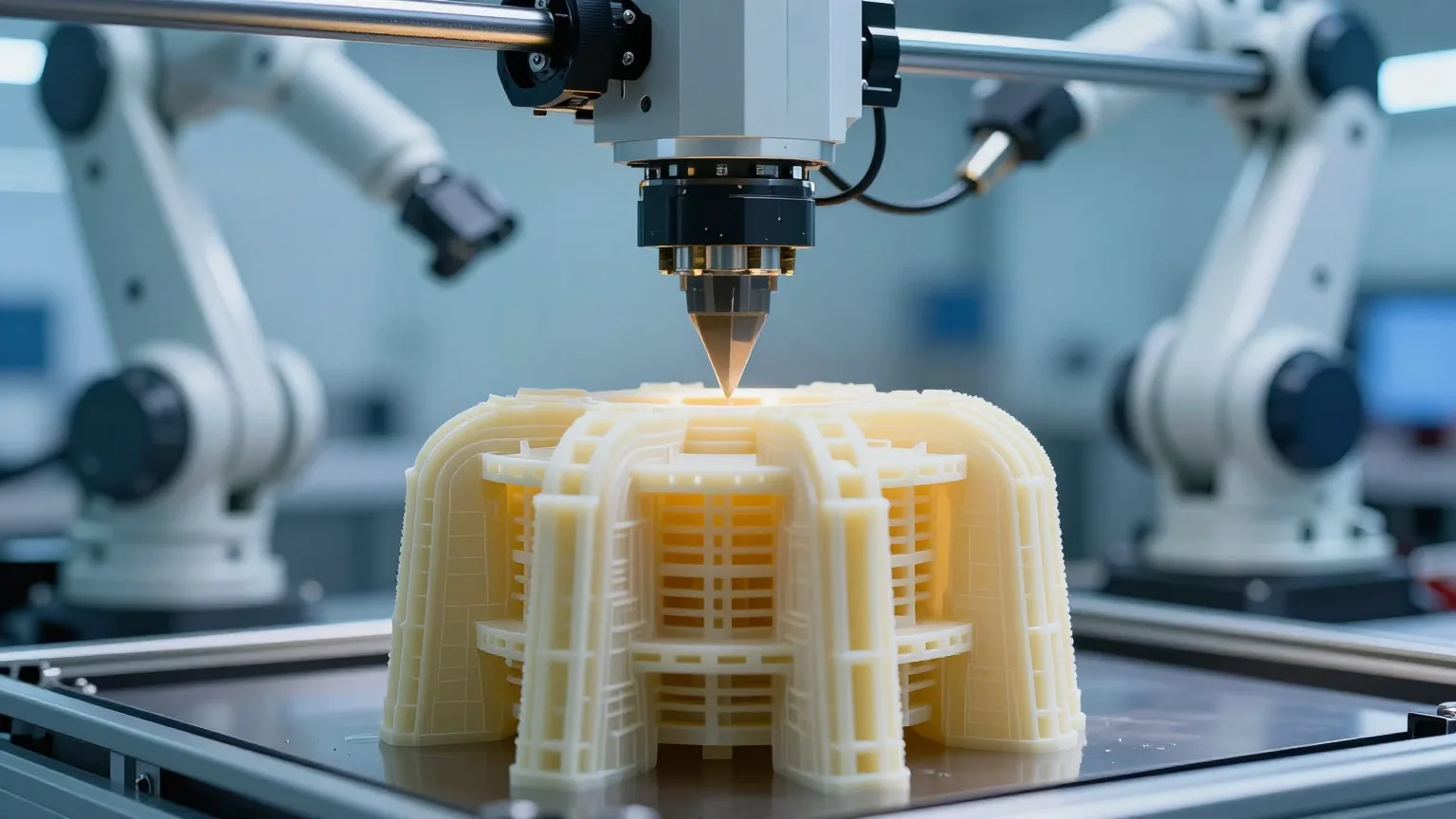
While the maker community is likely the first to adopt PancakeSlicer, the implications for industry are profound. In aerospace, automotive, and medical fields, every gram of weight and every millimeter of precision matters. Non-planar slicing allows for the creation of parts that are lighter, stronger, and more complex than ever before. This opens up new design possibilities that were previously impossible to manufacture additively.
For instance, in the aerospace industry, engineers are always looking for ways to reduce weight without sacrificing strength. By using non-planar slicing, they can design parts with internal structures that follow the load paths, resulting in a part that is optimized for both strength and weight. This is not just a theoretical concept; it is a practical application that can lead to significant cost savings and performance improvements. The 3D printing industry has been moving towards more integrated solutions, and software like PancakeSlicer is a key piece of that puzzle [1].
The Role of Open Source and Community
One of the most exciting aspects of PancakeSlicer is its open-source, self-hostable nature. In the 3D printing world, open-source software has always been a driving force for innovation. From Marlin firmware to Klipper, open-source projects have democratized technology and allowed users to customize and improve their setups. PancakeSlicer follows this tradition, inviting users to dive into the code and contribute to its development.
This community-driven approach has several benefits. First, it ensures that the software remains responsive to user needs. If a user identifies a bug or suggests a feature, they can implement it themselves or submit a pull request. Second, it creates a sense of ownership and community. Users are not just consumers; they are co-creators. This is a powerful dynamic that can accelerate development and adoption. The 3D printing community has a long history of sharing knowledge and resources, and PancakeSlicer is likely to become a central hub for that exchange [2].
Challenges and Limitations
Of course, no technology is without its challenges. Non-planar slicing is computationally intensive, even with optimized algorithms. Users with older or less powerful computers may experience longer slicing times or may need to upgrade their hardware. Additionally, the G-code generated by non-planar slicers is more complex, which can be challenging for some 3D printers to handle. Not all motion control systems are designed to handle the rapid changes in direction and speed required for non-planar printing. Users may need to tune their printer settings carefully to ensure that the motion system can keep up with the toolpath.
There are also material considerations. Non-planar slicing requires consistent extrusion and precise temperature control to ensure that the layers adhere properly. If the material flow is inconsistent, the curved layers may not bond well, leading to weak points in the part. Users will need to experiment with different materials and settings to find the optimal combination for their specific application. However, these challenges are not insurmountable. They are simply part of the learning curve that comes with adopting new technology.
Cultural Shift: From Rigid to Fluid
The adoption of non-planar slicing represents a cultural shift in the 3D printing community. For years, the industry has been focused on speed and cost. The goal was to print faster and cheaper, often at the expense of quality and complexity. PancakeSlicer challenges this paradigm by prioritizing quality and design freedom. It invites users to think beyond the limitations of the build plate and to explore new geometries and structures.
This shift is not just technical; it is philosophical. It reflects a growing understanding that 3D printing is not just about making things; it is about designing things. The software is an enabler of creativity, allowing designers to push the boundaries of what is possible. In this sense, PancakeSlicer is not just a tool; it is a catalyst for innovation. It encourages users to ask new questions and to explore new possibilities. This is the spirit of the maker movement, and it is a spirit that is likely to drive the future of 3D printing [5].
Future Outlook: Where Do We Go From Here?
As PancakeSlicer gains traction, we can expect to see a wave of innovation in the 3D printing ecosystem. Printer manufacturers will likely start to optimize their hardware for non-planar printing, with improved motion control systems and higher-resolution drivers. Material suppliers will develop new filaments and resins that are specifically designed for non-planar printing, with improved flow characteristics and adhesion properties.
We can also expect to see the emergence of new design tools that are integrated with non-planar slicers. These tools will allow designers to visualize and simulate the effects of non-planar slicing on their models, enabling them to optimize their designs for printability and performance. This integration will make the design-to-print process more seamless and efficient, reducing the need for trial and error.
In the long term, non-planar slicing could become the standard for high-quality 3D printing. As the technology matures and becomes more accessible, it is likely to be adopted by a wider range of users, from hobbyists to industrial manufacturers. The impact of this shift will be felt across many industries, from healthcare to aerospace to consumer goods. The possibilities are endless, and we are only just beginning to scratch the surface.
Conclusion: The Layers Are Changing
PancakeSlicer is more than just a software update; it is a signal that the 3D printing industry is maturing. It is a move away from the rigid, planar constraints of the past and towards a more fluid, adaptive future. By making non-planar slicing accessible to the masses, it is democratizing a technology that was previously reserved for the few. It is a testament to the power of open-source collaboration and the drive of the maker community to push the boundaries of what is possible.
As we look to the future, it is clear that the layers are changing. The flat, horizontal slices of the past are giving way to curved, flowing layers that conform to the geometry of the part. This shift is not just about better prints; it is about better design, better performance, and better possibilities. PancakeSlicer is the key that unlocks this new era, and it is a key that we should all be eager to use.
Call to Action: Are you ready to break free from the gridlock of planar slicing? Download PancakeSlicer and experiment with non-planar slicing on your next project. Share your results with the community and help us push the boundaries of what is possible. The future of 3D printing is fluid, and you can be part of it.