GM Goes 3D: How Stratasys is Transforming the Production Network
The Big Red Machine Gets a New Gear: GM’s 3D Printing Revolution
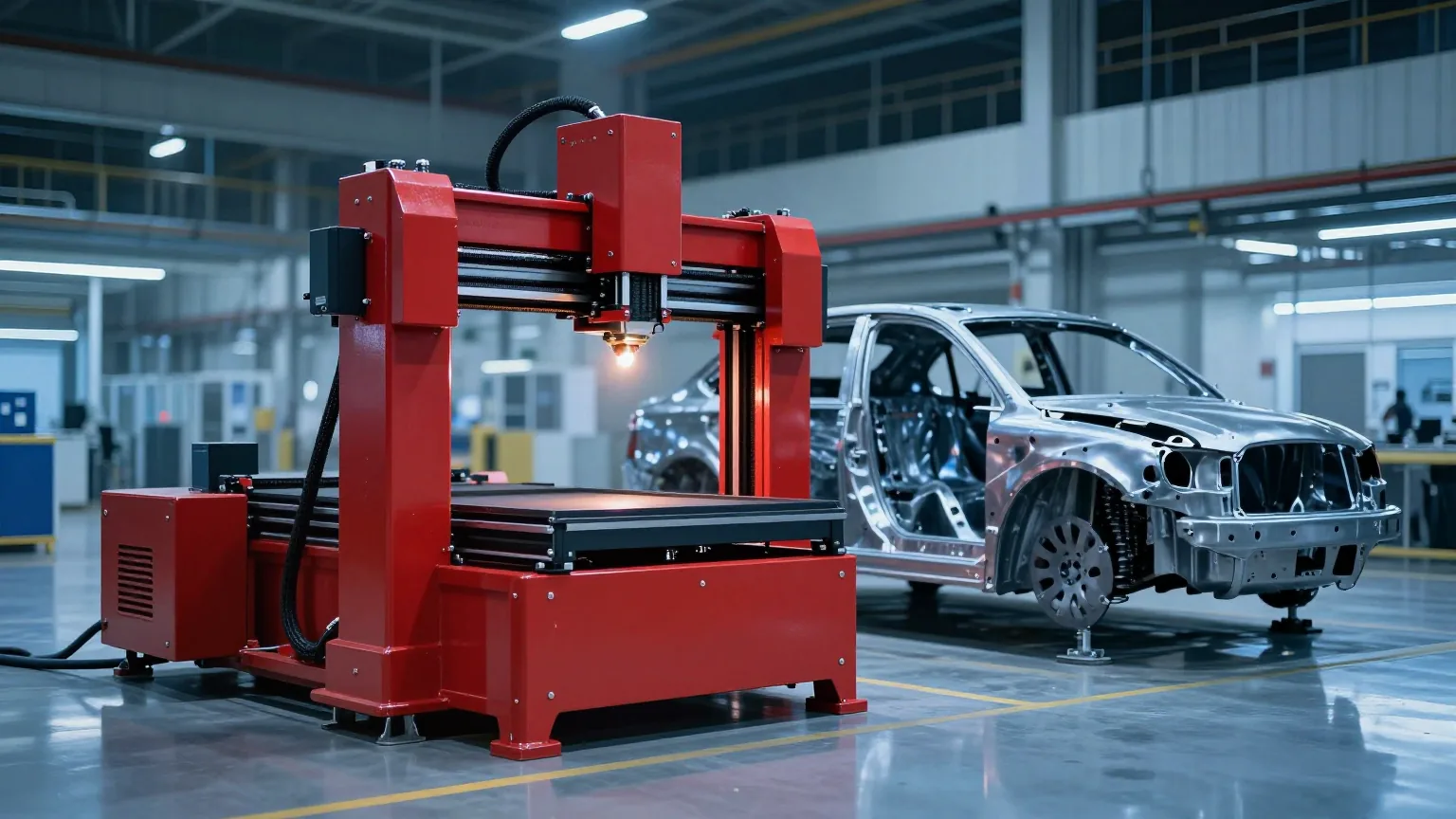
Imagine a world where the assembly line doesn’t just hum with the rhythm of steel and hydraulics, but also with the quiet, precise whir of polymer nozzles and laser sintering heads. It sounds like a scene from a sci-fi movie, perhaps a sequel to Blade Runner, but in 2026, it is the daily reality for General Motors. For decades, the automotive industry has been defined by the massive, heavy, and often slow-moving logistics of traditional manufacturing. But a significant shift is underway, one that is redefining how we think about "mass production." The headline isn’t just that General Motors (GM) is using 3D printing; it’s that they have deployed Stratasys 3D printing across their entire production network [2]. This isn’t a pilot program in a corner office or a single prototype lab. This is a systemic transformation, integrating additive manufacturing into the core of one of the world’s largest industrial engines. So, what does it actually mean when the giant of Detroit starts printing its parts? And why did they choose Stratasys to lead this charge? Let’s dive into the gears of this modern industrial evolution.
The Historical Context: From Steam to Silicon
To understand the magnitude of GM’s move, we have to look back at how we got here. The history of automotive manufacturing is a history of scale. Henry Ford’s moving assembly line was a revolution because it standardized parts and reduced labor time. For a century, the mantra was "make it big, make it cheap, make it fast." But this model has inherent limitations. Traditional subtractive manufacturing—cutting, machining, and casting—requires expensive tooling, significant material waste, and long lead times for design changes. If you want to change the shape of a bracket, you often need to build a new mold or fixture, a process that can take weeks or months.
3D printing, or additive manufacturing, flips this logic on its head. By adding material layer by layer, it allows for complex geometries that would be impossible or prohibitively expensive to machine. It reduces waste, shortens lead times, and allows for rapid iteration. However, for a long time, 3D printing was viewed as a niche tool for prototyping—great for checking if a concept fits, but too slow and expensive for actual production parts. The barrier was always the "digital to physical" gap. GM’s decision to deploy Stratasys technology across its production network signals that this barrier has finally been breached. It’s no longer just about making a model; it’s about making the car.
Why Stratasys? The Engine Behind the Machine
When you are a company like GM, with a global footprint and a reputation for reliability, you don’t just buy any printer. You need a partner that can scale. Stratasys, a pioneer in industrial additive manufacturing, has established itself as a leader in Fused Deposition Modeling (FDM) and other industrial-grade technologies. Their machines are designed for the rigors of factory floors, not just desktop hobbyists. By deploying Stratasys across its network, GM is leveraging a technology that is proven, scalable, and capable of producing parts with the mechanical properties required for automotive applications [2].
Stratasys offers a range of materials, from standard ABS and nylon to high-performance thermoplastics that can withstand the heat and vibration of an engine bay. This material versatility is crucial. A part for a dashboard might need a different polymer than a part for a suspension bracket. Stratasys’ ability to provide consistent, high-quality materials ensures that GM can trust the parts they are printing to perform as well as, or better than, their traditionally manufactured counterparts. It’s a marriage of industrial robustness and digital flexibility.
Speed as a Competitive Advantage
In the modern automotive landscape, speed is king. The market is saturated, and consumer tastes are shifting rapidly. Electric vehicles, autonomous driving features, and personalized interiors are just a few of the trends demanding faster development cycles. Traditional manufacturing methods, with their long lead times for tooling and logistics, can be a bottleneck in this fast-paced environment. 3D printing offers a solution: speed. Robot companies and automotive manufacturers are increasingly prioritizing speed in 3D printed parts for both design and production phases [2].
For GM, this means they can iterate on designs much faster. If an engineer wants to tweak the geometry of a part to improve airflow or reduce weight, they can print a new version in hours rather than weeks. This agility allows GM to respond to market demands and technical challenges with a speed that was previously unimaginable. It’s a fundamental shift in the development lifecycle, moving from a linear, sequential process to a parallel, iterative one. This doesn’t just save time; it saves money. Every week saved in the development phase translates into millions of dollars in reduced R&D costs and faster time-to-market for new models.
From Prototyping to Production: The Big Leap
For years, the distinction between "prototyping" and "production" in 3D printing was a hard line. Prototyping was for checking fit and form; production was for making millions of parts. But that line is blurring. GM’s deployment of Stratasys across its production network indicates a move into what is often called "mid-volume" or "low-volume" production. This is where 3D printing truly shines. It’s not about printing a million identical parts—that’s still the domain of injection molding. It’s about printing thousands of unique, complex, or high-value parts that would be inefficient to produce traditionally.
Consider a scenario where a specific part is only needed for a limited-edition model, or a specific trim level, or a regional variant. Traditionally, GM would have to create a dedicated tool for that part, which might not be cost-effective if the volume is low. With 3D printing, they can simply upload the digital file and start printing. There is no tooling cost, no minimum order quantity, and no inventory risk. This flexibility allows GM to offer more customization and variety without the associated logistical headaches. It’s a win for the consumer, who gets more options, and a win for GM, who gets a more efficient and responsive supply chain.
Logistics and Supply Chain Resilience
One of the most underappreciated benefits of in-house 3D printing is its impact on logistics. The global supply chain is notoriously fragile, as we saw during the recent years of chip shortages and shipping bottlenecks. By printing parts on-site, or at least within the same country as the assembly plant, GM can reduce its reliance on long-distance shipping. This not only cuts down on carbon emissions associated with transportation but also reduces the risk of delays due to customs, port congestion, or geopolitical issues.
Imagine a situation where a critical part is needed on the assembly line, but the shipment from the overseas supplier is delayed. In the traditional model, this could mean a line stoppage, costing thousands of dollars per hour. With 3D printing, GM can simply print the part on-site, keeping the line moving. This "just-in-time" manufacturing, taken to a new level, provides a level of resilience and flexibility that traditional supply chains simply cannot match. It’s a strategic advantage that goes beyond just the part itself; it’s about the entire ecosystem of production.
Sustainability: The Green Side of 3D Printing
Let’s talk about the environment. The automotive industry is under immense pressure to reduce its carbon footprint. 3D printing offers several sustainability advantages. First, it is an additive process, meaning it uses only the material needed for the part, significantly reducing waste compared to subtractive methods like machining, where up to 90% of the raw material can be discarded as chips and swarf. Second, by enabling lighter, more efficient part designs, 3D printing can contribute to fuel efficiency in vehicles, which in turn reduces emissions over the vehicle’s lifetime.
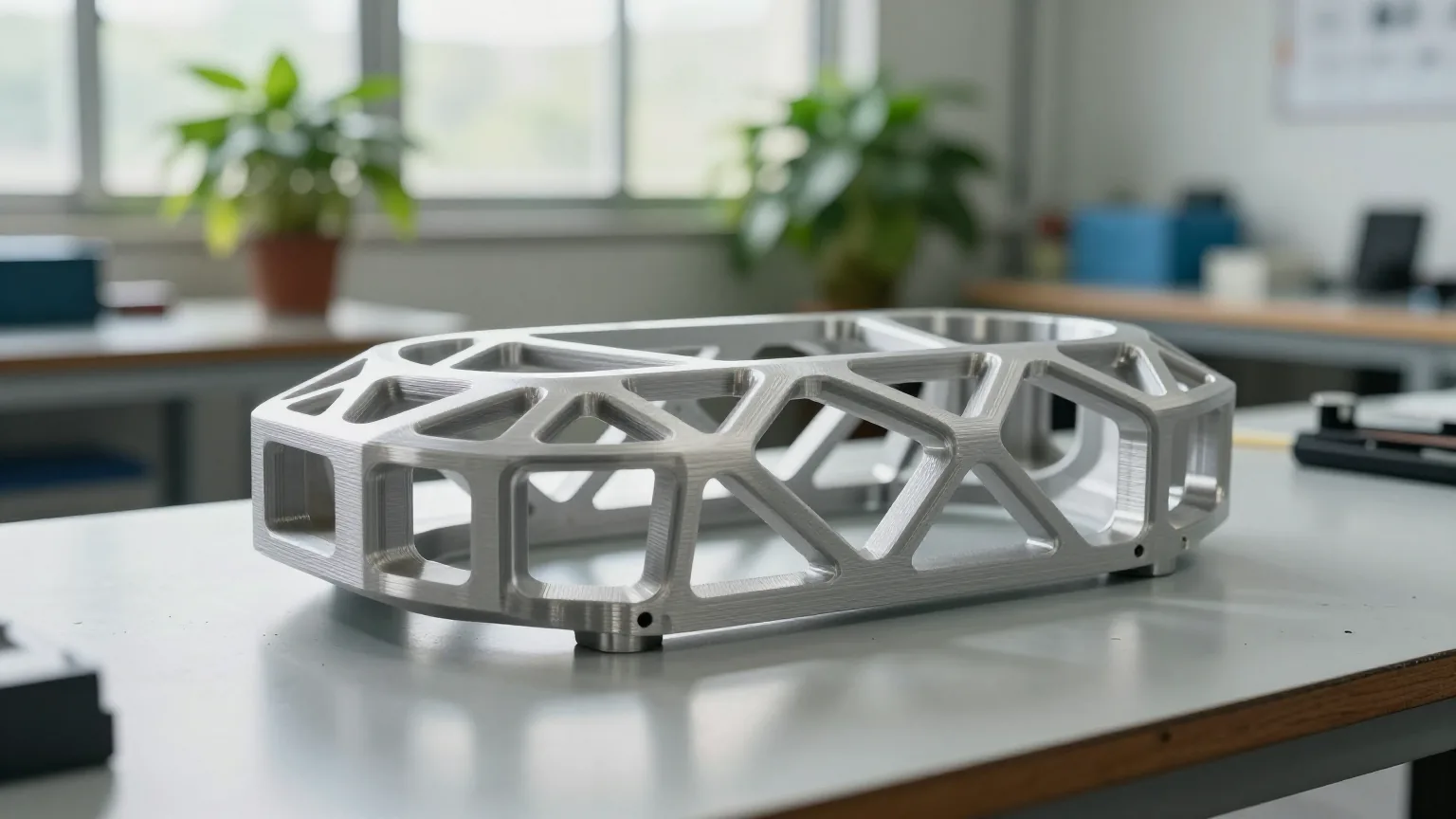
Furthermore, the ability to produce parts locally reduces the transportation footprint. Shipping heavy, bulky parts across oceans is a significant source of carbon emissions. By printing parts closer to where they are needed, GM can cut down on this "last-mile" or even "first-mile" logistics burden. It’s a holistic approach to sustainability, addressing waste, energy efficiency, and transportation all at once. As consumers become more environmentally conscious, these sustainability credentials are not just a nice-to-have; they are a key differentiator in the market.
The Human Element: Skilled Labor and New Roles
A common fear surrounding automation and advanced manufacturing is job loss. While 3D printing does change the nature of work, it doesn’t necessarily eliminate it. In fact, it creates new opportunities. The role of the traditional machinist is evolving into that of a "digital fabricator" or "additive manufacturing specialist." These workers need a different set of skills: understanding digital design, material science, and machine operation. They are not just pushing buttons; they are problem-solving, optimizing print parameters, and inspecting parts with a new level of precision.
GM’s deployment of this technology likely involves significant training and upskilling of its workforce. This is a positive trend, as it allows workers to transition into higher-value, more skilled roles. It’s a chance for the workforce to evolve alongside the technology, rather than being left behind. The human element is still crucial. 3D printing is not a "set it and forget it" process. It requires constant monitoring, quality control, and maintenance. The workers who operate these machines are the ones who ensure that the parts meet the high standards required for automotive use. They are the unsung heroes of this new manufacturing paradigm.
Challenges and Realities: It’s Not All Smooth Sailing
Let’s be realistic. 3D printing is not a magic bullet. There are challenges. One of the biggest is the speed of production. While it’s faster than traditional prototyping, it’s still slower than mass production methods like injection molding for high-volume parts. You can’t print a million car bodies in a day. So, 3D printing is not going to replace traditional manufacturing for the core structure of the car. It’s going to complement it. It’s going to be used for the parts where its strengths lie: complexity, low volume, and rapid iteration.
Another challenge is material consistency. While Stratasys and other leaders have made significant strides in material quality, there are still variations in properties between printed and traditionally manufactured parts. Ensuring that every printed part meets the exact same mechanical specifications is a challenge that requires rigorous testing and quality control. GM, with its strict quality standards, will need to implement robust inspection processes to ensure that the parts they are printing are as reliable as the ones they’ve been making for decades. It’s a challenge, but it’s a solvable one, and it’s part of the learning curve that comes with any new technology.
The Broader Industry Impact: A Ripple Effect
GM’s move is not happening in a vacuum. It’s part of a broader trend in the automotive industry. Other manufacturers are also exploring 3D printing, and the competition is driving innovation. When a leader like GM commits to a new technology, it signals to the rest of the industry that it’s time to pay attention. This creates a ripple effect, pushing suppliers, material scientists, and software developers to innovate faster. It’s a collaborative ecosystem, where progress in one area drives progress in another.
For example, as more automakers adopt 3D printing, there will be a greater demand for high-performance, automotive-grade materials. This will drive material suppliers to develop new polymers with better thermal, mechanical, and chemical properties. It will also drive software companies to develop better design tools and simulation platforms that can predict how printed parts will perform. It’s a virtuous cycle of innovation, where the adoption of 3D printing by a major player like GM accelerates the entire industry’s progress.
The Future: What’s Next for 3D Printing in Auto?
So, where do we go from here? The future of 3D printing in the automotive industry looks bright. We can expect to see more integration of 3D printing into the design process, with digital twins and simulation allowing engineers to test and optimize parts before they are even printed. We can also expect to see the use of 3D printing for personalized parts, allowing customers to choose specific features or finishes for their vehicles that are printed on-demand. Imagine a car with a custom dashboard layout, or a unique interior trim that is printed specifically for you. This level of personalization is something that traditional manufacturing struggles to achieve at scale, but 3D printing makes it possible.
We can also expect to see the use of 3D printing for spare parts. Instead of keeping a massive inventory of spare parts in warehouses, automakers could store digital files and print the parts as needed. This would reduce inventory costs and waste, while ensuring that parts are always available when needed. It’s a shift from a "push" supply chain to a "pull" supply chain, driven by digital data rather than physical stock.
Conclusion: The Gearbox of the Future
GM’s deployment of Stratasys 3D printing across its production network is a landmark moment in the history of manufacturing. It’s a testament to the maturity of additive manufacturing and its ability to deliver real value in a high-stakes, high-volume industry. It’s not just about printing parts; it’s about transforming the entire production process, making it faster, more flexible, more sustainable, and more resilient. It’s a move that positions GM at the forefront of the next industrial revolution, ready to compete in a world where speed and agility are as important as scale and cost.
As we look to the future, the possibilities are endless. 3D printing is not just a tool; it’s a mindset. It’s a way of thinking about design, production, and supply chains that is fundamentally different from the traditional approach. And as more companies like GM embrace this mindset, we can expect to see a world where manufacturing is more efficient, more sustainable, and more responsive to the needs of the consumer. The big red machine is shifting gears, and it’s going to be an exciting ride. So, keep your eyes on the road. The future of automotive manufacturing is being printed, one layer at a time.
What do you think? Will 3D printing become a standard part of the automotive production process, or will it remain a niche tool? Share your thoughts in the comments below. And if you’re interested in learning more about the latest trends in 3D printing, keep an eye on the news. The technology is evolving rapidly, and there’s never been a better time to get involved. The future is being built, and it’s being built with layers.