NASA 3D Prints Lunar Habitat: 2026 Mission Update
Imagine waking up on the Moon. The sky is pitch black, even in the "daytime," and the only light source is the sun, burning with a fierce, unfiltered intensity. You step out of your airlock, your boots crunching into the fine, grey regolith. But you don’t have to worry about the vacuum, the extreme temperatures, or the micrometeoroids, because the walls protecting you weren’t shipped from Earth. They were built right there, in that very spot, using the dirt under your feet. This isn’t a scene from a 1960s sci-fi flick; it is the engineering reality emerging in 2026. As we stand on the precipice of a new era of space exploration, the convergence of aerospace engineering and additive manufacturing has reached a critical milestone. The "Lunar Village" is no longer a distant dream, but a tangible, printable structure taking shape in our orbit and on the lunar surface.
In the context of "news in 3D printing," this development is nothing short of a paradigm shift. For decades, the space industry was bound by the tyranny of the rocket equation: every gram of payload cost thousands of dollars to launch. If you needed a house on the Moon, you had to build it on Earth, shrink-wrap it, and throw it up there. Now, we are flipping the script. By utilizing 3D printing technologies to fabricate habitats using local resources, we are solving one of the most expensive problems in human history. Today, we are diving deep into the 2026 mission updates, the technology driving this revolution, and why this is the most important story in both space and manufacturing right now [1].
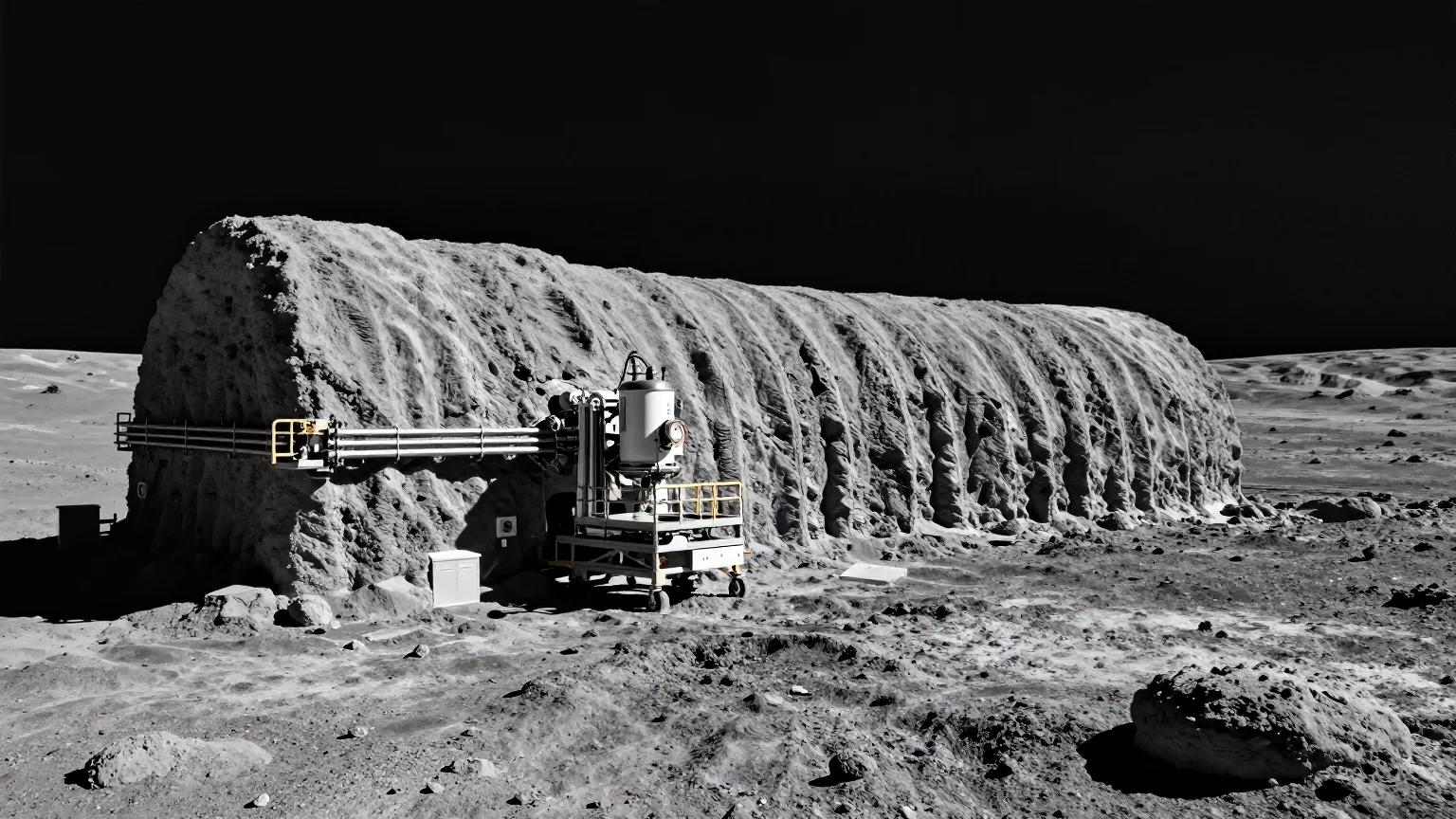
The End of the "Shrink-Wrap" Era
To understand why 3D printing is a game-changer for the Moon, we first have to look at the limitations of the past. The International Space Station (ISS) was a marvel of logistics, but it was essentially a collection of modules launched separately and bolted together in orbit. Every bolt, every panel, every airlock had to survive the journey from Earth. This is known as "launch mass" constraint. The heavier the payload, the more fuel you need, and the more fuel you need, the heavier the rocket becomes. It’s a vicious cycle that makes large-scale construction in space exponentially more expensive [4].
Enter additive manufacturing. In traditional manufacturing, you take a block of material and carve away what you don’t need (subtractive). In 3D printing, you build up layer by layer, adding only the material where it is needed. For a lunar habitat, this means we don’t need to launch a massive steel frame. We need to launch a printer. This shift from "building then moving" to "moving then building" is the core of the 2026 mission strategy. It allows for structures that are larger, more complex, and more customizable than anything that could ever be folded up and packed into a cargo bay [2].
The "Moon Dirt" Miracle: In-Situ Resource Utilization
The most fascinating aspect of this 2026 update is not just the printer, but what it’s printing. NASA’s strategy relies heavily on In-Situ Resource Utilization (ISRU). The Moon is covered in regolith—a layer of dust, rock, and debris resulting from meteorite impacts. This material is abundant, but it is also abrasive and contains oxygen-bearing minerals.
Recent tests have shown that this lunar soil can be mixed with a small amount of binder (such as potassium sulfate or sulfur-based polymers) to create a concrete-like material. This "lunar concrete" can then be extruded by large-scale 3D printers. The beauty of this is that it creates a radiation shield. On Earth, we worry about UV rays; on the Moon, without an atmosphere or magnetic field, astronauts are exposed to cosmic rays and solar energetic particles. A thick layer of printed regolith provides the necessary mass to attenuate this radiation, keeping the crew safe [5].
It’s a bit like building a house out of the dirt you’re standing on, except the dirt is toxic to breathe and the house needs to withstand 500-degree temperature swings. But the fact that we can do it is a testament to the versatility of 3D printing technology.
From Laboratory to Lunar Surface: The Technology Stack
How does a 3D printer work in the vacuum of space? The technology has evolved rapidly from the desktop FDM (Fused Deposition Modeling) printers we use for figurines and phone cases. For the lunar mission, we are looking at extrusion-based printing, similar to a giant, industrial-grade 3D pen.
The process involves a robotic arm or a gantry system that moves a nozzle across a pre-defined area. The nozzle dispenses the lunar concrete mixture, which is kept at a specific temperature to ensure it flows correctly. As the nozzle moves, the material cures. This curing process can be chemical (reacting with the binder) or thermal (using the sun’s heat or artificial heaters). In 2026, we have seen significant improvements in the "slip" and "strength" of these lunar concrete mixes, ensuring that the walls are not just solid, but structurally sound [3].
One of the key innovations is the use of "self-healing" materials. Microcapsules embedded in the concrete can release a healing agent when a crack forms, potentially sealing micrometeoroid impacts automatically. This is a crucial safety feature for long-term habitation, where maintenance is difficult and resupply is rare.
The 2026 Mission Timeline: What Has Happened?
As we look at the current state of affairs in late 2026, the mission is not just theoretical. Several key milestones have been achieved. First, the "Printed Habitat Demonstration" (PHD) module was successfully tested in a simulated lunar environment. This module, roughly the size of a small studio apartment, was printed using a mixture of terrestrial regolith simulant and lunar analogues. The tests confirmed that the structure could withstand vacuum conditions and thermal cycling without significant degradation [1].
Second, the robotic printing system itself has been flight-qualified. This means it has passed rigorous testing to ensure it can withstand the vibrations of launch and the harsh conditions of space. The system is designed to be autonomous, meaning it can operate with minimal human intervention. This is essential because the printing process can take weeks or even months, and astronauts cannot stand there holding a nozzle for 24/7 shifts [4].
Third, we have seen the integration of 3D printing into the broader lunar infrastructure plan. The habitat is not a standalone structure; it is part of a network. It includes airlocks, communication arrays, and power systems, all of which can be partially printed on-site. This modularity allows for the habitat to be expanded as the mission grows, much like a city growing from a single house into a neighborhood.
Radiation Shielding: The Invisible Wall
While the structural integrity of the habitat is important, its primary job is to keep the crew alive. Radiation is the silent killer of space exploration. On the Moon, the lack of a magnetic field means that the solar wind and cosmic rays can penetrate traditional metal hulls. A 3D printed regolith habitat solves this by providing a thick, dense layer of material.
Studies suggest that a wall thickness of about 1.5 to 2 meters of lunar regolith is sufficient to reduce radiation levels to acceptable limits for long-term human habitation. This is a significant advantage over metal structures, which would require much thicker walls or additional shielding materials, increasing the launch mass. By printing the shield, we are essentially using the Moon’s own geology to protect us [5].
Furthermore, the printed walls can be designed with internal geometries that optimize shielding without adding unnecessary mass. For example, the walls can be hollow with a complex internal lattice structure, which provides strength and radiation protection while minimizing the amount of material used. This is a perfect application of the design freedom that 3D printing offers.
Life Support Systems: Printing the Air You Breathe
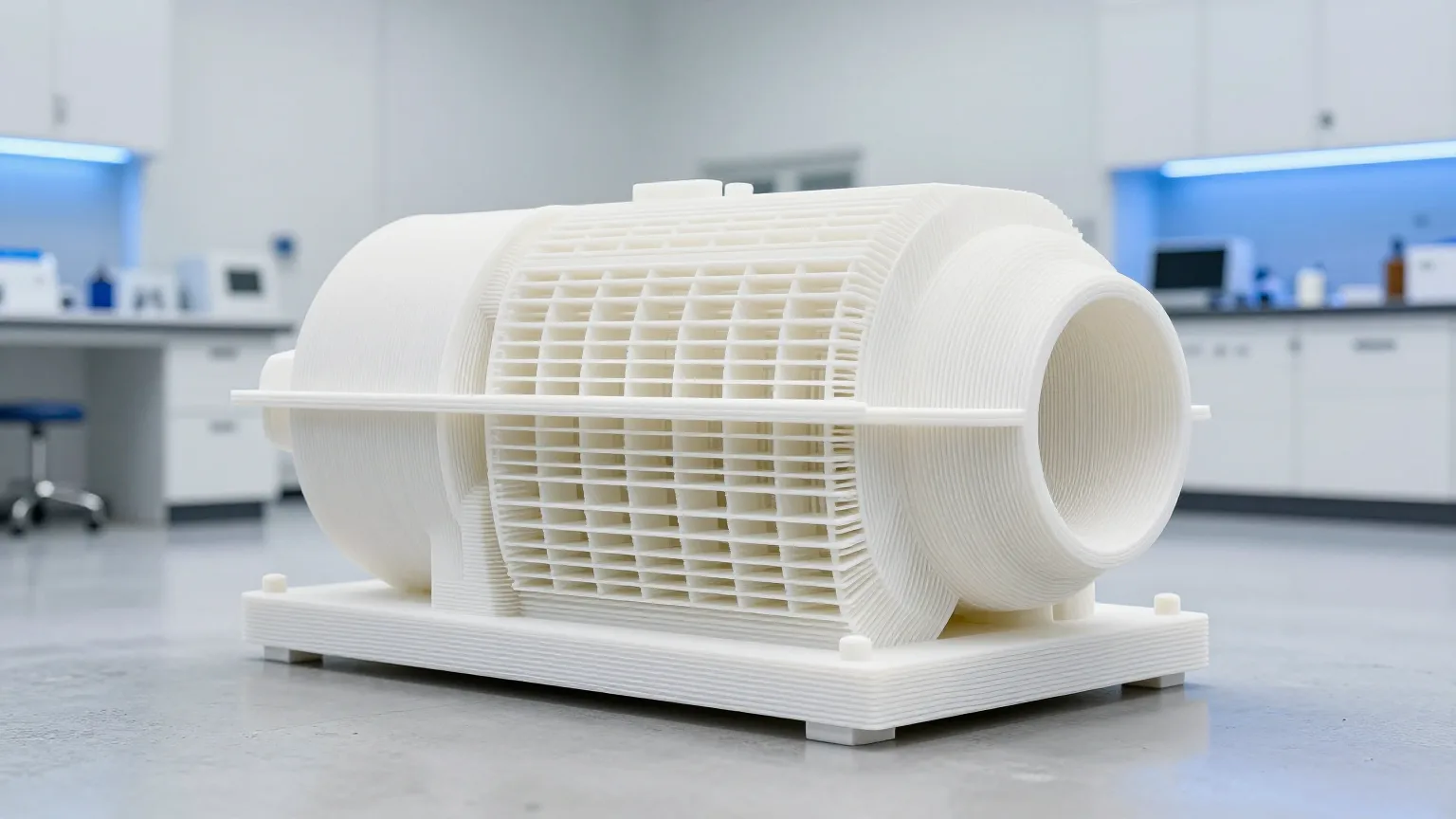
A habitat is only as good as its life support. In 2026, we are seeing the integration of 3D printing with life support systems. While the walls are printed with regolith, the internal components—such as pipes, filters, and even some parts of the air recycling system—are being printed using polymer materials. This reduces the need to ship these components from Earth, further lowering the launch mass [2].
Imagine a scenario where a filter clog occurs on the Moon. Instead of waiting for a resupply mission that could take weeks, the crew could print a new filter using a polymer printer on board. This "on-demand" manufacturing capability is a game-changer for mission reliability. It turns the habitat from a static container into a dynamic, self-sustaining system.
Moreover, the 3D printing process can be used to create custom parts for repair. If a valve fails, a new one can be designed and printed in hours, not months. This level of autonomy is critical for long-duration missions, where the cost and risk of a resupply mission are prohibitive.
Cultural and Historical Context: From Pyramids to Pyramids of the Moon
There is a poetic irony in using 3D printing to build on the Moon. For thousands of years, humanity has built structures by moving earth and stone. The pyramids of Egypt, the Great Wall of China, the cathedrals of Europe—all were built using local materials. We had forgotten this principle in the space age, where we tried to send everything from Earth. The lunar habitat mission is a return to this ancient wisdom, but with a modern twist.
Just as the pyramids were a testament to the organizational and engineering capabilities of ancient Egypt, the lunar habitat will be a testament to the technological and collaborative capabilities of 21st-century humanity. It is a symbol of our ability to adapt to new environments, not just conquer them. The act of building a home on another celestial body is a profound cultural statement. It says that we are no longer just visitors to the cosmos; we are settlers [1].
This shift in perspective is important. It moves space exploration from a "tourist" model, where we go, take photos, and come home, to a "settler" model, where we stay, build, and thrive. 3D printing is the enabler of this shift. It makes the transition from visitor to settler possible by providing the tools to build the infrastructure needed for long-term habitation.
Challenges and Criticisms: The Reality Check
Of course, not everything is rosy. There are significant challenges to overcome. One of the biggest is the durability of the printed materials. Lunar regolith is abrasive and can degrade the nozzles and other components of the printer. Additionally, the chemical composition of the regolith varies across the Moon, which means the printing process may need to be adjusted for different locations. This requires robust software and adaptive control systems [4].
Another challenge is the energy requirement. Printing a large structure requires significant power, especially if the curing process is thermal. While solar panels can provide this power, they are limited in capacity and efficiency, especially during the lunar night, which lasts for about 14 Earth days. Storing enough energy to power the printer during the night is a major engineering hurdle. Nuclear fission reactors, such as the Kilopower project, offer a solution, but they add complexity and risk to the mission [5].
There are also concerns about the environmental impact of building on the Moon. While the Moon has no atmosphere or biosphere, it does have a scientific heritage. We must be careful not to contaminate sites of scientific interest or alter the lunar environment in ways that hinder future research. This requires careful planning and international coordination, as the Moon is governed by the Outer Space Treaty, which prohibits national appropriation but encourages peaceful use [3].
Economic Implications: The Space Economy of 2030
The economic implications of 3D printed lunar habitats are profound. By reducing the launch mass, we reduce the cost of the mission. This makes it possible to build larger, more complex structures that would otherwise be economically unfeasible. It also opens up the possibility of commercial space stations and lunar bases. Private companies can now enter the market, offering construction services to governments and other commercial entities. This could lead to a boom in the space economy, with new industries emerging around in-space manufacturing and resource extraction [2].
Furthermore, the technology developed for the lunar habitat will have applications on Earth. The same 3D printing techniques used to build on the Moon can be used to build on Earth, particularly in remote or disaster-stricken areas. Imagine using 3D printing to build houses in areas affected by earthquakes or hurricanes, where traditional construction is slow and difficult. The lunar mission is not just about the Moon; it is about advancing technology that will benefit humanity on Earth as well [1].
The Human Element: Life in a Printed Home
Finally, we must consider the human experience. What will it be like to live in a 3D printed habitat on the Moon? The interior will be designed for comfort and efficiency. The walls will be smooth and insulated, and the layout will be optimized for the crew’s needs. There will be windows to look out at the Earth, a constant reminder of home. The habitat will be quiet, except for the hum of the life support systems. It will be a place of work, rest, and reflection [5].
Psychologically, living in a small, enclosed space is challenging. The habitat will need to be designed with mental health in mind, with features such as natural light, greenery, and social spaces. 3D printing allows for these customizations, as the interior can be tailored to the crew’s preferences. This is a significant advantage over prefabricated modules, which are one-size-fits-all [4].
In conclusion, the 2026 mission update on NASA’s 3D printed lunar habitat is a testament to the power of innovation and collaboration. It represents a new era in space exploration, one where we are no longer limited by the constraints of launch mass. By using local resources and additive manufacturing, we are making the Moon a more accessible and habitable place. This is not just a technical achievement; it is a cultural and economic milestone. It shows that we have the technology and the will to build a future beyond our planet. The next time you look up at the Moon, remember that it is not just a rock in the sky; it is a construction site for the future of humanity [1].
Call to Action: If you are interested in learning more about the intersection of 3D printing and space exploration, I encourage you to follow the latest updates from NASA and the private space sector. You can also explore the technology behind additive manufacturing and consider how it might be applied in your own field. The future is being built, layer by layer, and it is up to us to shape it. What do you think the first 3D printed structure on Mars will look like? Let me know in the comments below!