3D Printed Titanium Jet Parts Pass FAA 2026 Review
3D Printed Titanium Jet Parts Pass FAA 2026 Review: The End of the "Wait and See" Era
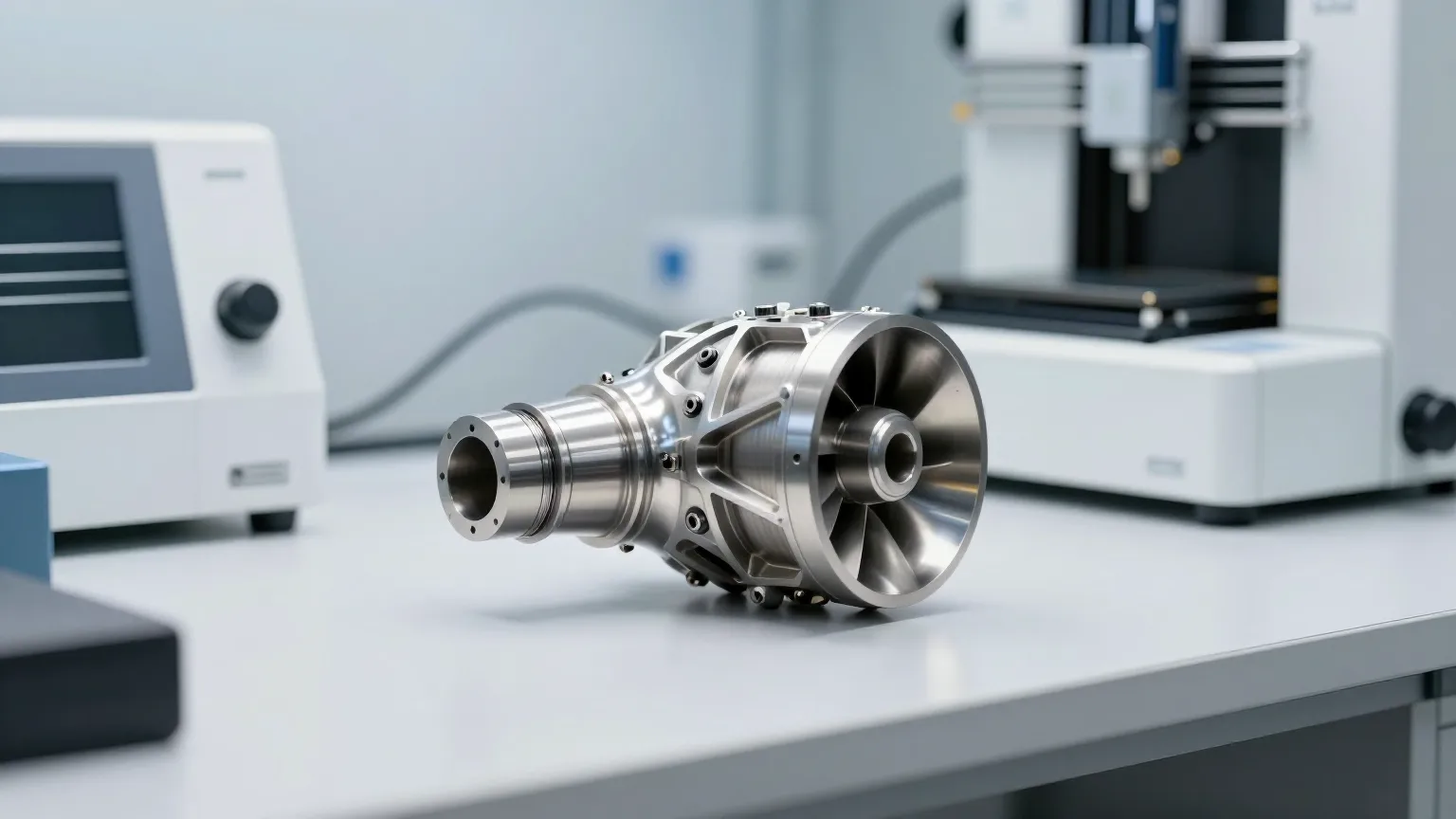
Imagine a world where the most critical structural components of a commercial airliner aren’t forged in massive, heat-bathed industrial foundries, but instead built layer by layer, atom by atom, in a sterile room that looks more like a high-end kitchen than a heavy manufacturing plant. For decades, this scenario was the stuff of science fiction, a tantalizing promise of the additive manufacturing (AM) revolution that kept getting pushed back by the ironclad grip of regulatory caution. But as we sit here in late November 2026, that future has officially arrived. The Federal Aviation Administration (FAA) has just completed its comprehensive review of titanium 3D-printed jet engine components, marking a definitive shift in how we build, inspect, and trust the machines that carry us across the globe. This isn’t just a regulatory footnote; it is a seismic shift in aerospace history, signaling that additive manufacturing has graduated from a niche prototyping tool to a mainstream production standard for safety-critical aviation parts. Let’s dive into what this means, why it took so long to get here, and how this decision is quietly rewriting the rules of global engineering.
The Long Wait: A Decade of Regulatory Friction
To appreciate the magnitude of the FAA’s 2026 approval, we have to look back at the turbulent decade that preceded it. The concept of 3D printing in aerospace didn’t start with jet engines. It began in the early 2010s with non-critical parts, such as brackets and ducts, for military drones and experimental vehicles. The material of choice was often aluminum or plastic, which were easier to validate and inspect. But titanium? Titanium is the king of aerospace metals. It offers an incredible strength-to-weight ratio, high heat resistance, and corrosion resistance. However, it is also notoriously difficult to work with using traditional methods. Machining it is slow, expensive, and generates significant waste, often reducing a large block of metal to a small, intricate part while discarding 80% or more of the raw material.
Enter additive manufacturing. By building parts from powder or wire, engineers could create complex geometries that were impossible to machine, using only the material needed. The promise was clear: lighter parts, better fuel efficiency, and faster production times. Yet, the aviation industry is governed by a culture of extreme conservatism. The FAA’s approach has always been "prove it is safe, and it is safe." For years, manufacturers argued that the physics of metal were the physics of metal, regardless of how it was formed. Regulators, however, were concerned about the unique microstructural challenges of 3D-printed metal. Porosity, lack of fusion, and residual stresses were not just theoretical risks; they were real phenomena that could lead to catastrophic fatigue failure. For a long time, the FAA maintained a "wait and see" posture, allowing only limited, non-load-bearing applications. The 2026 review represents the culmination of nearly fifteen years of data collection, testing, and dialogue between engineers and regulators, finally bridging the gap between innovation and certification.
Why Titanium? The Material That Changed Everything
Why was titanium the specific material that broke the dam? It all comes down to the specific needs of modern jet engines. As aircraft manufacturers like Boeing and Airbus push for greater fuel efficiency to meet stringent environmental targets, they are under immense pressure to reduce the weight of their engines. Every kilogram saved translates directly into fuel savings over the engine’s operational life. Traditional titanium forging is a battle against gravity and heat. It requires massive presses and complex die sets. 3D printing, specifically Direct Energy Deposition (DED) and Selective Laser Melting (SLM), allows for the creation of near-net-shape components. This means the part comes off the build platform looking 95% like the final product, requiring minimal machining.
There is also the issue of supply chain resilience. Titanium is a strategic material, often sourced from a limited number of countries. The geopolitical tensions of the 2020s highlighted the vulnerability of relying on traditional supply chains for raw titanium ingots. Additive manufacturing offers a degree of decentralization. While the raw powder must still be sourced, the ability to manufacture complex parts locally or regionally reduces the logistical footprint and the risk of supply chain disruption. In the context of the global push for sustainable aviation, titanium AM is not just a technical advantage; it is a strategic one. It allows for on-demand production, reducing the need for massive inventories of spare parts that sit gathering dust in warehouses around the world.
The Science of Layers: How 3D Printing Differs from Forging
It is a common misconception that 3D-printed metal is simply "stacked metal." In reality, the process is a high-speed welding operation that happens at the microscopic level. In Selective Laser Melting, a high-power laser scans a bed of metal powder, melting it in precise patterns. Each layer is only a few tens of microns thick. The rapid heating and cooling cycles create a unique microstructure that is fundamentally different from the grain structure of forged or cast metal. Forged metal has grains that flow in the direction of the applied force, giving it predictable strength along those lines. 3D-printed metal has a more equiaxed or columnar grain structure, depending on the build orientation.
This structural difference is exactly what kept the FAA up at night for years. Traditional non-destructive testing (NDT) methods, such as ultrasonic testing, are calibrated to detect flaws in homogeneous, forged materials. When applied to 3D-printed parts, these methods can sometimes miss specific types of defects or produce false positives due to the complex internal geometry. The 2026 review was significant not just because it approved the material, but because it approved a new set of inspection protocols. Engineers had to develop new algorithms for computer tomography (CT) scanning that could distinguish between a harmless gas pore and a dangerous lack-of-fusion defect. This was a massive undertaking, involving millions of test samples and the development of new AI-driven analysis tools that could process the vast amounts of data generated by high-resolution CT scans.
The FAA’s New Framework: Data-Driven Certification
One of the most profound changes in the 2026 review is the shift from prescriptive rules to performance-based, data-driven certification. Historically, the FAA prescribed exactly how a part should be made: "Use this alloy, forge it at this temperature, heat treat it in this sequence." This one-size-fits-all approach is ill-suited for additive manufacturing, where the process parameters (laser power, scan speed, hatch distance) are critical to the final part’s integrity. The new framework allows manufacturers to define their own process windows, provided they can demonstrate, through rigorous statistical analysis and full-scale testing, that the parts they produce meet the required safety factors.
This is a cultural shift as much as a technical one. It places a heavier burden on the manufacturer to prove safety, but it also grants them the flexibility to innovate. It acknowledges that the "digital twin" of the manufacturing process is just as important as the physical part. Every 3D-printed part will now come with a digital record of its entire production history, from the batch number of the powder to the exact laser settings used for each layer. This level of traceability is unprecedented in the history of aviation manufacturing. It transforms the part from a static object into a dynamic entity with a documented life cycle, allowing for predictive maintenance and real-time monitoring of structural health. This data-driven approach is a precursor to the "self-healing" or "self-monitoring" aircraft of the future, where the aircraft itself can report its own health status to maintenance crews before a problem becomes critical.
Industry Reaction: A Mixed Bag of Optimism and Caution
The reaction from the aerospace industry has been overwhelmingly positive, but not without nu. Major engine manufacturers like GE Aviation, Rolls-Royce, and Pratt & Whitney have already been working on AM components for years, often using them in non-critical roles or in military applications where the regulatory burden is slightly different. The 2026 FAA approval gives them the green light to scale these technologies for commercial aviation. GE, for example, has already been producing 3D-printed fuel nozzles for the LEAP engine, which have shown significant improvements in fuel efficiency and durability. The approval of titanium structural parts opens up new possibilities for integrating functions, such as combining structural support with cooling channels in a single, lightweight component.
However, there is a note of caution among smaller suppliers and startups. The approval process, while successful, was expensive and time-consuming. The cost of developing the necessary data sets and undergoing the rigorous testing required by the FAA is a barrier to entry that may favor established giants over agile innovators. There is a fear that the new regulatory framework, while flexible in theory, may become a new form of bureaucracy in practice. Smaller companies worry that the requirement for extensive digital documentation and AI-driven inspection tools will be too costly for them to implement. This could lead to a consolidation of the AM supply chain, with only the largest players able to compete in the high-stakes world of commercial aviation. The industry is now watching closely to see how the FAA implements these guidelines in practice, particularly regarding the approval of new materials and processes in the years to come.

Economic Implications: Cost, Speed, and Supply Chain
Let’s talk numbers, because in the end, economics drives adoption. The initial cost of 3D-printing a titanium part is often higher than the cost of the raw material. The machines are expensive, the powder is costly, and the post-processing (heat treatment, machining, inspection) is labor-intensive. So why are companies embracing this? It’s because the total cost of ownership is lower. Traditional manufacturing involves long lead times, complex logistics, and high inventory costs. A jet engine manufacturer might need a specific bracket that is only used in a few hundred engines per year. Traditionally, they would order a batch of 500 parts, store them, and hope they don’t rust or get lost. With 3D printing, they can produce these parts on demand, just-in-time, reducing inventory costs to near zero.
Furthermore, the reduction in part count is a game-changer. In traditional assembly, a complex assembly might require ten different parts, each with its own supply chain, quality control, and assembly labor. Additive manufacturing allows for "design for additive," where those ten parts can be combined into one. This reduces assembly time, eliminates the risk of assembly errors, and simplifies the supply chain. For a company like Boeing or Airbus, this translates into millions of dollars in savings per aircraft over its lifetime. The 2026 review accelerates this economic shift by validating the technology for the most valuable and complex parts. It signals to the market that AM is not a stopgap solution but a permanent fixture in the aerospace manufacturing landscape. Investors are already taking notice, with significant capital flowing into AM startups that specialize in aerospace applications, particularly those focused on post-processing and inspection technologies.
The Environmental Angle: Greening the Skies
We cannot discuss the future of aviation without discussing its environmental impact. The aviation industry is under intense scrutiny for its carbon footprint. The International Civil Aviation Organization (ICAO) has set ambitious goals for carbon neutrality by 2050. Every kilogram of weight reduction contributes to this goal. 3D-printed titanium parts are typically 10-20% lighter than their forged counterparts, thanks to the ability to optimize internal structures with lattice geometries that would be impossible to create otherwise. These lattice structures provide strength where it is needed and void space where it is not, creating parts that are strong, light, and efficient.
There is also the issue of material waste. Traditional machining of titanium can produce up to 80% scrap. This scrap is difficult to recycle due to the risk of contamination, which can weaken the metal. In contrast, 3D printing uses 90-95% of the raw material, and the leftover powder can often be recycled and reused in future builds, provided it is properly screened and purified. This closed-loop manufacturing process aligns perfectly with the circular economy principles that are becoming central to industrial strategy. The 2026 FAA approval is a step toward a more sustainable aviation industry, where the way we make parts is as important as the fuel we burn. It demonstrates that technological innovation can drive environmental progress, not just economic gain. As airlines seek to reduce their Scope 3 emissions (indirect emissions from the supply chain), the efficiency gains from AM will become a key selling point for aircraft manufacturers.
Challenges Remain: The Road Ahead is Not Smooth
Despite the optimistic headline, the road ahead is not without challenges. The first major hurdle is standardization. While the FAA has approved the technology, there is still no global standard for 3D-printed titanium parts. Different countries have different regulatory bodies, each with their own interpretations and requirements. This fragmentation creates a complex compliance landscape for manufacturers who want to sell their parts globally. Harmonizing these standards will take time and requires international cooperation. Organizations like the International Organization for Standardization (ISO) and the Aerospace Quality Group (AQG) are working on developing common standards, but progress is slow. Until there is a global consensus, manufacturers will have to navigate a patchwork of regulations, which adds cost and complexity.
Another challenge is the workforce. 3D printing is a highly technical field that requires a blend of materials science, software engineering, and traditional manufacturing knowledge. There is a significant skills gap in the industry. Many traditional machinists and welders do not have the training to operate and maintain AM systems, and many software engineers do not understand the physics of metal deposition. Bridging this gap will require a new generation of technicians and engineers. Educational institutions are beginning to offer specialized programs in additive manufacturing, but it will take years for this pipeline to mature. The industry will need to invest heavily in training and upskilling its workforce to keep up with the pace of innovation. This is a human challenge, not just a technical one, and it requires a commitment to education and professional development that goes beyond the typical corporate training programs.
Cultural Shift: From "Made" to "Grown"
Perhaps the most subtle but significant impact of the 2026 FAA approval is the cultural shift it represents. For centuries, manufacturing has been about subtractive processes: cutting, drilling, milling, and turning. We have been "making" things by removing material. Additive manufacturing is about "growing" things. This is a fundamental change in mindset. It changes how designers think. They are no longer constrained by the limitations of the machine tool. They are constrained only by the laws of physics and their imagination. This shift is already influencing design practices across the industry. Engineers are beginning to design parts specifically for additive manufacturing, taking advantage of its unique capabilities. This is a cultural revolution in engineering, one that is as important as the technology itself. It is changing the way we think about product development, from a linear process to an iterative, data-driven one. The 2026 review is a milestone in this cultural evolution, marking the point where additive manufacturing became a legitimate, respected, and essential part of the aerospace engineering toolkit.
Looking Forward: The Next Decade of Innovation
What comes next? The 2026 approval is just the beginning. We can expect to see a rapid expansion of AM applications in the coming years. New materials will be approved, including high-temperature alloys for turbine blades and nickel superalloys for combustors. We will see the integration of AM with other advanced technologies, such as digital twins, artificial intelligence, and the Internet of Things. Imagine an engine that is built with 3D-printed sensors embedded directly into the structure, allowing for real-time monitoring of stress and temperature. This is not science fiction; it is the logical next step. We will also see the rise of "distributed manufacturing," where parts are produced locally, close to the point of use, reducing logistics costs and lead times. This will transform the global supply chain, making it more resilient and responsive. The 2026 review is the opening act in a long and exciting play. The curtain has just risen, and the best is yet to come.
Conclusion: A New Era of Flight
The FAA’s 2026 review of 3D-printed titanium jet parts is a testament to the power of collaboration between industry and regulators. It is a recognition that innovation and safety are not mutually exclusive. It is a signal to the world that additive manufacturing is ready for prime time. As we look out the window of the next generation of aircraft, we will be looking at a machine that is lighter, more efficient, and more sustainable than any that have flown before. This is the promise of 3D printing, and it is a promise that has finally been delivered. The future of flight is not just about faster and higher; it is about smarter and greener. And it is being built, one layer at a time.
Call to Action: Are you an engineer, a student, or an industry professional interested in the future of additive manufacturing? This is your moment to get involved. Follow the developments in AM standards, explore the latest research in materials science, and consider how your skills can contribute to this revolution. The industry is growing, and it needs talent. Check out the latest updates from the FAA and the Aerospace Quality Group to stay informed. Share this article with your network and join the conversation. The future of aviation is being printed right now, and you can be part of it.