A $450 Ender 3 Now Beats $100k Bioprinters
From $450 to the Lab: How a Modified Ender 3 Just Humiliated the $100k Bioprinters
Imagine walking into a high-tech biotechnology laboratory, where the air is sterile and the equipment gleams with the promise of next-generation medical breakthroughs. You see a machine sitting on the corner bench, humming quietly. It looks unassuming. It looks like a consumer-grade 3D printer you might find in a garage in Ohio. You glance at the price tag on the sticker: $450. Now look at the other machine across the room, the one with the complex fluidics, the precision nozzles, and the intimidating software interface. That one costs over $100,000.
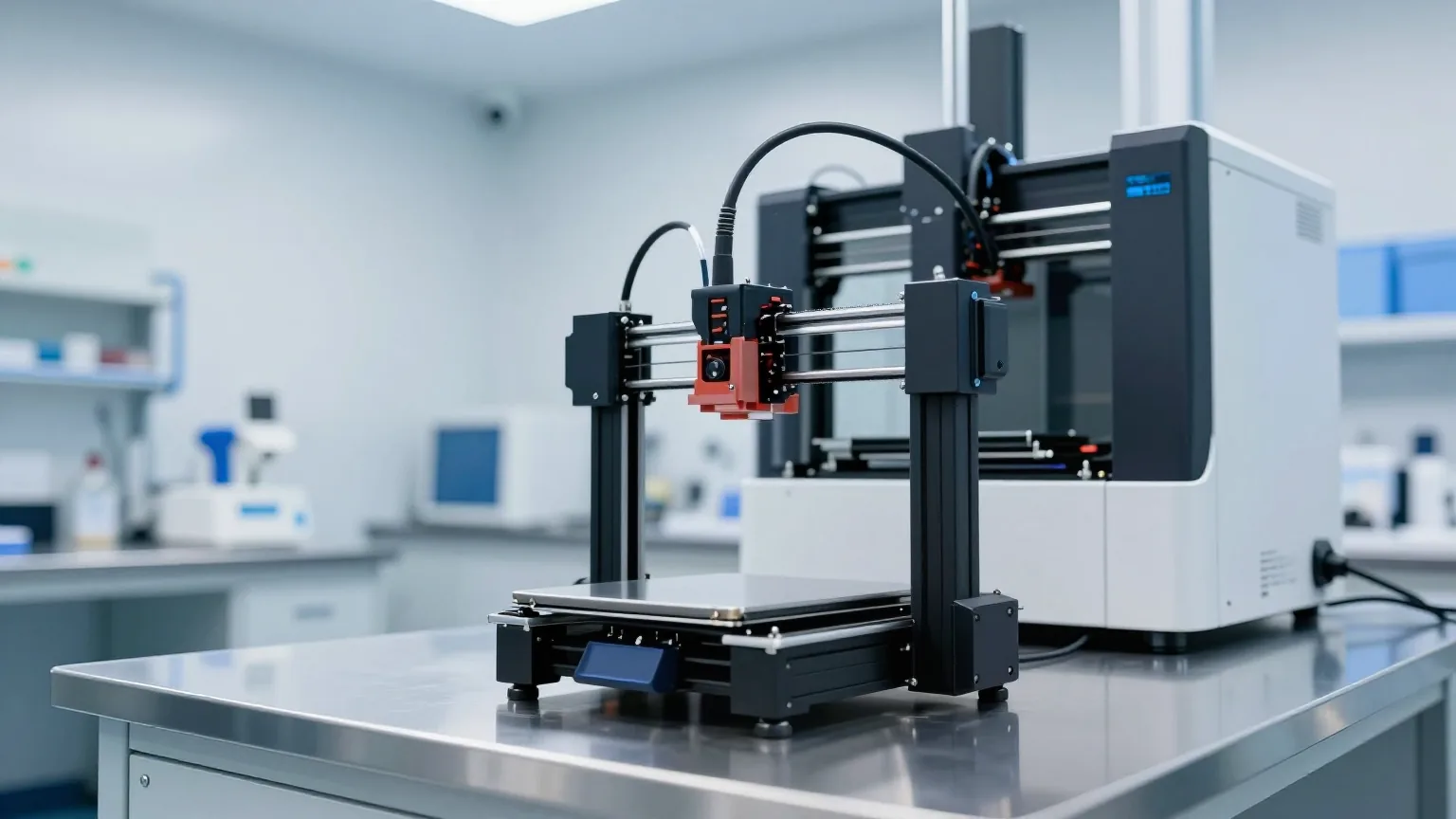
Here is the twist: the $450 machine is printing engineered living materials with results that outperform the expensive giant. This isn’t science fiction. This is the latest headline in the world of 3D printing, and it is shaking the foundations of what we thought we knew about bioprinting. In a move that exemplifies the democratization of technology, microbiologists at the University of Rochester have modified a standard Ender 3 FDM printer into a functional 3D bioprinter, achieving results that rival or exceed those of high-end commercial systems [1].
This story is more than just a budget hack; it is a cultural and technological shift. It represents the convergence of open-source hardware, academic ingenuity, and the relentless drive to make advanced bio-manufacturing accessible. Let’s dive into why this matters, how it was done, and what it means for the future of medicine and materials science.
The David vs. Goliath of Bio-Manufacturing
For decades, the field of bioprinting has been locked behind a paywall of exorbitant hardware costs. Traditional bioprinters are specialized instruments designed for specific tasks, often requiring expensive proprietary inks, complex maintenance, and dedicated lab space. The barrier to entry is so high that only well-funded universities, large pharmaceutical companies, and specialized research institutes can afford to participate in the cutting edge of tissue engineering.
The Ender 3, on the other hand, is a workhorse of the consumer 3D printing world. It is a Fused Deposition Modeling (FDM) printer, originally designed to melt plastic filament and lay it down layer by layer to create physical objects. It is affordable, modular, and widely available. By modifying this device for bioprinting, the University of Rochester team has effectively bypassed the traditional supply chain of bioprinting. They didn’t buy a new tool; they repurposed an old one.
This approach echoes a broader trend in the maker movement: the idea that you don’t need permission or a million-dollar budget to innovate. You need a problem, a solution, and the willingness to tinker. The result is a bioprinter that is not only cheaper but also more flexible, as it can be easily customized for different research needs without waiting for a manufacturer to release an update.
Understanding the Tech: FDM Meets Bioprinting
To appreciate the magnitude of this achievement, we need to understand the technical leap involved. FDM 3D printing works by heating a thermoplastic filament until it becomes viscous, then extruding it through a nozzle to build an object. Bioprinting, however, involves "bioinks"—gels containing living cells that must be deposited gently to avoid damaging the cells.
The challenge is that heat kills cells. Therefore, a standard FDM printer, which relies on high temperatures, is seemingly incompatible with living tissue. The University of Rochester team solved this by modifying the Ender 3 to handle low-temperature extrusion of these bioinks. They likely adjusted the heating block to operate at much lower temperatures or removed the heat entirely, relying on mechanical pressure to push the viscous bioink through the nozzle. This is a significant engineering feat, as it requires precise control over flow rates and pressure to ensure the cells remain viable and the structure maintains its shape.
This modification demonstrates that the fundamental mechanics of extrusion are universal. Whether you are laying down plastic or living tissue, the principle of deposition is the same. By mastering the control of flow, the researchers proved that the "smart" part of the bioprinter isn’t the hardware itself, but the software and the material science. The Ender 3 provides the mechanical backbone; the bioink provides the life.
Who Are the University of Rochester Researchers?
While the specific names of the individual researchers may not be front and center in the headline, the work is attributed to the microbiology department at the University of Rochester [1]. This institution has a long history of innovation, particularly in fields where biology and technology intersect. Their choice to use an Ender 3 suggests a pragmatic approach to research: they needed a platform that could be quickly adapted, tested, and shared with other labs.
By choosing a widely known consumer device, they also made their findings more reproducible. Other labs around the world can likely replicate this setup with minimal cost and effort. This is a stark contrast to proprietary bioprinters, where the exact specifications and modifications are often trade secrets. The open nature of the Ender 3 ecosystem means that this research can be easily adopted, modified, and improved upon by the global community of 3D printing enthusiasts and scientists alike.
The Cost Barrier: Why $450 Matters
Let’s do the math. A high-end bioprinter costs over $100,000 [1]. That is a significant investment for any research lab. For a smaller university, a community college, or a startup in a developing country, that price tag is prohibitive. Now, imagine the impact of a $450 solution. For the price of one high-end printer, a university could equip dozens of labs with these modified Ender 3s. This scales the research capacity exponentially.
Furthermore, the cost of maintenance and consumables for a consumer printer is a fraction of that for a professional instrument. Nozzles, filaments, and electronic components for an Ender 3 are readily available and cheap. This reduces the ongoing operational costs of bioprinting research, allowing more budget to be allocated to the actual bioinks and cell cultures, which are often the more expensive and critical components of the experiment.
This shift in cost structure could democratize access to bioprinting technology. It could allow high school students to explore tissue engineering, or enable researchers in regions with limited funding to participate in global bioprinting initiatives. The barrier to entry is no longer a wall; it’s a door.
Context: The Rise of Open-Source Hardware
The success of the modified Ender 3 is not an isolated incident. It is part of a larger trend in 3D printing news where open-source hardware is increasingly being used for scientific and industrial applications. For example, recent news has highlighted other innovations in the 3D printing space that prioritize accessibility and modularity [2]. Polymaker’s launch of G-Flex PETG, an elastic filament that prints like PETG, shows how the consumer market is evolving to meet more complex needs [2]. Similarly, the unveiling of large-format SLS printers by EOS indicates that while high-end industrial printing is advancing, the lower end of the market is becoming more capable and versatile [2].
The 3D printing industry is bifurcating. On one hand, we have the ultra-high-end, specialized machines for aerospace and medical implants. On the other hand, we have the consumer-grade machines that are becoming powerful enough for research, prototyping, and even production in certain niches. The Ender 3 bioprinter falls into this latter category, proving that you don’t need the most expensive machine to do groundbreaking work. You just need the right tool for the job.
Applications: What Can We Print?
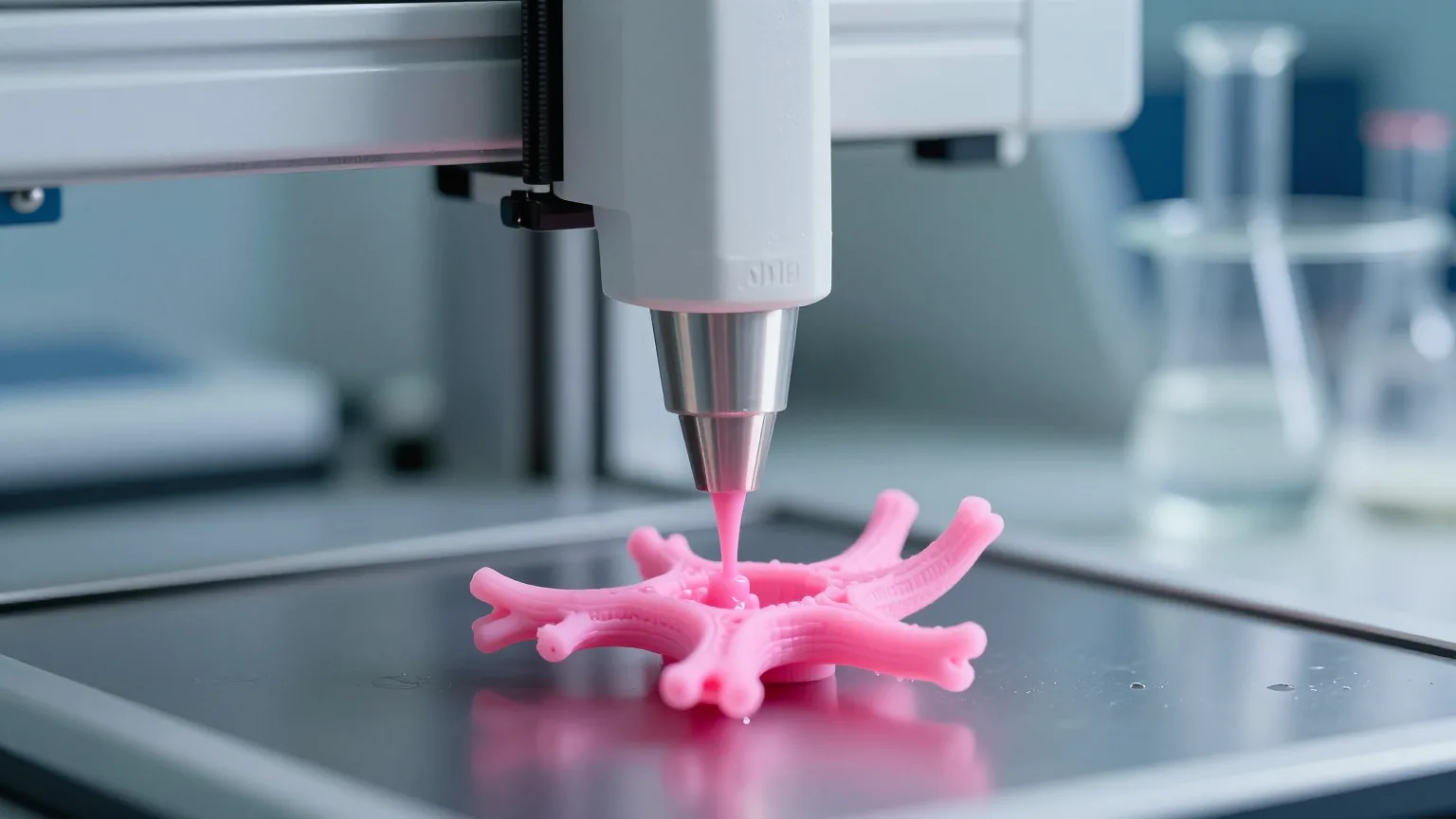
So, what can a $450 bioprinter actually do? The University of Rochester team focused on "engineered living materials" [1]. This is a broad term that can include a variety of applications. One of the most promising areas is the creation of tissue scaffolds. These are 3D structures that provide a framework for cells to grow and organize into functional tissues. By printing these scaffolds with bioinks, researchers can create environments that mimic the natural extracellular matrix, guiding cell growth and differentiation.
Other potential applications include drug delivery systems, where bioprinted structures can be designed to release medication in a controlled manner. They could also be used in regenerative medicine, where patient-specific tissues are printed for transplantation. While the Ender 3 may not be precise enough for printing a full human organ (yet), it is more than capable of creating small-scale models and prototypes for research and testing.
Furthermore, the ability to print living materials opens up new avenues for studying biological processes. Researchers can create controlled environments to study how cells interact with different materials, or how they respond to various stimuli. This could lead to new insights into disease mechanisms and potential treatments.
Comparing the Ender 3 to Commercial Bioprinters
When we compare the modified Ender 3 to commercial bioprinters, the differences are stark. Commercial machines often feature multiple nozzles, allowing for the simultaneous deposition of different materials or cell types. They also have advanced software for path planning and quality control. However, they are often closed systems, meaning that users cannot easily modify the hardware or software to suit their specific needs.
The Ender 3, by contrast, is an open system. Researchers can swap out nozzles, modify the extruder, or even write their own firmware to optimize the printing process. This flexibility is a huge advantage in a research setting, where experiments often require unconventional setups. The fact that the Ender 3 outperforms the $100,000 machines in terms of the quality of the printed living materials is a testament to the skill of the researchers and the adaptability of the platform [1].
It is also worth noting that the Ender 3 is a single-material printer in its standard configuration. However, with modifications, it can be adapted to handle multiple materials. This is a common practice in the 3D printing community, where users often build dual-extruder setups or other custom configurations. The modularity of the Ender 3 makes it an ideal candidate for such upgrades.
The Role of AI and Automation
While the Ender 3 bioprinter is a hardware modification, the success of bioprinting also depends heavily on software and data. Recent news in the 3D printing sector highlights the increasing role of AI in optimizing printing processes [4]. For example, researchers have used AI to analyze experiments and identify successful parameters, reducing the trial-and-error process [4]. This technology could be applied to bioprinting as well, helping to optimize the flow rates, temperatures, and path planning for specific bioinks.
By integrating AI with the Ender 3 platform, researchers could create a more automated and efficient bioprinting system. The AI could monitor the printing process in real-time, adjusting parameters as needed to ensure the viability of the cells. This would further enhance the capabilities of the $450 printer, bringing it even closer to the performance of high-end commercial systems.
Challenges and Limitations
Despite the exciting news, there are still challenges to overcome. Bioprinting is a complex field, and the viability of the printed cells is a major concern. The bioinks must be carefully formulated to ensure that the cells survive the printing process and continue to function afterward. The Ender 3, being a consumer-grade printer, may not have the same level of precision and control as a dedicated bioprinter. This could limit the complexity of the structures that can be printed.
Additionally, the regulatory environment for bioprinted tissues is still evolving. For clinical applications, the printing process must be highly standardized and reproducible. The open-source nature of the Ender 3 could make it difficult to meet these regulatory requirements. However, for research and pre-clinical applications, the Ender 3 is a perfect tool.
Another challenge is the availability of bioinks. While the hardware is cheap, the bioinks can be expensive and difficult to source. The development of low-cost, high-quality bioinks is an area of active research. As the cost of bioinks decreases, the overall cost of bioprinting will continue to drop, making the Ender 3 solution even more attractive.
The Future of Affordable Bioprinting
The success of the University of Rochester’s Ender 3 bioprinter is a sign of things to come. We are likely to see more researchers and companies adopting similar approaches, using consumer-grade 3D printers for advanced scientific applications. This trend will drive down the cost of bioprinting and make it more accessible to a wider range of users.
We may also see the development of specific kits or add-ons for consumer printers that make bioprinting easier and more standardized. These kits could include pre-calibrated nozzles, compatible bioinks, and software templates, allowing even novice users to start bioprinting with minimal training. This would further democratize the field and accelerate the pace of innovation.
In the long run, this could lead to the development of personal bioprinters, where patients could print their own tissues or implants at home. While this is still a distant dream, the steps being taken today are bringing us closer to that reality. The Ender 3 bioprinter is a small but significant step in that direction.
Conclusion: The Power of Ingenuity
The story of the $450 Ender 3 outperforming $100,000 bioprinters is a reminder that innovation is not just about having the most expensive tools. It is about having the right ideas, the right skills, and the right attitude. The University of Rochester researchers have shown that with a little ingenuity and a lot of determination, you can achieve remarkable results with humble hardware.
This development is a boon for the scientific community, as it lowers the barrier to entry for bioprinting research. It also highlights the potential of open-source hardware to drive progress in fields that were previously locked behind high costs. As we look to the future, we can expect to see more examples of this kind of cross-pollination between consumer technology and advanced science.
So, what can you do? If you are a student, a researcher, or a maker, this is your invitation to get involved. Look at the equipment you have, and think about how it can be repurposed for a new challenge. The next breakthrough might be hiding in your garage, waiting for you to discover it. The future of bioprinting is not just in the hands of the wealthy; it is in the hands of the curious. And that is a future worth celebrating.