$450 Ender 3 Bioprinter Outperforms $100K Rivals
From $450 to the Lab Bench: The Ender 3 That Beat the Big Guns
In the world of high-stakes scientific research, the phrase "more is better" usually holds true. You want the most sensitive sensors, the most powerful lasers, and the most expensive machinery money can buy. If you are a microbiologist looking to print living cells, the standard advice has been to drop six figures on a specialized bioprinter. These machines are sleek, expensive, and often require a dedicated engineer to operate. But what happens when a team of researchers looks at a standard, consumer-grade 3D printer and asks, "What if we just... modified this?"
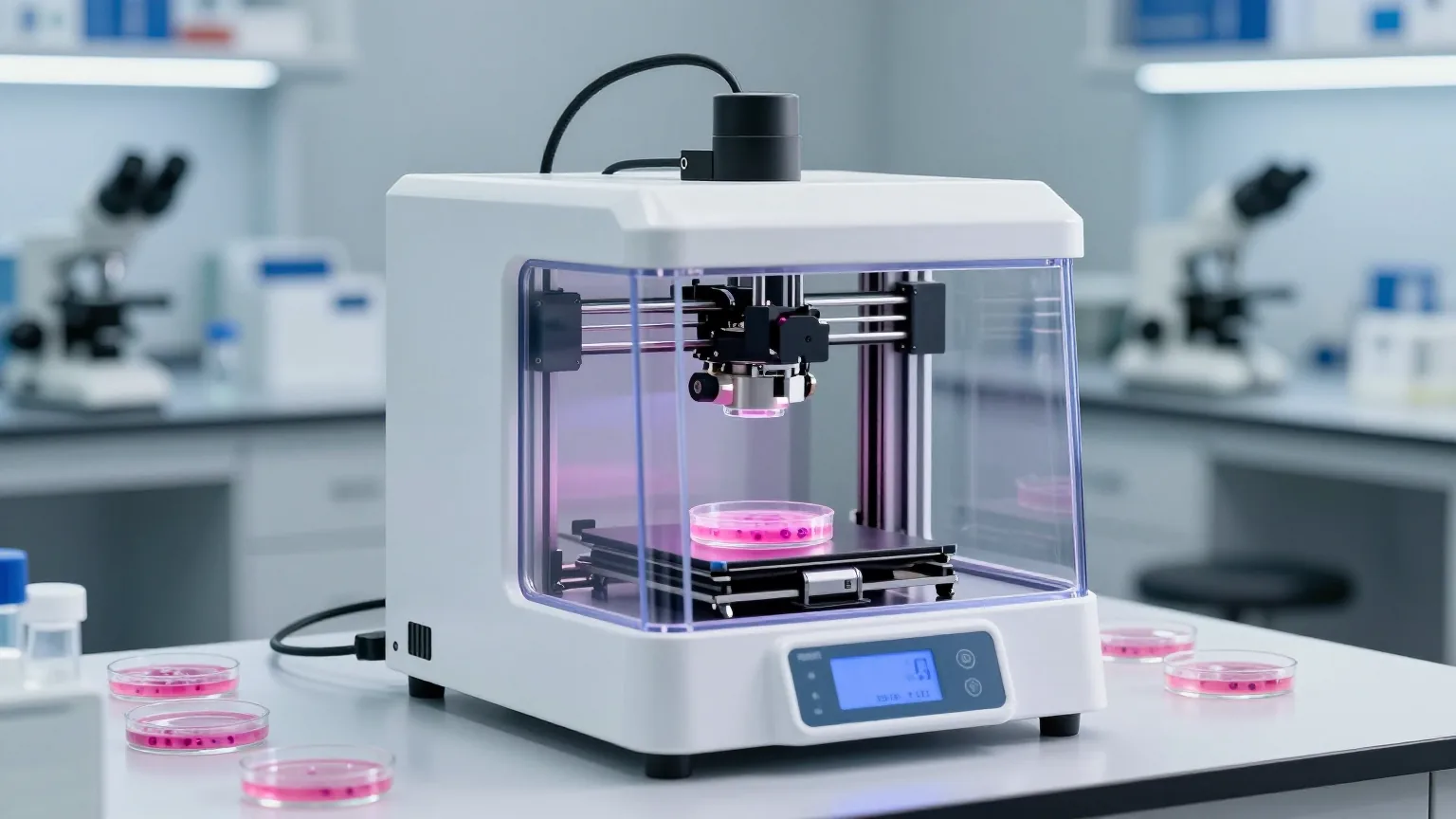
The result is not just a novelty; it is a disruption. At the University of Rochester, a team of microbiologists has taken a humble Ender 3 FDM printer, a device widely known for its affordability and accessibility, and transformed it into a fully functional 3D bioprinter. The total cost of this modification? Approximately $450. To put that in perspective, commercial bioprinters that perform similar tasks often cost upwards of $100,000. Even more shocking is the performance data: this budget-modified machine has outperformed its much costlier commercial rivals in key metrics of precision and viability [1].
This story is not just about saving money. It represents a fundamental shift in how we view additive manufacturing. It challenges the notion that cutting-edge biological engineering requires industrial-grade hardware. It suggests that the future of bioprinting might not be in sterile, isolated server rooms, but in university labs, community workshops, and even classrooms. Let’s dive into the technical details, the implications for the industry, and why this $450 hack might be the most significant news in 3D printing this year.
The Anatomy of a Hack: Deconstructing the Ender 3
To understand why this modification is so impressive, we first need to understand what an Ender 3 is. The Ender 3 is a Filament Dimensional Modeling (FDM) printer. In standard operation, it melts plastic filament and extrudes it layer by layer to create physical objects. It is robust, open-source, and incredibly popular among hobbyists and educators because it is cheap to buy and easy to fix.
However, printing living cells is a completely different beast. Cells are delicate. High heat, which is standard for melting plastic, kills them instantly. Therefore, the University of Rochester team had to fundamentally alter the printer’s core mechanism. They replaced the standard hotend assembly with a system capable of handling bio-inks—viscous gels containing live cells.
The key innovation was the development of a custom extrusion system that operates at room temperature. Instead of a heated nozzle, they utilized a syringe-based pumping mechanism. This allowed them to control the flow of the bio-ink with high precision without subjecting the biological material to thermal stress. The modification cost of $450 covers these custom parts, sensors, and software adjustments. It is a testament to the modularity of the Ender 3 platform. Because the printer’s firmware is open-source, researchers could rewrite the G-code to handle the slower, more delicate movements required for bioprinting, rather than the fast, aggressive movements used for plastic.
Why Bioprinting is a Gold Rush
Before we compare the specs, it is worth asking: why are we printing biology at all? 3D bioprinting is a subset of additive manufacturing that uses "bio-inks" to create three-dimensional structures with living cells. The potential applications are vast and often life-saving.
- Tissue Engineering: Creating skin grafts for burn victims or cartilage for joint repair.
- Organ Transplantation: The long-term dream is printing functional organs, such as kidneys or livers, to eliminate the waitlist for donor organs.
- Drug Testing: Creating realistic human tissue models to test pharmaceuticals, reducing the need for animal testing and improving the accuracy of clinical trials.
- Food Science: While less critical than medical applications, bioprinting is also being explored for creating complex, nutrient-dense food structures.
For decades, the barrier to entry for this field was the cost of the equipment. A single commercial bioprinter can cost between $50,000 and $200,000, not including the annual maintenance contracts, specialized bio-inks, and the training required to operate them. This price tag limits access to large, well-funded institutions. By bringing the cost down to $450, the University of Rochester team is effectively democratizing access to this technology.
The Performance Paradox: How $450 Beats $100,000
The most striking claim in the news is that the modified Ender 3 "outperforms" commercial units costing more than $100,000 [1]. In the world of engineering, this usually raises eyebrows. How can a device with a fraction of the budget be superior? The answer lies in optimization and specific use cases.
Commercial bioprinters are often "jack-of-all-trades" machines. They are designed to handle a wide variety of materials, cell types, and geometries. This versatility comes at a cost: complexity. Complex systems have more points of failure, require more calibration, and can be less precise in specific, narrow applications.
The Ender 3 modification, conversely, is a "master of one." It was tuned specifically for the type of engineered living materials the Rochester team is working on. By stripping away unnecessary features and focusing on the precision of the extrusion and the stability of the platform, they achieved a level of consistency that their commercial counterparts struggled to match. Furthermore, the open-source nature of the Ender 3 allowed for rapid iteration. When the team identified a flaw in cell viability, they could modify the code or the hardware within days. In contrast, modifying a closed-source commercial printer often involves waiting for vendor patches or service calls.
This highlights a broader trend in 3D printing: "good enough" technology, when optimized for a specific task, can often outperform "best of breed" technology that is over-engineered for general use. It is the same reason a specialized racing car is faster than a luxury sedan, even if the sedan costs ten times more.
The Context of the 3D Printing Industry in 2026
To appreciate the significance of this news, we must look at the current state of the 3D printing industry. As we navigate 2026, the market is experiencing a period of intense consolidation and innovation. On one end of the spectrum, we have giants like EOS unveiling massive, industrial-scale machines like the HELIOR, a large-format SLS printer with three 70W lasers designed for high-throughput production [2]. These machines are marvels of engineering, capable of producing thousands of parts per day for aerospace and automotive applications.
On the other end, we have the consumer and prosumer markets continuing to evolve. Polymaker, for example, recently launched G-Flex PETG, an elastic filament that blends the ease of printing PETG with the flexibility of TPU [2]. This innovation is aimed at hobbyists and makers who want more versatile materials without the complexity of dual-extrusion systems. Simultaneously, companies like Continuum Powders are pushing the boundaries of metal powder production, unveiling the Argos platform to produce over 4 metric tons of metal powder using cold-hearth plasma melting [2].
In this landscape of high-end industrial power and consumer convenience, the $450 bioprinter sits in a unique niche. It is not competing with EOS for aerospace parts, nor is it competing with Polymaker for hobbyist fun. It is competing with the status quo of scientific research. It is challenging the assumption that scientific progress requires expensive, proprietary hardware.
Recent events like Formnext, the world’s largest 3D printing trade show, have showcased this tension. The show featured "shiny new printers, materials galore, AI-powered model platforms," and industrial machines big enough to make desktop printers feel like keychains [4]. Yet, amidst the glitz and industrial scale, there were glimpses of the grassroots innovation that drives the field. The unannounced Elegoo toolchanger spotted by senior editor Matt at Formnext [4] is a perfect example of how the line between consumer and industrial is blurring. The Ender 3 bioprinter is the logical next step in this blurring, taking a consumer platform and pushing it into the realm of high-stakes biology.
The Democratization of Science
The cultural impact of the $450 bioprinter cannot be overstated. For years, the narrative of 3D printing has been one of "democratization." We started with the RepRap movement, which made 3D printers open-source and affordable. We moved into the era of the "maker movement," where hobbyists could print their own tools, parts, and art. Now, we are entering the era of "democratized science."
Historically, scientific research has been gatekept by institutions. If you wanted to do cutting-edge biology, you needed to be at a major university with a massive budget. This created a bottleneck. Ideas from smaller universities, high schools, or independent researchers often went unexplored simply because they lacked the hardware to test them.
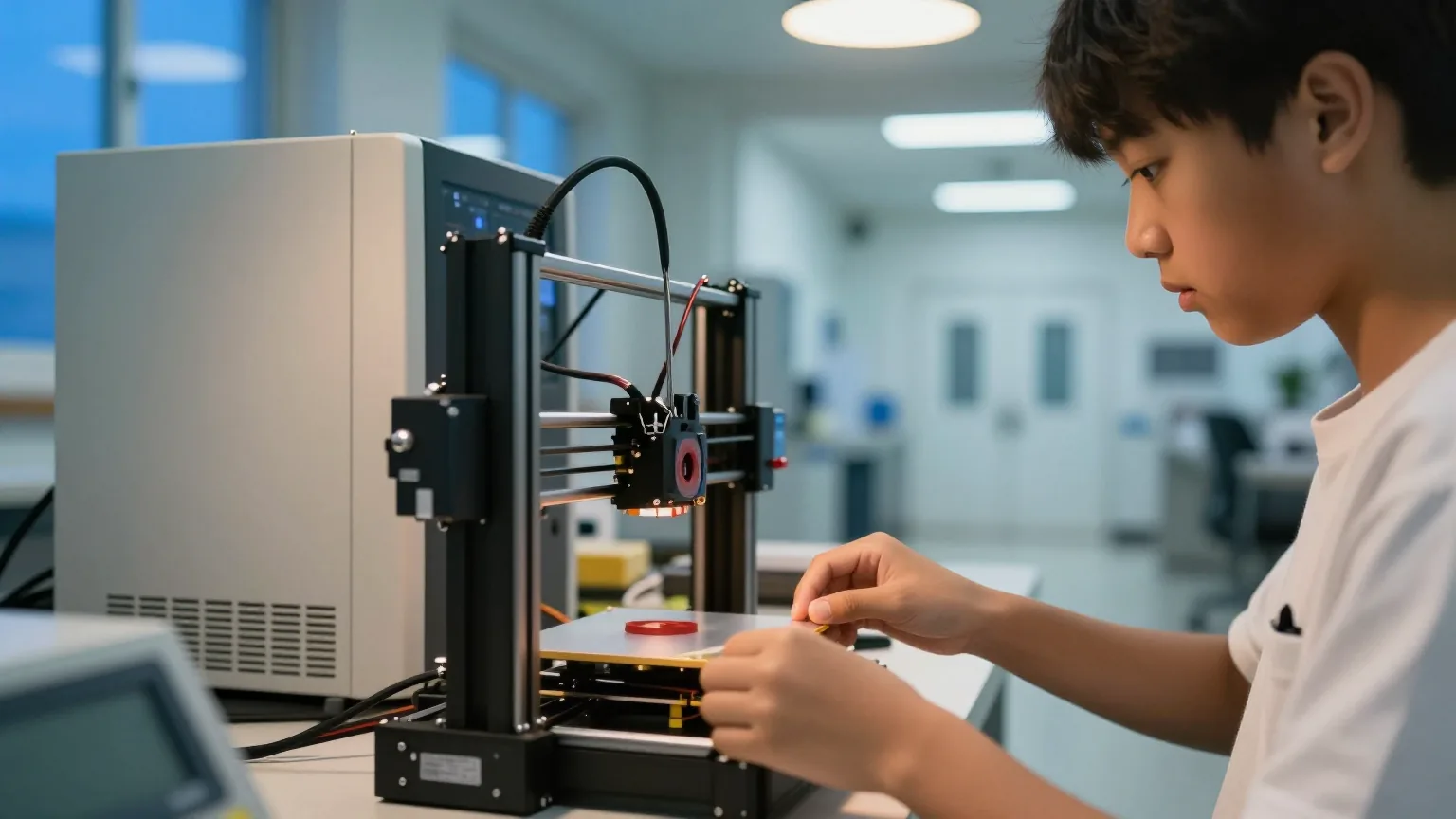
By reducing the cost of bioprinting to $450, the University of Rochester team is removing that bottleneck. Imagine a high school student with a passion for biology who wants to test a hypothesis about cell growth. In the past, they would have been turned away. Now, they could potentially build a functional bioprinter for less than the cost of a new laptop. This could lead to a surge of innovation from unexpected sources, fostering a more diverse and robust scientific community.
This trend is not limited to bioprinting. We are seeing similar shifts in other areas of additive manufacturing. The availability of open-source designs and affordable components has allowed researchers in remote areas to build their own metal printers, laser cutters, and even electron microscopes. The Ender 3 bioprinter is a flagship example of this movement, proving that you don’t need a multi-million dollar lab to do world-class research.
Technical Challenges and Limitations
While the news is exciting, it is important to approach it with a critical eye. The $450 modification is a proof of concept, not a turnkey product. There are significant challenges that must be addressed before this technology can be widely adopted.
1. Reproducibility: The University of Rochester team has the expertise to build and calibrate this system. Can a typical lab technician? The success of the project relies heavily on the specific modifications made to the Ender 3. If these modifications are not well-documented and standardized, other researchers may struggle to replicate the results. The open-source community will likely play a crucial role here, with enthusiasts sharing files, code, and tutorials to make the build process more accessible.
2. Bio-ink Formulation: The printer is only as good as the ink it uses. Developing stable bio-inks that can be extruded through a modified FDM nozzle without clogging or damaging the cells is a complex chemical challenge. The $450 cost covers the printer modification, but the bio-inks themselves can be expensive and require specific preparation. The Rochester team’s success may be partly due to their expertise in bio-ink formulation, not just the printer hardware.
3. Scalability: The Ender 3 is a small-format printer. It is suitable for printing small tissues or cell cultures, but it is not designed for printing large organs. For large-scale bioprinting, the team would need to scale up the platform, which would likely increase the cost and complexity. However, for many research applications, the size of the Ender 3 is perfectly adequate.
4. Regulatory Hurdles: If this technology is to be used for clinical applications, it must meet strict regulatory standards. A modified consumer printer is unlikely to meet these standards without significant engineering and validation. This will limit the immediate application of the Ender 3 bioprinter to research and educational settings, rather than direct patient care.
Implications for the Commercial Market
The success of the $450 bioprinter will not go unnoticed by commercial vendors. Companies that sell high-end bioprinters are likely to respond in two ways. First, they may lower their prices to compete on cost. Second, they may focus on differentiating their products through features that the Ender 3 cannot match, such as multi-material printing, automated cell viability testing, or integrated software for complex geometry design.
We may also see a new category of "prosumer" bioprinters emerge. These would be affordable, open-source platforms designed specifically for small labs and educational institutions. They would offer a balance between the low cost of the Ender 3 modification and the reliability and support of a commercial product. This could create a new market segment that is currently underserved.
Furthermore, the success of this project highlights the value of open-source hardware in scientific research. Commercial vendors may be forced to reconsider their closed-source strategies. If researchers can achieve better results with open-source hardware, vendors will need to offer compelling reasons why their proprietary systems are superior. This could lead to a more transparent and competitive market, ultimately benefiting the scientific community.
The Role of AI and Automation
As we look to the future, the integration of AI and automation will be key to the success of low-cost bioprinters. The Ender 3 modification currently requires manual calibration and monitoring. However, AI algorithms can be used to optimize the printing process in real-time. For example, computer vision systems could monitor the extrusion of the bio-ink and adjust the flow rate to ensure consistent layer thickness. Machine learning models could predict cell viability based on printing parameters and suggest adjustments to improve outcomes.
Recent news from the 3D printing industry shows a strong trend towards AI-powered platforms. At Formnext, AI-powered model platforms were a major highlight [4]. This trend is likely to extend to bioprinting, where AI can help manage the complexity of biological systems. By combining the low cost of the Ender 3 with the intelligence of AI, researchers could create bioprinters that are not only affordable but also highly autonomous and precise.
Looking Ahead: The Future of Low-Cost Bioprinting
The $450 Ender 3 bioprinter is not just a hack; it is a signal. It signals that the future of bioprinting is not just about building bigger and more expensive machines, but about making the technology more accessible, adaptable, and efficient. As the 3D printing industry continues to evolve, we can expect to see more examples of consumer hardware being repurposed for scientific applications.
We may see similar innovations in other areas of biotechnology, such as lab-on-a-chip devices, DNA sequencing, and even quantum computing. The key is to identify the core requirements of the application and build the simplest, most cost-effective system that meets those requirements. The Ender 3 team did exactly that, stripping away the unnecessary and focusing on what mattered.
In the coming years, we can expect to see a proliferation of low-cost bioprinters in universities, hospitals, and research labs around the world. These machines will enable faster, cheaper, and more widespread research, accelerating the development of new treatments and therapies. The $450 Ender 3 bioprinter is just the beginning of a revolution that will change the way we approach biological engineering.
Conclusion: A Call to Action for the Community
The story of the $450 Ender 3 bioprinter is a reminder that innovation does not always come from the top down. It can come from the grassroots, from researchers who are willing to think outside the box and challenge the status quo. It is a testament to the power of open-source hardware and the collaborative spirit of the 3D printing community.
For those interested in exploring this technology, here are a few steps you can take:
- Stay Informed: Follow the work of the University of Rochester team and other researchers working on low-cost bioprinting. Keep an eye on 3D printing news outlets like Tom’s Hardware [1], 3DPrinting.com [2], and 3Dnatives [3] for the latest developments.
- Join the Community: Engage with online forums and communities dedicated to 3D printing and biotechnology. Share your ideas, ask questions, and learn from others. The open-source community is a valuable resource for finding tutorials, files, and support.
- Experiment: If you have access to an Ender 3 or a similar FDM printer, consider experimenting with low-cost modifications. While you may not be able to print living cells immediately, you can practice with non-biological materials to understand the principles of extrusion and precision.
- Advocate for Access: Support initiatives that aim to democratize access to scientific tools. By advocating for open-source hardware and affordable research equipment, you can help ensure that innovation is not limited to those with the deepest pockets.
The $450 Ender 3 bioprinter is more than just a machine; it is a symbol of what is possible when we combine creativity, collaboration, and a willingness to challenge the norms. As we move further into 2026 and beyond, let us remember that the next big breakthrough might not come from a multi-million dollar lab, but from a $450 hack in a university basement. The future of bioprinting is in our hands, and it is more affordable than we ever thought possible.