$450 Ender 3 Bioprinter Beats $100K Machines in Lab
The $450 Revolution: How a Modified Ender 3 Just Humiliated the $100,000 Bioprinter Industry
If you have been following the additive manufacturing space for more than a few years, you know the narrative. It is usually a tale of two worlds: the hobbyist world of colorful filament and weekend projects, and the industrial world of sterile labs, six-figure price tags, and life-saving medical breakthroughs. For a long time, these two worlds rarely spoke to each other, let alone competed. The industrial machines were the kings of the castle, boasting precision that hobbyist printers could only dream of, especially when it came to the delicate and complex task of bioprinting—depositing living cells and bio-inks with surgical accuracy.
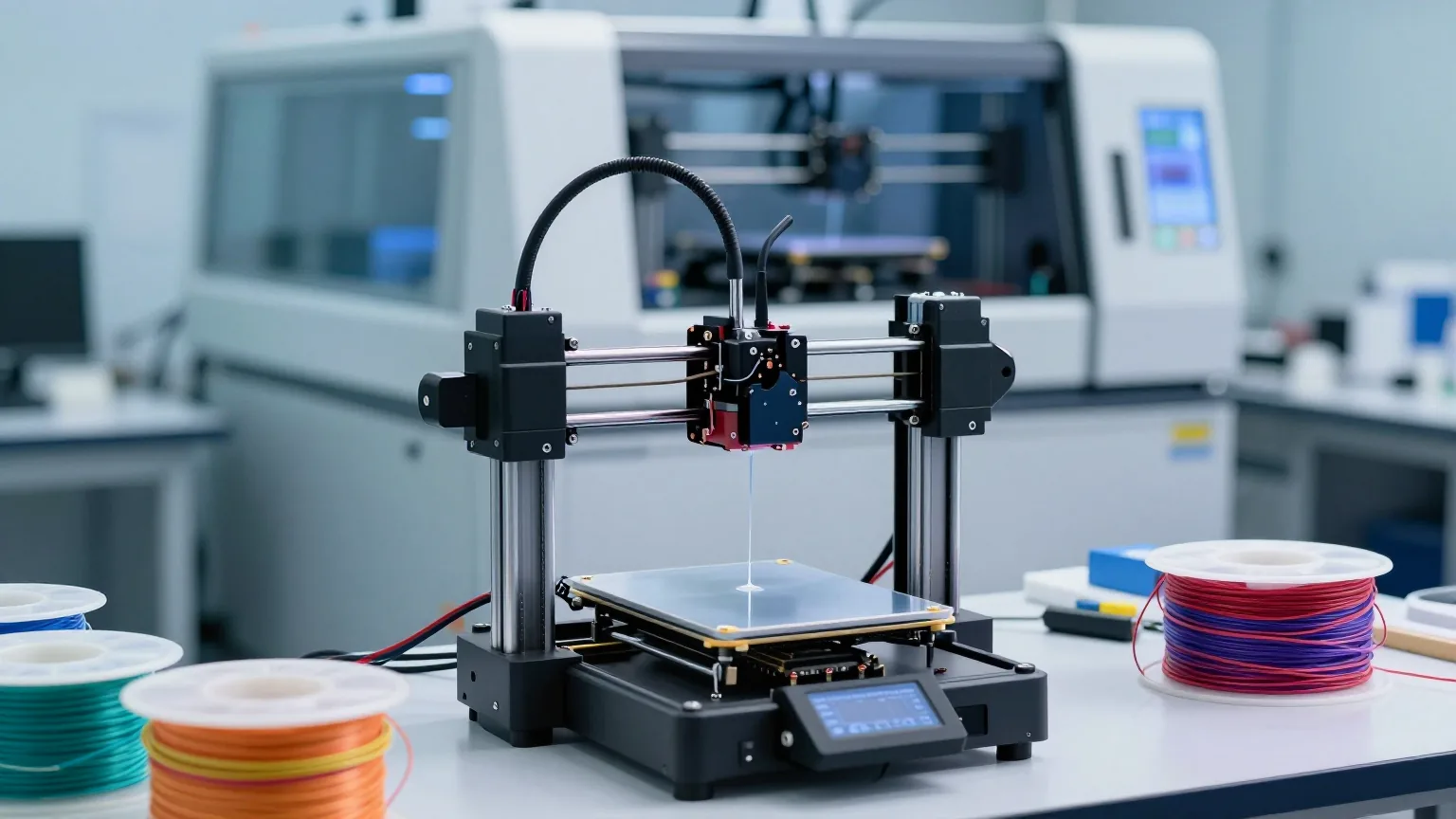
But that narrative just took a massive, unexpected turn. In a move that is likely causing quite a stir in the biotech sector, microbiologists at the University of Rochester have demonstrated that a modified, $450 Ender 3 FDM printer can outperform dedicated 3D bioprinters that cost more than $100,000 [2]. Yes, you read that correctly. A machine that most of us might buy to print a custom cable management box or a detailed figurine has just entered the arena of engineered living materials and come out on top in terms of performance and cost-efficiency. This isn't just a technical curiosity; it is a potential paradigm shift in how we think about accessibility in regenerative medicine and tissue engineering.
The Gap Between Hobby and Industry
To understand why this development is so significant, we first need to look at the status quo. Bioprinting is not like printing a plastic toy. It involves "bio-inks"—gels or pastes containing live cells, growth factors, and structural materials. These materials are viscous, sensitive to temperature, and, most importantly, fragile. If you squeeze them too hard, the cells die. If you move too slowly, the structure collapses before it sets. If the environment isn't sterile, the whole batch is contaminated.
Traditionally, the only machines capable of handling these nuances were specialized, closed-system industrial units. These machines are expensive because they offer precise control over pressure, temperature, and sterility. They are the tools of choice for large pharmaceutical companies and well-funded university labs. But for the vast majority of independent researchers, smaller universities, and developing nations, the price tag of $100,000 or more is simply a barrier to entry. It means that the frontier of tissue engineering remains locked behind a paywall, accessible only to the elite.
The University of Rochester team didn't just try to build a cheaper bioprinter; they tried to democratize the technology. By taking a standard Ender 3—a machine widely known in the hobbyist community for its affordability and modifiability—and modifying it, they proved that the core mechanics of FDM (Fused Deposition Modeling) can be adapted for biological applications without the need for proprietary, expensive hardware. This challenges the assumption that high cost equals high capability in this specific niche.
What is an Ender 3, Really?
For those unfamiliar with the hardware, the Creality Ender 3 is arguably the most iconic 3D printer in the hobbyist world. Released in the mid-2010s, it became the default choice for millions of makers due to its low price point, open-source firmware, and massive community support. It is a Cartesian coordinate printer, meaning it moves a print head along X, Y, and Z axes to deposit material layer by layer.
In its standard configuration, the Ender 3 melts plastic filament and deposits it to create solid objects. It is not designed for sterility. It is not designed for temperature-sensitive biological materials. In fact, the heating elements used to melt plastic are often a liability in a biological context, as they can kill cells if not carefully managed. However, the Ender 3’s greatest strength is its modifiability. Because it is open-source, engineers and hobbyists have spent years creating mods, upgrades, and alternative extruder systems. This culture of "hack it to make it work" is precisely what allowed the Rochester team to repurpose the machine.
The fact that a machine designed to print cheap plastic can be adapted to print living tissue is a testament to the versatility of the FDM mechanism. It suggests that the fundamental physics of extrusion and deposition are robust enough to handle a wide variety of materials, from PLA plastic to complex hydrogels, provided the delivery system is adjusted.
The Rochester Modification: Engineering the Bio-Printer
So, how did the University of Rochester team transform a $450 plastic printer into a viable bioprinter? The answer lies in a series of targeted modifications. While the specific engineering details of their setup are the subject of their research, the core concept involves replacing the standard hot-end extruder with a cold, pressure-driven system suitable for bio-inks.
In a standard FDM printer, the filament is heated to a liquid state and pushed through a nozzle. In a bioprinter, you cannot heat the bio-ink, as the cells would die. Instead, you need a way to push the viscous gel through a nozzle with precise control. This is typically achieved using a syringe pump or a pneumatic system. The Rochester team likely integrated a syringe-based extruder into the Ender 3's motion system. This allows the printer to move the nozzle with the same precision as it would when printing plastic, but it deposits a cold, liquid biological material.
Furthermore, the team would have had to address the issue of sterility. While a home Ender 3 is not a cleanroom, the team likely implemented protocols to maintain a sterile environment around the print head and the print bed. This might involve using sealed syringes, sterilizing the nozzle between prints, and working in a controlled laboratory environment. The key insight is that the mechanical precision of the Ender 3 is sufficient for the biological task; the environmental controls are what make it safe.
This modification is a brilliant example of "frugal innovation." Instead of designing a new, expensive machine from scratch, they leveraged an existing, affordable platform and added only the necessary biological components. This approach reduces development time, cost, and complexity. It also means that the parts are readily available. If a part breaks on an Ender 3, you can buy a replacement for a few dollars. If a part breaks on a $100,000 industrial bioprinter, you are waiting weeks for a specialized component from the manufacturer.
Performance: How Did It Beat the Big Guns?
The claim that the modified Ender 3 "outperforms" $100,000 machines is bold, but it is backed by the results reported in the news [2]. In the context of bioprinting, "performance" is often measured by the viability of the printed cells and the structural integrity of the printed tissue. A high-end industrial bioprinter might offer more features, such as multi-material heads, integrated microscopy, or automated sterility checks. However, if the $450 machine produces tissue with higher cell viability or more accurate structural fidelity, it has effectively won the race.
Why might a simpler machine perform better? One possibility is that the complexity of high-end machines introduces more points of failure. Every additional component, sensor, or software layer is a potential source of error. The Ender 3, with its straightforward mechanical design, offers a direct and predictable relationship between the input (the G-code) and the output (the printed structure). This simplicity can lead to more consistent results, especially when working with sensitive biological materials.
Another factor is the optimization of the bio-ink. The Rochester team likely spent significant time tuning the viscosity and rheology of their bio-inks to work specifically with the Ender 3's extrusion system. This level of material optimization is often overlooked in favor of buying a more expensive machine. By focusing on the material and the simple mechanics of the printer, they achieved a level of precision that more complex systems might struggle to match due to calibration challenges or sensor noise.
This result suggests that in bioprinting, the quality of the bio-ink and the precision of the motion system are more important than the number of features or the price tag of the machine. It is a reminder that engineering excellence is not always about adding more; sometimes, it is about doing less, but better.
The Cost of Accessibility
The most immediate impact of this development is economic. A $100,000 price tag is a barrier that excludes the vast majority of research labs, especially those in developing countries or smaller universities. By reducing the cost of entry to $450, the University of Rochester has opened the door to a new generation of researchers who can now experiment with tissue engineering.
This has profound implications for global health. Imagine a small hospital in a rural area that cannot afford a $100,000 bioprinter but can afford a $450 one. They could potentially print custom tissue grafts for patients, reducing the need for donor tissue and long-distance transport. Imagine a university in a developing country where students can now learn about bioprinting and contribute to research in this field, rather than being excluded by cost.
The democratization of bioprinting technology could accelerate the pace of innovation. When more people can access the tools, more ideas are tested, more problems are solved, and more breakthroughs are made. This is the same logic that drove the success of the open-source hardware movement in electronics and 3D printing. By lowering the barrier to entry, you increase the number of participants, which in turn increases the rate of innovation.
Furthermore, the low cost of the Ender 3 means that it can be used in a variety of settings, from large research institutions to small startups, from government labs to private clinics. This versatility makes it a powerful tool for widespread adoption. It is no longer a niche technology reserved for the elite; it is a practical tool that can be deployed where it is needed most.
Historical Context: The Arc of 3D Printing
This development is not an isolated incident; it is part of a larger trend in 3D printing. The history of additive manufacturing is a story of continuous cost reduction and capability expansion. In the early days, 3D printing was a luxury technology, available only to large corporations and research institutions. The printers were slow, expensive, and limited to a few materials.
Over the past two decades, the technology has undergone a revolution. The introduction of open-source designs, like the RepRap project, and the rise of affordable commercial printers, like the Ender 3, have brought 3D printing into the mainstream. Today, you can buy a 3D printer for less than $200. This has led to an explosion of innovation, with hobbyists and engineers pushing the boundaries of what is possible.
The bioprinting field has followed a similar trajectory, albeit on a slower timeline. Early bioprinters were bulky, expensive, and limited in their capabilities. Over time, researchers have developed new bio-inks, new printing techniques, and new applications. The work of the University of Rochester team fits into this broader narrative of progress. It represents the next step in the democratization of bioprinting, bringing the technology closer to the masses.
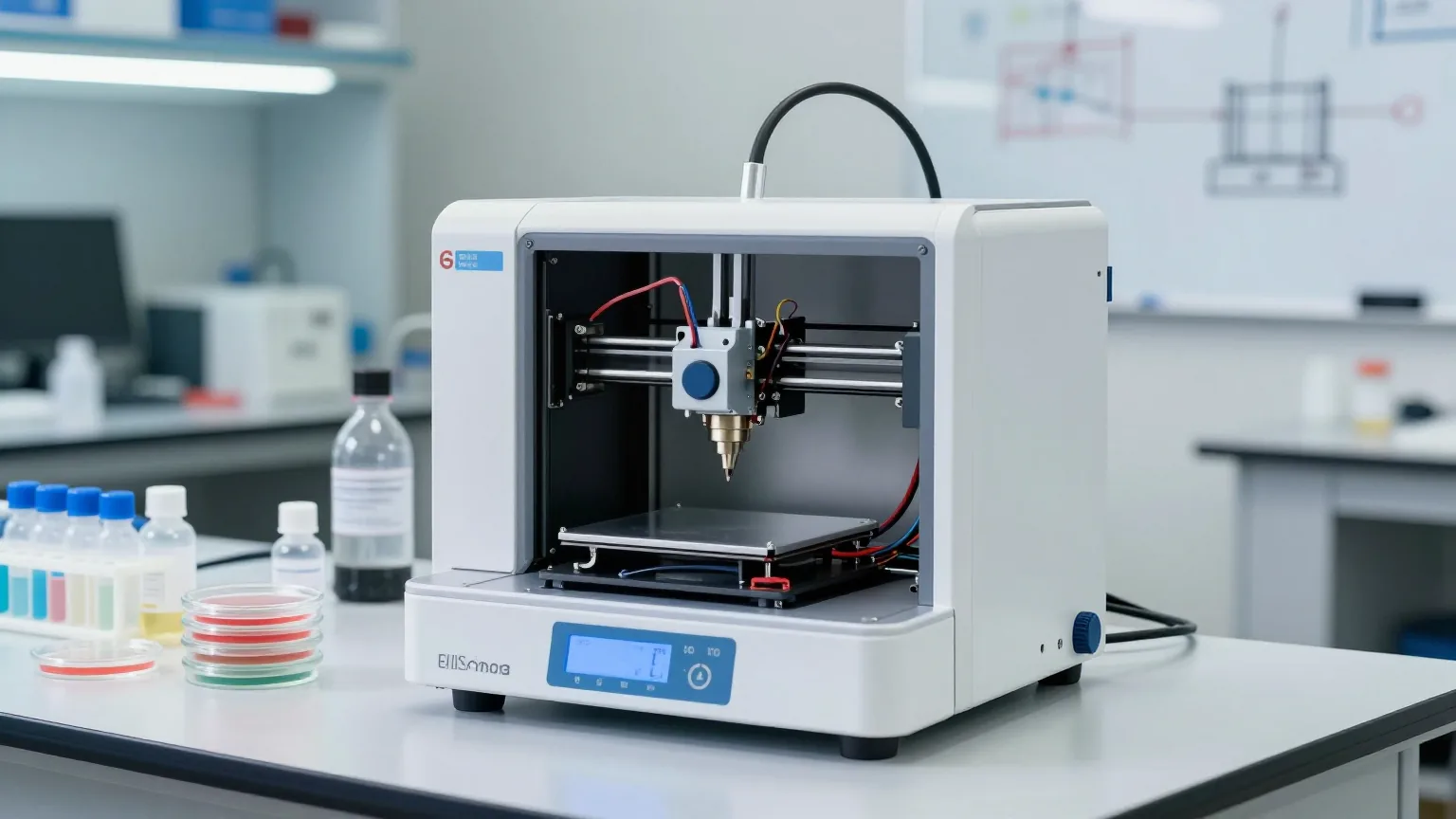
This trend is also reflected in the broader 3D printing industry. As seen in recent news from events like Formnext, the industry is moving towards more advanced materials, AI-powered design tools, and industrial-scale machines [1]. However, the focus on high-end, industrial solutions often overlooks the potential of low-cost, accessible technologies. The Ender 3 bioprinter serves as a reminder that innovation can come from unexpected places, and that simplicity and affordability are valuable assets in their own right.
Modern Perspectives: AI and Automation
While the Ender 3 bioprinter is a mechanical triumph, it is also a platform for future digital innovations. The 3D printing industry is increasingly embracing artificial intelligence and machine learning. AI-powered model platforms are becoming more common, allowing users to optimize their prints for strength, weight, or material usage [1]. These same AI tools can be applied to bioprinting.
Imagine an AI system that analyzes the bio-ink in real-time, adjusting the extrusion pressure and speed to ensure optimal cell viability. Imagine a machine learning algorithm that predicts the structural integrity of the printed tissue and suggests modifications to the design. These capabilities are not science fiction; they are on the horizon. The Ender 3, with its open-source firmware, is an ideal platform for testing and developing such AI-driven features.
Furthermore, the integration of sensors and feedback loops can enhance the precision of the bioprinter. For example, a camera system could monitor the printing process, detecting and correcting errors in real-time. A temperature sensor could ensure that the bio-ink remains within the optimal range. These features, which are standard in high-end industrial machines, can be added to the Ender 3 using off-the-shelf components, further reducing the cost and increasing the capability.
The potential for automation is also significant. While the Ender 3 is primarily a manual device, it can be integrated into larger automated systems. For example, a robotic arm could load the bio-ink, start the print, and then move the finished tissue to a sterile incubator. This level of automation can increase throughput and reduce the risk of contamination, making the Ender 3 bioprinter suitable for high-volume production.
Applications: From Lab to Clinic
The potential applications of a low-cost bioprinter are vast. In the short term, the most likely use case is in research. Universities and small labs can use the Ender 3 to experiment with new bio-inks, new printing techniques, and new tissue types. This can accelerate the pace of discovery and lead to new insights into tissue engineering.
In the long term, the Ender 3 bioprinter could be used in clinical settings. For example, it could be used to print custom skin grafts for burn victims, or cartilage implants for patients with joint damage. These applications are already being explored with high-end bioprinters, but the cost of those machines limits their widespread adoption. The Ender 3, with its low cost and high reliability, could make these treatments accessible to a much larger population.
Another potential application is in the field of drug testing. Pharmaceutical companies spend billions of dollars testing new drugs on animal models, which is slow, expensive, and often inaccurate. Bioprinted tissues can provide a more accurate and faster way to test drugs. The Ender 3 bioprinter could be used to print large batches of tissue for drug testing, reducing the cost and time required for preclinical studies.
Finally, the Ender 3 bioprinter could be used in the field of food science. Bioprinting is being used to create complex food structures, such as chocolate, meat, and plant-based products. The low cost of the Ender 3 makes it an attractive option for food companies looking to experiment with new food designs and textures.
Challenges and Limitations
While the Ender 3 bioprinter is a significant achievement, it is not without its challenges. One of the main limitations is the lack of integrated sterility. While the Rochester team implemented protocols to maintain a sterile environment, this is a manual process that requires careful attention. In a high-throughput clinical setting, this could be a bottleneck. High-end industrial bioprinters, on the other hand, often have integrated sterile cabinets and automated cleaning systems, which reduce the risk of contamination.
Another limitation is the build volume. The Ender 3 has a relatively small build volume, which limits the size of the tissues that can be printed. While this is not a problem for small-scale research, it could be a limitation for larger clinical applications. However, this can be overcome by using multiple Ender 3 printers in parallel, or by developing larger, low-cost bioprinters based on the same principles.
There are also regulatory challenges. The use of bioprinted tissues in clinical settings is subject to strict regulatory approval. While the Ender 3 is a low-cost device, it must still meet the same safety and efficacy standards as any other medical device. This could be a barrier to adoption, as the regulatory process is time-consuming and expensive. However, the low cost of the Ender 3 could make it easier to obtain regulatory approval, as the device is simpler and more predictable than high-end industrial machines.
Despite these challenges, the potential benefits of the Ender 3 bioprinter are significant. It offers a low-cost, accessible, and versatile platform for bioprinting, with the potential to accelerate innovation and improve patient outcomes. As the technology matures and the regulatory framework develops, we can expect to see more widespread adoption of this type of device.
The Future of Bioprinting
The work of the University of Rochester team is a glimpse into the future of bioprinting. It suggests that the future of this technology is not just about building more expensive, more complex machines, but about making the technology more accessible, more affordable, and more widely available. This shift in focus could have profound implications for the field, accelerating the pace of innovation and expanding the range of applications.
In the coming years, we can expect to see more low-cost bioprinters based on similar principles. We can also expect to see the integration of AI, automation, and advanced sensors into these devices, further enhancing their capability and reliability. The potential for these devices to transform healthcare, research, and even food science is immense.
Moreover, the success of the Ender 3 bioprinter could inspire other areas of additive manufacturing. For example, it could lead to the development of low-cost printers for other biological applications, such as organ-on-a-chip devices or microfluidic systems. It could also inspire the development of low-cost printers for other advanced materials, such as carbon fiber or metal alloys.
The key takeaway is that innovation is not just about high-end technology; it is also about creativity, resourcefulness, and a willingness to challenge the status quo. The University of Rochester team demonstrated that with the right modifications and the right materials, a simple, affordable printer can achieve results that rival those of much more expensive machines. This is a lesson that should resonate throughout the 3D printing industry and beyond.
Conclusion: A Call to Action
The story of the $450 Ender 3 bioprinter is more than just a technical achievement; it is a testament to the power of open-source innovation and the potential for technology to democratize science. It challenges the notion that high cost is a prerequisite for high performance, and it opens the door to a new era of accessible bioprinting.
For researchers, this is an invitation to experiment. If you are working in the field of tissue engineering or bioprinting, consider whether a low-cost, modifiable printer could be a valuable addition to your lab. The Ender 3 is not just a printer; it is a platform for innovation. By leveraging its modifiability and affordability, you can push the boundaries of what is possible in your field.
For the 3D printing industry, this is a reminder to focus on accessibility and simplicity. While high-end, industrial machines will always have a place in the market, there is a growing demand for affordable, versatile tools that can be used in a variety of settings. By embracing this demand, the industry can expand its reach and impact, bringing the benefits of 3D printing to a wider audience.
For the general public, this is a story that should inspire hope. It shows that technology can be used to solve real-world problems, and that innovation can come from unexpected places. It is a reminder that the future is not just about what we can build, but about who can build it, and at what cost.
The $450 Ender 3 bioprinter is a small machine with a big impact. It is a symbol of the potential for technology to democratize science, and a reminder that innovation is not just about the latest and greatest, but about the simplest and most effective. As we look to the future, let us remember the power of simplicity, the value of accessibility, and the endless possibilities that lie ahead.
So, what are you waiting for? Whether you are a researcher, an engineer, or a maker, the time to explore the potential of low-cost bioprinting is now. Grab your Ender 3, modify it, and start printing the future. The possibilities are endless, and the cost is low. The revolution is here, and it is affordable.