$450 Ender 3 Bioprinter Outperforms $100K Rivals
From Garage Tinkerer to Lab Breakthrough: The $450 Bioprinter That Shook the World
Imagine walking into a high-tech biomedical laboratory, expecting to see racks of expensive, stainless-steel machinery that hums with the quiet confidence of a million-dollar budget. Instead, you see a modified, slightly dented plastic box sitting on a workbench. It looks like something you’d find in a teenager’s bedroom or a maker space in Austin, Texas. It is an Ender 3. And it is printing living tissue.
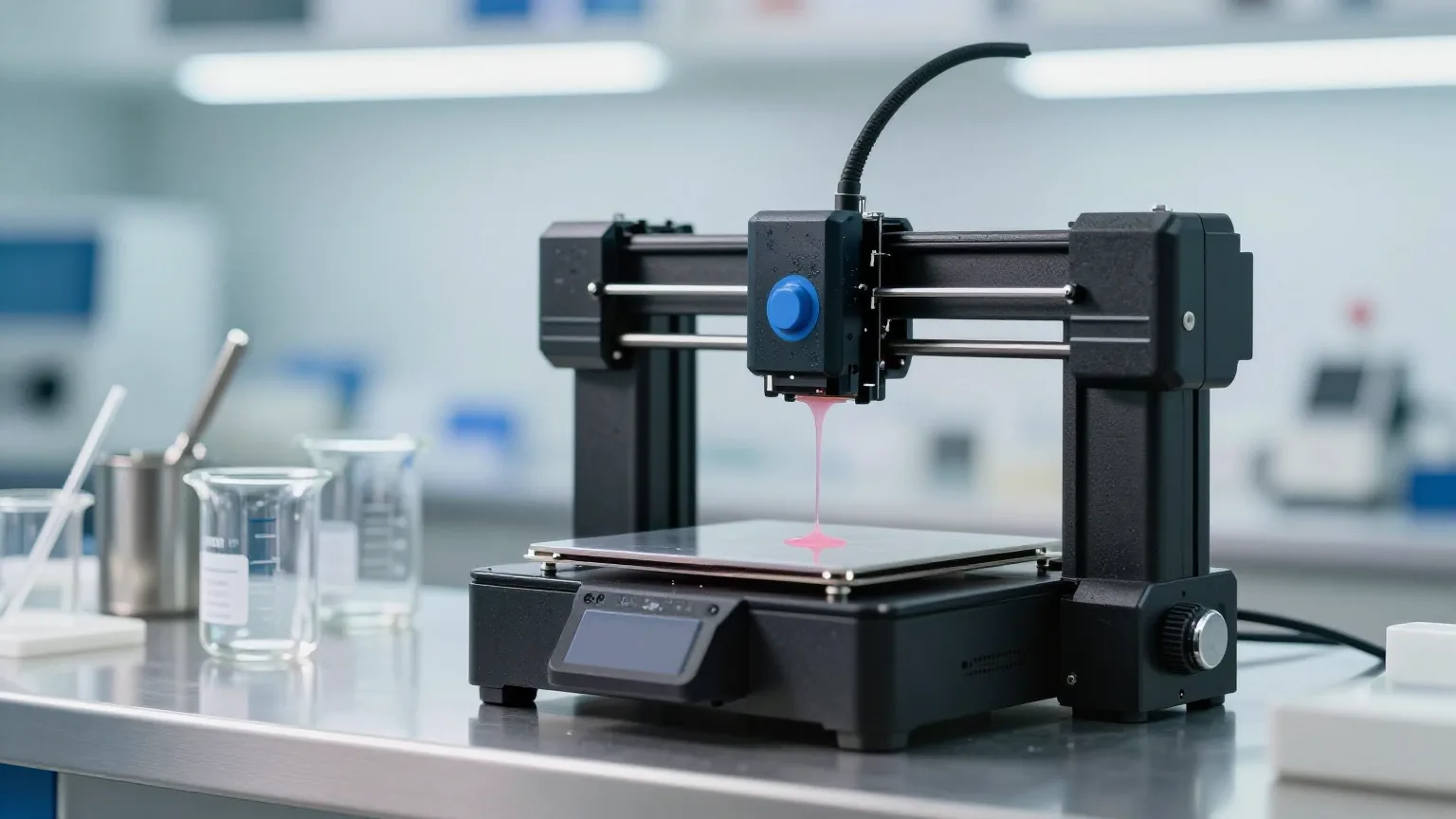
This isn’t a scene from a sci-fi movie or a fever dream of a hacker. This is reality, and it is rewriting the rules of biotechnology. In a stunning display of "democratized science," microbiologists at the University of Rochester have taken a standard FDM (Fused Deposition Modeling) 3D printer, cost around $450, and transformed it into a functional bioprinter. The result? A device that outperforms commercial 3D bioprinters costing upwards of $100,000 [3].
If you have been following the 3D printing news, you know that the industry has been rapidly evolving. We are seeing everything from AI-driven design tools to new material platforms like SiN/PEEK [1]. But few developments have captured the imagination quite like this. It challenges the fundamental assumption that advanced biotechnology requires advanced, expensive hardware. It suggests that the barrier to entry for printing life itself might not be the technology, but the budget.
The "Ender" Effect: A Brief History of the Workhorse
To appreciate the magnitude of this achievement, we have to look at the star of the show: the Ender 3. For years, this printer has been the undisputed king of the budget 3D printing scene. It is the "Toyota Corolla" of the 3D printing world. It is reliable, it is affordable, and it is everywhere. From university engineering departments to high school science fairs, the Ender 3 has been the default choice for anyone wanting to get into 3D printing without selling a kidney.
Historically, the 3D printing world has been divided into two camps: the consumer/hobbyist camp, dominated by FDM printers like the Ender, and the professional/industrial camp, dominated by high-end SLA (Stereolithography) or SLS (Selective Laser Sintering) machines. Bioprinting, the process of using 3D printing to create living tissues, has always lived firmly in the professional camp. Why? Because printing with "bio-inks" (materials containing living cells) is delicate. The shear forces generated by standard FDM extrusion can kill cells. Therefore, the industry assumed that only specialized, gentle, and expensive extrusion systems could handle the job.
The University of Rochester team didn’t just assume this; they proved it wrong. By modifying the Ender 3, they demonstrated that with the right tweaks, the humble plastic extruder can handle living materials with surprising efficiency. This is a cultural shift in how we view "low-cost" technology. It is no longer just for prototypes; it is becoming a tool for discovery.
How Did They Do It? The Science of the Modification
So, how do you turn a machine that prints plastic into a machine that prints life? It isn’t magic, but it is close. The key lies in the modification of the extrusion system. Standard FDM printers melt plastic by heating it to high temperatures. Obviously, you cannot do this with living cells. Instead, the Rochester team likely utilized a system that can handle viscous, non-thermally sensitive bio-inks. This often involves replacing the standard heated hotend with a room-temperature or gently heated syringe-driven extrusion system.
The "Ender" modification involves swapping out the standard filament path for a mechanism that can dispense bio-ink layer by layer. The precision of the Ender’s motion control, which is already well-regarded in the hobbyist community, provides the necessary accuracy for depositing cells in specific patterns. The fact that they achieved this with a $450 base unit suggests that the mechanical framework of the Ender is robust enough to handle the slower, more precise movements required for bioprinting.
This is a significant insight. It means that the "brain" of the printer—the firmware and the motion control—is already capable of the task. The "body" just needed a different "mouth." This modular approach is a hallmark of the open-source 3D printing community. By keeping the core platform open and affordable, researchers can focus their innovation on the specific application, in this case, the bio-ink delivery, rather than reinventing the entire machine.
Why "Outperforming" $100K Machines Matters
The headline says the modified Ender 3 "outperforms" 3D bioprinters costing more than $100,000 [3]. What does "outperform" actually mean in this context? In the world of bioprinting, performance is usually measured by viability (how many cells stay alive after printing), resolution (how fine the details of the printed structure are), and throughput (how fast you can print).
High-end commercial bioprinters are often designed to be "turnkey" solutions. They are closed systems, meaning the manufacturer controls the software, the hardware, and the materials. This can limit flexibility. Researchers often find themselves fighting against the machine’s limitations when trying to test new bio-inks or new structural designs. The modified Ender 3, being an open-source platform, allows for total customization. Researchers can tweak the firmware, modify the extruder, and experiment with new materials without waiting for a software update from a vendor.
This flexibility likely contributes to the "outperformance." The ability to rapidly iterate on the printing process, to adjust parameters on the fly, and to adapt the hardware to specific experimental needs gives the $450 printer an edge in a research environment. It is not just about printing faster or more accurately; it is about printing more flexibly. In science, flexibility is often more valuable than raw power.
The Context of 3D Printing News in 2026
To understand why this story is making waves right now, we need to look at the broader landscape of 3D printing news in late 2026. The industry is currently experiencing a dual revolution. On one hand, we are seeing massive corporate investment in advanced materials. For example, SINTX has completed its 3D printing facility for its SiN/PEEK platform, targeting initial product availability in 2027 as it pursues FDA 510(k) clearance [1]. This represents the "high-end" of the market, where 3D printing is being used for highly regulated, high-stakes medical and aerospace applications.
On the other hand, we are seeing a rapid expansion of the consumer and prosumer market. Companies like Bambu Lab have released a series of upgrades, including the BQDry Mini, a cheaper Panda Station, and new models like the Knomi and PWR [2]. There is also a growing focus on user experience, with devices like Qidi’s MakeBuddy Smart5 pitching "worry-free" 3D printing for parents of small kids [2]. This trend shows a clear desire to make 3D printing more accessible, safer, and more integrated into daily life.
The University of Rochester’s bioprinter fits perfectly into this narrative. It bridges the gap between the high-end medical applications and the accessible consumer tools. It suggests that the technology needed for high-end bioprinting is not as far out of reach as we thought. It is already in our garages, our classrooms, and our labs. The only thing missing was the right modification and the right mindset.
AI and the Future of Bioprinting
Another key trend in 3D printing news is the integration of Artificial Intelligence. Recent reports from ScienceDaily indicate that researchers are using AI to optimize 3D printing processes. In one example, a system analyzed 40 experiments to identify six successful parameters for a new solid-state material that converts sunlight into higher-energy UV light [5].
Imagine applying this same AI-driven optimization to the Ender 3 bioprinter. AI could analyze the viability of printed cells in real-time, adjusting the extrusion speed, temperature (if applicable), and layer height to maximize cell survival. It could predict which bio-ink formulations will work best for specific tissue types. This combination of low-cost hardware and high-intelligence software could create a powerful new paradigm in biotechnology.
The potential applications are vast. From printing simple skin grafts for burn victims to creating complex organoids for drug testing, the cost barrier has always been a major hurdle. By bringing the cost down to $450, the University of Rochester team has made these applications potentially accessible to smaller research labs, universities, and even developing countries where funding for high-end equipment is limited. This could accelerate medical research globally.
The Cultural Shift: Democratization of Science
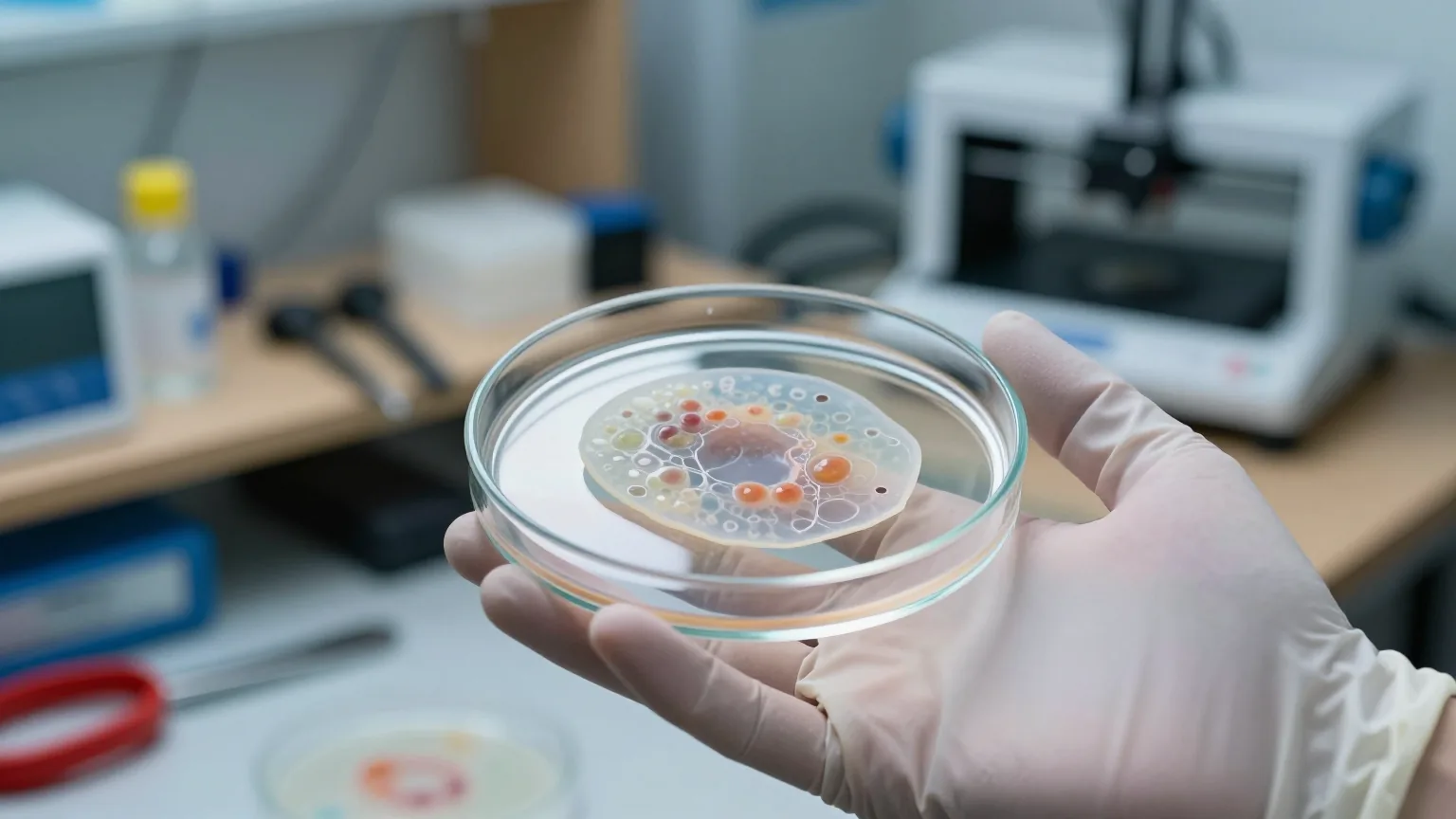
There is a profound cultural shift happening here. For decades, science has been associated with big institutions, big budgets, and big equipment. The "ivory tower" of academia was walled off from the general public. 3D printing, and specifically the open-source movement, has begun to tear down those walls.
The fact that a $450 printer can outperform a $100,000 machine is a statement. It says that innovation does not require capital; it requires creativity. It says that the barriers to entry for scientific discovery are lower than we think. This is empowering. It encourages more people to get involved in biotechnology, not just as consumers of its results, but as creators and researchers.
Think about the historical context. In the early days of computing, mainframes were massive, expensive machines that only governments and large corporations could afford. The personal computer revolution democratized computing. Similarly, the 3D printing revolution is democratizing manufacturing and, now, biotechnology. The Ender 3 bioprinter is a symbol of this democratization. It is a reminder that the future of science is not just in the hands of the wealthy and the well-connected, but in the hands of the curious and the creative.
Challenges and Limitations
Of course, we must be realistic. A $450 bioprinter is not a magic bullet. It comes with its own set of challenges. First, the bio-inks themselves are expensive. The cost of the printer is only a fraction of the total cost of bioprinting. Developing high-quality, cell-compatible bio-inks is a major area of research in itself. Second, the modified Ender 3 is a research prototype. It is not a commercial product. It requires technical skills to build and maintain. It is not a "plug-and-play" solution for non-technical users.
Furthermore, regulatory hurdles remain. Printing living tissue for medical use is subject to strict FDA regulations. As seen with SINTX’s pursuit of FDA 510(k) clearance for its SiN/PEEK platform [1], getting a 3D-printed medical device approved is a long and expensive process. The Ender 3 bioprinter is likely intended for research and pre-clinical testing, not for immediate clinical use. However, even for research, the impact is significant. It allows for more rapid prototyping and testing of new bio-inks and structures, which can accelerate the path to clinical applications.
Applications Beyond Medicine
While bioprinting is the most obvious application, the success of the Ender 3 modification has implications for other areas of "bio-manufacturing." For example, it could be used for bioprinting of plant tissues for food applications. Imagine printing fresh, high-quality plant-based meats or other food products using living plant cells. The low cost of the printer makes this a more viable option for small-scale food producers and restaurants.
It could also be used for environmental applications. Bioprinting of microbial mats for bioremediation, or for creating artificial reefs for marine conservation, could benefit from low-cost, portable printing solutions. The ability to deploy a $450 printer in remote locations, such as coral reefs or contaminated sites, opens up new possibilities for environmental science.
Even in the field of materials science, the principles learned from this modification could be applied to other "soft" materials. Printing with hydrogels, for example, is a growing area of research. The Ender 3’s ability to handle viscous materials could make it a valuable tool for researchers in this field.
The Role of the Open-Source Community
None of this would be possible without the open-source community. The Ender 3 is based on open-source hardware and software. This means that anyone can download the design files, modify them, and share them. The University of Rochester team likely built on the work of thousands of hobbyists who have modified and improved the Ender 3 over the years. This collective knowledge base is a powerful resource for innovation.
The open-source model encourages collaboration and transparency. When the team publishes their modifications, other researchers can replicate them, test them, and improve upon them. This accelerates the pace of innovation. In a closed-system world, progress is limited by the pace of a single company. In an open-source world, progress is limited only by the creativity of the community.
This is a lesson for the entire 3D printing industry. While proprietary systems have their place, especially in highly regulated industries, the open-source model is driving much of the innovation. It is a reminder that the most powerful tools are often the ones that are accessible to everyone.
What This Means for You
If you are a 3D printing enthusiast, a student, or a researcher, what does this mean for you? It means that the barriers to entry for advanced biotechnology are lower than you think. You don’t need a PhD or a million-dollar budget to start experimenting with bioprinting. You need curiosity, a willingness to learn, and a $450 printer.
It also means that the skills you have learned in the consumer 3D printing world are more valuable than you realize. The ability to troubleshoot, to modify hardware, and to optimize printing parameters are directly applicable to bioprinting. The line between "hobbyist" and "researcher" is blurring. In the future, we may see more citizen scientists contributing to biomedical research through 3D printing.
For businesses, this is a signal that innovation is coming from unexpected places. It is a reminder to stay open to new ideas and new technologies. It is also a warning that the cost of entry for new competitors is dropping. If a $450 printer can do what a $100,000 printer can, then the market for high-end bioprinters may be disrupted. Companies need to adapt or risk being left behind.
Conclusion: The Future is Printed, and It’s Affordable
The story of the $450 Ender 3 bioprinter is more than just a technical achievement. It is a symbol of the power of accessibility, creativity, and open collaboration. It challenges our assumptions about what is possible with low-cost technology. It shows that the future of biotechnology is not just in the hands of the wealthy, but in the hands of the curious.
As we look to the future, we can expect to see more innovations like this. We will see AI-driven optimization, new bio-inks, and new applications for bioprinting. We will see the line between consumer and professional 3D printing continue to blur. And we will see the democratization of science accelerate.
So, what can you do? If you are interested in 3D printing, consider exploring the bioprinting community. Follow the work of the University of Rochester team and other researchers in this field. If you have a 3D printer, start experimenting. Try printing with new materials. Try modifying your printer. Who knows? You might be the next one to make a breakthrough.
The future is being printed, one layer at a time. And it’s more affordable, more accessible, and more exciting than ever before. The $450 bioprinter is just the beginning. The rest of the story is up to us.
Call to Action: What do you think? Is the democratization of biotechnology through low-cost 3D printing a positive development? Share your thoughts in the comments below. And if you have a 3D printer, have you ever considered experimenting with non-standard materials? Let us know what you’ve tried!