Bambu Lab's Secret S1 Scanner: FCC Filings Reveal the 2026 Mystery
Imagine for a moment that you are sitting in a dimly lit room, the only light coming from the glow of a computer monitor. On the screen, a 3D model rotates slowly, rendered in high definition. It is a perfect replica of a complex mechanical part, down to the finest thread and the subtlest curvature. You are about to send it to your printer. But wait. There is a problem. The model is digital, but the object you are trying to replicate is physical, sitting right in front of you. How do you bridge the gap between the tangible world and the digital void? This has been the central question of additive manufacturing for decades. We have spent years refining how we build things layer by layer, but the step of capturing reality has often lagged behind, plagued by expensive, slow, or inaccurate solutions. That is, until now. In 2026, the landscape of 3D printing is shifting from a focus solely on creation to a holistic ecosystem of capture, design, and manufacture. And at the heart of this shift is a device that has become the subject of intense speculation, leaked teasers, and regulatory filings: the Bambu Lab S1 Scanner.
For years, Bambu Lab has been the undisputed king of consumer and prosumer FDM 3D printing, known for bringing industrial-grade reliability to the desktop. But their latest move signals a departure from their comfort zone. Recent news reports indicate that Bambu Lab has teased its S1 3D scanner, while FCC filings hint at what the company is keeping a secret right now [4]. This is not just another gadget; it is a potential game-changer that could redefine how millions of makers, engineers, and hobbyists interact with their physical surroundings. Let’s dive deep into the mystery, the technology, and the massive implications of the S1 Scanner in the 2026 3D printing landscape.
The Context: A Year of Rapid Evolution in Additive Manufacturing
To understand why the S1 Scanner is generating such a buzz, we must first look at the broader context of 3D printing in 2026. The industry has matured significantly. We are no longer in the era of "cool factor" where 3D printing was a novelty. Today, it is a utility. From bioprinting organs to printing metal aerospace components, the technology has become indispensable [2]. However, the entry barrier for digital design remains high. While FDM, SLA, and SLS printers have become user-friendly, the process of getting an object into a printable format has often required expensive laser scanners or complex photogrammetry setups that are difficult for the average user to master.
In 2026, the focus of innovation has shifted toward integration and intelligence. According to recent industry analyses, the latest innovations include AI-assisted design tools and low-waste multicolor printing, but the missing link has always been seamless capture [3]. The S1 Scanner fits perfectly into this narrative. It represents the next logical step in the Bambu Lab ecosystem: a closed-loop system where you scan an object, process it with AI, and print it, all within a unified software environment. This is not just a hardware release; it is a strategic pivot toward becoming a comprehensive digital fabrication platform.
What Are FCC Filings and Why Do They Matter?
Now, let’s talk about the "smoking gun" in this story: the FCC filings. For those unfamiliar with the Federal Communications Commission (FCC), it is the U.S. regulatory body responsible for managing the use of the electromagnetic spectrum. Before any electronic device that transmits wireless signals—such as Wi-Fi, Bluetooth, or cellular data—can be sold in the United States, it must undergo rigorous testing and receive authorization from the FCC.
This process creates a public record. When a company files for FCC certification, it must submit detailed technical specifications, including the radio frequencies used, the power output, and the physical layout of the radio components. These filings are often submitted months before a product’s official launch. They are a treasure trove for tech enthusiasts and industry analysts because they provide undeniable proof that a device is in the final stages of development, even if the manufacturer has not officially announced it.
In the case of Bambu Lab, the recent filings have raised eyebrows. They hint at a new class of device that is not a printer. The presence of specific radio components suggests a device capable of high-bandwidth data transmission, likely for streaming scan data in real-time or for connecting to a cloud-based AI processing engine. This is a crucial detail. It suggests that the S1 Scanner is not a standalone unit that you have to plug into a computer via USB to transfer files. Instead, it is likely a networked device, designed to integrate seamlessly into a modern, cloud-connected workflow. The FCC filings confirm that the hardware is real, functional, and ready for market, even if the marketing campaign has not yet begun.
Decoding the S1: What Do We Know So Far?
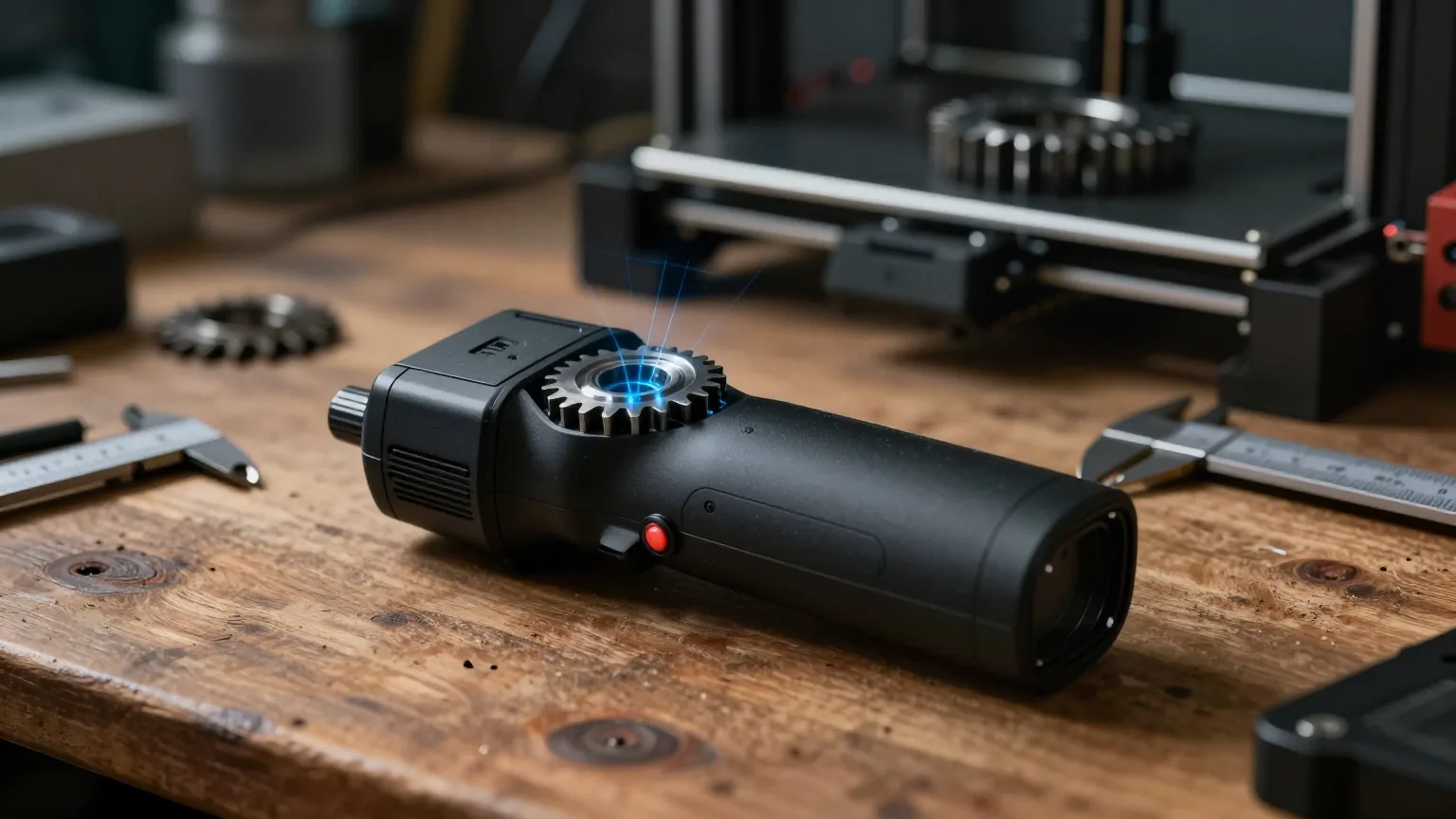
So, what exactly is the S1 Scanner? While Bambu Lab has kept details scarce, the available information paints a clear picture. The "S1" designation follows Bambu Lab’s naming convention, suggesting it is a consumer or prosumer-grade product, similar to their P1S and X1 series printers. It is not a heavy industrial laser scanner costing tens of thousands of dollars. Instead, it is likely a compact, affordable device designed for the desktop.
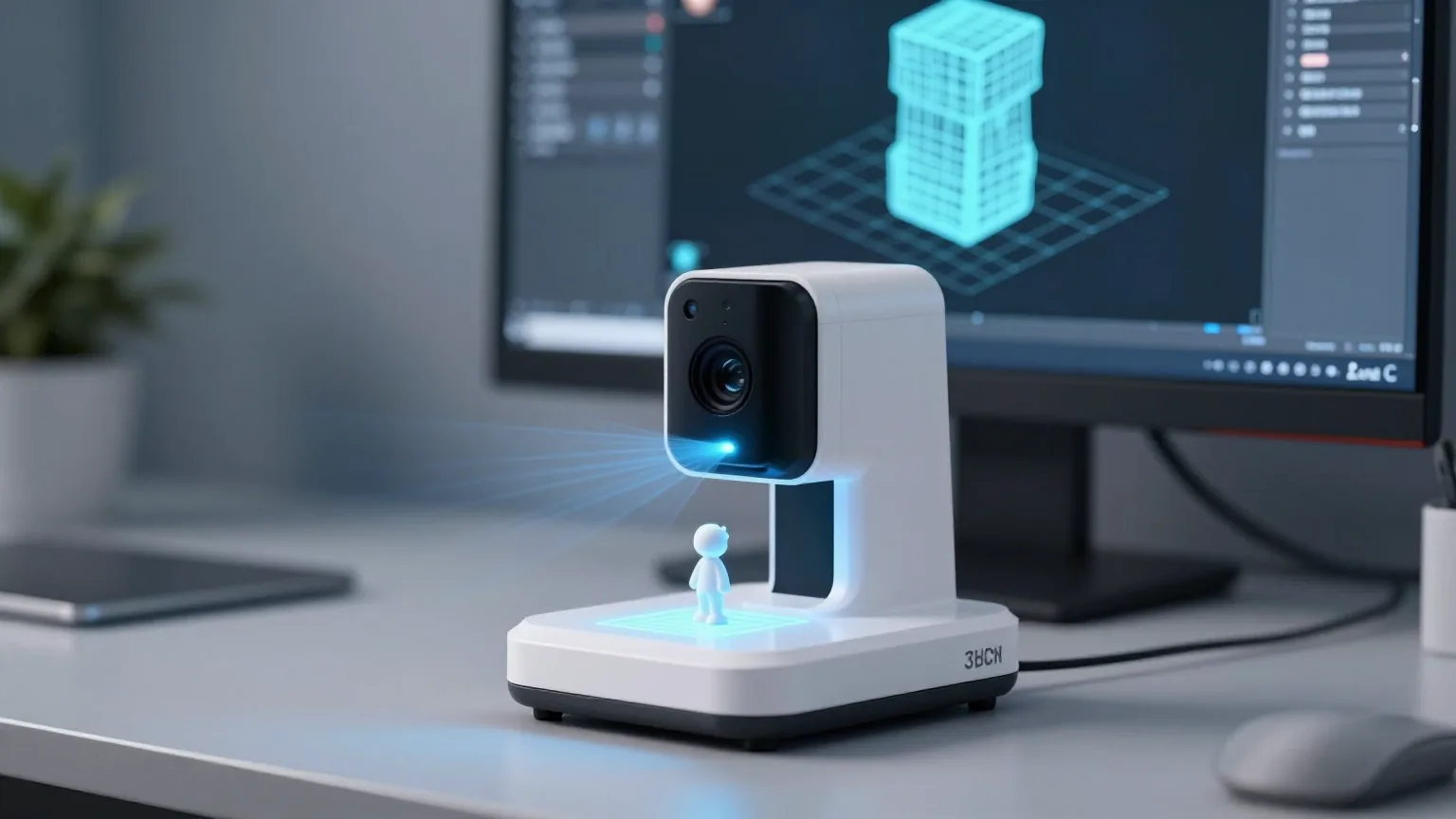
Based on the trend of modern 3D scanning technology, the S1 is expected to use structured light or structured light with active illumination. This method projects a pattern of light onto the object and uses cameras to capture the deformation of that pattern, allowing the device to calculate depth and geometry with high precision. This technology is well-suited for capturing small to medium-sized objects, such as figures, mechanical parts, jewelry, or household items.
One of the most intriguing aspects of the S1 is its likely integration with Bambu Lab’s existing software suite, Bambu Studio. Imagine a workflow where you place an object on the scanner, press a button, and within minutes, a clean, watertight 3D mesh is ready in your slicer. The device likely includes advanced noise filtering and hole-filling algorithms, powered by AI, to handle the common issues of 3D scanning, such as reflective surfaces, thin features, and complex geometry. This level of automation is what distinguishes the S1 from older, clunkier scanning solutions that required extensive post-processing in software like Meshmixer or Blender.
The Historical Context: From Cave Paintings to Digital Twins
To appreciate the significance of the S1 Scanner, we must look at the history of how humans have tried to capture and replicate the physical world. For millennia, we relied on manual methods: carving, casting, and drawing. The invention of photography in the 19th century was a monumental leap, allowing us to capture two-dimensional representations of reality. In the 20th century, the advent of CAD (Computer-Aided Design) allowed us to create digital models from scratch, but it did not solve the problem of capturing existing objects.
Early 3D scanning technology in the 1990s and 2000s was bulky, expensive, and slow. It was primarily used in high-end industries like automotive design and archaeological preservation. The data was often noisy and required significant manual cleanup. The democratization of 3D printing in the 2010s created a demand for affordable scanning, but the supply did not match the demand. Most users had to resort to photogrammetry, which requires taking hundreds of photos and processing them with complex software, a process that is often frustrating and time-consuming.
The S1 Scanner represents the culmination of this historical arc. It is the point where hardware, software, and AI converge to make 3D capture as easy as 3D printing. It completes the loop of digital fabrication, allowing users to move seamlessly from the physical world to the digital and back again. This is a cultural shift in how we view objects: they are no longer just physical items; they are data. They are digital twins that can be analyzed, modified, replicated, and shared.
AI as the Brain: The 2026 Difference
What makes the S1 Scanner different from previous generations of consumer 3D scanners? The answer is artificial intelligence. In 2026, AI is not just a buzzword; it is the core engine of innovation in the 3D printing space. Recent industry reports highlight AI-assisted design as one of the key innovations that makers need to know about [3]. The S1 Scanner is likely to leverage AI in several critical ways.
First, AI can handle the preprocessing of scan data. Raw 3D scan data is often messy, with gaps, noise, and artifacts. Traditional algorithms struggle with this, requiring manual intervention. AI models, trained on millions of 3D models, can automatically identify and fill gaps, smooth surfaces, and remove noise. This means that the output of the S1 Scanner will be ready for printing with minimal post-processing.
Second, AI can assist in the design process. Once the object is scanned, the S1 Scanner’s software could offer AI-driven suggestions for modifications. For example, if you scan a broken part, the AI could suggest how to repair it or how to redesign it for better strength. It could also optimize the model for 3D printing, suggesting changes to the geometry to reduce support material or improve print quality. This level of intelligence transforms the scanner from a simple data capture tool into a design assistant.
Third, AI can enable real-time feedback. As you scan the object, the AI can analyze the data in real-time, alerting you to areas that need better lighting or different angles. This interactive approach makes the scanning process more intuitive and less error-prone. It is a significant improvement over the "scan and hope for the best" approach of earlier technologies.
The Ecosystem Play: Why Bambu Lab is Doing This
Why is Bambu Lab entering the 3D scanning market? The answer lies in the concept of the ecosystem. In the tech world, the most successful companies are not those that sell the best individual products, but those that create the most cohesive ecosystems. Apple, for example, dominates not just because of the iPhone, but because of the seamless integration between the iPhone, Mac, iPad, and Apple Watch.
Bambu Lab has built a powerful ecosystem around its printers. The Bambu Studio software is highly regarded for its ease of use and feature set. The Bambu Lab app allows users to monitor and control their printers remotely. Now, with the S1 Scanner, they are adding another layer to this ecosystem. The scanner will likely integrate deeply with Bambu Studio, allowing for a seamless workflow from scan to print. This integration creates a "moat" that is difficult for competitors to cross. If you own a Bambu Lab printer, the S1 Scanner is the natural next step. It locks you into the ecosystem, increasing customer loyalty and lifetime value.
Furthermore, Bambu Lab has a history of disrupting markets with high-quality, affordable products. By bringing professional-grade 3D scanning to the consumer market, they are likely to drive down prices and raise the quality standards for the entire industry. This is a win for consumers, as it makes advanced technology more accessible. It also puts pressure on other scanner manufacturers to innovate and improve their products. The result is a more competitive and dynamic market, which benefits everyone.
Applications Beyond the Hobbies: Real-World Impact
While the S1 Scanner will likely appeal to hobbyists and makers, its impact will extend far beyond the bedroom 3D printing setup. In 2026, the applications of 3D scanning are becoming increasingly diverse and impactful.
- Education: In schools and universities, the S1 Scanner can be used to teach students about 3D modeling, geometry, and digital fabrication. Students can scan real-world objects, such as fossils, architectural models, or biological specimens, and analyze them digitally. This hands-on approach makes learning more engaging and effective.
- Healthcare: While the S1 is not a medical device, it can be used in non-invasive applications. For example, it can be used to scan feet to create custom orthotics, or to scan hands to design custom prosthetics. This can lead to more comfortable and personalized medical devices.
- Preservation: Cultural institutions and museums can use the S1 Scanner to create digital archives of artifacts. This allows for the preservation of fragile items, as well as the creation of interactive digital exhibits. Visitors can view 3D models of artifacts on their phones or in virtual reality environments.
- Customization: In the fashion and jewelry industries, the S1 Scanner can be used to create custom designs. Customers can scan their hands or bodies to create personalized jewelry or accessories. This level of customization was previously only available to high-end clients, but now it is accessible to a wider audience.
- Reverse Engineering: Engineers and designers can use the S1 Scanner to reverse-engineer existing parts. This is useful for maintenance and repair, as well as for designing new products that are compatible with existing systems.
These applications demonstrate the broad potential of the S1 Scanner. It is not just a tool for making toys; it is a tool for solving real-world problems. By making 3D scanning more accessible, Bambu Lab is empowering a new generation of creators, educators, and professionals.
The Competitive Landscape: Who Else is Playing?
The entry of Bambu Lab into the 3D scanning market is a significant move, but it is not the only one. The 3D scanning market is becoming increasingly competitive. Companies like Artec, Photoneo, and Shining3D are all pushing the boundaries of what is possible in 3D scanning. Artec, for example, is known for its high-end handheld scanners that are used in industries like automotive and aerospace. Photoneo is focused on making 3D scanning more accessible to the average consumer. Shining3D is known for its structured light scanners that offer high precision and speed.
However, Bambu Lab has a unique advantage: its printer ecosystem. While other companies may offer better scanning technology in some respects, they do not have the same level of integration with a leading 3D printer brand. This integration is a key differentiator. It means that the S1 Scanner is not just a scanner; it is a part of a complete workflow. This is a powerful selling point for users who are already invested in the Bambu Lab ecosystem.
Additionally, Bambu Lab’s reputation for quality and reliability is a major asset. In the 3D printing world, reliability is crucial. Users do not want to deal with buggy software or unreliable hardware. Bambu Lab has built a strong brand around these values, and the S1 Scanner is likely to live up to that reputation. This gives it an edge over competitors who may have superior technology but a less polished user experience.
Challenges and Limitations: What to Watch Out For
While the S1 Scanner is a promising addition to the 3D printing landscape, it is not without its challenges. 3D scanning is a complex technology, and there are inherent limitations that users should be aware of.
First, lighting is a critical factor. 3D scanners are sensitive to light, and poor lighting can lead to inaccurate scans. The S1 Scanner will likely include built-in light sources to mitigate this issue, but users will still need to be mindful of their environment. Reflective surfaces, such as shiny metal or glass, can also be difficult to scan. While AI can help with this, it may not be a perfect solution. Users may need to apply a matte spray or other surface preparation techniques to get the best results.
Second, the size of the object matters. The S1 Scanner is likely designed for small to medium-sized objects. Scanning large objects, such as furniture or cars, may require multiple scans and complex stitching, which can be time-consuming and error-prone. Users should manage their expectations accordingly.
Third, the file format and compatibility are important. The S1 Scanner will likely output standard 3D file formats, such as STL, OBJ, or 3MF. However, users should ensure that these files are compatible with their slicer software. While Bambu Studio will likely have native support, other slicers may require additional steps. Users should test the workflow before relying on the S1 Scanner for critical projects.
The Future: Where Does This Lead Us?
The release of the S1 Scanner is a significant milestone in the 3D printing industry. It marks the beginning of a new era, where 3D capture and 3D creation are seamlessly integrated. This has profound implications for the future of manufacturing, design, and creativity.
In the near future, we can expect to see more innovations in this space. We may see the emergence of "scan-to-print" services, where users can send their scanned models to a cloud-based platform for automatic processing and printing. We may also see the development of new AI models that can generate 3D models from 2D images or text descriptions, further blurring the line between imagination and reality.
We may also see the integration of 3D scanning with other technologies, such as augmented reality (AR) and virtual reality (VR). Imagine being able to scan an object in your living room and then viewing it in AR, or using a 3D scanner to create a digital twin of a building for VR walkthroughs. These applications are already emerging, and they will only become more widespread in the coming years.
Furthermore, the S1 Scanner could lead to new business models. For example, companies could offer 3D scanning as a service, allowing customers to scan their products and create digital twins for e-commerce. This would allow customers to view products in 3D before purchasing, reducing returns and increasing satisfaction. This is a significant opportunity for retailers and manufacturers.
Conclusion: A Call to Action for the 3D Printing Community
The Bambu Lab S1 Scanner is more than just a new product; it is a symbol of the maturation of the 3D printing industry. It represents a shift from a focus on hardware to a focus on ecosystems, from a focus on creation to a focus on capture, and from a focus on manual processes to a focus on AI-assisted workflows. It is a device that has the potential to democratize 3D scanning, making it accessible to a wider audience and opening up new possibilities for creativity and innovation.
As we move further into 2026, the 3D printing landscape will continue to evolve. New technologies, new materials, and new applications will emerge. The key for users is to stay informed, stay curious, and stay engaged. The 3D printing community is a vibrant and dynamic group of people, and it is our collective responsibility to push the boundaries of what is possible.
So, what should you do now? If you are a maker, an engineer, or a hobbyist, the S1 Scanner is worth watching. Keep an eye on official Bambu Lab announcements and FCC filings for more details. In the meantime, consider how 3D scanning could enhance your workflow. Can you use it to capture your ideas? Can you use it to repair broken parts? Can you use it to create custom designs? The possibilities are endless.
Join the conversation. Share your thoughts on the S1 Scanner with other makers. Discuss the potential applications and the challenges. Connect with the 3D printing community and learn from others. The future of 3D printing is being written now, and you have a role to play in shaping it. Let’s build, let’s scan, and let’s create together. The mystery of the S1 Scanner is just the beginning. The real story is what we do with it.